

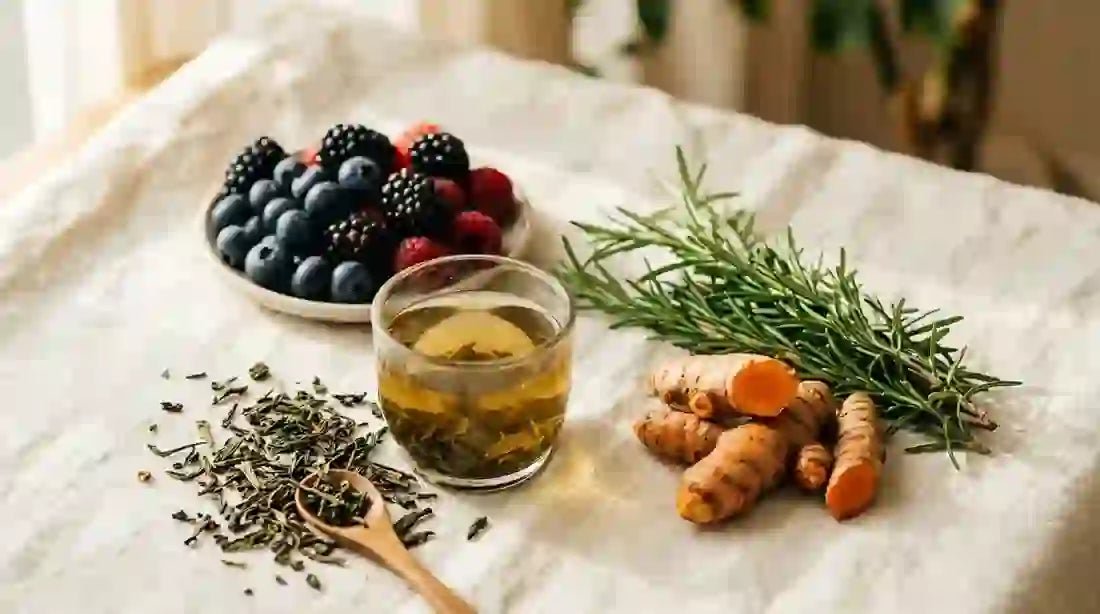
Polyphenols are found in berries, green tea, olive oil, and turmeric, and hardly any group of substances is celebrated as much in the wellness sector. But what's really behind them, especially when it comes to hormones, the menstrual cycle, and PCOS? We've reviewed the studies and honestly assessed what the research shows and what remains unclear.
Polyphenols are secondary plant compounds, meaning substances that plants produce to protect themselves from stress, UV light, and predators. Chemically, they are identified by at least one aromatic ring with one or more hydroxyl groups. Over 8,000 different structures have been described to date, from simple phenolic acids to complex tannins.
Relevant to us: They are among the most thoroughly researched bioactive compounds in nutrition and are primarily studied for their antioxidant and anti-inflammatory effects.
The five major groups of polyphenols
Polyphenols are not a single substance but a huge family. Researchers usually divide them into five main classes. This distinction is important because individual representatives have very different effects in the body, which explains why polyphenols cannot be lumped together.
| Group | Known Representatives | Where they are found |
|---|---|---|
| Flavonoids | Quercetin, Apigenin, Catechins (EGCG), Anthocyanins, Soy isoflavones | Berries, green tea, onions, apples, soy, cocoa |
| Phenolic acids | Caffeic acid, Ferulic acid, Chlorogenic acid | Coffee, whole grains, berries |
| Stilbenes | Resveratrol, Pterostilbene | Red grapes, blueberries, peanuts |
| Lignans | Secoisolariciresinol | Flax seeds, sesame, whole grains |
| Tannins | Proanthocyanidins, Ellagitannins | Cranberry, pomegranate, red wine, nuts |
You'll likely recognize some names here that we've already written about in detail: Quercetin, Apigenin, and Resveratrol. This article provides an overview of the entire family; the individual deep dives can be found in their respective posts.
How polyphenols work in the body
The common denominator of almost all polyphenols is their antioxidant effect. Their hydroxyl groups can scavenge free radicals, thereby dampening oxidative stress, a state in which more reactive oxygen compounds accumulate in the body than the body's own protective systems can neutralize. Oxidative stress and low-grade inflammation play a role in many hormonal issues, from insulin resistance to menstrual problems.
Beyond this antioxidant effect, many polyphenols interfere with inflammatory and metabolic signaling pathways. In laboratory and animal studies, for example, they influence inflammatory mediators and the sensitivity of cells to insulin. It is important to honestly categorize here: much of this comes from the lab, and not every mechanism that works in cell culture can be directly transferred to humans.
Many polyphenols are absorbed only to a small extent in the gut and are quickly broken down again. This means that even if a substance has a strong effect in a test tube, often only a fraction of it reaches the cells in the body. Precisely this low bioavailability is one of the main reasons why impressive laboratory results often significantly diminish in human clinical studies.
Cycle+ was developed for women with cycle and PCOS issues and provides targeted, clinically studied botanicals to support insulin and hormone balance.
€75,00
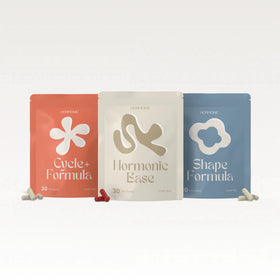
Maximum support for your cycle, metabolism & hormones
Hormonic Base provides 16 essential micronutrients like magnesium, zinc, and vitamin D3, while Cycle+ and Shape Formula supplement targeted botanicals & polyphenols for cycle and metabolism concerns. Developed by doctors and loved by thousands of women.
Frequently Asked Questions about Polyphenols
Are polyphenols and phytochemicals the same thing?
Do polyphenols help with PCOS?
Welche Lebensmittel enthalten am meisten Polyphenole?
Sind hochdosierte Polyphenol-Supplements sinnvoll?
Scientific Sources
- Balieiro CCA et al. (2024). Effects of polyphenol in women with polycystic ovary syndrome: a systematic review and meta-analysis of randomized controlled trials. Eur J Obstet Gynecol Reprod Biol. doi:10.1016/j.ejogrb.2023.12.038
- Simental-Mendia LE et al. (2022). Effect of Curcumin on Glycaemic and Lipid Parameters in Polycystic Ovary Syndrome: A Systematic Review and Meta-Analysis of RCTs. Reprod Sci. doi:10.1007/s43032-021-00761-6
- Shen W et al. (2022). Therapeutic effect and safety of curcumin in women with PCOS: a systematic review and meta-analysis. Front Endocrinol (Lausanne). doi:10.3389/fendo.2022.1051111
- Resveratrol umbrella review (2026). Effects of resveratrol supplementation on multiple health outcomes: an umbrella review of systematic reviews and meta-analyses of RCTs. Nutr J. doi:10.1186/s12937-026-01319-5
- Critical Reviews in Food Science and Nutrition (2024). Efficacy and safety of dietary polyphenol administration assessed by hormonal, glycolipid metabolism, inflammation and oxidative stress parameters in patients with PCOS. doi:10.1080/10408398.2024.2440063
- Rana A et al. (2025). Dietary polyphenols and human health: sources, biological activities, nutritional and immunological aspects, and bioavailability, a comprehensive review. Front Immunol. doi:10.3389/fimmu.2025.1653378
- Cory H et al. dietary polyphenols, oxidative stress and antioxidant and anti-inflammatory effects. doi:10.1016/j.cofs.2016.02.002
About the Author

You might also be interested in this.

Peppermint, Chamomile, Sage, Fennel, and Fenugreek for PCOS, PMS, and Menopause, honestly categorized by evidence. What is proven and what is not.
Resveratrol is considered anti-inflammatory and is widely discussed in relation to endometriosis. What laboratory research, human studies, and guidelines truly show, honestly assessed.
If you suffer from hormonal disorders such as polycystic ovary syndrome (PCOS), quercetin could be just the right ingredient for you. Quercetin is a flavonoid found in many fruits and vegetables an...