


Resveratrol and pterostilbene are two polyphenols found in grapes and blueberries, which are touted as antioxidants and hormone regulators. But how well is their efficacy really proven? This article provides an honest assessment of the study situation, including areas where the evidence is contradictory.
Resveratrol, specifically the readily absorbable trans-form, is one of the most well-researched polyphenols for female hormone balance. Several studies on PCOS observed positive effects on testosterone and insulin sensitivity. Not every study shows the same effect, which we honestly explain here. Pterostilbene, its close relative from blueberries, is even better absorbed, but its efficacy data so far primarily comes from animal studies.
What are Resveratrol and Pterostilbene?
Resveratrol is a natural polyphenol found primarily in the skin of red grapes, as well as in nuts and berries. In its readily absorbable trans-form, it is researched for its antioxidant and anti-inflammatory properties and described as a phytoestrogen that can bind to estrogen receptors and modulate their activity. Precisely this hormonal connection makes it particularly interesting for women's health.
Pterostilbene is structurally closely related to resveratrol, is found mainly in blueberries, and differs in one crucial aspect: it is more fat-soluble, which means it is absorbed significantly better and remains active in the body for longer. On paper, this is an advantage. However, whether this translates into a stronger effect in humans is still an open question.
The form is crucial: most positive studies on PCOS use readily absorbable trans-resveratrol.
The amounts of resveratrol used in studies are hardly achievable through diet? A glass of red wine only provides a fraction of it. The doses of several hundred milligrams of high-quality trans-resveratrol used in studies practically always come from extracts, not from food.
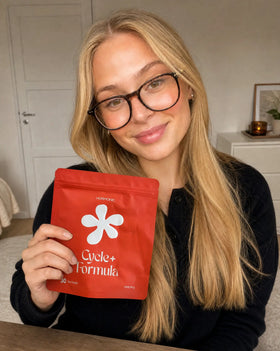
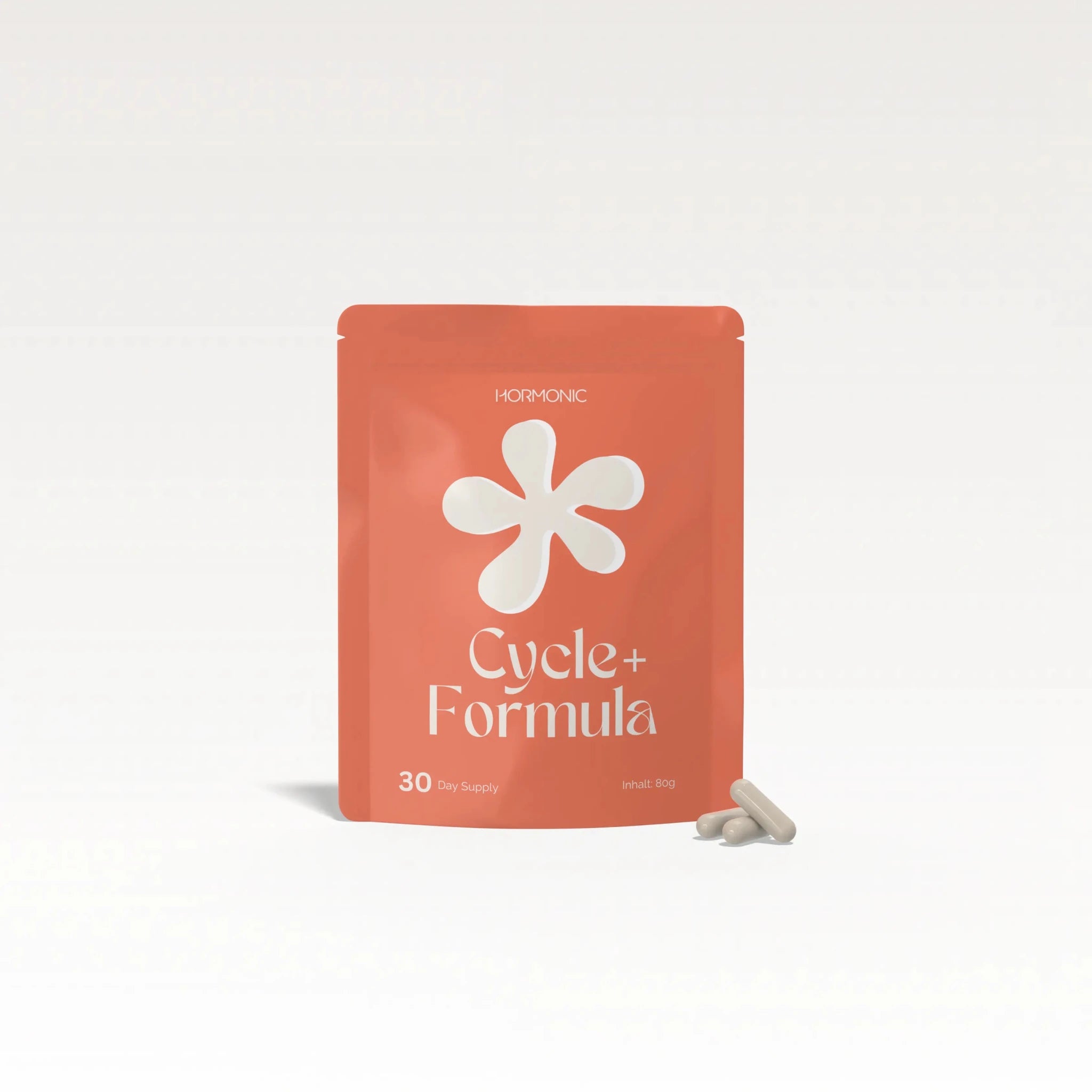
Cycle+ Formula: Trans-Resveratrol plus Inositol for Your Hormone Balance
Cycle+ combines highly absorbable trans-resveratrol with myo-inositol, D-chiro-inositol, zinc, quercetin, and apigenin – precisely the active ingredients researched in the context of PCOS and cycle health. Doctor-developed, manufactured in Austria, as a coordinated concept rather than isolated individual substances.
€75,00

Unsure what makes sense for you?
Which active ingredients really help in your situation cannot be said across the board. In a telemedical video consultation, we will assess this together, with a sound medical basis and without promises.
Frequently Asked Questions about Resveratrol and Pterostilbene
Does resveratrol help with PCOS?
What is the difference between resveratrol and pterostilbene?
Kann ich genug Resveratrol über Lebensmittel aufnehmen?
Sind Resveratrol und Pterostilben sicher?
Scientific Sources
- Fadlalmola H.A. et al. (2023). Efficacy of resveratrol in women with polycystic ovary syndrome: a systematic review and meta-analysis of randomized clinical trials. Pan African Medical Journal, 44, 134. doi:10.11604/pamj.2023.44.134.32404
- Larik M.O. et al. (2024). Effects of resveratrol on polycystic ovarian syndrome: a systematic review and meta-analysis of randomized controlled trials. Endocrine, 83(1), 51-59. doi:10.1007/s12020-023-03479-4
- Banaszewska B. et al. (2016). Effects of resveratrol on polycystic ovary syndrome: a double-blind, randomized, placebo-controlled trial. Journal of Clinical Endocrinology & Metabolism, 101(11), 4322-4328.
- Bahramrezaie M. et al. (2019). Effects of resveratrol on VEGF and HIF1 genes expression in granulosa cells in infertile women with PCOS: a randomized clinical trial. Journal of Assisted Reproduction and Genetics, 36(8), 1701-1712.
- Etxeberria U. et al. (2017). Pterostilbene-induced changes in gut microbiota composition in relation to obesity. Molecular Nutrition & Food Research, 61(1). doi:10.1002/mnfr.201500906
- Riche D.M. et al. (2013). Analysis of safety from a human clinical trial with pterostilbene. Journal of Toxicology, 2013, 463595.
About the Author

You might also be interested in this.
These 4 supplements are recommended daily by science for women: Micronutrient basis, Omega-3, Creatine, and targeted gut-hormone add-ons. Without hype, with a study basis.
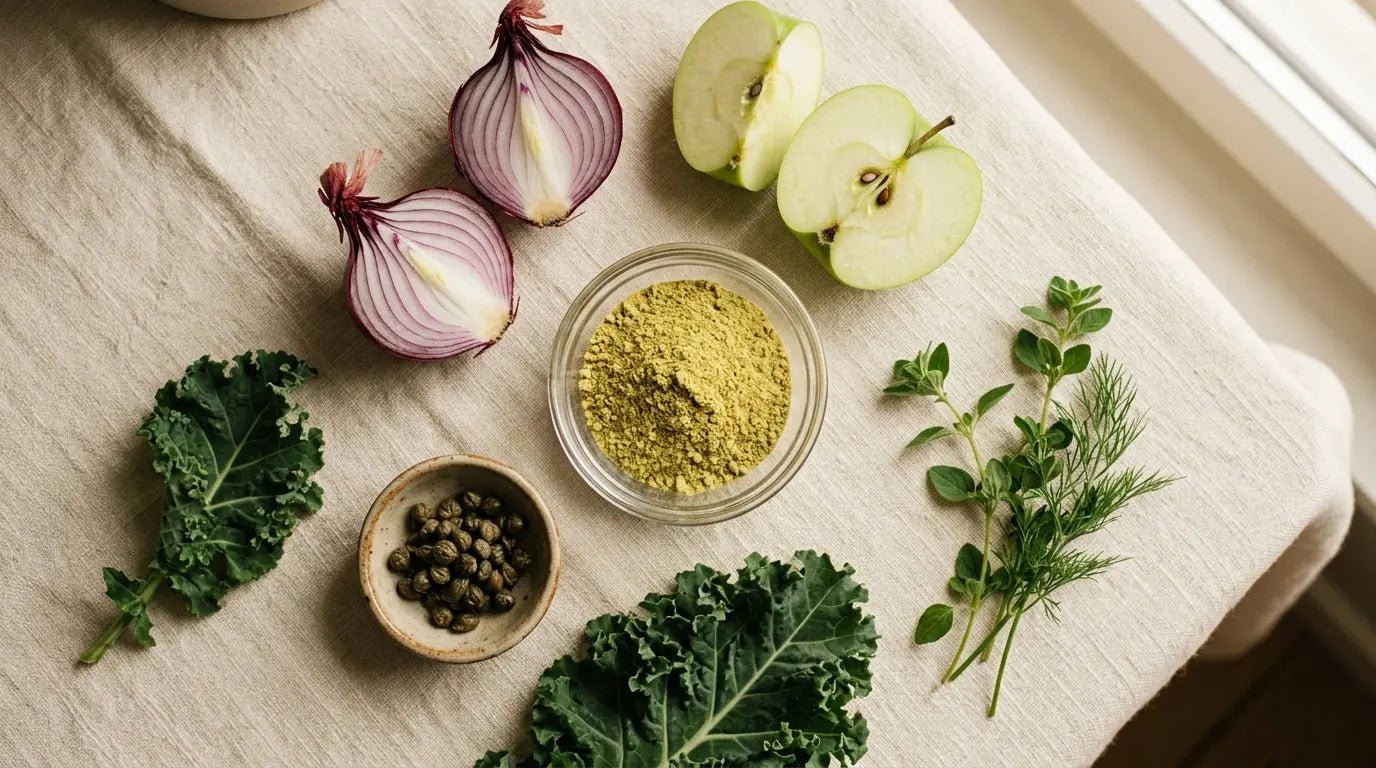
If you suffer from hormonal disorders such as polycystic ovary syndrome (PCOS), quercetin could be just the right ingredient for you. Quercetin is a flavonoid found in many fruits and vegetables an...

How does inositol work for PCOS, what do studies show regarding ovulation, testosterone, and insulin resistance, and what is a sensible dosage? The evidence-based overview.