Cart

Your cart is empty

Continue shopping

Trending searches

Featured products

Hormonic Base Nahrungsergänzung mit 16 Mikronährstoffen
Sale price€65,00
(5.0)
Hormonic Midlife Formula für die Perimenopause
Sale price€75,00
(5.0)
Kinderwunsch? Diese Nährstoffe machen laut Studien den Unterschied
FruchtbarkeitOct 21, 20249 min read

Fertility Boost: How Nutrition and Supplements Can Improve the Chances of Getting Pregnant

Dreaming of a baby, but it's not happening? You are not alone. Around 15 percent of couples worldwide in their reproductive years experience difficulties conceiving naturally. This article provides evidence-based insights into which nutrients and foods are truly relevant for women and men, and where research reaches its limits.

Key takeaways

Folic acid has the most evidence regarding fertility. CoQ10, myo-inositol, and vitamin D can be supportive in certain cases. More important than individual capsules is the dietary pattern, and this applies to both partners.

What it's about
Nutrients for fertility, honestly assessed

Nutrition and micronutrients can improve the conditions for a pregnancy. They are a support, not a guarantee. In this article, we evaluate the study data by strength of evidence and look at both partners.

~15 %
of couples worldwide have trouble getting pregnant
~50 %
of cases also have a cause in the man
~90
days are needed for egg and sperm maturation

Our modern lifestyles play a major role: unfavorable diet, lack of exercise, and exposure to environmental toxins affect fertility. The good news is that many of these factors can be influenced. Research suggests that targeted nutrition and selected dietary supplements can support fertility.

What happens in the body when nutrients are lacking?

Egg and sperm cells are particularly sensitive to oxidative stress. Micronutrients such as selenium, zinc, vitamin E, and coenzyme Q10 act as antioxidants and are associated in studies with the protection of egg and sperm cells. Folate is involved in cell division and cell growth, which is why it plays a role even before conception. An unfavorable metabolism, for example in insulin resistance, can disrupt ovulation.

It's less about a single miracle cure than about an overall favorable environment.

Did you know that

egg and sperm cells need about 90 days to mature? So what you change today regarding nutrition and micronutrients will only have its full effect after about three months. That's why it's worth starting early, and for both partners.

Which nutrients are scientifically relevant for fertility?

The same micronutrients consistently appear in research regarding female fertility. Important upfront: The evidence varies in strength depending on the nutrient. A 2024 umbrella review (Kuchakulla et al., Nutrients) summarizes the study situation on multi-micronutrients and antioxidants and comes to an honest conclusion: There is evidence of higher pregnancy and birth rates, but the overall strength of the studies is low (very low certainty). This does not mean that nutrients are useless. It means that we should see them as support, not as a guarantee.

Folic Acid (Vitamin B9)

Folic acid is the most well-established nutrient in the preconception phase. Professional societies recommend that women trying to conceive supplement with about 400 to 800 µg daily, ideally a few weeks before a planned pregnancy. The reason is well-documented: A low folate status is associated with an increased risk of neural tube defects in the fetus (Mashhadi et al., 2025).

Coenzyme Q10

CoQ10 has been linked in studies to egg quality, especially in women with diminished ovarian reserve and PCOS. A meta-analysis by Schütz et al. (2025) showed that CoQ10 can improve egg retrieval and pregnancy rates in these groups. Again, the effects are promising, but the study quality is limited, and the greatest benefit tends to be seen in women aged approximately 35 or older or with a poor ovarian response.

Myo-Inositol

Myo-inositol is particularly well-researched for PCOS. Meta-analyses suggest that it can support egg maturation and cycle regularity and is associated with higher pregnancy rates during ovulation induction. If you have PCOS, a closer look is worthwhile: we have a separate article on myo-inositol for PCOS.

Vitamin D

Vitamin D is associated with cycle regulation and reproductive health. Low levels are more frequently observed in women with cycle disorders or PCOS. However, the evidence for a direct improvement in birth rates is inconsistent. It makes sense to have your vitamin D status measured and replenish it specifically, rather than taking high doses blindly.

Omega-3 Fatty Acids

Omega-3 fatty acids, especially from fatty fish, are linked in studies to egg maturation and a more favorable hormonal environment. In men, they are associated with sperm motility and the protection of sperm DNA from oxidative stress. The data is predominantly observational, but the benefit of adequate intake is plausible and low-risk.

Selenium, Zinc, and Iron

Selenium and zinc act as antioxidants and are discussed in the context of thyroid health, sperm quality, and assisted reproduction. Iron is relevant because a deficiency can impair cycle function. These nutrients complement good nutrition but do not replace a balanced diet.

Diet: What Studies Show in Women and Men

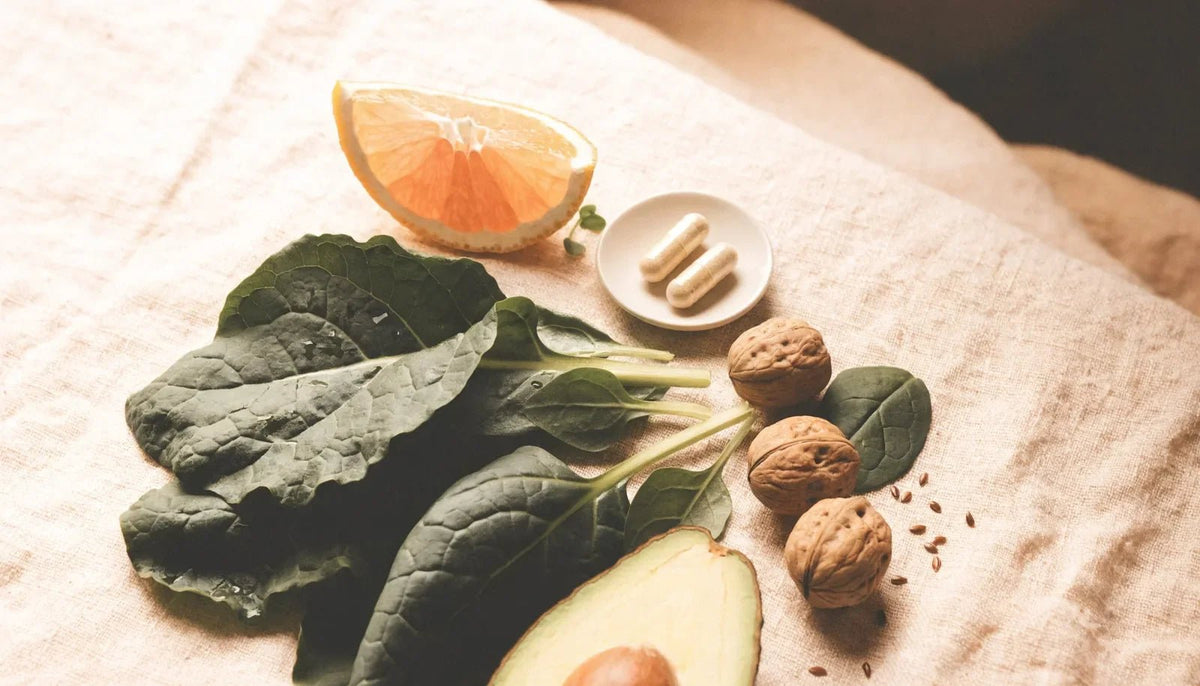
Perhaps the most important lever is not the individual pill, but the overall dietary pattern. The Mediterranean diet, rich in vegetables, legumes, olive oil, nuts, and fatty fish, is associated with better reproductive health in several studies.

In women, a high intake of omega-3 fatty acids was associated with a lower risk of anovulation, i.e., a missed ovulation. In men, a systematic review by Piera-Jordan et al. (2024) showed a correlation between good adherence to the Mediterranean diet and better sperm concentration and motility.

What Role Do Nuts Play?

Nuts provide omega-3 fatty acids, vitamin E, selenium, and polyphenols. A meta-analysis showed that daily consumption of about 60 g of nuts can improve sperm motility, vitality, and morphology in men. In women, the healthy fats and antioxidants contribute to a favorable hormonal environment. Two small handfuls of walnuts, almonds, or hazelnuts a day are a simple addition.

What You Should Avoid

Trans fats and sugar from highly processed foods are associated with ovulation disorders and insulin resistance, both unfavorable for fertility. Avoiding highly processed products and sugary drinks is therefore a sensible first step.

The Supplement Duo for Cycle and Egg Maturation

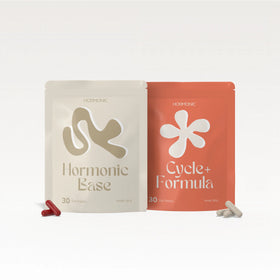
The Hormonic Base Cycle+ bundle combines over 20 laboratory-tested micronutrients such as Myo-inositol and folate, which are discussed in studies in connection with cycle regulation and egg maturation. Developed by doctors.

€125,00

Discover now

What research really shows for men

A point often overlooked: In about half of the cases, the cause lies with the man. Nevertheless, during the fertility treatment phase, almost everything revolves around the woman. Yet, it's worthwhile to consider both partners.

Scientific honesty is important here. While a healthy eating pattern is consistently linked to better semen quality, the evidence for individual supplements is mixed. Maitin-Shepard et al. (2024) noted that neither pure folic acid nor zinc supplementation in men showed a clear effect on fertility. The same applies to CoQ10 in men: Studies show it improves individual sperm parameters, but a clear effect on birth rates is not confirmed. Antioxidants like selenium, zinc, and omega-3 are positively associated with sperm quality in reviews, but an overdose can even be counterproductive.

The most honest conclusion: For men, an overall good diet brings more benefits than a single high-dose capsule.

How long in advance should you start?

Eggs and sperm mature over approximately 90 days. So, if you want to make changes through diet and micronutrients, it makes sense to start about three months before a planned attempt. This applies to both partners.

Environmental factors often overlooked

A good diet alone is not always enough. Environmental toxins from food or packaging, including lead, perfluorinated compounds, BPA, and phthalates, can disrupt hormonal balance. Opt for low-pollutant packaging and reduce contact with these substances wherever possible.

Considering starting a family? Our doctors are here to support you

In a personal video consultation, we'll work together to find out what suits you and your situation. Our doctors specialize in this field and have already accompanied hundreds of women on their journey.

Free initial consultation

The Most Important Points at a Glance

  • Folic acid is the most proven nutrient during the fertility planning phase, 400 to 800 µg daily, a few weeks before a planned pregnancy.
  • CoQ10 and Myo-Inositol show promising, but not conclusively proven effects, especially with PCOS or reduced egg reserve.
  • The dietary pattern counts more than the individual capsule: The Mediterranean diet is associated with better reproductive health in both women and men.
  • Both partners count: In about half of the cases, the cause lies with the man.
  • Plan for patience: Eggs and sperm need about 90 days to mature.

When you should seek medical advice

If you are under 35 and have been trying to get pregnant unsuccessfully for about a year, or over 35 for about six months, a medical consultation is advisable. Early clarification is also worthwhile if you have an irregular or absent cycle, known PCOS, endometriosis, or thyroid problems. Nutritional supplements do not replace this clarification.

Conclusion

There is no miracle cure for fertility, but there are reliable levers. Folic acid is a given, a Mediterranean diet with nuts, vegetables, and fatty fish is beneficial for both partners, and targeted micronutrients such as CoQ10, myo-inositol, or vitamin D can support in certain situations. It is crucial to keep expectations realistic: These measures create a favorable environment, they do not guarantee pregnancy.

If you want to understand your body better and support it specifically, we will discuss together in a personal consultation what suits you and your situation.

Frequently Asked Questions about Nutrients for Fertility

Which nutrients are most important when trying to conceive?

The best-documented is folic acid (400 to 800 µg daily). In addition, studies discuss coenzyme Q10, myo-inositol, vitamin D, omega-3 fatty acids, selenium, and zinc in connection with fertility. The evidence varies in strength depending on the nutrient, and the overall dietary pattern counts more than a single supplement.

How long before pregnancy should you start taking nutrients?

Egg cells and sperm mature over approximately 90 days. It therefore makes sense to start around three months before a planned attempt. Folic acid should ideally be taken several weeks before a possible pregnancy.

Sollte auch der Mann auf seine Ernährung achten?
Ja. In etwa der Hälfte der Fälle liegt eine Ursache beim Mann. Eine mediterrane Ernährung ist in Studien mit besserer Spermienqualität assoziiert. Einzelne Supplements wie Folsäure oder Zink zeigten bei Männern allerdings keine klare Wirkung, eine insgesamt gute Ernährung bringt hier mehr als eine einzelne Kapsel.
Können Nahrungsergänzungsmittel eine Schwangerschaft garantieren?
Nein. Nahrungsergänzungsmittel können ein günstiges Umfeld für die Fruchtbarkeit unterstützen, aber keine Schwangerschaft garantieren. Die Studienlage zu vielen Nährstoffen ist begrenzt. Bei längerem unerfülltem Kinderwunsch ist eine ärztliche Abklärung wichtig.

Scientific Sources

  • Mashhadi F. et al. (2025). Nutritional Interventions for Enhancing Female Fertility: A Comprehensive Review of Micronutrients and Their Impact. Nursing Research and Practice. doi:10.1155/nrp/2137328
  • Kuchakulla M. et al. (2024). The Role of Nutrient Supplements in Female Infertility: An Umbrella Review and Hierarchical Evidence Synthesis. Nutrients, 17(1), 57. doi:10.3390/nu17010057
  • Schütz D. et al. (2025). Effect of micronutrients on fertility and aneuploidy rates in human conceptions: a systematic review and meta-analysis. Reproductive BioMedicine Online. doi:10.1016/j.rbmo.2025.104987
  • Alrashidi A.S. et al. (2024). The Effect of Nutrient Supplementation on Female Fertility: A Systematic Review. Cureus, 16(8), e67028. doi:10.7759/cureus.67028
  • Piera-Jordan C.Á. et al. (2024). Influence of the Mediterranean diet on seminal quality, a systematic review. Frontiers in Nutrition, 11, 1287864. doi:10.3389/fnut.2024.1287864
  • Maitin-Shepard M. et al. (2024). Food, nutrition, and fertility: from soil to fork. The American Journal of Clinical Nutrition. doi:10.1016/j.ajcnut.2023.12.005
  • Skoracka K. et al. (2021). Female Fertility and the Nutritional Approach: The Most Essential Aspects. Advances in Nutrition, 12(6), 2372-2386. doi:10.1093/advances/nmab068

About the Author

Lisa Maria Emmer

Physician & Medical Director · Hormonic

Lisa Maria Emmer is co-founder and Medical Director at Hormonic. She specialises in cycle health, PCOS, and menopause.

Note: This article is based on current guidelines and scientific work (as of 2026). It is for informational purposes only and does not replace medical advice, diagnosis, or treatment.

Share

You might also be interested in this.

Natürlich die Fruchtbarkeit steigern
FruchtbarkeitSep 15, 202521 min read
Increase fertility naturally

15-25% of Western couples are affected by fertility problems. Here's what really helps and which natural measures can improve fertility.

Eizellqualität verbessern: Was wirklich funktioniert
FruchtbarkeitOct 24, 20248 min read
Improve Egg Quality: What Really Works

The quality of your eggs is one of the most important factors for fertility and directly impacts the chances of a successful pregnancy. Women are born with a limited egg reserve – around 1 to 2 mil...
Eizellreserve und AMH
DiagnostikJun 4, 20267 min read
Everything you need to know about your eggs and fertility

How many eggs do I have left? Your AMH level estimates your egg reserve. Find out what it really means, what it doesn't, and why the pill falsifies it.