



Quitting the pill sounds simple: finish the pack, done. In reality, it kick-starts a hormonal adjustment process that can last weeks to months. This guide explains, based on evidence, what happens in your body, which symptoms are truly attributable to stopping the pill, when medical clarification is advisable, and how you can actively support your hormone balance during the transition phase.
Are you thinking about stopping the pill, or did you do so a few weeks ago and are now wondering why everything feels different? This is no coincidence: with the last tablet, a hormonal control that kept your body constant for years ends. What then returns is your own cycle, and it needs time to find itself again. This guide will show you, based on evidence, what happens, what is normal, and how you can actively support the transition.
What happens in the body when you stop taking the pill?
A combined pill contains ethinylestradiol and a progestogen. These two substances act on the hypothalamus and pituitary gland via a negative feedback signal: the release of the control hormone GnRH is inhibited, FSH and LH remain low, the follicle does not mature, and ovulation does not occur. Studies show that this inhibition primarily takes place at the hypothalamic level; the pituitary gland itself remains functional.
As soon as you stop taking the pill, the synthetic hormones decline within a few days. The hypothalamus registers the absence of the feedback signal and begins to release GnRH in a pulsatile manner again. FSH rises, a follicle begins to mature, estradiol builds up, and an LH peak eventually triggers ovulation. In a prospective study by Gnoth et al., approximately 58 percent of the first cycles after discontinuation were already ovulatory, although often with a shortened luteal phase. It is therefore entirely possible to ovulate in the first cycle, but it is just as normal for your body to need two or three attempts.
Hormonal transition after discontinuation
Why do women stop taking the pill?
The following motives appear most frequently in counseling sessions and in healthcare research. It is rarely about just one reason; usually, several overlap.
- Side effects that are noticeably burdensome: Mood swings, loss of libido, migraines, water retention, or skin changes are the most common reasons why women switch or stop entirely. The Danish registry study by Skovlund et al. showed an association between hormonal contraception and first-time antidepressant prescription, especially in adolescents.
- Desire to conceive: Those who wish to become pregnant usually stop taking the pill after finishing the pack. A waiting period is not medically essential, but three to six months of getting to know one's cycle are useful to recognize ovulation.
- Desire to live hormone-free: Many women want to experience their natural cycle, to get to know their energy curve, their libido, and their mood beyond synthetic control.
- Health concerns: Risk of thrombosis, family history, migraine with aura, or new diagnoses such as high blood pressure can be medical reasons for discontinuation. Medical consultation is always advisable here.
- Life phase changes: Change of partnership, studies, new phase of life, or simply the need to question a routine that has been running for years.
Micronutrients for Post-Pill Recovery
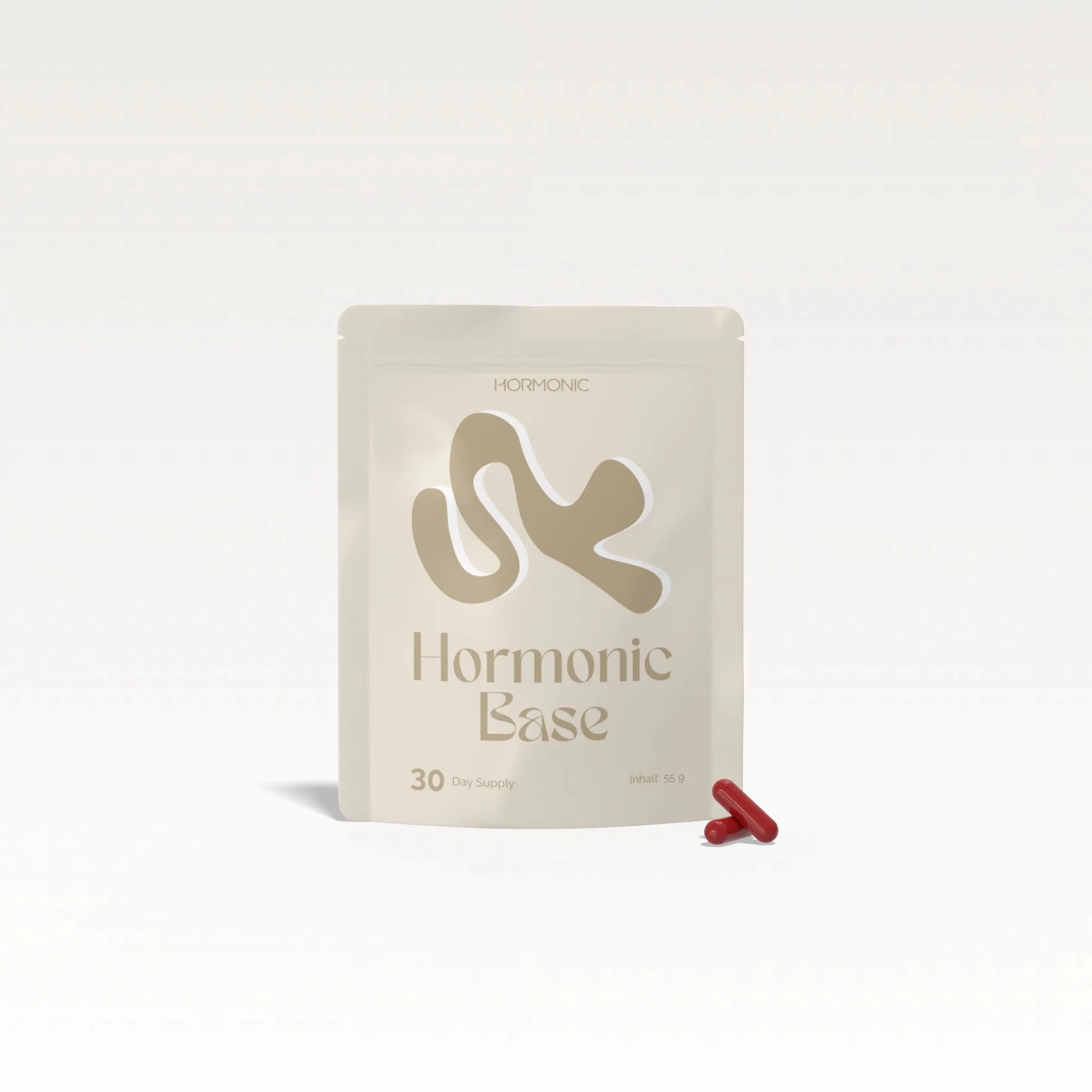
Studies show that the pill can affect certain micronutrients: Vitamin B6, B12, folic acid, zinc, and Vitamin D. Hormonic Base provides exactly these nutrients in clinically relevant dosages, developed with our medical team for women's daily lives. Dietary supplements do not replace medical treatment.
€65,00

Our medical team will support you in stopping the pill, from preparation to hormone balance afterwards. In a free telemedical video consultation, we clarify what makes sense for your individual situation.
Common questions about stopping the pill
How long does it take for your cycle to normalize after stopping the pill?
What should you consider when stopping the pill?
Welche Symptome sind nach dem Absetzen der Pille normal?
Kann man sofort schwanger werden nach dem Absetzen der Pille?
Welche Supplemente helfen nach dem Absetzen der Pille?
Scientific Sources
- Gnoth C et al. (2002). Cycle characteristics after discontinuation of oral contraceptives. Gynecol Endocrinol 16(4):307-317.
- Davis AR et al. (2008). Occurrence of menses or pregnancy after cessation of a continuous oral contraceptive. Fertil Steril 89(5):1059-1063. DOI: 10.1016/j.fertnstert.2007.05.012
- Mansour D et al. (2011). Fertility after discontinuation of contraception: a comprehensive review. Contraception 84(5):465-477. DOI: 10.1016/j.contraception.2011.04.002
- Barnhart KT, Schreiber CA. (2009). Return to fertility following discontinuation of oral contraceptives. Fertil Steril 91(3):659-663. DOI: 10.1016/j.fertnstert.2009.01.003
- Archer DF, Thomas RL. (1981). The fallacy of the postpill amenorrhea syndrome. Clin Obstet Gynecol 24(3):943-950.
- Hull MG et al. (1981). Post-pill amenorrhea: a causal study. Fertil Steril 36(4):472-476.
- Wilson SMC et al. (2011). Oral contraceptive use: impact on folate, vitamin B6, and vitamin B12 status. Nutr Rev 69(10):572-583. DOI: 10.1111/j.1753-4887.2011.00419.x
- Palmery M et al. (2013). Oral contraceptives and changes in nutritional requirements. Eur Rev Med Pharmacol Sci 17(13):1804-1813.
- Riedel B et al. (2005). Effects of oral contraceptives and hormone replacement therapy on markers of cobalamin status. Clin Chem 51(4):778-781. DOI: 10.1373/clinchem.2004.043828
- Harmon QE et al. (2016). Use of estrogen-containing contraception is associated with increased concentrations of 25-hydroxy vitamin D. J Clin Endocrinol Metab 101(9):3370-3377. DOI: 10.1210/jc.2016-1658
- Skovlund CW et al. (2016). Association of hormonal contraception with depression. JAMA Psychiatry 73(11):1154-1162. DOI: 10.1001/jamapsychiatry.2016.2387
- IQWiG. Contraception. gesundheitsinformation.de
About the Author

You might also be interested in this.

Hormonal contraception not only affects the cycle but also measurably alters at least 9 lab values. Here's what that means for your next blood test and how to correctly interpret your results.
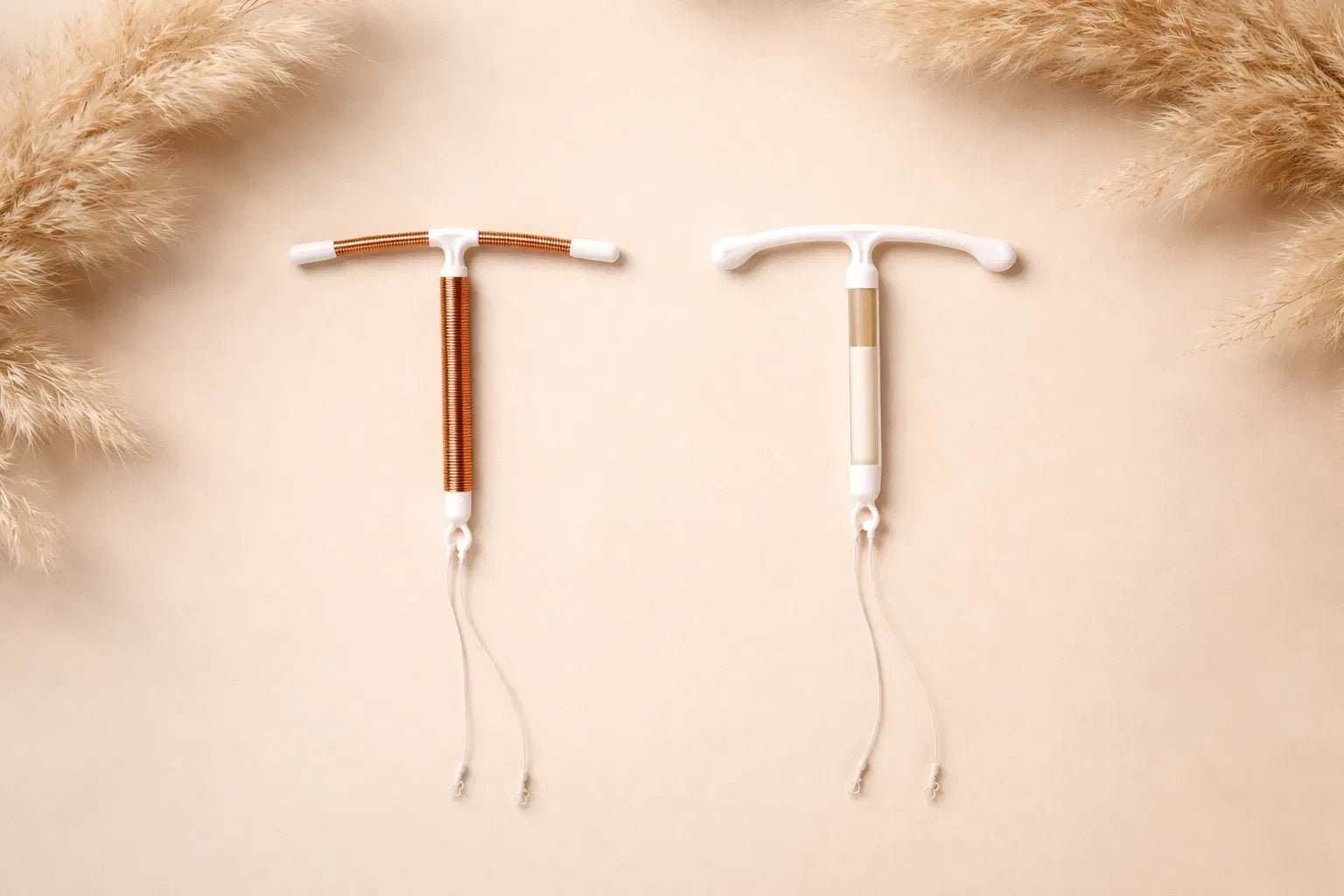
Hormonal or hormone-free contraception? And should it be the hormonal or copper IUD? We provide scientifically sound explanations of the effects, advantages, and risks of both contraceptives and of...

You’ve stopped taking the pill and are suffering from hair loss? You’re not alone. According to a recent study, this affects a full 26% of all women who stop taking the pill. Despite the significan...