


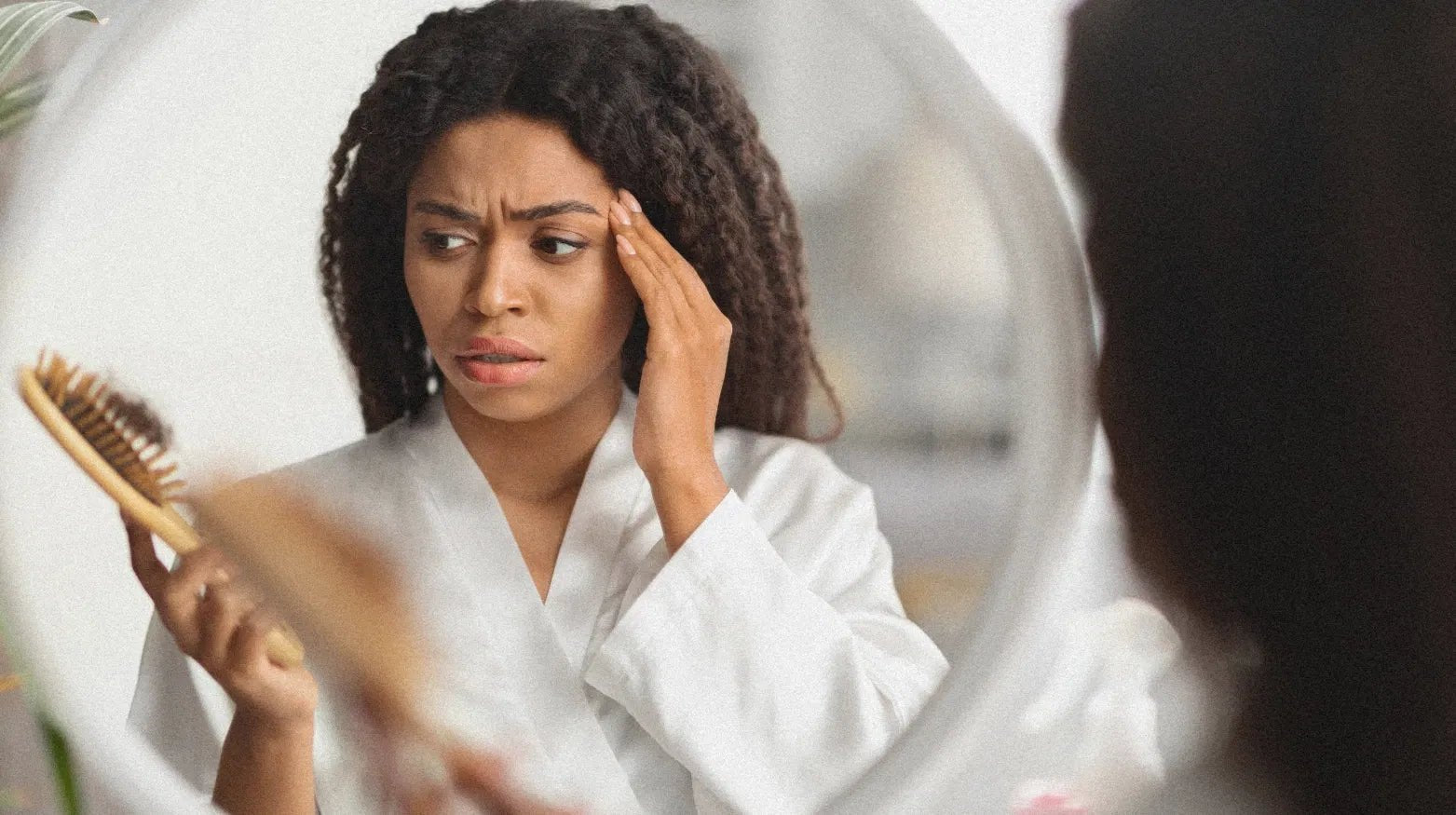
Have you stopped taking the pill and are experiencing hair loss? You are not alone. Many women notice increased hair loss a few weeks to months after stopping. According to a recent study, this affects as many as 26% of all women. There are effective, natural measures that can ease the transition.
The call came about four months after stopping: “My hair is falling out in handfuls, is that normal?” I hear this concern often in my consultations, and usually, I can reassure them. Because hair loss after stopping the pill is, in most cases, temporary, and there's a lot you can do yourself to support your hair through this phase.
Last updated: September 2026 · By Lisa Maria Emmer, Doctor at Hormonic
Why does hair loss occur after stopping the pill?
Stopping the pill throws the hormone balance out of whack. During pill use, artificial hormones suppress the natural balance, especially estrogen levels remain consistently elevated. When the pill is stopped, this level drops abruptly. This hormonal stress reaction can trigger hair loss.
Telogen Effluvium: the mechanism behind it
Estrogen normally promotes hair growth. If levels suddenly drop, many hair follicles prematurely switch from the growth phase (anagen) to the resting phase (telogen). Several weeks later, these hairs fall out, often in handfuls in the shower or brush.
Telogen effluvium refers to diffuse hair loss triggered by a hormonal stress reaction.
Time course: when does it start and how long does it last?
Hair loss sets in with a delay, usually about two to four months after stopping, because the hairs first need to switch to the resting phase before they fall out. This is followed by the most severe shedding phase, before growth slowly recovers. The following overview shows the typical progression.
| Phase | Time after stopping | What happens in the body |
|---|---|---|
| Delayed onset | approx. 2 to 4 months | Increased number of hairs enter the resting phase, first visible loss |
| Most severe shedding phase | approx. 3 to 6 months | Maximum hair loss, significantly more hair in brush and shower |
| Recovery | approx. 6 to 12 months | New hair growth becomes visible, shedding subsides |
| Normalization | from approx. 12 months | Complete recovery of hair density in most women |
Does the hair grow back? In the vast majority of cases, yes. Telogen effluvium after stopping the pill is temporary: once the hormone balance has re-established itself, the hair follicles resume their normal growth phase. Since hair only grows about one to one and a half centimeters per month, visible recovery requires patience. Hair loss is part of the broader hormonal adjustment, which we explain step-by-step in the Guide to stopping the pill. Accompanying effects like weight changes after stopping also belong to the same phase.
Androgens and genetic predisposition
Combination pills also suppress male hormones (androgens). After stopping, androgen levels can temporarily rise. In women with a genetic predisposition to androgenetic hair loss, this can further stress the hair follicles. The pill may have suppressed this hair loss for years, and it reappears after stopping.
This androgenetic hair loss follows different rules than temporary telogen effluvium and can be permanent. How hereditary hair loss generally manifests in women and what measures help is explained in detail in our Overview of hair loss in women. Distinguishing between both forms is important because they have different courses.
| Feature | Telogen Effluvium | Androgenetic Alopecia |
|---|---|---|
| Trigger | hormonal changes, estrogen drop | genetic sensitivity to androgens |
| Pattern | diffuse thinning all over the head | thinning primarily at the parting |
| Progression | temporary, usually reversible | progressive, permanent without treatment |
| Relation to the pill | weeks to months after stopping | emerges as soon as the pill no longer masks it |
Other influencing factors
Nutrient deficiency
Iron, zinc, vitamin D, and B vitamins are essential for hair growth. During hormonal changes, the demand may increase.
Stress
The transition itself is stressful for the body. Additional emotional stress or lack of sleep can exacerbate hair loss.
Thyroid problems
The pill can mask a latent underactive thyroid. After stopping, it can emerge, with hair loss as a symptom.
Nutrient balance, in particular, deserves attention: many women start the post-pill period with depleted stores, as hormonal contraception can increase the need for certain micronutrients. What the pill depletes in detail can be read in the article on nutrient deficiency caused by the pill.
Hormonic Base: Nutrients for your hair
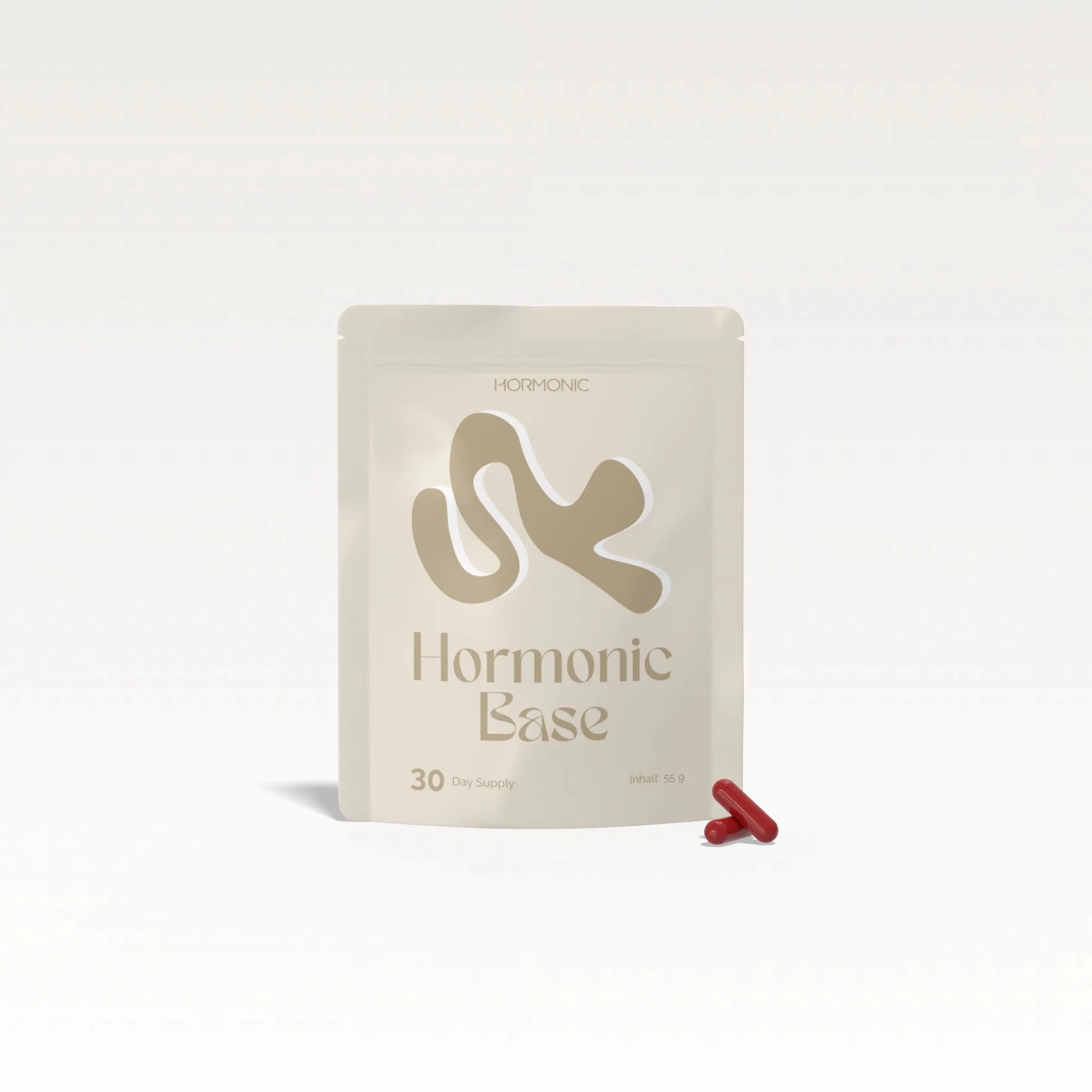
Zinc and selenium contribute to the maintenance of normal hair, and during hormonal changes after stopping the pill, the nutrient requirement can increase. Hormonic Base combines zinc, selenium, folate, vitamin D, and other micronutrients as a daily foundation for your hormonal health.
Discover Hormonic Base
Because your hair needs more than shampoo
After stopping the pill, your nutrient requirements may increase. Hormonic Base provides zinc and selenium, which contribute to the maintenance of normal hair, as well as folate, vitamin D, and other micronutrients. Not a hair growth product, but a well-thought-out daily foundation for your hormonal health.
€65,00

Overwhelmed by the situation? Hormonic supports you.
In a personal video consultation with a specialized doctor from Hormonic, you can ask all your questions and get advice regarding your symptoms. All from the comfort of your home, without waiting times.
Common questions about hair loss after stopping the pill
How long does hair loss last after stopping the pill?
What's the fastest way to stop hair loss after coming off the pill?
What helps best against hair loss after stopping the pill?
Can you prevent hair loss after stopping the pill?
Is hair loss after stopping the pill normal?
Scientific Sources
- Rathnayake D, Sinclair R. Innovative use of spironolactone as an antiandrogen in the treatment of female pattern hair loss. Dermatol Clin. 2010.
- Blume-Peytavi U et al. S1 guideline for diagnostic evaluation in androgenetic alopecia in men, women and adolescents. Br J Dermatol. 2011.
- Trüeb RM. The impact of oxidative stress on hair. Int J Cosmet Sci. 2015
- Piliang MP, Bergfeld WF. Diffuse alopecia: telogen effluvium. In: Camacho FM, Tosti A, editors. Tricology. 2015
- Finner AM. Nutrition and hair: deficiencies and supplements. Dermatol Clin. 2013
About the Author

You might also be interested in this.

Are you considering discontinuing the pill, or have you already done so? This guide provides evidence-based information on what happens in your body, typical side effects and symptoms, and how long...

The pill or the hormonal IUD? We explain the scientifically sound effects, advantages, and risks of both contraceptives and provide you with medically reviewed guidance to help you make an informed...

Why women lose hair, what's behind diffuse hair loss, and which measures are scientifically proven. Medically reviewed overview of causes, the hair cycle, and the most important nutrients.