



The pill or the hormonal IUD is one of the most common contraception questions. Both are very reliable but work fundamentally differently: the pill systemically influences your entire hormone balance, while the IUD primarily has a local effect in the uterus.
The most important things at a glance
- Both methods are among the most reliable available; the IUD is often slightly more reliable in daily life because no user error is possible.
- The pill works systemically and daily, the IUD locally and for 3 to 8 years.
- Side effects with the IUD are usually milder because less hormone enters the body.
- After removing the IUD, you are immediately fertile; after stopping the pill, it usually takes a few weeks to months.
- There is no universal "better": the choice depends on your daily life, complaints, and risk factors and should be medically guided.
I get this question constantly from friends, in the community, sometimes I've even asked myself: Pill or hormonal IUD, which is actually better? The honest answer is both uncomfortable and reassuring: there is no general better, only what is better for you.
Therefore, we will look at both methods without judgment: how they work, their advantages and disadvantages, known risks, and what questions can help you make the right choice for your body and your daily life. A common topic here is weight gain from the pill, for which the study data is clearer than many think.
Did you know?
The hormonal IUD primarily releases its hormone directly into the uterus. As a result, significantly less hormone enters the rest of your body than with the pill, which is why many women experience milder side effects.
How the pill and IUD work: systemic versus local
Both prevent pregnancy with hormones, but in very different ways, and this is precisely the most important distinction. The birth control pill comes in two main forms. The combined pill (estrogen plus progestin) primarily suppresses ovulation and additionally alters cervical mucus and the uterine lining. The mini-pill (progestin only) mainly thickens cervical mucus; with many preparations, ovulation persists, while newer, higher-dose mini-pills also suppress it. For women who cannot tolerate estrogen, such as smokers over 35, the mini-pill is often the safer alternative.
The hormonal IUD (e.g., Mirena, Kyleena, Jaydess) is a small T-shaped device that sits in the uterus and continuously releases the progestin levonorgestrel. It thickens the cervical mucus and inhibits the buildup of the uterine lining, but ovulation usually remains for most women. This means: the pill systemically intervenes in your entire cycle, while the IUD primarily acts locally.
Both have one thing in common: your body must metabolize the supplied hormones, and this increases the demand for certain micronutrients such as B vitamins, magnesium, and zinc. Especially with long-term hormonal contraception, women are more likely to develop low levels, which can affect energy, skin, and well-being.
Pill and hormonal IUD at a glance
| Pill | Hormonal IUD | |
|---|---|---|
| Effect | systemic, suppresses ovulation | local, ovulation usually remains |
| Application | daily intake | inserted once, 3 to 8 years |
| Cycle | regular, light withdrawal bleeding | initially spotting, later often absent |
| Side effects | mood, libido, skin, thrombosis risk | spotting, headache, cysts, usually milder |
| Fertility afterward | after a few weeks to months | immediately after removal |
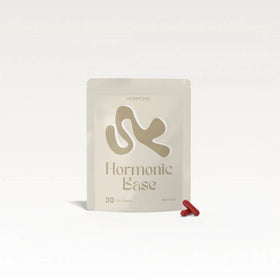
Hormonic Base: Nutrients for Hormonal Contraception
All hormonal contraception increases the need for certain micronutrients. Studies show that women who use hormonal contraception for longer periods often have low levels of folate, vitamin B6, zinc, and magnesium. Hormonic Base provides exactly these micronutrients as a well-designed daily foundation, developed for your hormonal health.
€65,00
Unsure which contraception is right for you?
In a free 15-minute consultation, one of our doctors will address your questions about the pill, IUD, and side effects – completely non-binding and tailored to your needs.
Frequently asked questions about the pill and hormonal IUD
What's safer: the pill or a hormonal IUD?
What are the side effects of the birth control pill?
Für wen ist die Pille nicht geeignet?
Für wen ist die Hormonspirale nicht geeignet?
Scientific Sources
- Federal Centre for Health Education (BZgA) (2022). Comparison of Contraceptive Methods. Cologne: BZgA.
- German Society for Gynecology and Obstetrics (DGGG) (2020). S3 Guideline: Hormonal Contraception. AWMF Register No. 015-015.
- Faculty of Sexual & Reproductive Healthcare (FSRH) (2019). Clinical Guideline: Combined Hormonal Contraception. RCOG, London.
- Faculty of Sexual & Reproductive Healthcare (FSRH) (2021). Clinical Guideline: Intrauterine Contraception. RCOG, London.
- Gallo, M. F. et al. (2013). 20 µg versus >20 µg estrogen combined oral contraceptives. Cochrane Database of Systematic Reviews. doi:10.1002/14651858.CD003989.pub5
- Lopez, L. M. et al. (2013). Progestin-only contraceptives: effects on weight. Cochrane Database of Systematic Reviews. doi:10.1002/14651858.CD008815.pub3
- Mörch, L. S. et al. (2017). Contemporary hormonal contraception and the risk of breast cancer. New England Journal of Medicine. doi:10.1056/NEJMoa1700732
- World Health Organization (WHO) (2015). Medical eligibility criteria for contraceptive use (5th ed.). Geneva: WHO.
You might also be interested in this.

Are you considering discontinuing the pill, or have you already done so? This guide provides evidence-based information on what happens in your body, typical side effects and symptoms, and how long...

Hormonal acne often appears on the chin and jawline, usually before one's period. We explain the role of androgens, the menstrual cycle, and nutrition, and clarify which active ingredients and appr...

Elevated androgens manifest as acne, hair loss, and menstrual irregularities. We explore the underlying biology and evidence-based effective interventions.