


Acne, hair loss on the head, unwanted body hair, irregular cycles: These symptoms can indicate elevated androgens. The most common underlying condition is PCOS, but it's not the only one. This article explains exactly what happens in the body and which measures are actually supported by studies.
Acne on the chin, thinning hair, an irregular cycle, weight gain in the abdominal area: when several of these symptoms occur together, it is worth taking a look at your androgen levels. Elevated androgens in women are more common than often assumed, and the causes are almost always treatable.
Acne on the chin & jawline
Hair loss on the scalp
Irregular cycle
Belly fat despite a normal diet
What are androgens and when are they elevated?
Androgens, including testosterone, DHEAS, and androstenedione, are male sex hormones that women naturally produce in smaller quantities. They are produced in the ovaries and the adrenal cortex and are important for bone density, muscle mass, libido, and mood.
Hyperandrogenism is the term used when androgen levels are above the normal female range. This can only be reliably determined via a blood test.
| Marker | Abnormal | Note |
|---|---|---|
| Total Testosterone | above 0.5 ng/ml | Observe lab-specific reference range |
| Free Testosterone | above reference range | Highly dependent on SHBG |
| DHEAS | above 350 µg/dl | Indication of adrenal cause |
| SHBG | lowered | Indirectly increases free testosterone |
Brief definition
What does hyperandrogenism mean?
Hyperandrogenism describes elevated male sex hormones in women. It is a central diagnostic criterion for PCOS, but can also have other causes, including adrenal disorders or certain medications.
The most common cause: PCOS and insulin resistance
How insulin resistance increases androgens
Insulin resistance: Body tissue becomes less sensitive to insulin, and the pancreas releases more of it.
Ovarian stimulation: Elevated insulin directly stimulates the theca cells of the ovaries to produce more androgens.
SHBG drops: High insulin levels reduce the liver's production of SHBG, the protein that binds and inactivates free testosterone.
More free testosterone: Less SHBG means more biologically active testosterone in the blood, which triggers acne, hirsutism, and hair loss.
This cascade explains why insulin sensitivity is the primary point of intervention for naturally lowering androgens. A systematic review with meta-analysis on the efficacy of anti-androgens for PCOS (Pundir et al. 2023) confirms: lifestyle interventions, especially weight loss, lower androgens as effectively as drug therapies in cases of mildly elevated levels.
Evidence-based natural approaches
Myo-Inositol and D-Chiro-Inositol
The combination of Myo-Inositol and D-Chiro-Inositol significantly lowers testosterone and LH in RCTs, while increasing SHBG. Mechanism of action according to several studies: improved insulin sensitivity and reduced ovarian androgen production. Also contained in the supplement Cycle+.
Unfer et al. 2016, systematic review of RCTs
Spearmint tea
Drinking spearmint tea twice daily significantly lowers free testosterone levels in women with PCOS without altering LH and FSH. The anti-androgenic effect is considered sufficiently proven for mild symptoms.
Akdogan et al. 2007; Zamani et al. 2012
Exactly the active ingredients that perform best in the article
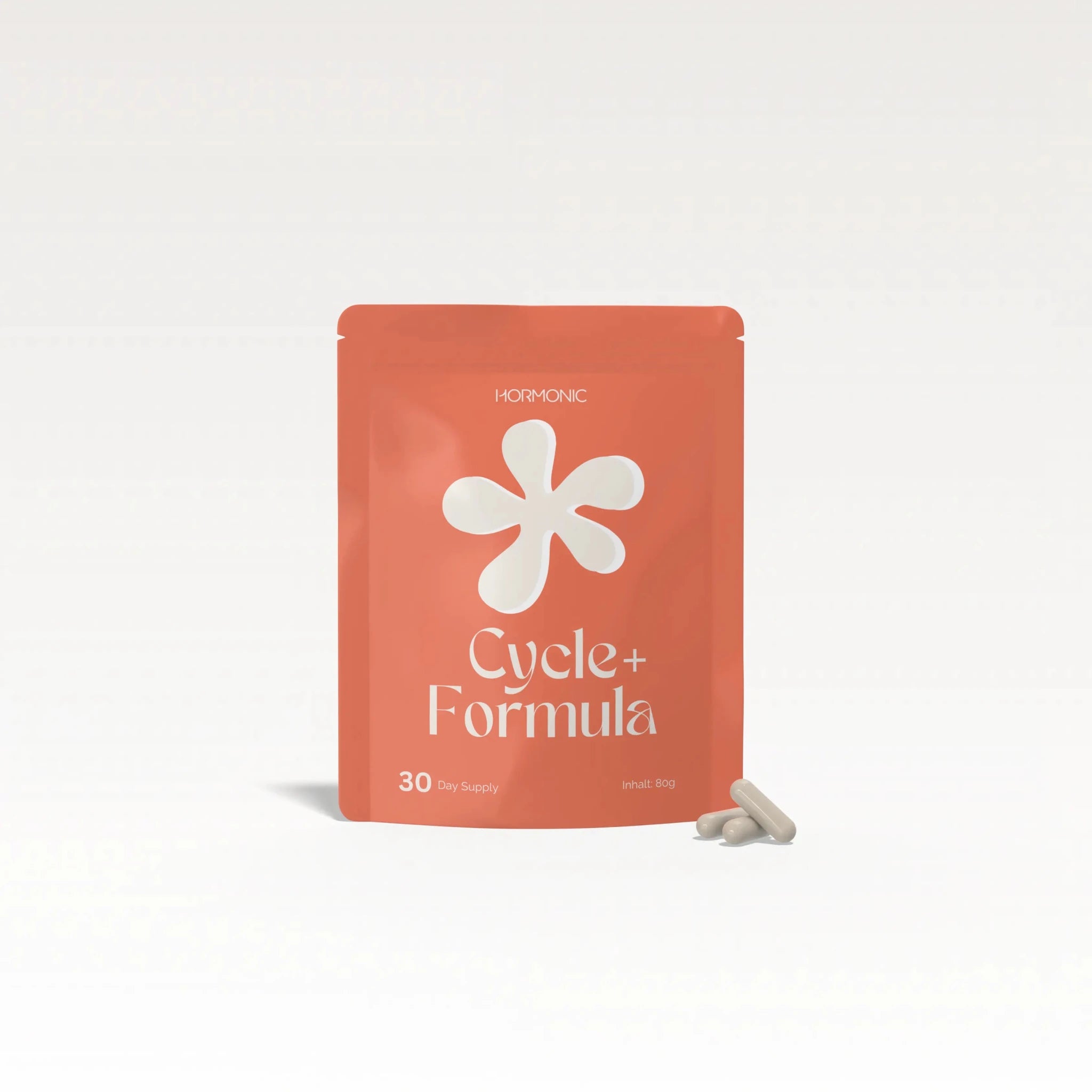
A low-glycemic diet, exercise, and weight management are the most powerful levers—and the most difficult to maintain on a daily basis. Cycle+ focuses precisely on the active ingredients with the strongest evidence in this article: myo- and d-chiro-inositol, studied in randomized trials for PCOS, combined with zinc, which helps maintain normal testosterone levels in the blood. Intended as a daily supplement to Hormonic Base, not as a replacement for medical treatment.
€75,00

You don't have to sort this out on your own. Speak to one of the Hormonic doctors, who specialize in PCOS and androgens, in a free 15-minute video call. Completely non-binding, from the comfort of your home, and with no waiting time: you ask your questions and receive an initial medical assessment on where to start for you.
Common Questions About Androgen Levels in Women
How do I know if I have elevated androgens?
Which blood tests are done for elevated androgens?
Kann ich Androgene ohne Bluttest senken?
Wie lange dauert es, bis Inositol Androgene senkt?
Hilft Spearmint-Tee auch bei Androgenen ohne PCOS?
Scientific Sources
- Pundir J, Psaroudakis D, Savnur P, et al. (2023). Efficacy and safety of anti-androgens in PCOS: systematic review and meta-analysis. EClinicalMedicine. doi:10.1016/j.eclinm.2023.102169
- Unfer V, Carlomagno G, Dante G, Facchinetti F. (2016). Effects of inositols in women with PCOS: systematic review of RCTs. Gynecol Endocrinol. doi:10.3109/09513590.2015.1101444
- Akdogan M, Tamer MN, Cure E, et al. (2007). Effect of spearmint herbal tea on androgen levels in PCOS: RCT. Phytother Res. doi:10.1002/ptr.2074
- Zamani M, Neghab N, Torabian S. (2012). Therapeutic effect of Mentha spicata on androgen levels in PCOS. Adv Biomed Res. PMID:23359226
- Sharma P, et al. (2024). Serum trace elements and PCOS risk. Biol Trace Elem Res. doi:10.1007/s12011-023-03664-6
- Jalal R, et al. (2020). Therapeutic effects of zinc on reproductive hormones and insulin resistance in PCOS. PMC7206839
About the Author

You might also be interested in this.

Vitamin D acts like a hormone and is important for insulin, the immune system, and the menstrual cycle. Why women with PCOS are particularly prone to deficiency and what really helps.
How does inositol work for PCOS, what do studies show regarding ovulation, testosterone, and insulin resistance, and what is a sensible dosage? The evidence-based overview.
Elevated testosterone levels in women, especially with PCOS, affect the cycle, skin, hair, and mood. This article presents evidence-based natural strategies, from circadian rhythm to insulin sensit...