



In women, testosterone can primarily be lowered by managing insulin: according to studies, strength training, a low-glycemic diet, sufficient sleep, and stress regulation are the most reliable methods because high insulin levels stimulate the ovaries to produce more androgens. Testosterone levels are elevated in 60 to 80 percent of women with PCOS. This article explains the underlying mechanisms and shows which natural approaches are scientifically proven and which are not. Elevated androgen levels should be medically evaluated.
"I thought my skin was just difficult." A patient I accompanied in a telemedicine consultation had for years put up with chin acne, a few dark hairs, and an irregular cycle. Only a blood test revealed what was behind it: elevated testosterone levels. For her, it was a relief because finally her body had an explanation, and most importantly, concrete starting points.
That's exactly what this is about: how to recognize a testosterone surplus and with which levers you can naturally lower elevated androgens. Honestly classified according to what research shows, without false promises.
Testosterone excess in women: Recognizing symptoms
Elevated testosterone levels often go undetected in women. Not because the symptoms are absent, but because they are often attributed to other causes. Acne is treated as a skin problem, hair loss as a symptom of stress, an irregular cycle is dismissed as normal. Yet, precisely these signs can indicate a testosterone excess.
The most common symptoms of elevated androgen levels in women:
- Acne: Especially in the chin and jaw area, as well as on the back. Testosterone stimulates the sebaceous glands; more sebum means more clogged pores and inflammation.
- Hair loss on the head (androgenetic): Elevated androgens, especially DHT, can miniaturize hair follicles on the scalp. The result: increasingly thinning hair at the temples and crown.
- Increased body or facial hair (hirsutism): Hair growth in areas typically considered male, such as the chin, upper lip, and abdomen. According to studies, about 70 to 80% of women with PCOS are affected.
- Irregular or absent cycle: Elevated androgens inhibit ovulation. Without ovulation, there is no luteal phase and insufficient progesterone, making the cycle irregular or absent.
- Mood swings and irritability: Less known but well-documented: elevated androgens can affect mood regulation.
These symptoms alone do not prove a testosterone excess. A diagnosis always requires a blood test. Below, we look at the levers that can naturally influence elevated androgens, starting with the circadian rhythm.
Cycle+ Formula: Support for Your Hormone Balance
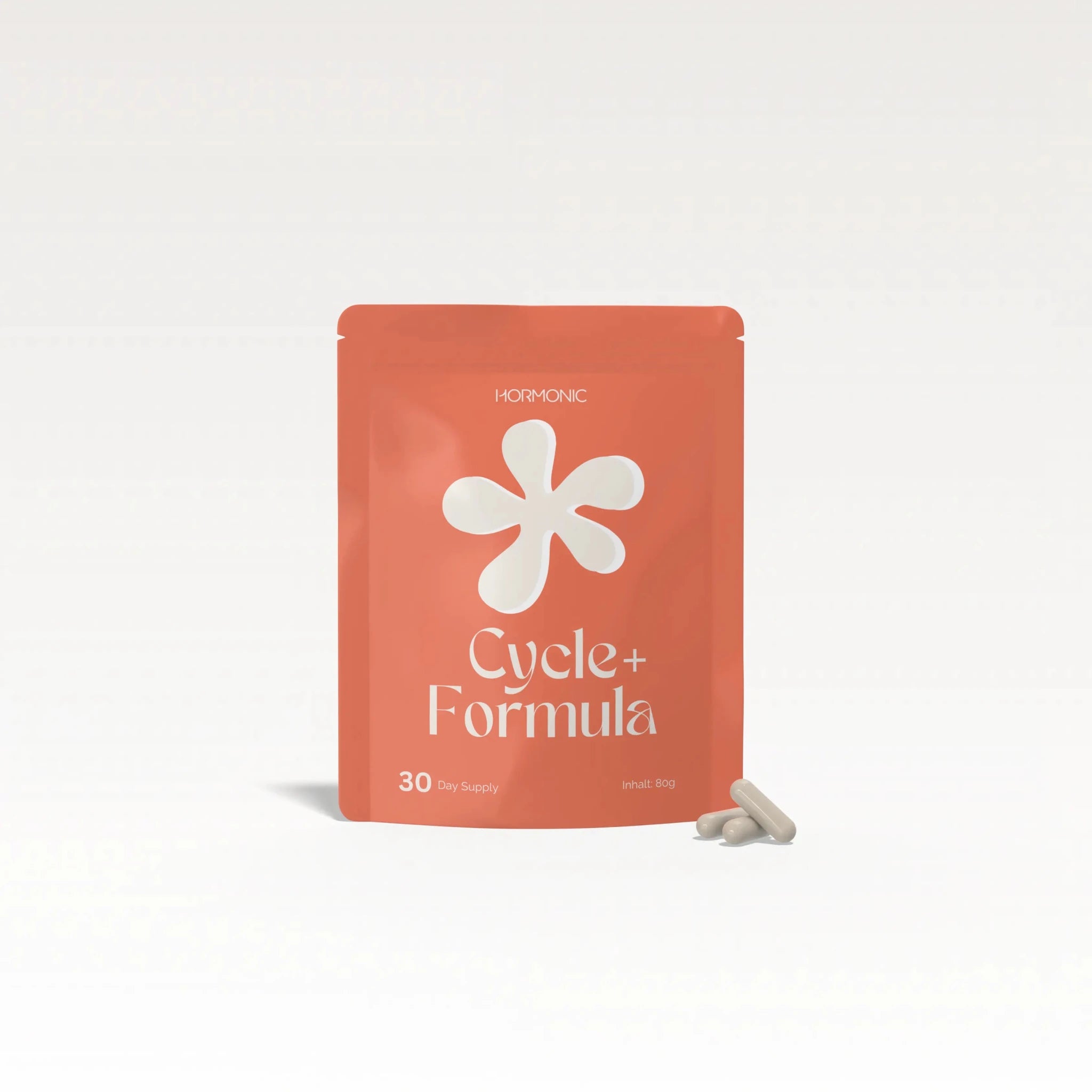
A stable insulin metabolism is one of the most important levers when it comes to elevated androgens. Cycle+ Formula provides Myo- and D-Chiro-Inositol, which can improve insulin sensitivity, as well as zinc, which contributes to normal hormone balance and protects cells from oxidative stress. Developed as a daily supplement to Hormonic Base for your cycle.
Discover Cycle+ Formula
Cycle+ Formula: For Insulin and Hormone Balance
Elevated androgens are often linked to insulin metabolism. Cycle+ Formula combines myo- and D-chiro-inositol with polyphenols like quercetin and trans-resveratrol, as well as zinc, which contributes to normal hormone balance and cell protection from oxidative stress. A thoughtful daily companion for your cycle, developed as a supplement to Hormonic Base.
€75,00

Are you struggling with PCOS alone? You don't have to.
Metabolic problems, hair loss, or a cycle that does what it wants: it's hard to make sense of. Book a free video consultation with one of the Hormonic doctors now. We listen, look at your symptoms together, and discuss sensible next steps.
Common Questions About High Testosterone in Women
What can be done about too much testosterone in women?
Is high testosterone dangerous in women?
Was senkt männliche Hormone bei Frauen?
Welche Lebensmittel senken Testosteron bei Frauen?
Wie schnell kann man Testosteron senken?
Scientific Sources
- Spritzer PM et al. Hirsutism and PCOS: prevalence and management. Front Horm Res.
- Grant P. Spearmint herbal tea has anti-androgen effects in PCOS. Phytother Res.
- Unfer V et al. Myo-inositol effects in women with PCOS: a meta-analysis. Gynecol Endocrinol.
- Jamilian M, Asemi Z. Chromium and PCOS: effects on metabolic and hormonal parameters. Biol Trace Elem Res.
About the Author

You might also be interested in this.

Vitamin D acts like a hormone and is important for insulin, the immune system, and the menstrual cycle. Why women with PCOS are particularly prone to deficiency and what really helps.

PCOS symptoms are varied – this article explains the four PCOS types in detail, shows typical signs and helps you to better identify your type.

Metabolism and hormones are closely linked in women. What studies say really helps with insulin resistance, weight, and during menopause.