


In the vast majority of cases, HPV is cleared by the body's own immune system: around 90 percent of infections are no longer detectable after one to two years, even without treatment. There is no therapy that directly removes the virus, so the focus is on immune competence and regular screening. Nevertheless, an HPV diagnosis catches many women off guard. This article explains what HPV is, why there is no direct therapy, and which factors truly support the immune system.
I vividly remember staring at my own diagnosis: HPV-positive. For a moment, there was only one thought, "Do I have cancer now?", and quite a shock. As a Research Fellow, I then did what I do best: I scoured through studies, one after another. What emerged was surprisingly reassuring, and this article was born precisely from that research. Here, I want to honestly explain what HPV truly means and what helps your immune system get rid of the virus.
An HPV diagnosis catches many women unprepared. Suddenly, a virus is present that can theoretically be linked to cancer. The most common question: How do I get rid of HPV? The medically correct answer is less spectacular than many internet promises but significantly more reassuring: In most cases, the body takes care of it all by itself.
90%
of HPV infections clear within 2 years
200+
known HPV types, most are harmless
0
direct antiviral medications for HPV
What HPV really is and why it usually disappears on its own
Some HPV types (e.g., 6 and 11) cause benign warts, while other high-risk types can, over time, initiate cell changes in the cervix. Approximately 90 percent of infections clear up within two years without treatment. A strong immune system recognizes infected cells and usually reliably destroys them. Regular screenings like the Pap smear help detect any cell changes early.
Why there is no direct HPV therapy
There is no medication that can directly kill HPV. HPV embeds itself in cells, and antiviral pills like those for herpes viruses do not exist for HPV. In practice, therefore, only the consequences of HPV are treated: genital warts can be removed, and abnormal cervical cell changes can be corrected through minor procedures.
Important to know
If cell changes are already detected in the Pap smear, the situation changes. A positive result means that HPV has already altered cells. Then it's no longer just about getting rid of HPV, but about targeted medical support and monitoring of the changes.
The most important factor: The immune system
The body itself is the best HPV fighter. People with weakened immune systems demonstrably develop persistent HPV infections much more frequently. Active T-cells are closely correlated with viral load and are crucial for elimination. The better the immune system is supported, the sooner it can deal with HPV.
What can actually help: Factors with evidence
There is no measure that guarantees to cure HPV. But there are proven factors that are associated with faster HPV regression in clinical studies. They do not act antivirally, but immunologically.
Strongest risk factor
Stop smoking
Smoking is one of the best-documented negative influencing factors. Nicotine and tobacco components reduce the activity of immune cells, impair local immune defense in the cervix, and measurably increase the HPV viral load. Women who smoke have an increased risk of persistent high-risk HPV infection. Quitting smoking demonstrably improves the immunological conditions for HPV regression.
Well-documented
Micronutrient supply
Folate (B9) and vitamin B12 play a central role in DNA synthesis, methylation, and repair of genetic damage. Low folate levels have been repeatedly associated with a higher risk of HPV persistence and cervical dysplasia. Vitamin D is an immunomodulator and influences T-cells, macrophages, and inflammation-regulating signaling pathways. Antioxidant nutrients like vitamins A, C, E, as well as zinc and selenium, support mucosal integrity and immune cell functions. A good supply creates conditions, not guarantees.
Developed by doctors
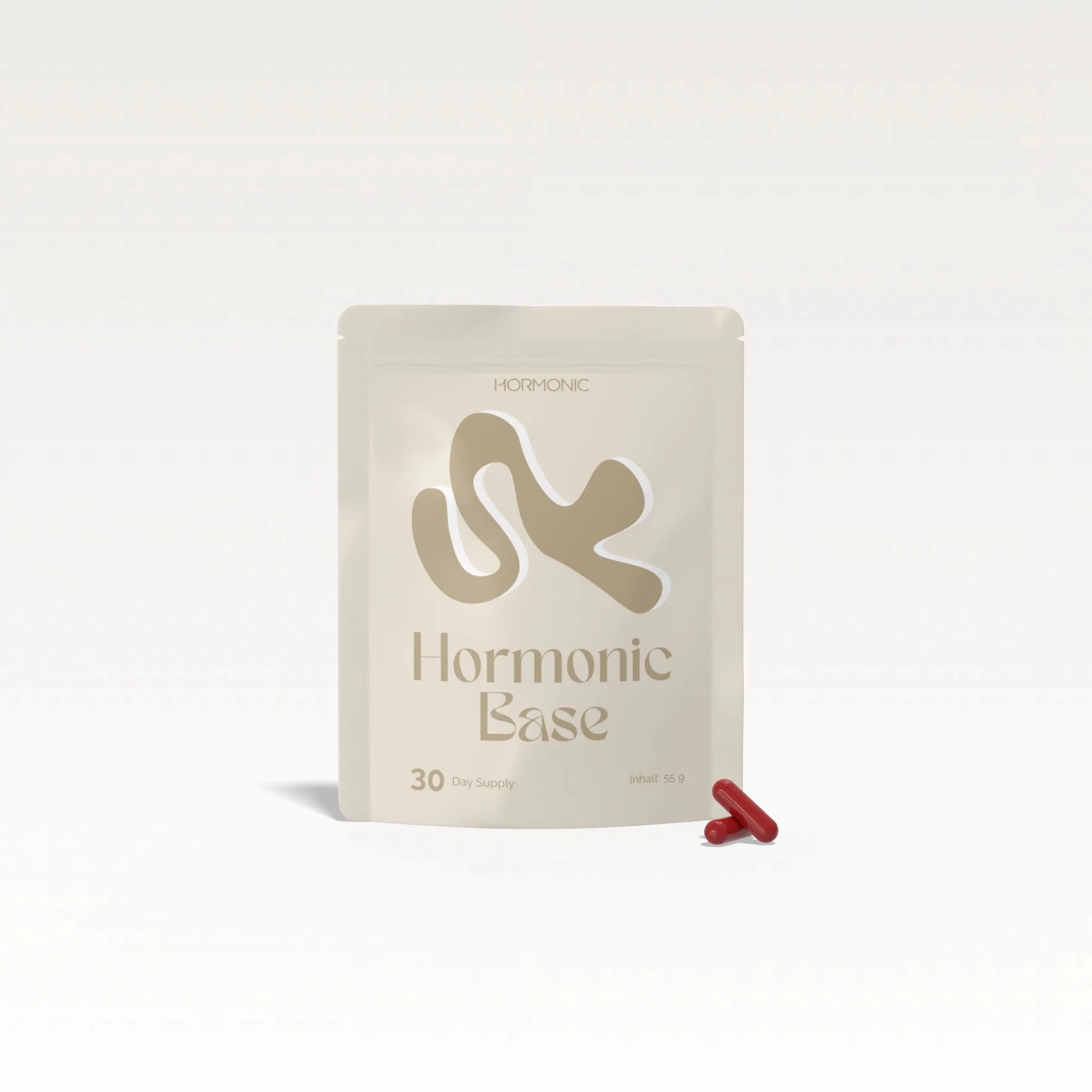
Hormonic Base: 16 micronutrients for your immune system
Hormonic Base contains folate, vitamin D, zinc, selenium, B12 and other clinically relevant micronutrients for immune function and hormonal health. Plant-based, lab-tested in Germany. Dietary supplements do not replace medical treatment.
Discover Hormonic BaseUnderestimated
Sleep and circadian rhythm
During sleep, immune cells regenerate and adaptive immune responses are stabilized. Large population-based studies show a higher HPV prevalence with chronic sleep deprivation and irregular sleep-wake rhythms. Crucial here is not only sleep duration but regularity. A stable rhythm supports precisely those T-cell-mediated processes that are necessary for the elimination of virus-infected cells.
Measurably relevant
Reduce chronic stress
Chronically elevated cortisol levels can weaken the HPV-specific T-cell response. Studies show that women with high chronic stress levels more often have persistent HPV infections. It's not about being stress-free, but about regulation: sufficient recovery periods, exercise, and sleep are immunologically relevant.
How quickly does HPV disappear? The timeframe
Typical course after HPV diagnosis
Naturally curing HPV: What doesn't work
- Papaya and similar foods: Observational studies show correlations, not causality. Papaya is a marker for health-conscious overall behavior, not an active ingredient against HPV.
- Detox and juice cleanses: HPV resides in cells, not freely in the blood. There is no biological mechanism by which detoxification programs could specifically remove the virus.
- Vaginal douches and HPV cures: These can disrupt the vaginal microflora and weaken local immune defenses rather than strengthen them.
- Immune system boosts through short-term high dosages: The immune system does not work like a muscle that can be briefly revved up. Immune function means balance, not maximal stimulation.
When medical supervision is indispensable
- Abnormal Pap smear result: If HPV has already caused cell changes, it's about targeted monitoring, not just waiting. A colposcopy may be necessary.
- High-risk HPV persists after 12 to 18 months: Does not automatically mean danger, but the course should be professionally monitored.
- Visible symptoms: Genital warts, unusual bleeding after sex, persistent unusual discharge, or pain should be investigated.
- Weakened immune system: In cases of immunosuppression due to medication or chronic diseases, HPV persistence is more likely and requires a clear monitoring plan.
Conclusion
HPV is not a personal failure and not an emergency
HPV is an extremely common viral infection that the body regulates itself in most cases, silently, over time, without drama. There is no quick cure because it is not biologically possible. What really matters: being smoke-free, getting good sleep, stress regulation, a good micronutrient supply, and consistent preventive screenings.
Knowledge, consistency, and monitoring are the strongest levers with HPV.
Hormonic Base: Micronutrients for Your Immune System
A well-supported immune system is the most important factor for HPV. Hormonic Base provides zinc, selenium, and vitamin D, which contribute to the normal function of the immune system, as well as folate, which plays a role in cell division. Not a cure for HPV, but a well-thought-out daily foundation for your immune system.
€65,00

Questions about your HPV findings?
In a free 15-minute consultation, you can ask our doctors your questions about findings, prevention, and next steps, with no obligation.
Frequently Asked Questions about HPV
Is it bad to be HPV positive?
Do you have HPV for life?
Was kann man selbst gegen HPV tun?
Wann muss ich zur Ärztin wegen HPV?
Helfen Nahrungsergänzungsmittel gegen HPV?
Scientific Sources
- Doorbar J, Egawa N, Griffin H, Kranjec C, Murakami I. The biology and life-cycle of human papillomaviruses. Vaccine, 2015;33(Suppl 1):A21-A26.
- Schiffman M, Wentzensen N. Human papillomavirus infection and the multistage carcinogenesis of cervical cancer. Cancer Epidemiol Biomarkers Prev, 2013;22(4):553-560.
- Moscicki AB, Schiffman M, Kjaer S, Villa LL. Updating the natural history of human papillomavirus and anogenital cancers. Vaccine, 2006;24(Suppl 3):S42-S51.
- Xi LF, Koutsky LA, Castle PE, et al. Relationship between cigarette smoking and human papillomavirus type 16 and 18 DNA load. Cancer Epidemiol Biomarkers Prev, 2009;18(12):3490-3496.
- Giuliano AR, Sedjo RL, Roe DJ, et al. Clearance of oncogenic HPV infection: Effect of smoking. Cancer Causes Control, 2003;13(9):839-846.
- Fang CY, Miller SM, Bovbjerg DH, et al. Perceived stress is associated with impaired T-cell response to HPV16 in women with cervical dysplasia. Psychosom Med, 2008;70(4):428-436.
- Chen L, Deng Y, Li J, Wang Y, Zhang X. Association between sleep duration and human papillomavirus infection. BMC Public Health, 2023;23:114.
- Piyathilake CJ, Henao OL, Macaluso M, et al. Folate deficiency is associated with high-risk HPV infection and cervical intraepithelial neoplasia. Cancer, 2004;101(10):2308-2316.
- Sedjo RL, Roe DJ, Abrahamsen M, et al. Vitamin A, carotenoids, and risk of persistent oncogenic HPV infection. Cancer Epidemiol Biomarkers Prev, 2002;11(9):876-884.
- Zhang Z, Zhang L, Zhou X, Zhang Y, Li Q. Vitamin D deficiency and cervical cancer risk: A systematic review and meta-analysis. J Nutr Sci Vitaminol, 2020;66(5):416-425.
- Stanley M. Immunobiology of HPV and HPV vaccines. Gynecol Oncol, 2012;127(2):273-277.
About the Author

You might also be interested in this.
The pill can lower folate, B vitamins, magnesium, zinc, and other micronutrients. Find out which ones are affected, what symptoms this causes, and how you can specifically protect your supply.

The thyroid gland is a central player in the body’s hormonal system and regulates a wide range of physiological processes — including the menstrual cycle. Disorders such as hypothyroidism and hyper...

Vitamin D acts like a hormone and is important for insulin, the immune system, and the menstrual cycle. Why women with PCOS are particularly prone to deficiency and what really helps.