
Cart

Your cart is empty

Continue shopping

Popular searches

Featured products

Hormonal Base
Sale price€65,00
(5.0)
Midlife balance
Sale price€75,00
(5.0)
Myo-Inositol bei PCOS: Wirkung, Studien & Dosierung
FruchtbarkeitMay 31, 202610 min read

Myo-inositol for PCOS: Effects, Studies & Dosage

This article is part of: PCOS: The Comprehensive Guide to Causes, Symptoms, and Treatment

Many women with PCOS have heard of inositol, but hardly anyone explains to them how it actually works in the body. Inositol is not a miracle cure, but it is one of the best-researched supplements for PCOS, with data on insulin resistance, cycle regulation, and androgens. This article presents the current state of research, realistic expectations, and what the most important studies truly show.

Key takeaways
  • In clinical trials, the typical dosage was around 4g of myo-inositol per day, usually divided into two doses.
  • A meta-analysis of 9 RCTs and 496 women showed significant reductions in fasting insulin and HOMA-IR (Unfer et al. 2017).
  • 26 RCTs with 1,691 women suggest an almost twofold higher probability of regular cycles with inositol versus placebo (Greff et al. 2023).
  • Initial changes in insulin and androgens are measurable after 8 to 12 weeks; cycle and ovulation usually take 3 to 6 months.
  • The international PCOS guideline 2023 rates the evidence as limited but considers inositol a reasonable option with good tolerability.
Many women with PCOS have heard the term inositol before, often in connection with fertility wishes, fertility, or cycle problems. What few people know: Inositol is not a vitamin, but a substance that your body produces itself and which plays a central role in insulin signal transmission. This is exactly where its effect on PCOS comes in.

What is inositol and how does it work for PCOS?

In short: Myo-inositol and D-chiro-inositol are endogenous molecules that are involved as messengers in insulin action. In PCOS, this mechanism often does not work optimally. Studies show that a supplementary intake can improve insulin sensitivity, positively influence the LH/FSH ratio, and in many cases support ovulation.

Inositol belongs to the group of sugar alcohols and occurs in nine different forms. Two of them are crucial for PCOS: myo-inositol, by far the most common form in the body, and D-chiro-inositol, which is formed from myo-inositol by an insulin-dependent enzyme. Both are absorbed daily in small quantities through food, such as from whole grains, legumes, and citrus fruits, and are also synthesized by the body itself from glucose.

Within the cell, both forms act as so-called secondary messengers of insulin action. Simply put: when insulin binds to its receptor, inositol takes over part of the internal signal transmission. Myo-inositol is primarily involved in glucose uptake, D-chiro-inositol in glycogen synthesis. In insulin resistance, as it occurs in many forms of PCOS, this system is disrupted.

Mechanism of action

1

Inositol supports insulin signaling pathways in muscle, fat, and liver tissue. The cells respond better to insulin again.

2

Less insulin in the blood means less stimulation of the theca cells in the ovaries, which produce more androgens under insulin.


3

Decreasing androgens and a normalized LH/FSH ratio create the prerequisites for more regular cycles and ovulations.

Sources: Genazzani 2016; Bevilacqua & Bizzarri 2018.

In the ovaries, there is also a separate metabolic pathway. Myo-inositol supports FSH signaling and thus the maturation of egg cells. D-chiro-inositol acts differently in the ovary than in the rest of the body and can even be counterproductive in too high amounts. Detailed background information on hormonal regulation can be found in the PCOS Guide.

What do the studies show?

The body of research on inositol for PCOS grows every year. Most studies are small to medium-sized randomized studies from the last 20 years. A large phase 3 study, like for classic medications, is missing. Nevertheless, a consistent picture emerges in the meta-analyses.

Meta-analysis

Unfer et al. 2017

9 RCTs with 496 women. Myo-inositol significantly lowered fasting insulin and HOMA-IR compared to controls. Testosterone showed a trend in the same direction.

DOI: 10.1530/EC-17-0243

Ovulation

Pkhaladze et al. 2016

In a study of 61 adolescent PCOS patients, myo-inositol significantly improved weight, insulin, HOMA-IR, free testosterone, and LH, also compared to the pill.

DOI: 10.1155/2016/1473612

AMH

Özay et al. 2016

137 women, randomized to myo-inositol plus folic acid or combined hormonal treatment. Myo-inositol lowered AMH and ovarian volume significantly more.

DOI: 10.1155/2016/3206872

Testosterone

Costantino et al. 2009

Double-blind RCT with 42 women. Total testosterone decreased significantly with 4g myo-inositol plus 400µg folic acid, insulin sensitivity improved, 16 out of 23 women ovulated.

PMID: 19499845

Cycle

Greff et al. 2023

Large meta-analysis with 26 RCTs and 1,691 women. Inositol increased the probability of a regular cycle by a factor of 1.79 compared to placebo.

DOI: 10.1186/s12958-023-01055-z

Guideline

Fitz et al. 2024

Systematic review for the international PCOS guideline 2023. 30 studies, cautious assessment: Inositol can be useful, but the evidence is classified as limited.

DOI: 10.1210/clinem/dgad762
Did you know?

Inositol is not a classic vitamin, but a sugar-like molecule that your body can even produce itself from glucose. In women with PCOS, this metabolic pathway is often disrupted, so the body's own production is insufficient. This is precisely why researchers have been interested in targeted supplementation since the 1990s.

Who is Inositol particularly relevant for?

PCOS is not a uniform condition. In practice, various forms can be distinguished, and inositol is not equally suitable for all of them.

Inositol has been particularly well-studied for the insulin-resistant form of PCOS. This includes women with elevated fasting insulin, an abnormal HOMA-IR, carbohydrate cravings, or a tendency to rapid weight gain in the abdominal area. Lean PCOS can also be insulin-associated, even without being overweight. In the studies by Pkhaladze and Costantino, it was precisely these women who benefited most significantly.

For so-called adrenal PCOS, where androgens primarily originate from the adrenal gland, meaning mainly DHEA and DHEA-S are elevated, the evidence for inositol is weaker. Here, the causes are often more related to stress and the cortisol system. You can read more about this in the article on naturally lowering androgens in women.

Inositol is also frequently discussed after discontinuing the pill when the cycle does not return. However, direct studies on this specific setting are lacking.

Inositol can also be interesting for women who do not tolerate Metformin, for example due to gastrointestinal complaints, or who first want to try an option without a prescription medication. The decision should be discussed with your doctor.

Dosage: How much, how often, and with what should Myo-Inositol be combined?

In the vast majority of studies, a daily dose of 2 g of Myo-Inositol was investigated. This dose has proven effective and well-tolerated in RCTs.

Inositol can be taken with or between meals. Those who want to monitor the effect on blood sugar may benefit from taking it with a main meal, but uniform study data on this is lacking.

What to combine: In most studies, Myo-Inositol was used together with 200 to 400 µg of folic acid. For women trying to conceive, the folic acid dose should be adjusted in consultation with the doctor, often to 400 to 800 µg.

Sensible combinations from the literature:

  • Inositol plus D-Chiro-Inositol: Most studies use a combination of both forms in physiological composition. It is important that Myo-Inositol clearly predominates, as high amounts of pure D-Chiro-Inositol can be counterproductive.
  • Inositol plus Folic Acid: Standard combination in most studies.
  • Inositol plus Alpha-Lipoic Acid: Used in some studies as an additional insulin sensitizer, but the evidence specifically for PCOS is limited.
  • Inositol plus Vitamin D: Vitamin D deficiency is common in PCOS. Studies show that the combination can further improve metabolic markers, but a blood vitamin D level should be known.

The Hormonic Cycle Bundlecombines all these active ingredients, along with many other cycle and hormone-relevant botanicals. Developed by doctors and produced in Austria.

Inositol vs. Metformin: What does the research say?

Metformin has been the standard pharmacological treatment for insulin-resistant PCOS for decades. Inositol is increasingly being discussed as an alternative or supplement.

Several studies have directly compared both. A meta-analysis by Facchinetti et al. 2019, including six studies, showed comparable effects on BMI, HOMA-IR, fasting insulin, testosterone, androstenedione, and SHBG. In an RCT by Raffone et al. 2010, 65 percent of women ovulated with Myo-Inositol, compared to 50 percent with Metformin, with better tolerability. Fruzzetti et al. 2017 confirmed this picture: similar efficacy, fewer side effects with Inositol.

An important difference is tolerability. Metformin causes gastrointestinal complaints in about one-third of users, which often only disappear after weeks or lead to discontinuation. According to study data and the 2024 international guideline analysis, Inositol is significantly better tolerated.

What does this mean in practice? Inositol is not a substitute for Metformin in every situation, but an option with a convincing safety profile. In cases of pronounced insulin resistance, manifest prediabetes, or type 2 diabetes, Metformin often remains the first medical choice. The decision should be in the hands of your treating physician.

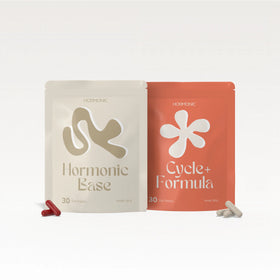
Cycle+ Formula: Smartly combined inositol

Hormonic Cycle+ Formula contains myo-inositol and D-chiro-inositol, along with other PCOS-relevant micronutrients. Doctor-developed, produced in Austria, and loved by thousands of women.

€75,00
Save 20% with a subscription

How long does Myo-inositol take to work?

Those taking inositol should have realistic expectations. It is not a switch, but a metabolic effect that takes time. For this reason, consistent, long-term intake is important, as is the awareness that you will not feel effects directly.

The following progression is observed in studies. First changes in fasting insulin, HOMA-IR, and LH can often be measured as early as 8 to 12 weeks. Visible effects on testosterone and free testosterone usually appear within 12 to 24 weeks. A normalization of the cycle and a return of ovulation are realistic after 3 to 6 months, and in the retrospective analysis by La Marca et al. 2015, improvements even continued for up to 15 months.

In practical terms, this means: A first laboratory check is advisable after about 12 weeks. Useful measurements include fasting insulin, fasting glucose, HOMA-IR, total testosterone, SHBG, free androgen index, and AMH depending on the specific question. A second check after 6 months will show whether the trend is confirmed.

If no noticeable change in symptoms or values is seen after 6 months, you should discuss with your doctor whether the active ingredient is suitable for your specific form of PCOS or whether other factors such as thyroid, vitamin D, sleep, or chronic stress are playing a role.

Side effects of Myo-inositol and who should be careful

Inositol is one of the best-tolerated supplements for PCOS. Overall, very few side effects have been reported in clinical studies. If something does occur, it is usually mild gastrointestinal complaints such as bloating, nausea, or loose stools, especially at dosages above 4 g per day. Mild headaches, dizziness, or fatigue are rare. Severe side effects have not been observed in the available PCOS studies.

Caution is advisable in some situations:

  • When taken concurrently with metformin or insulin, the blood sugar-lowering effect can be additive. Medical supervision and, if necessary, adjustment of medication are important.
  • High amounts of pure D-chiro-inositol without myo-inositol are suspected of impairing egg quality and increasing androgens (Bevilacqua et al. 2021). Therefore, look for products in which myo-inositol clearly predominates.
  • According to current data, myo-inositol is considered safe during pregnancy; several studies even suggest a reduced rate of gestational diabetes (D'Anna et al. 2012, 2015). Nevertheless, intake during pregnancy and breastfeeding should always be coordinated with a doctor.
  • In bipolar disorders, very high doses from psychiatry are described as possibly mood-stabilizing, but at dosages far above the amounts used for PCOS.

Unsure if inositol is right for your PCOS type?

Our medical team will assess your current situation with you to jointly develop the best plan for you.

Book a free consultation call

The Most Important Information at a Glance

Myo-inositol is an endogenous substance that acts as a secondary messenger in insulin action and can be specifically supplemented for PCOS. Studies consistently show a favorable effect on insulin resistance, fasting insulin, and HOMA-IR, with indications of better cycle regulation and lower androgen levels. Initial effects appear in laboratory tests after 8 to 12 weeks, while cycle and ovulation often normalize only after 3 to 6 months. Compared to metformin, inositol is significantly better tolerated with similar efficacy, but it does not replace metformin in every clinical situation.

Frequently Asked Questions about Myo-Inositol

How does inositol work for PCOS?

Inositol primarily acts on PCOS through insulin signaling pathways. Studies show that myo-inositol can improve insulin sensitivity and thus indirectly reduce ovarian androgen production. Since many women with PCOS have insulin resistance, their menstrual cycle often benefits as well, because less insulin stimulates the ovaries less strongly to produce testosterone. In clinical studies, fasting insulin and HOMA-IR also significantly decreased, and testosterone and the LH/FSH ratio tended to improve.

How long do you have to take inositol for PCOS?

In most studies, inositol was taken for 12 weeks to 6 months. Initial changes in insulin and hormones can often be seen in laboratory tests after 8 to 12 weeks, while cycle and ovulation typically take 3 to 6 months. Those who wish to use inositol for a longer period can do so according to studies, with a check of values every 3 to 6 months being advisable. A fixed maximum duration is not defined in the studies.

Can inositol be taken long-term?

Most studies run for 12 weeks to 6 months, with some observational data extending up to 15 months. Severe side effects with longer-term use have not been reported so far. Since PCOS is a chronic condition, longer-term use as a supportive strategy is possible but should be regularly monitored. Laboratory checks every 3 to 6 months and a medical assessment of the course are advisable.

Does inositol help even without PCOS?

Inositol has not only been studied in PCOS. There is data on gestational diabetes, metabolic syndrome, and to a lesser extent, mood and sleep. For women without PCOS, but with insulin resistance or prediabetes, inositol may be beneficial after individual consideration. As a wellness product without a specific indication, there is no robust evidence. A regular diet typically covers around 1g per day.

Inositol for PCOS and fertility: What's proven?

Several studies suggest that myo-inositol can improve oocyte quality and ovulation rate in PCOS. However, the 2018 Cochrane review classifies the evidence for live births and clinical pregnancies as very low quality. It has been proven that inositol can make the cycle more regular, which is a prerequisite for ovulation. For women actively trying to conceive, inositol use should be managed by a team experienced in reproductive medicine.

Scientific Sources

  • Unfer V, Facchinetti F, Orrù B, Giordani B, Nestler J. Myo-inositol effects in women with PCOS: a meta-analysis of randomized controlled trials. Endocrine Connections, 2017;6(8):647-658.
  • Unfer V, Nestler JE, Kamenov ZA, Prapas N, Facchinetti F. Effects of Inositol(s) in Women with PCOS: A Systematic Review of Randomized Controlled Trials. International Journal of Endocrinology, 2016.
  • Greff D, Juhász AE, Váncsa S, et al. Inositol is an effective and safe treatment in polycystic ovary syndrome: a systematic review and meta-analysis. Reproductive Biology and Endocrinology, 2023;21(1):10.
  • Fitz V, Graca S, Mahalingaiah S, et al. Inositol for Polycystic Ovary Syndrome: A Systematic Review and Meta-analysis to Inform the 2023 PCOS Guidelines. Journal of Clinical Endocrinology and Metabolism, 2024;109(6):1630-1655.
  • Showell MG, Mackenzie-Proctor R, Jordan V, Hodgson R, Farquhar C. Inositol for subfertile women with polycystic ovary syndrome. Cochrane Database of Systematic Reviews, 2018.
  • Costantino D, Minozzi G, Minozzi E, Guaraldi C. Metabolic and hormonal effects of myo-inositol in women with PCOS: a double-blind trial. European Review for Medical and Pharmacological Sciences, 2009;13(2):105-110.
  • Genazzani AD, Lanzoni C, Ricchieri F, Jasonni VM. Myo-inositol administration positively affects hyperinsulinemia and hormonal parameters in overweight patients with PCOS. Gynecological Endocrinology, 2008;24(3):139-144.
  • Papaleo E, Unfer V, Baillargeon JP, et al. Myo-inositol in patients with polycystic ovary syndrome: a novel method for ovulation induction. Gynecological Endocrinology, 2007;23(12):700-703.
  • Özay ÖE, Özay AC, Çağlıyan E, Okyay RE, Gülekli B. Different Effects of Myoinositol plus Folic Acid versus Combined Oral Treatment on Androgen Levels in PCOS Women. International Journal of Endocrinology, 2016.
  • La Marca A, Grisendi V, Dondi G, Sighinolfi G, Cianci A. The menstrual cycle regularization following D-chiro-inositol treatment in PCOS women: a retrospective study. Gynecological Endocrinology, 2015;31(1):52-56.
  • Fruzzetti F, Perini D, Russo M, Bucci F, Gadducci A. Comparison of two insulin sensitizers, metformin and myo-inositol, in women with PCOS. Gynecological Endocrinology, 2017;33(1):39-42.
  • Genazzani AD. Inositol as putative integrative treatment for PCOS. Reproductive BioMedicine Online, 2016;33(6):770-780.
  • D'Anna R, Di Benedetto A, Scilipoti A, et al. Myo-inositol Supplementation for Prevention of Gestational Diabetes in Obese Pregnant Women. Obstetrics and Gynecology, 2015;126(2):310-315.
  • Pundir J, Psaroudakis D, Savnur P, et al. Inositol treatment of anovulation in women with PCOS: a meta-analysis of randomised trials. BJOG, 2018;125(3):299-308.

About the Author

Lisa Maria Emmer

Lisa Maria Emmer

Physician & Chief Medical Officer · Hormonic

Lisa Maria Emmer is co-founder and medical director at Hormonic. She supports women with hormonal problems every day and specializes in cycle health, PCOS, and menopause.

This article is based on current scientific work (as of 2026). It is for informational purposes only and does not replace medical advice or treatment. The use of inositol for PCOS, during pregnancy, or with existing medication should be under the supervision of a qualified physician.

Share

You might also be interested in this.

PCOS: Der Guide zu Ursachen, Symptomen und Behandlung
PCOSMay 27, 20267 min read
PCOS: The Comprehensive Guide to Causes, Symptoms, and Treatment

PCOS, now also known as PMOS, affects 8 to 13 percent of women of reproductive age. This guide explains causes, symptoms, diagnosis, and what the evidence says about lifestyle, inositol, and micron...

Androgene bei Frauen natürlich senken: Was wirklich hilft
PCOSMay 31, 20268 min read
Androgene bei Frauen natürlich senken: Was wirklich hilft

Erhöhte Androgene äußern sich durch Akne, Haarausfall und Zyklusstörungen. Was biologisch dahintersteckt und welche Maßnahmen evidenzbasiert wirksam sind.

PCOS und Stress: Verursacht Cortisol PCOS?
PCOSAug 29, 20246 min read
Is PCOS caused by stress?

Polycystic ovary syndrome (PCOS) is considered one of the most common endocrinological disorders in women of childbearing age. While current medical guidelines traditionally emphasize genetic and m...