


PCOS is considered one of the most common hormonal disorders in women of reproductive age. Genetic and metabolic causes are traditionally emphasized. However, an intriguing question is increasingly coming into focus: Does chronic stress cause PCOS, or does it merely exacerbate it? We honestly evaluate the current research.
According to current studies, stress is associated with PCOS and can exacerbate symptoms. That stress directly causes PCOS is currently a hypothesis, not proven. The 2025 guideline of the German Society for Endocrinology describes PCOS as multifaceted, with genetic, ovarian, and metabolic factors.
How stress affects hormone balance
Under stress, the body activates the hypothalamus-pituitary-adrenal axis, or HPA axis. The result is an increased release of cortisol and other stress hormones. Studies show that women with PCOS often have a more activated HPA axis, with increased cortisol production, especially during the morning cortisol awakening response.
Theoretically, chronic cortisol excess can worsen insulin resistance and stimulate androgen production, both typical features of PCOS. This makes the hypothesis plausible that stress at least acts as an exacerbating factor. However, plausible is not the same as proven.
The most interesting question is not whether stress and PCOS are related, but in which direction.
chronic stress can not only shift hormones but also alter the brain? Research describes changes in the hippocampus, a region for memory and emotions, with persistent stress. Similar changes are observed in PCOS, indicating a close interplay that goes beyond mere hormone levels.
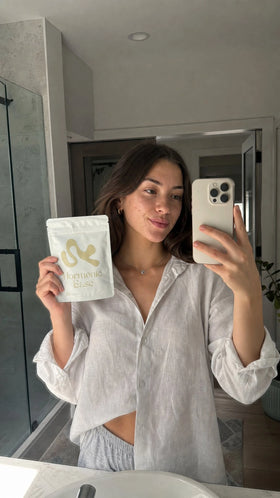
Hormonic Base as a daily foundation
Hormonic Base provides 16 micronutrients, including magnesium, vitamin D, zinc, and folate, which support a balanced hormonal environment. A calm, daily base, especially during stressful periods.
€65,00

PCOS, stress, and sleep are interconnected. In a personal, free initial consultation, we will medically assess your situation and answer all your questions. Conveniently from home via video call.
Frequently Asked Questions about PCOS and Stress
Can stress cause PCOS?
Why do women with PCOS often have elevated cortisol?
Welche Rolle spielt Schlaf bei PCOS?
Ist der Zusammenhang zwischen Stress und PCOS Ursache oder Wirkung?
Scientific Sources
- German Society for Endocrinology (2025). S2k Guideline Diagnostics and Therapy of Polycystic Ovary Syndrome (PCOS). AWMF Register Number 089-004l.
- Anderson G. et al. (2024). Polycystic Ovary Syndrome Pathophysiology: Integrating Systemic, CNS and Circadian Processes. Frontiers in Bioscience (Landmark), 29(1), 24. doi:10.31083/j.fbl2901024
- Circadian rhythm disruption and polycystic ovary syndrome: a systematic review and meta-analysis (2025). F&S Reviews / ScienceDirect. doi:10.1016/j.xfnr.2025.100096
- Cooney L.G. et al. (2017). High prevalence of moderate and severe depressive and anxiety symptoms in polycystic ovary syndrome: a systematic review and meta-analysis. Human Reproduction, 32(5), 1075-1091.
- Gutierrez Nunez S. et al. (2025). Chronic Stress and Autoimmunity: The Role of HPA Axis and Cortisol Dysregulation. International Journal of Molecular Sciences, 26(20), 9994. doi:10.3390/ijms26209994
About the Author

You might also be interested in this.

Apigenin is a plant-based flavonoid found in chamomile, parsley, and celery. Here is what research says about its effects on sleep, hormones, PCOS, and inflammation, and who it is suitable for.

PCOS and a desire to have children? Learn which levers really improve your fertility with PCOS, according to science: lifestyle, nutrients, and medical support.

How does inositol work for PCOS, what do studies show regarding ovulation, testosterone, and insulin resistance, and what is a sensible dosage? The evidence-based overview.