


PCOS is one of the most common hormonal disorders in women of childbearing age and can disrupt ovulation. Pregnancy is usually still possible, however. This article shows, based on evidence, which levers truly work.
Polycystic ovary syndrome (PCOS) is one of the most common hormonal disorders affecting women of reproductive age, with approximately 10% of women impacted. PCOS can disrupt ovulation, making it harder to conceive. The good news is that pregnancy is possible for most women with PCOS. Here you’ll learn what really works according to current research, and what is more hocus pocus. Many of the fundamentals for increasing fertility naturally also apply regardless of PCOS.
The Vicious Cycle of Insulin, Androgens, and Ovulation
Understanding the mechanics behind PCOS reveals where the effective levers lie. Three factors intertwine and reinforce each other:
Cells respond less effectively to insulin. The body produces more of it to regulate blood sugar.
High insulin levels stimulate the ovaries to produce more testosterone and other androgens.
Egg maturation is disrupted, cycles lengthen, and ovulations become less frequent or cease entirely.
This is precisely where most effective measures come into play: they interrupt this cycle by improving insulin sensitivity. This indirectly lowers the androgen load and can restore ovulation.
Healthy Lifestyle: The First and Most Important Step
International guidelines agree: adapting diet and exercise forms the basis of PCOS treatment for women trying to conceive. This is particularly beneficial if you are overweight.
Weight Reduction: Small Steps, Big Impact
Even a 5-10% reduction in body weight can positively influence hormone balance, regularize the cycle, and restore ovulation. In one study, approximately 70% of women with PCOS resumed ovulation after such weight loss. This is easier said than done, as PCOS often comes with insulin resistance and a tendency to gain weight. Nevertheless, every small step forward counts.
Nutrition: Insulin-Friendly Instead of Restrictive
An insulin-friendly diet keeps blood sugar more stable and can reduce insulin resistance. A low-glycemic index (low-GI) diet has proven particularly effective. In a randomized study, 24.6% of cycles were ovulatory in PCOS women on a low-GI diet, compared to only 7.4% on a conventional diet. Practically, this means fiber-rich whole grains, vegetables, and legumes, and fewer fast sugars and highly processed carbohydrates. The Mediterranean diet also appears beneficial for those trying to conceive. Extreme crash diets, on the other hand, are counterproductive because they further stress the body.
Exercise: The Insulin Lever
Physical activity improves insulin sensitivity and aids in weight loss. Even 30 minutes of moderate exercise per day can make a big difference, as exercise lowers insulin levels and thus relieves the ovaries. An ideal combination includes both endurance and strength training. The most important thing is to find something you enjoy and can maintain regularly. A pleasant side effect is that exercise reduces stress, which can further exacerbate hormonal imbalances.
Not all women with PCOS are overweight. Lean individuals affected by PCOS benefit just as much; here, the focus is on improving metabolism, not weight loss.
Your Daily Companion for Healthy Hormones
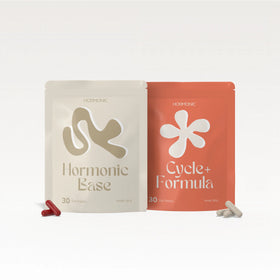
The duo of Hormonic Base and Cycle+ provides you with over 20 essential micronutrients, including myo-inositol, folic acid, vitamin D, coenzyme Q10, and NAC, which have been studied in connection with hormonal balance and fertility. Your daily support on the journey to your desired child.
€125,00

You don't have to walk the path alone
Our specialized doctors at Hormonic will gladly support you on your journey. In our free, digital initial consultation, you can ask all your questions and see if Hormonic is right for you. No obligation, no waiting time, conveniently from home.
Frequently Asked Questions about Fertility in PCOS
Can I get pregnant with PCOS?
How long does it take to get pregnant with PCOS?
Welche Vitamine und Nährstoffe helfen bei Kinderwunsch und PCOS?
Was ist bei Kinderwunsch besser: Metformin oder Myo-Inositol?
Hilft Abnehmen wirklich bei PCOS-Fruchtbarkeitsproblemen?
Scientific Sources
- Teede HJ et al. (2023). Recommendations from the 2023 International Evidence-based Guideline for the Assessment and Management of PCOS. Hum Reprod. doi:10.1093/humrep/dead156
- Legro RS et al. (2014). Letrozole versus Clomiphene for Infertility in the Polycystic Ovary Syndrome. N Engl J Med, 371, 119-129. doi:10.1056/NEJMoa1313517
- Marshall JC, Dunaif A (2012). Should all women with PCOS be treated for insulin resistance? Fertil Steril, 97(1), 18-22. doi:10.1016/j.fertnstert.2011.11.036
- Marsh KA et al. (2010). Effect of a low glycemic index compared with a conventional healthy diet on PCOS. Am J Clin Nutr, 92(1), 83-92. doi:10.3945/ajcn.2010.29261
- Regidor PA, Schindler AE (2016). Myoinositol as a Safe and Alternative Approach in the Treatment of Infertile PCOS Women. Int J Endocrinol, 2016, 9537632. doi:10.1155/2016/9537632
- Morley LC et al. (2017). Insulin-sensitising drugs (metformin, rosiglitazone) for women with PCOS. Cochrane Database Syst Rev. doi:10.1002/14651858.CD003053.pub6
About the Author

You might also be interested in this.

How harmful are blood sugar spikes in healthy women really, and do you need a CGM? An honest, evidence-based look behind the glucose hype, including cycle and menopause effects.

PCOS, now also known as PMOS, affects 8 to 13 percent of women of reproductive age. This guide explains causes, symptoms, diagnosis, and what the evidence says about lifestyle, inositol, and micron...

Intermittent fasting can improve insulin resistance and lower active testosterone in PCOS. What a recent Nature Medicine study shows and who the protocol is suitable for.