


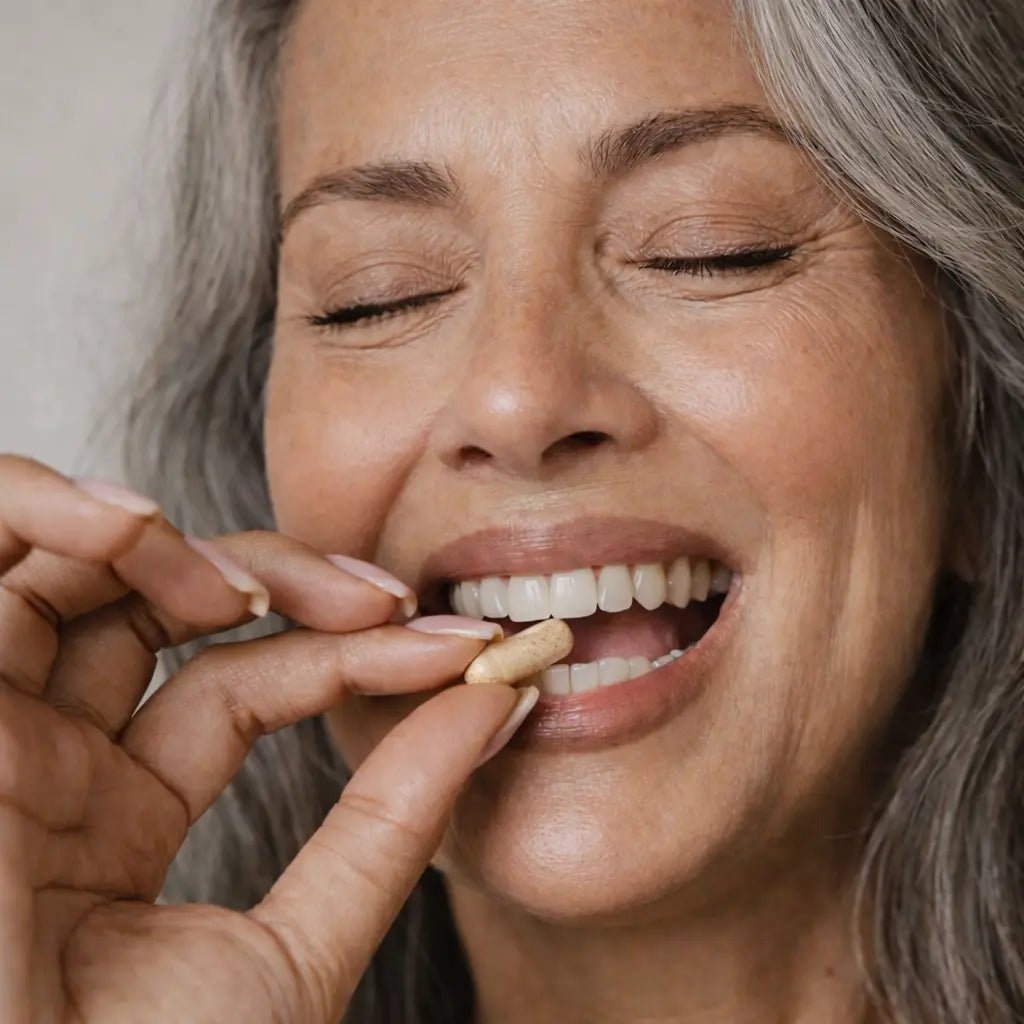

Female hair loss has many causes, from hormones and nutrient deficiencies to genetic predisposition. This article explains the growth phases, most common causes, and what research says about effective treatments.
Hair loss in women is widespread but rarely openly discussed. This article explains what causes thinning hair, common reasons for it, and scientifically proven measures to address it.
Key takeaways
- Up to 50 percent of all women experience visible hair loss during their lifetime, especially after hormonal changes.
- The most common triggers are hormonal changes, nutrient deficiencies, stress, thyroid disorders, and genetic predisposition.
- Diffuse hair loss over the entire scalp often indicates an internal trigger that can be specifically addressed.
- Nutrients such as iron, zinc, selenium, biotin, and vitamin D are important for healthy hair but are only effective if a deficiency exists.
- Hair growth occurs in cycles; visible improvements realistically take three to six months.
Few topics cause as much quiet uncertainty in my practice as hair loss. Many women only come in when their ponytail is noticeably thinner or their part widens, and almost all say the same thing: that they felt alone with it. Yet, hair loss in women is common, and in most cases, there is an explainable, often treatable trigger behind it.
It is important to distinguish between normal hair shedding and actual hair loss. It is completely normal to lose about 50 to 100 hairs daily. Only when significantly more hair falls out, the hair becomes noticeably thinner, or bald patches appear, is it considered hair loss, medically known as alopecia. To understand what helps, it is first worth looking at the hair cycle and the possible causes.
What is hair loss, and what is still normal?
Hair loss refers to hair shedding that exceeds the normal amount. Medically, several forms are distinguished: diffuse hair loss, where hair thins evenly over the entire head; androgenetic alopecia, which is the hereditary and hormonally induced form; and alopecia areata, where isolated bald patches occur. The diffuse type is particularly common in women and is usually an expression of an internal trigger such as a nutrient deficiency, a thyroid disorder, or a hormonal change.
How common is hair loss in women?
Hair loss affects far more women than the taboo suggests. It is estimated that about half of all women experience a visible form of hair loss during their lifetime, with a significantly increasing frequency from perimenopause onwards. As estrogen and progesterone decline, the balance shifts in favor of androgens, and many women first notice thinning hair during this phase. Temporary hair loss is also very common after pregnancy or after discontinuing birth control pills.
The hair cycle: the four growth phases
Every hair goes through a cycle of four phases, and hair loss almost always means that this balance has shifted. Approximately 85 to 90 percent of hairs are in the anagen phase (growth phase), which lasts two to seven years and determines the maximum hair length. This is followed by the short catagen phase (transition phase) of about two to three weeks, during which the follicle regresses. In the telogen phase (resting phase) of about three months, about 10 to 15 percent of the hairs reside before they fall out in the exogen phase, making way for new growth.
Many forms of female hair loss occur because too many hairs prematurely enter the resting phase simultaneously, a phenomenon known as telogen effluvium. This is precisely why hair loss often only becomes apparent two to three months after the actual trigger, such as an infection, a diet, childbirth, or a period of intense stress.
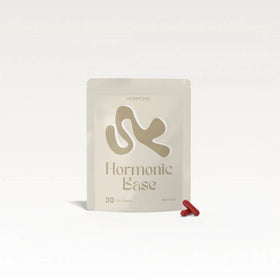
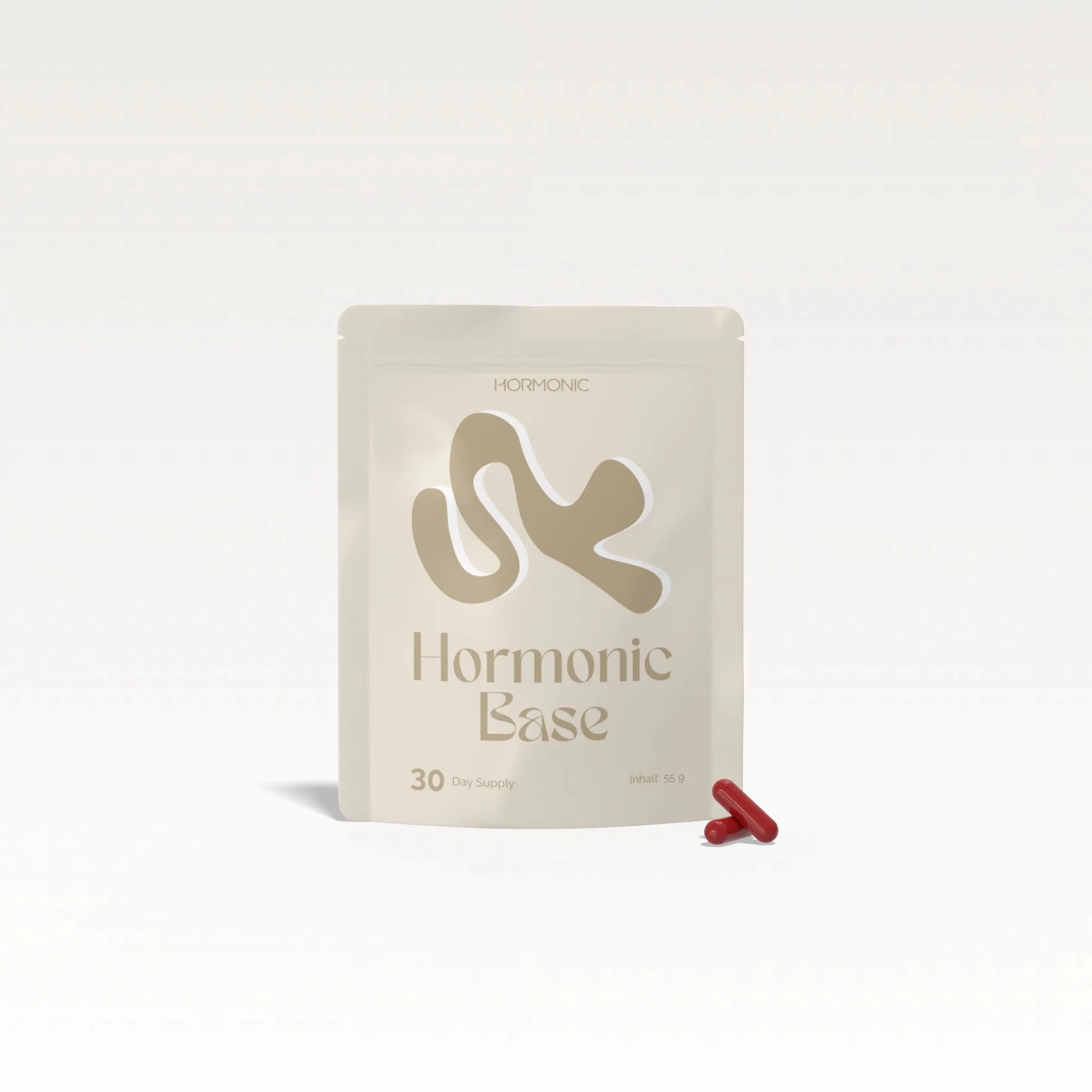
Hormonic Base: Zinc and Selenium for Your Hair Base
If nutrient deficiencies are behind your hair loss, a solid basic supply is worthwhile. Hormonic Base provides 16 micronutrients, including zinc and selenium, which contribute to the maintenance of normal hair, as well as magnesium, vitamin B6, and folate. Physician-developed, clinically dosed, and quality-tested in German laboratories.
€65,00
Unsure what's causing your hair loss?
In a free 15-minute consultation, one of our doctors will assess your situation and discuss with you which values and next steps are appropriate, completely without obligation.
Common Questions About Female Hair Loss
What are the most common causes of hair loss in women?
How do I know if my hair loss is hormone-related?
Welche Nährstoffe helfen gegen Haarausfall?
Wie lange dauert es, bis Maßnahmen gegen Haarausfall wirken?
Scientific Sources
- Almohanna, H. M. et al. (2019). The Role of Vitamins and Minerals in Hair Loss: A Review. Dermatol Ther (Heidelb), 9(1), 51-70. doi:10.1007/s13555-018-0278-6
- Guo, E. L., Katta, R. (2017). Diet and hair loss: effects of nutrient deficiency and supplement use. Dermatol Pract Concept, 7(1), 1-10. doi:10.5826/dpc.0701a01
- Grymowicz, M. et al. (2020). Hormonal Effects on Hair Follicles. Int J Mol Sci, 21(15), 5342. doi:10.3390/ijms21155342
- Trüeb, R. M. (2016). Serum Biotin Levels in Women Complaining of Hair Loss. Int J Trichology, 8(2), 73-77. doi:10.4103/0974-7753.188040
- Kil, M. S. et al. (2013). Analysis of serum zinc and copper concentrations in hair loss. Ann Dermatol, 25(4), 405-409. doi:10.5021/ad.2013.25.4.405
- Regulation (EU) No 432/2012; EFSA Journal (zinc and selenium: contribution to the maintenance of normal hair).
You might also be interested in this.

Why does hair thin during menopause? What you should get checked out, what really helps, and why biotin is overrated.
You’ve stopped taking the pill and are suffering from hair loss? You’re not alone. According to a recent study, this affects a full 26% of all women who stop taking the pill. Despite the significan...

Do women lose hair on Ozempic? Why GLP-1 causes hair loss, how long it lasts, and what truly helps with regeneration.