

As a research associate in the field of hormonal health, I read studies on menopause week after week. One thing has truly surprised me: how naturally diffuse muscle pain is overlooked during this phase. Everyone knows about hot flashes, but almost nowhere is it mentioned that many women wake up in the morning feeling as if they had run a marathon the day before without having done any exercise.
Yet, muscle pain during menopause is not a peripheral phenomenon. It is actually one of the most common and most underestimated companions of the hormonal transition. Many women describe it as a pulling sensation that moves from place to place, as stiffness, or as a diffuse feeling that everything just hurts everywhere. That is exactly what this is about: why it happens and what actually helps according to studies.
Why do you get muscle pain during menopause?
Muscle pain during menopause occurs primarily because estrogen levels drop. Estrogen simultaneously acts on the muscles, connective tissue, and the pain system within the nervous system. When it is absent, muscles and fascia lose elasticity, regeneration slows down, and pain stimuli are less dampened. Added to this are muscle loss, a tendency toward silent inflammation, and frequently poor sleep. These factors accumulate, which is why it feels widespread rather than like a single injured muscle.
The following overview shows the most important mechanisms and their effect at a glance:
| Mechanism | The underlying cause | Effect on the body |
|---|---|---|
| Estrogen drop and pain processing | Estrogen normally dampens pain signals | Stimuli are perceived more strongly as pain |
| Loss of muscle mass (sarcopenia) | Less estrogen and age promote muscle loss | Muscles fatigue faster and feel weak |
| Low-grade inflammation | Estrogen acts as an anti-inflammatory regulator | More silent inflammation in muscle tissue |
| Lack of sleep | Hot flashes and sleep maintenance insomnia | Poorer regeneration, higher pain sensitivity |
| Vitamin D and magnesium status | Deficiency is common in this phase of life | Muscle weakness, cramps, and diffuse pain |
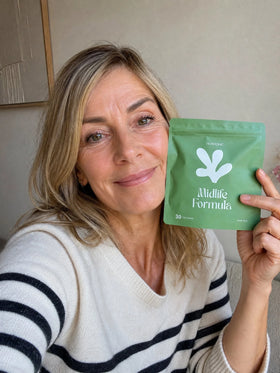
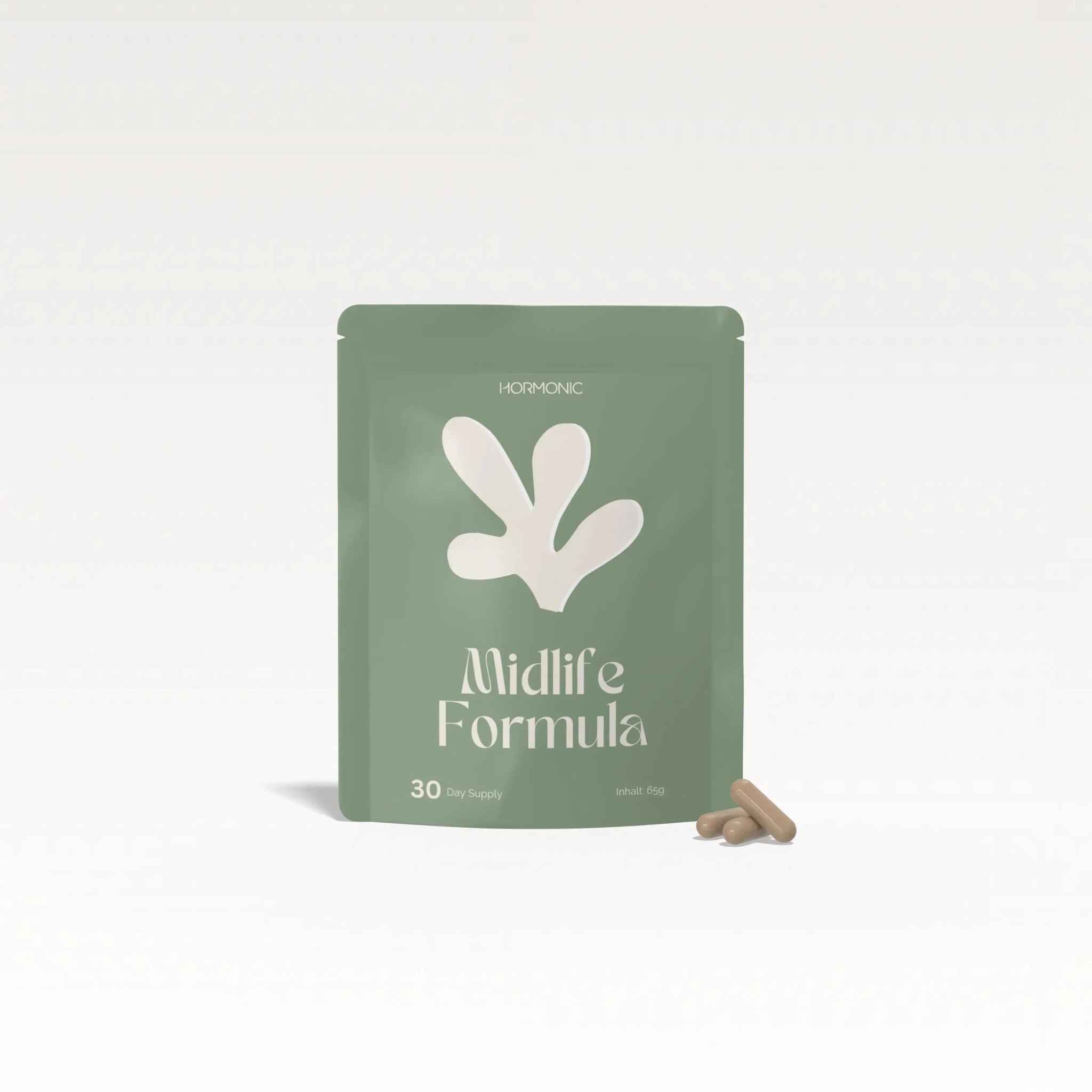
Midlife Formula for your muscle strength from midlife onwards
The Midlife Formula contains creatine. For adults over 55, it is recognized that daily creatine intake can enhance the effect of resistance training on muscle strength, with 3 grams of creatine daily and resistance training on at least three days per week. In combination with your training, it thus specifically supports muscle building, which counteracts the cycle of weakness and pain.
Are you wondering if your pain is related to menopause?
In a free 15-minute introductory call, one of our doctors will initially assess your symptoms, and you can ask all your questions, without any obligation.
Common Questions About Muscle Pain During Menopause
Why do I have pain everywhere during menopause?
Are muscle aches normal during menopause?
Was hilft gegen Muskelschmerzen in den Wechseljahren?
Wann sollte ich mit Muskelschmerzen zur Ärztin?
Scientific Sources
- Wright VJ, Schwartzman JD, Itinoche R, Wittstein J (2024). The musculoskeletal syndrome of menopause. Climacteric, 27(5), 466-472. doi:10.1080/13697137.2024.2380363
- dos Santos EEP, de Araújo RC, Candow DG, Forbes SC, et al. (2021). Efficacy of Creatine Supplementation Combined with Resistance Training on Muscle Strength and Muscle Mass in Older Females: A Systematic Review and Meta-Analysis. Nutrients, 13(11), 3757. doi:10.3390/nu13113757
- Kheirouri S, Alizadeh M, et al. (2021). Randomized Study of the Effects of Vitamin D and Magnesium Co-Supplementation on Muscle Strength and Function, Body Composition, and Inflammation in Vitamin D-Deficient Middle-Aged Women. Biological Trace Element Research, 199(7), 2523-2534. doi:10.1007/s12011-020-02387-2
- Zhang JL, Poon CCW, Wong MS, et al. (2022). Vitamin D Supplementation Improves Handgrip Strength in Postmenopausal Women: A Systematic Review and Meta-Analysis of Randomized Controlled Trials. Frontiers in Endocrinology, 13, 863448. doi:10.3389/fendo.2022.863448
- European Commission (2017). Implementing Regulation (EU) 2017/672 authorizing a health claim related to creatine in combination with resistance training and the increase in muscle strength in adults over 55. Official Journal of the EU L 97/24.
- Overton R, Amini P, Chew A, et al. (2025). The effect of hormone replacement therapy on musculoskeletal pain in menopausal women: A systematic review and meta-analysis. Women's Health (London), 21. doi:10.1177/20533691251403087
About the Author