
Cart

Your cart is empty

Continue shopping

Trending searches

Featured products

Hormonic Base - Hormonic - Nahrungsergänzungsmittel
Sale price€65,00
(5.0)
Midlife Formula - Hormonic - Nahrungsergänzungsmittel
Sale price€75,00
(5.0)
Östrogendominanz: Symptome, Ursachen und was wirklich hilft - Hormonic
HormoneJul 5, 20269 min read

Estrogen Dominance: Symptoms, Causes, and What Really Helps

Estrogen dominance describes an imbalance of sex hormones, where there is relatively too little progesterone and relatively too much estrogen. This is usually due to a weak or absent luteal phase. The term is a descriptive model but not an official medical diagnosis.

The most important points at a glance

  • Estrogen dominance refers to a relative excess of estrogen compared to progesterone, usually due to a weak luteal phase.
  • It is a popular model term, not a fixed diagnosis, and cannot be confirmed with a single blood test.
  • Typical triggers are anovulatory cycles and, above all, perimenopause.
  • Symptoms such as PMS, breast tenderness, or heavy bleeding are non-specific.
  • Fiber, low alcohol intake, and a healthy weight are helpful; nutrients like inositol and zinc can indirectly support the cycle, and noticeable bleeding should be medically investigated.

Heavy periods, breast tenderness, irritability before menstruation, water retention: many women feel that something is out of sync in their second half of the cycle, and when searching for answers, they quickly come across the term estrogen dominance. It sounds clear, but it needs explanation. Often, it's less about too much estrogen and more about too little progesterone. Let's take an honest look at what's behind it and what can really help you.

Did you know?

Estrogen dominance is not a diagnosis you get from a single blood test. The term comes from functional medicine and describes a real imbalance, usually a relative progesterone deficiency. In classical gynecology, concrete conditions such as luteal phase defect, anovulation, or the hormonal shifts of perimenopause are discussed instead.

What does estrogen dominance mean?

Estrogen and progesterone are the two major regulators of the female cycle, and they work as antagonists. In the first half of the cycle, estrogen rises and builds up the uterine lining. After ovulation, the corpus luteum produces progesterone, which slows down this buildup and calms the body. Estrogen dominance occurs when this balance shifts, meaning progesterone is relatively too low.

Important to note: this is rarely "too much" estrogen in the classic sense, but usually too little antagonist. This is precisely why the term should be used with caution. It is useful for getting a feel for the balance, but it does not replace a medical assessment of the actual cause.

A related technical term is luteal phase defect. This means that the corpus luteum produces too little progesterone after ovulation or declines too early. It is one of the most common causes behind what is commonly called estrogen dominance and can be professionally assessed.

Typical symptoms at a glance

The symptoms attributed to estrogen dominance or progesterone deficiency are varied and unfortunately non-specific. This means that they may, but do not necessarily, indicate a hormonal imbalance. It is all the more important to consider them in the context of your cycle and observe them over several months, rather than deriving a diagnosis from a single symptom.

Area Possible symptoms
Cycle heavy or irregular bleeding, short second half of the cycle
Physical breast tenderness, water retention, headaches
Emotional irritability, mood swings, pronounced PMS
Sleep & Energy difficulty falling or staying asleep, inner restlessness

The most common causes

The most important reason for relative estrogen dominance is anovulatory cycles. Progesterone is only produced by the corpus luteum after ovulation. If ovulation does not occur or the second half of the cycle is shortened, the antagonist to estrogen is missing (ASRM, 2021).

This is particularly common during perimenopause: In the years leading up to menopause, ovulations become less frequent, progesterone levels drop, while estrogen levels can still be normal or even elevated at times (Prior, 2009). Other factors that can shift the balance towards estrogen include a higher body fat percentage, as adipose tissue produces additional estrogen via the aromatase enzyme, and regular alcohol consumption, which can slightly raise estrogen levels (Tin Tin et al., 2024).

Chronic stress is also often mentioned. A connection between persistent stress and lower progesterone production is plausible, but the frequently cited idea that cortisol is produced directly "at the expense" of progesterone is scientifically oversimplified and not well-substantiated. Nevertheless, stress management is beneficial, but not a miracle cure.

An often-overlooked factor is estrogen excretion. If digestion is sluggish or the gut is out of balance, estrogen that has already been broken down can be reabsorbed instead of leaving the body. And in polycystic ovary syndrome (PCOS), ovulation often does not occur, so the protective progesterone is absent. These examples show: estrogen dominance is rarely a single switch, but rather the result of several interacting influences.

Perimenopause: the most common phase for estrogen dominance

In perimenopause, the years around 40 to mid-50s, the balance shifts particularly often. The ovaries work more irregularly, ovulations occur less frequently, and progesterone usually drops earlier and more significantly than estrogen. This explains why many women first hear about estrogen dominance at this time: cycles become shorter or more irregular, bleeding becomes heavier, and PMS-like symptoms increase.

What medical help is available

If there is a real underlying cause for the symptoms, it should be addressed by a doctor. Depending on the situation, cyclically administered progesterone to support the second half of the cycle or hormonal contraception may be considered. Important: If estrogen is given during or after menopause, progesterone is necessary to protect the uterine lining.

You will make these decisions together with your gynecologist or one of the Hormonic doctors (click herefor a free initial consultation), tailored to your symptoms, your cycle, and your stage of life. Supplements do not replace this clarification; they can at most accompany it.

Whether and how measurements are taken depends on the individual case. A single progesterone value fluctuates greatly and is ideally determined about one week before the expected period, but it alone says little. The overall picture of symptoms, cycle progression, and, if necessary, an ultrasound examination is more informative.

Cycle+ Formula for Your Cycle

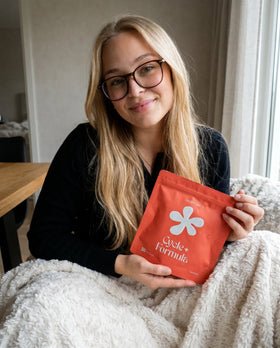
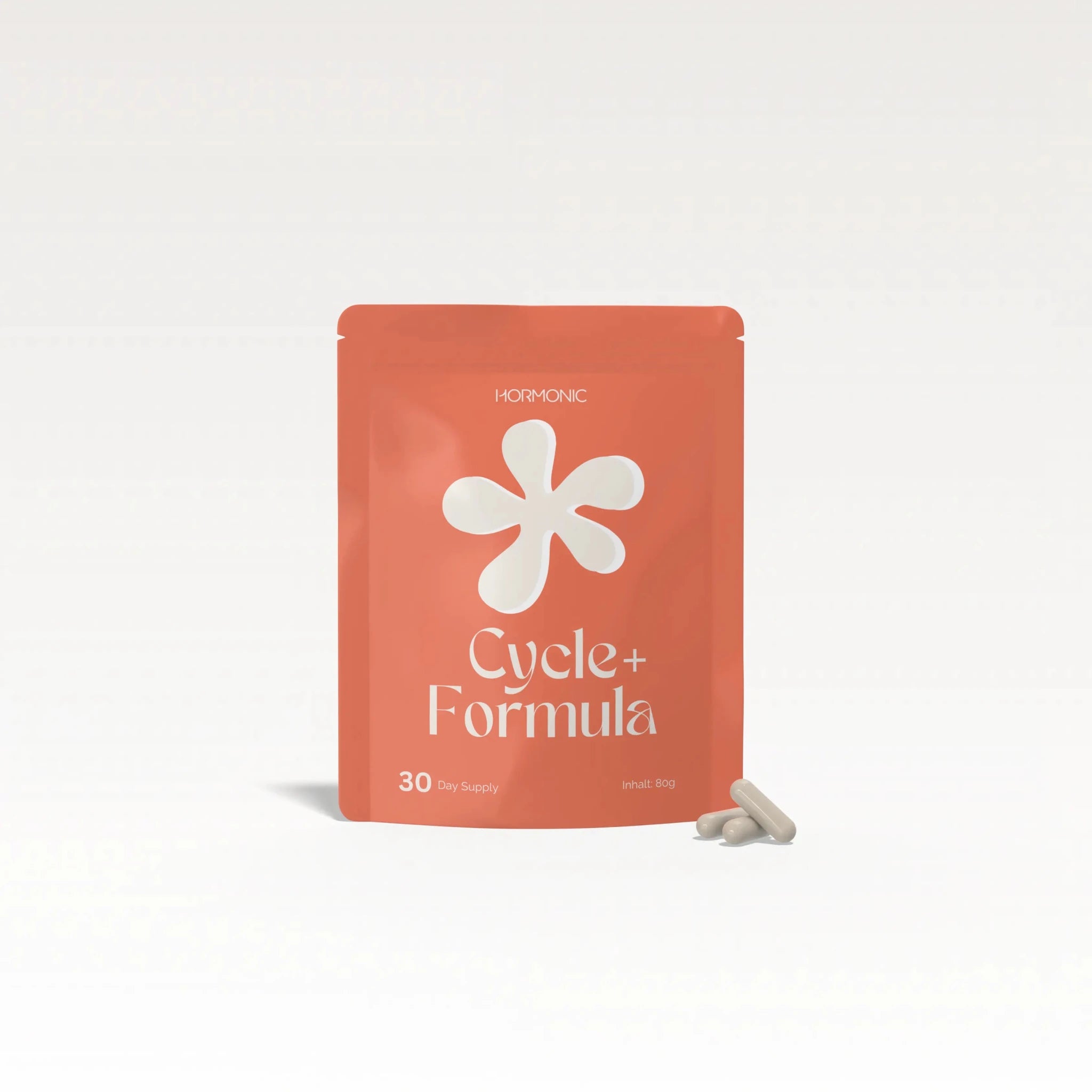
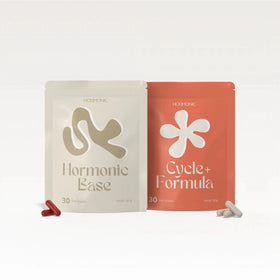
Cycle+ Formula combines eight active ingredients for your cycle, including zinc, which contributes to normal hormone balance and fertility, as well as myo-inositol and D-chiro-inositol, rhodiola, L-theanine, and polyphenols such as quercetin and resveratrol. Not a substitute for medical clarification, but a well-thought-out support for your cycle, developed as a supplement to Hormonic Base.
Learn more

Diet and Lifestyle: What Affects Estrogen Levels

There are some things you can do yourself. Fiber supports the excretion of estrogen through the gut, because a healthy gut microbiome ensures that broken-down estrogen is excreted instead of being reabsorbed. Less alcohol and a healthy body weight also help: both reduce the body's own estrogen production, partly because fatty tissue forms additional estrogen via the enzyme aromatase (Tin Tin et al., 2024).

Specifically, this means: plenty of vegetables, whole grains, legumes, and flaxseeds for fiber, plus enough water and exercise to keep digestion going. Frequently recommended cruciferous vegetables such as broccoli and their extracts (DIM, indole-3-carbinol) have so far mainly changed laboratory values for estrogen breakdown; a clear benefit in terms of symptoms has not been proven. They are useful as part of a vegetable-rich diet, but not as a targeted remedy for estrogen dominance.

Nutrients That Can Support the Cycle

The most important lever among nutrients is to support ovulation, because strong ovulation is a prerequisite for enough progesterone. Almost all useful nutrients therefore work indirectly: not by simply raising progesterone, but by improving the environment for a healthy cycle.

The most thoroughly researched isInositol, usually as a combination of myo-inositol and D-chiro-inositol. Current meta-analyses show that inositol can improve insulin sensitivity and, in the case of cycle disorders, especially PCOS, support ovulation and a more regular cycle (Fitz et al., 2024; Greff et al., 2023). The indirect route is crucial here: better insulin utilization, which leads to more reliable ovulation, a stronger corpus luteum, and subsequently more endogenous progesterone, which counteracts the relative estrogen excess.

Zinccontributes to normal hormone balance, normal fertility and reproduction, and the protection of cells from oxidative stress, according to approved claims, and newer reviews indicate a benefit in menstrual pain and premenstrual symptoms (Jamilian et al., 2024). The polyphenolsQuercetin and Resveratrolare being investigated in current studies primarily in connection with insulin sensitivity, inflammation, and androgens, with promising but sometimes inconsistent results (Rezvan et al., 2017; Bahramrezaie et al., 2023). They also tend to work indirectly by improving the environment for a balanced cycle.

Because chronic stress can slow down ovulation, plant substances that alleviate the perception of stress also play a role. Rhodiola roseais traditionally used as an adaptogen and is being investigated in studies on stress and exhaustion,L-theaninein connection with relaxation and sleep (Hidese et al., 2019). The indirect idea behind this: less chronic stress, calmer control of the ovaries, and thus more reliable ovulation.

The honest truth remains: there is no proof for any of these nutrients that they directly raise progesterone or cure estrogen dominance. They support the environment in which a healthy cycle can occur and do not replace medical clarification.

Nutrients at a Glance, Honestly Classified:

  • Myo- and D-chiro-inositol: can support insulin sensitivity and ovulation, good current study data on cycle disorders.
  • Zinc: contributes to normal hormone balance and normal fertility (approved claim).
  • Quercetin and Resveratrol: polyphenols, investigated in studies on insulin, inflammation, and androgens, results sometimes inconsistent.
  • Rhodiola and L-theanine: can alleviate the perception of stress and thus indirectly promote regular ovulation.
  • Fiber: supports the excretion of estrogen through the gut.

What You Can Do in Everyday Life

In addition to diet and nutrients, a few simple habits help. A cycle diary or app helps you identify patterns and bring concrete observations to your doctor. Regular exercise, sufficient sleep, and conscious stress management indirectly support hormone balance because they promote ovulation and the body's recovery. When it comes to environmental hormones, a sense of proportion is important rather than panic: avoiding heavily heated plastic for food and consciously selecting products makes sense, even if the direct influence of such substances on estrogen dominance has not yet been definitively clarified.

When You Should See a Doctor

Some symptoms always require medical clarification, because "estrogen dominance" can have more serious causes. These include very heavy or irregular bleeding, bleeding between periods, andany bleeding after menopause. Because continuously unchecked estrogen can thicken the uterine lining and, in the long term, increase the risk of pathological changes. In cases of suspected fibroids, endometriosis, or unfulfilled desire to have children, gynecological clarification is the right way, not self-diagnosis. If you have questions, you can also use a free initial consultation with one of our doctors to have your situation assessed.

The Cycle Power Duo

Hormonic Base provides 16 essential active ingredients that the body needs daily, including vitamin B6, which contributes to the regulation of hormonal activity, and magnesium for the nervous system. Cycle+ supplements provide botanicals for cycle-related issues. Together, they form the Power Duo!

To the bundle

Conclusion

Estrogen dominance is not a fixed medical diagnosis, but rather a descriptive model for a real imbalance: too little progesterone relative to estrogen, usually due to weak or absent ovulations, especially during perimenopause. Because the symptoms are non-specific, it cannot be determined by how you feel, and a single blood test rarely provides the whole truth.

What helps is a combination of fundamentals and targeted support: a fiber-rich diet, little alcohol, a healthy weight, and stress management, supplemented by specific nutrients like inositol and zinc, which have current but still limited evidence. It remains important to note: these nutrients primarily work indirectly by promoting ovulation. For severe or unusual bleeding and if you are trying to conceive, the path always leads to the gynecologist's office.

Frequent Questions about Estrogen Dominance

What is estrogen dominance?

Estrogen dominance refers to an imbalance where there is relatively too little progesterone and relatively too much estrogen. This is usually due to a weak or absent luteal phase, often during perimenopause. Important to note: It is a popular conceptual term, not an official medical diagnosis, and cannot be reliably determined with a single blood test.

What are the symptoms of estrogen dominance?

Frequently mentioned are heavy or irregular periods, pronounced PMS, breast tenderness, irritability and mood swings, water retention, sleep problems, and headaches. However, these symptoms are non-specific and can have many other causes, from thyroid issues to PCOS to perimenopause. The symptoms alone therefore do not prove estrogen dominance.

Was hilft bei Östrogendominanz?
Hilfreich sind eine ballaststoffreiche Ernährung, wenig Alkohol, ein gesundes Körpergewicht und Stressmanagement. Bei den Nährstoffen ist vor allem Inositol untersucht, das über eine bessere Insulinverwertung den Eisprung unterstützen kann, dazu Zink, das zu einem normalen Hormonhaushalt beiträgt. Diese Nährstoffe wirken vor allem indirekt und ersetzen keine ärztliche Abklärung. Steckt eine echte Ursache wie eine schwache Gelbkörperphase, Myome oder Endometriose dahinter, gehört das ärztlich behandelt.
Wie wird Östrogendominanz festgestellt?
Einen eindeutigen Test gibt es nicht. Ärztinnen und Ärzte schauen sich Deine Beschwerden, Deinen Zyklus und gegebenenfalls Hormonwerte in der zweiten Zyklushälfte an, wobei einzelne Progesteronwerte schwanken und mit Vorsicht zu deuten sind. Wichtiger als ein einzelner Laborwert ist das Gesamtbild. Bei auffälligen Blutungen wird zusätzlich die Gebärmutterschleimhaut kontrolliert.

Scientific Sources

  • Practice Committees of the ASRM and SREI (2021). Diagnosis and treatment of luteal phase deficiency: a committee opinion. Fertility and Sterility. doi:10.1016/j.fertnstert.2021.02.010
  • Fitz, V. et al. (2024). Inositol for polycystic ovary syndrome: a systematic review and meta-analysis to inform the 2023 update of the international evidence-based PCOS guidelines. The Journal of Clinical Endocrinology & Metabolism. doi:10.1210/clinem/dgad762
  • Greff, D. et al. (2023). Inositol is an effective and safe treatment in polycystic ovary syndrome: a systematic review and meta-analysis of randomized controlled trials. Reproductive Biology and Endocrinology. PMID:36703143
  • Jamilian, H. et al. (2024). Efficacy of zinc supplementation in the management of primary dysmenorrhea: a systematic review and meta-analysis. Nutrients. doi:10.3390/nu16234116
  • Rezvan, N. et al. (2017). Effects of quercetin on adiponectin-mediated insulin sensitivity in polycystic ovary syndrome: a randomized placebo-controlled double-blind trial. Hormone and Metabolic Research. PMID:27824398
  • Bahramrezaie, M. et al. (2023). Effects of resveratrol supplementation in women with polycystic ovary syndrome: a systematic review and meta-analysis of randomized controlled trials. Endocrine. doi:10.1007/s12020-023-03479-4
  • Hidese, S. et al. (2019). Effects of L-theanine administration on stress-related symptoms and cognitive functions in healthy adults: a randomized controlled trial. Nutrients. doi:10.3390/nu11102362
  • Tin Tin, S. et al. (2024). Alcohol intake and endogenous sex hormones in women: a meta-analysis of cohort studies and Mendelian randomization. Cancer. doi:10.1002/cncr.35391
  • Ishaque, S. et al. (2012). Rhodiola rosea for physical and mental fatigue: a systematic review. BMC Complementary and Alternative Medicine. doi:10.1186/1472-6882-12-70

About the Author

Amelie Weiss

Amelie Weiss

Research Fellow, PhD · Hormonic

Amelie Weiss is a Research Fellow at Hormonic and conducts scientific research on hormonal health, micronutrients, and evidence-based women's health.

Note: This article is based on current guidelines and scientific work (as of 2026). It is for informational purposes only and does not replace medical advice, diagnosis, or treatment.

Share

You might also be interested in this.

Progesteronmangel: Symptome erkennen, Ursachen verstehen & gegensteuern - Hormonic
WechseljahreMay 27, 20268 min read
Progesterone Deficiency: Recognizing Symptoms, Understanding Causes & Counteracting It

Progesterone deficiency affects women at all stages of life. Here you can find out how corpus luteum insufficiency develops, what symptoms it causes, and what micronutrients such as B6, magnesium, ...

Östrogenmangel: Symptome, Ursachen & was im Körper passiert - Hormonic
HormoneJun 4, 20268 min read
Estrogen Deficiency: Symptoms, Causes & What Happens in the Body

What is estrogen deficiency and what causes it? Learn how estrogen works in the body, what symptoms a deficiency triggers, who can be affected – even before menopause – and what a comprehensive dia...

Ursachen, Symptome und Behandlungsmöglichkeiten für PMS - Hormonic
ZyklusMay 27, 20269 min read
Causes, symptoms and treatment options for PMS

From symptoms to the real causes and treatment: the evidence-based overview of PMS, including the remedies with the best scientific evidence.