


Certain tea varieties have shown hormonal effects in studies. Peppermint tea lowers androgens in PCOS, chamomile has a calming effect. This guide categorizes what is genuinely proven and what is merely tradition.
A cup of tea feels like self-care, and indeed, there is evidence for hormonal effects in some herbs. At the same time, many promises circulate online that go far beyond what studies support. This article honestly categorizes peppermint, chamomile, sage, fennel, and fenugreek according to strength of evidence, from well-supported to preliminary.
This way, you can decide for yourself which tea suits your daily routine as a gentle accompaniment, without expecting too much from it or delaying necessary medical clarification.
Peppermint Tea: The most studied candidate for PCOS
Peppermint is the tea with the comparatively best data available regarding hormonal effects in women. In small clinical studies on women with PCOS, regular peppermint tea consumed over several weeks lowered free androgen levels and was associated with an increase in progesterone. Improvements in hirsutism and cycle regularity were also observed.²
Important to note: These studies were small, and the effects are moderate. Therefore, peppermint tea is not a substitute for PCOS therapy, but can be a useful, well-tolerated accompaniment. A minor detail often overlooked: the anti-androgenic effect, which is desirable in women, is why men should rather avoid large quantities of peppermint tea.
In the studies, participants typically drank one cup of peppermint tea twice daily for several weeks. This is an easily manageable amount for everyday life. As with all plant-based approaches, give it a few weeks before judging its effect, as hormonal changes often only become apparent over one or two cycles.
Tea is a gentle accompaniment, not a substitute for medical treatment.
Chamomile: calming, with hints from small studies
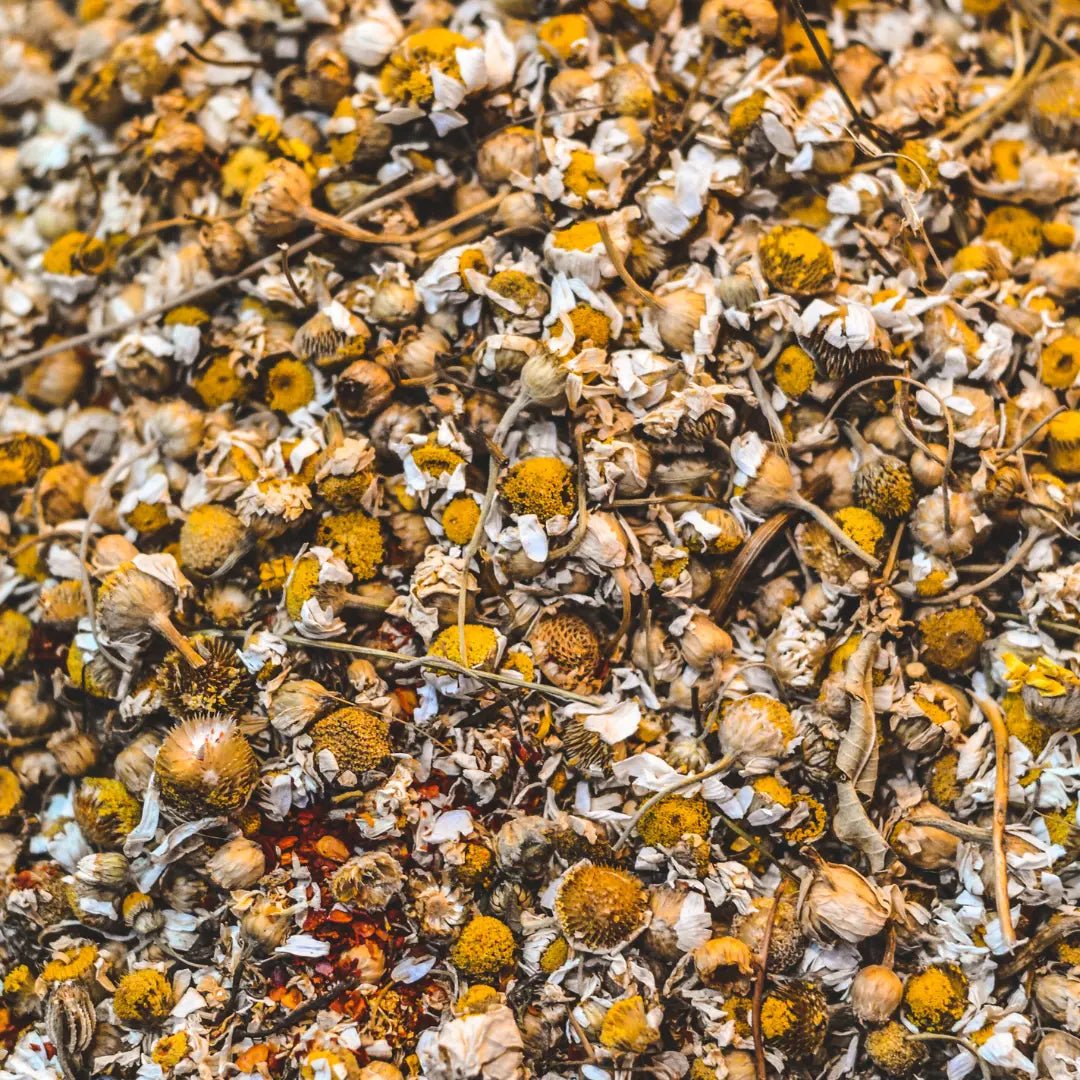
Chamomile is best known for its calming effect. It contains the flavonoid apigenin and other antioxidants that have anti-inflammatory properties. Through better sleep and less stress, chamomile can indirectly contribute to hormonal balance, as persistently high stress levels adversely affect hormone balance.
There are also individual clinical indications that chamomile extract can favorably influence symptoms such as hirsutism and irregular cycles in women with PCOS. However, a large part of the research comes from animal models, which is why these effects should be considered preliminary.
This indirect pathway is generally important to understand with herbal teas. Many of the beneficial effects do not come from direct hormonal intervention, but rather from relaxation, better sleep, and calmer digestion. Since chronic stress and poor sleep can demonstrably throw hormone balance out of whack, precisely this gentle, calming effect is often more valuable than it appears at first glance.

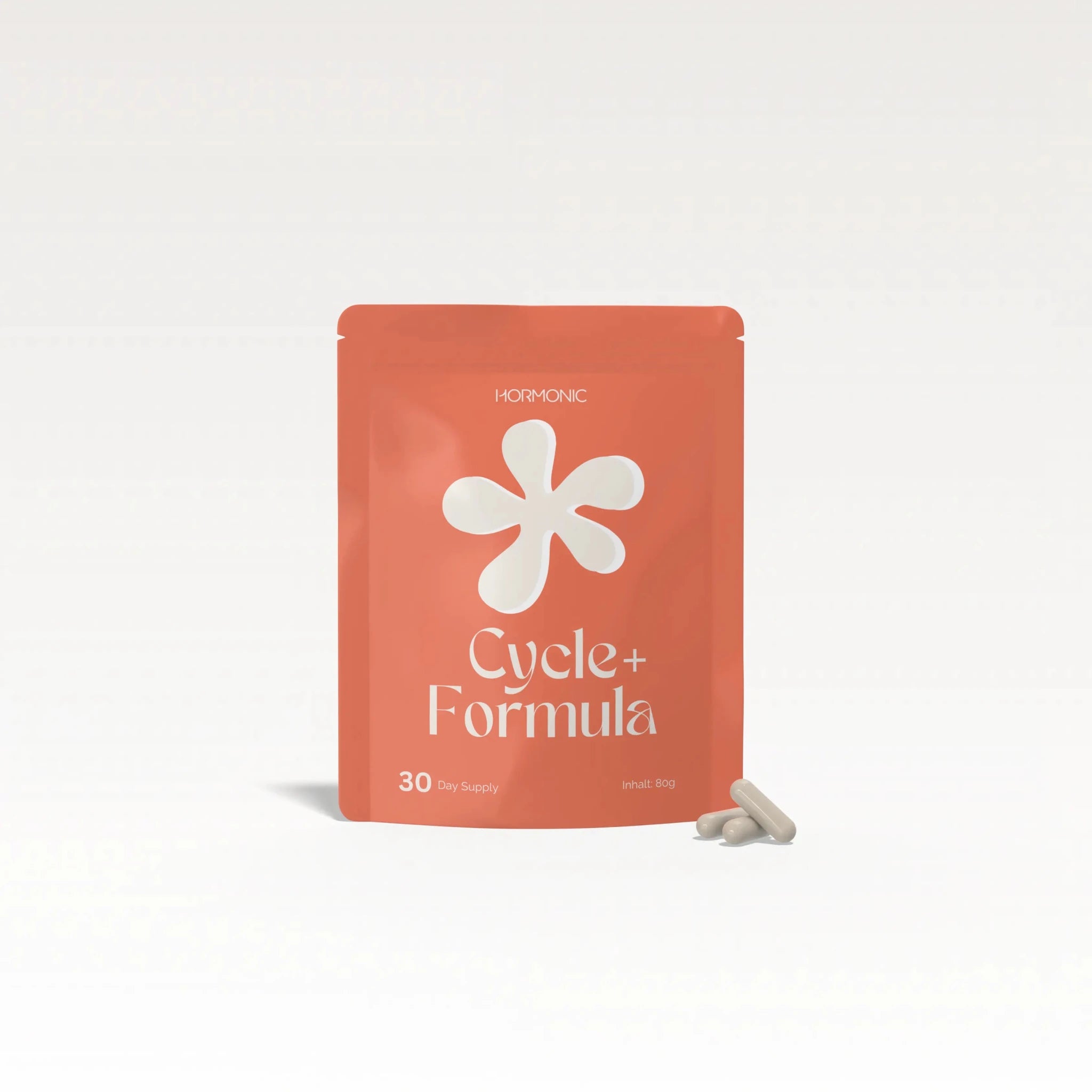
Cycle+ Formula for Your Cycle Balance
While tea offers gentle support, targeted active ingredients go a step further. Cycle+ was developed for hormonal balance around your cycle and PCOS, and supports you with clinically-dosed ingredients.
€75,00

Unsure what's causing your symptoms?
Then book a free digital initial consultation with one of the Hormonic doctors now. We will help you with your questions and together we will look at which steps truly make sense now.
Frequent Questions about Tea for Hormonal Issues
Which tea helps with PCOS?
Does peppermint tea really lower testosterone in women?
Hilft Salbeitee in den Wechseljahren?
Kann ich diese Tees in der Schwangerschaft trinken?
Scientific Sources
- Grant, P. (2010). Spearmint herbal tea has significant anti-androgen effects in polycystic ovarian syndrome: A randomized controlled trial. Phytotherapy Research, 24(2), 186-188. doi:10.1002/ptr.2900
- Akdoğan, M., et al. (2007). Effect of spearmint (Mentha spicata Labiatae) teas on androgen levels in women with hirsutism. Phytotherapy Research, 21(5), 444-447. doi:10.1002/ptr.2074
- Mao, J. J., et al. (2016). Long-term chamomile (Matricaria chamomilla L.) treatment for generalized anxiety disorder: A randomized clinical trial. Phytomedicine, 23(14), 1735-1742. doi:10.1016/j.phymed.2016.10.012
- Bommer, S., Klein, P., Suter, A. (2011). First time proof of sage's tolerability and efficacy in menopausal women with hot flushes. Advances in Therapy, 28(6), 490-500. doi:10.1007/s12325-011-0027-z
- Swaroop, A., et al. (2015). Efficacy of a novel fenugreek seed extract (Trigonella foenum-graecum, Furocyst) in polycystic ovary syndrome (PCOS). International Journal of Medical Sciences, 12(10), 825-831. doi:10.7150/ijms.13024
- Khanna, A., et al. (2021). Supplementation of a standardized fenugreek seed extract improves menopausal symptoms. Journal of Mid-life Health, 12(2), 119-127. doi:10.4103/jmh.JMH_124_20
About the Author

You might also be interested in this.

Elevated androgens manifest as acne, hair loss, and menstrual irregularities. We explore the underlying biology and evidence-based effective interventions.
Apigenin is a plant flavonoid found in chamomile, parsley, and celery. What research says about its effects on sleep, hormones, PCOS, and inflammation – and for whom it is beneficial.

Intermittent fasting can improve insulin resistance and lower active testosterone in PCOS. This is shown by a recent Nature Medicine study - and for whom the protocol is suitable.