You've been diagnosed with Hashimoto's and have since been reading conflicting recommendations: gluten-free, iodine-free, high-dose selenium, a dozen capsules in the morning. This is understandable, as the desire to be able to do something yourself is great. The good news is that nutrition does play a role. The honest news is that much of what circulates online goes significantly further than what studies show.
This article categorizes the most important micronutrients and nutritional questions for Hashimoto's according to the strength of evidence, from well-supported to overrated. This way, you can decide with your doctor what makes sense for you, instead of being guided by trends.
What happens in the body with Hashimoto's
In Hashimoto's, the immune system targets the thyroid gland itself. Characteristic features include elevated antibodies against thyroperoxidase (TPO antibodies), chronic tissue inflammation, and often a gradual decline in hormone production over time. This frequently leads to hypothyroidism, which is treated with the thyroid hormone L-thyroxine.
For nutrition, two levers are interesting: Firstly, the thyroid needs certain trace elements to produce hormones and protect itself from oxidative stress. Secondly, diet can influence inflammatory processes and avoidable stimuli, such as very high iodine intake. Importantly: these levers support; they do not replace medical therapy.
Nutrition does not cure Hashimoto's. However, it can improve supply and support therapy.
Why women are so frequently affected
Hashimoto's is the most common autoimmune disease of the thyroid and affects women significantly more often than men. Estimates suggest a four- to ten-fold higher risk. The exact reasons are not definitively clarified; factors discussed include the influence of estrogen on the immune system, genetic predisposition, and phases of hormonal changes such as after pregnancy.
One observation is particularly relevant for nutrition: women of childbearing age have a higher risk of iron deficiency due to menstruation, and vegetarian or vegan diets further exacerbate this. Since iron is needed for thyroid hormone production, an undetected deficiency can worsen symptoms like fatigue, which are already associated with Hashimoto's. This is precisely why it's worthwhile to specifically examine the supply rather than supplementing indiscriminately.
Selenium: The Best-Documented Nutrient for Hashimoto's
If a single micronutrient deserves attention in Hashimoto's, it's selenium. This trace element is a building block of glutathione peroxidases, the enzymes that protect the thyroid gland from oxidative stress. This is precisely where the hope lies that selenium could dampen inflammatory activity.
Two systematic reviews from 2024 have consolidated the existing studies. Huwiler et al. (2024) evaluated data from over 2,300 participants in a meta-analysis of randomized controlled trials and found, on average, a decrease in TPO antibodies and a slight reduction in TSH in people without thyroid hormone replacement therapy. However, the authors explicitly classify the certainty of the evidence as moderate, and the heterogeneity between studies was high.
Important for an honest classification: In the same analysis, most individual study arms showed no significant effect on antibodies. The overall effect only emerges in the synthesis. A network meta-analysis by Peng et al. (2024) directly compared selenium, vitamin D, and myo-inositol and concluded that, among these options, selenium offers the most robust support as an accompanying measure to standard therapy.
What this means in practice: Selenium can influence antibody load and inflammatory markers, but it is not a cure and does not replace medically prescribed hormone therapy. Intake is particularly useful when there is a deficiency or undersupply, which can be clarified by checking selenium status.
For selenium, furthermore: More is not better. The body only needs it in small amounts, and persistently very high intake can have undesirable effects. In the evaluated studies, selenium was well tolerated at the dosages used, and the rates of side effects did not differ from the placebo group. Nevertheless, long-term intake without monitoring is not advisable. A medically supervised, status-oriented dosage is the safe way, precisely because selenium can accumulate in the body.
Vitamin D, Iron, and Zinc: Important, but to be considered with nuance
Women with Hashimoto's frequently have lower vitamin D levels than healthy control groups in observational studies, and low levels correlate with higher TPO antibodies. However, whether supplementation actually lowers antibodies is controversial. A meta-analysis by Jiang et al. (2022) found a significant reduction in TPO antibodies with vitamin D, while the direct network meta-analysis by Peng et al. (2024) showed no clear effect on antibodies for vitamin D alone. The evidence is thus mixed.
Iron is often overlooked but is central to the thyroid: The enzyme thyroperoxidase, which builds thyroid hormones, is iron-dependent. Iron deficiency can slow down hormone production and exacerbate symptoms like fatigue, which are already associated with Hashimoto's. Women with heavy menstruation and vegetarian or vegan women are particularly affected. A ferritin value below approximately 30 micrograms per liter is considered by many professional societies to require treatment, but supplementation should be laboratory-supported and medically supervised, not based on suspicion.
Zinc is involved in the conversion of T4 to active T3. Targeted high-dose supplementation is rarely necessary with a balanced diet, but a general basic supply through food is useful.
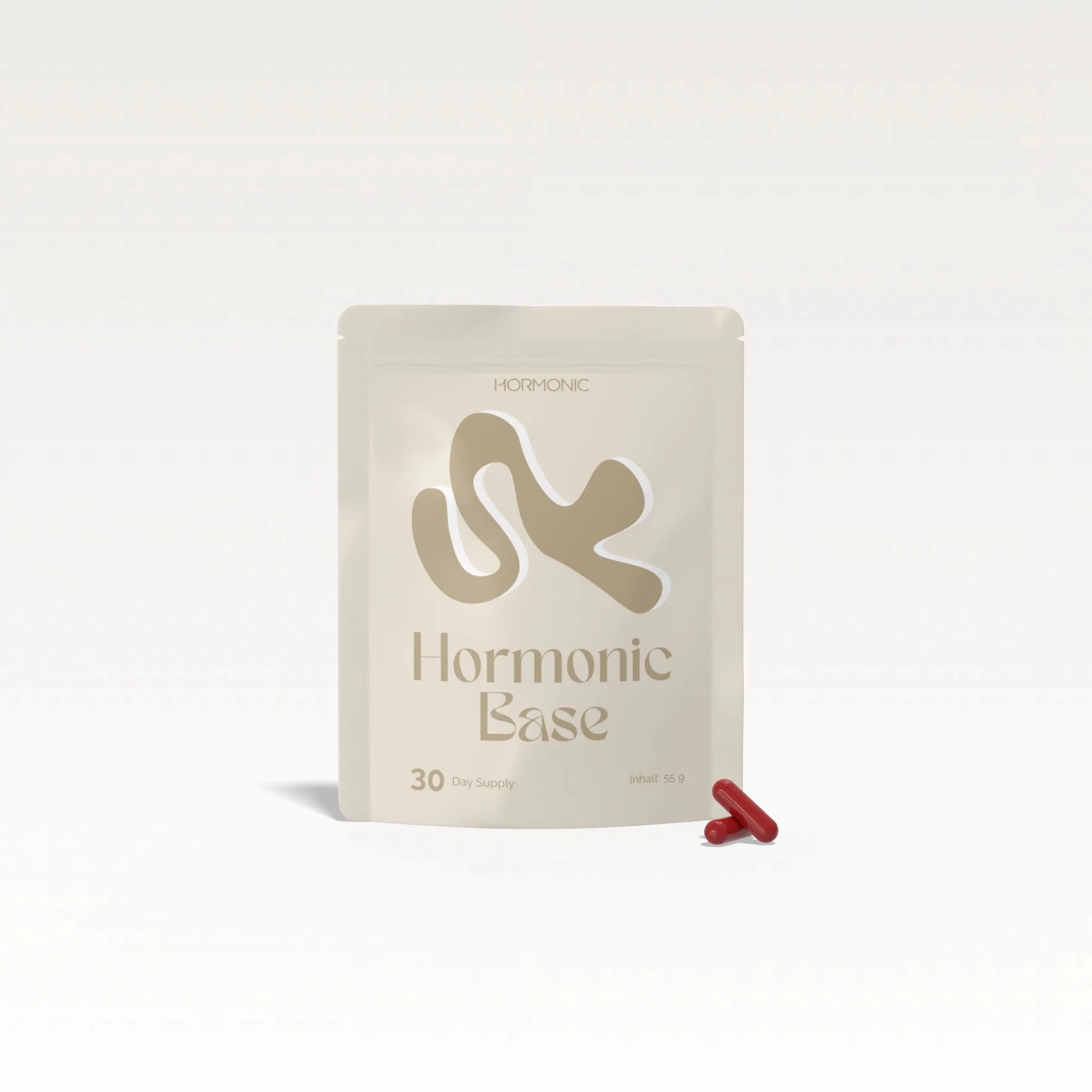
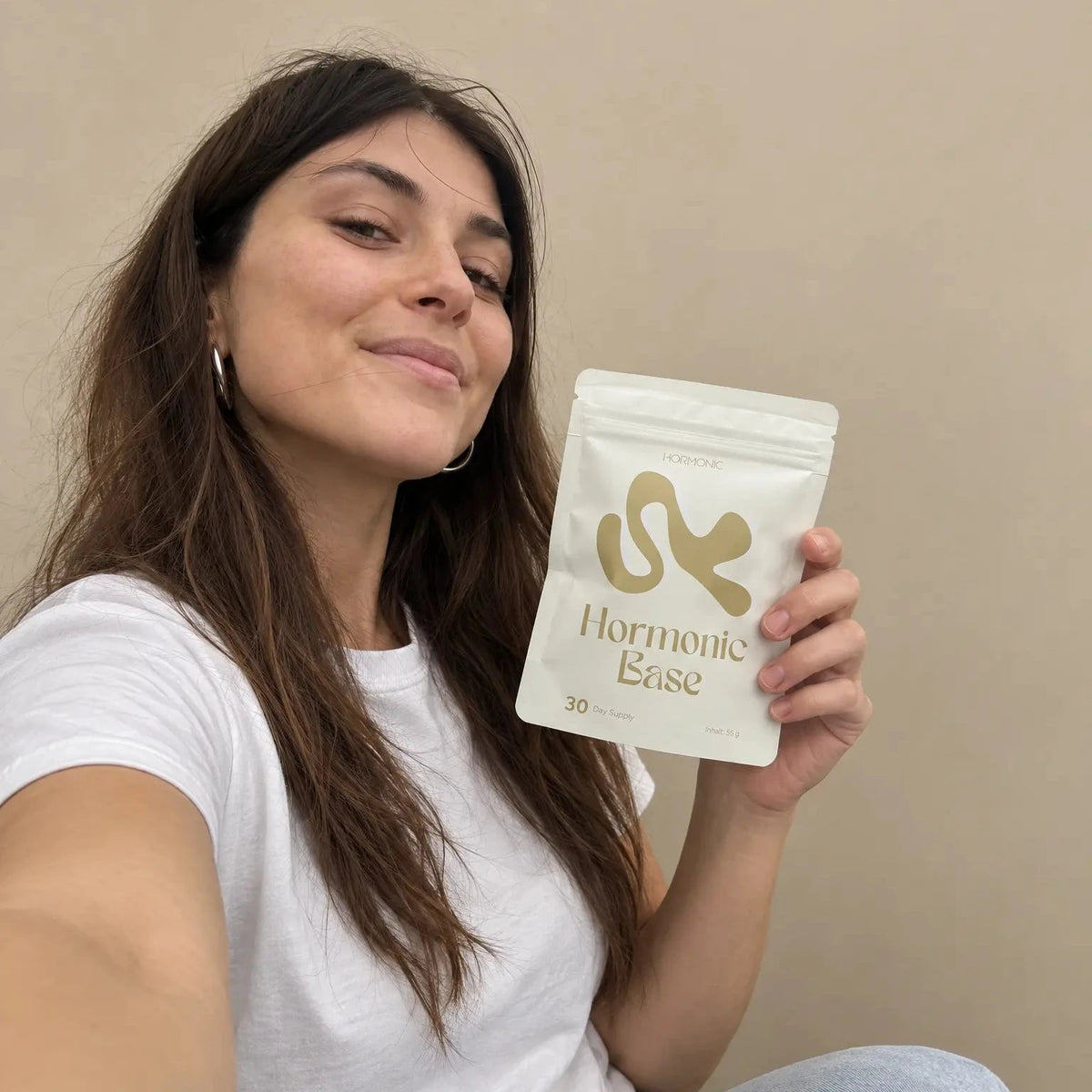
Selenium, zinc and vitamin D are among the trace elements that your thyroid needs for hormone production and cell protection. Hormonic Base provides a medically developed supply of 16 essential micronutrients.
Iodine: the trace element where more is not better
Hardly any nutrient has a message as clear and as often misunderstood as iodine. Iodine is a basic building block of thyroid hormones, so a certain amount is indispensable. At the same time, there is evidence that a consistently very high iodine intake can exacerbate the autoimmune reaction in Hashimoto's and worsen its course.
In practical terms, this means that a normal daily intake via iodized table salt and a balanced diet is usually unproblematic. High-dose iodine supplements and very iodine-rich algae products such as kelp, kombu, or spirulina are critical. These should only be included in the diet for Hashimoto's after consulting a doctor. Conversely, strict iodine restriction is also not advisable, as it jeopardizes basic supply.
Eating gluten-free with Hashimoto's: what the evidence really shows
Hardly any topic is as oversimplified on social media as the connection between gluten and Hashimoto's. The background is a real observation: Celiac disease and Hashimoto's occur together disproportionately often. From this, it is often concluded that every woman with Hashimoto's should avoid gluten. This goes beyond the available data.
A small pilot study by Krysiak et al. (2018) with 34 women found a decrease in thyroid antibodies under a gluten-free diet. However, a meta-analysis from 2025 summarized randomized studies and came to a sobering conclusion: Only three studies with a total of around 110 participants could be evaluated, the evidence was very uncertain, and the effects were inconsistent. For women without confirmed celiac disease or gluten intolerance, there is currently no reliable evidence that a general gluten-free diet improves the disease.
More sensible than blanket prohibitions is an overall anti-inflammatory, Mediterranean-style eating pattern with plenty of vegetables, fruits, legumes, fish, and olive oil. Anyone who suspects gluten intolerance should have it medically clarified before eliminating gluten, as premature avoidance complicates the diagnosis of celiac disease.
What you can do in everyday life
Get your status tested before supplementing:Ferritin, vitamin D, and selenium status provide you and your doctor with a basis instead of taking capsules based on suspicion.
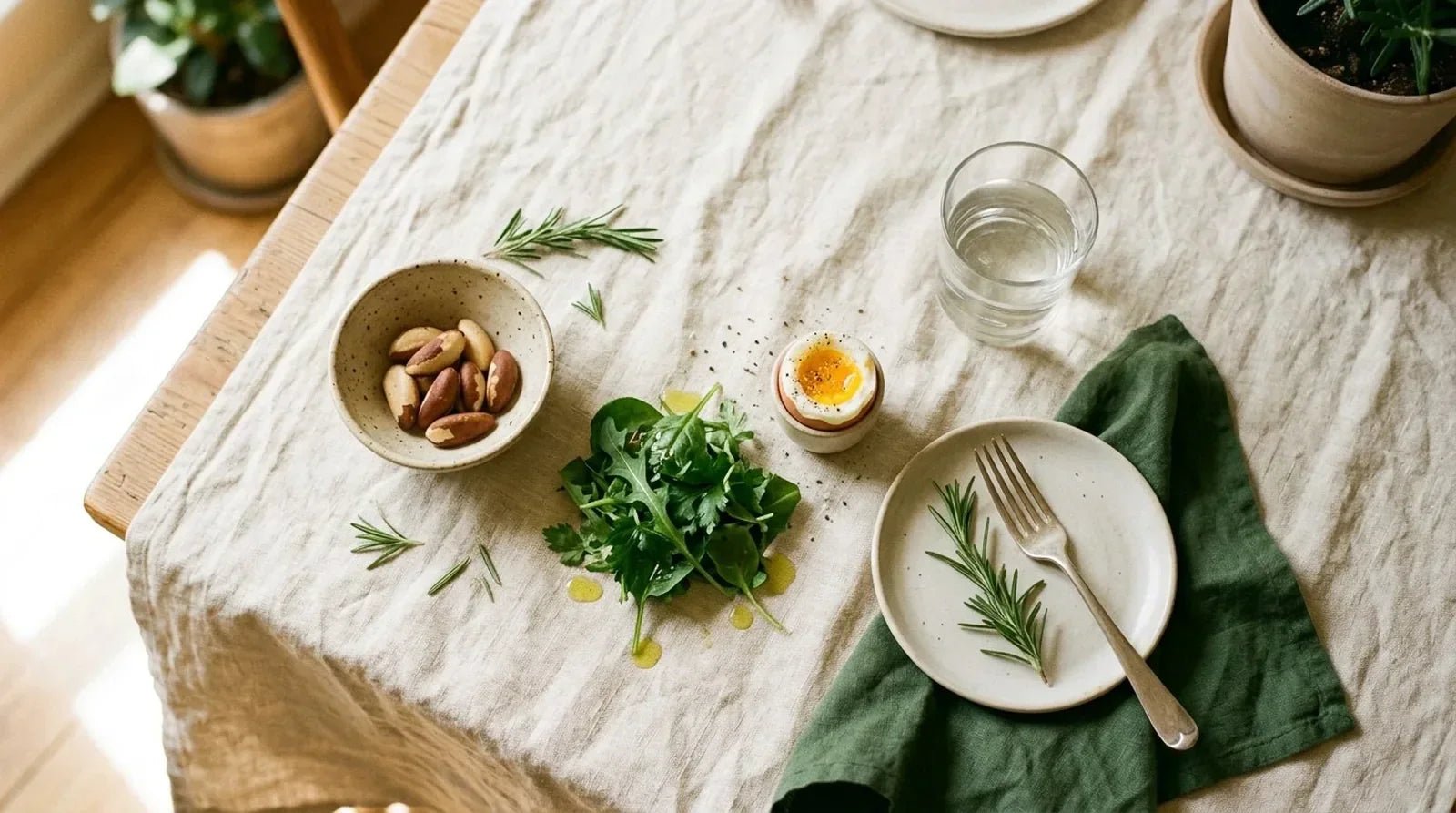
Eat a Mediterranean, nutrient-dense diet:Vegetables, legumes, fish, olive oil, and nuts support general nutrition. Just one or two Brazil nuts cover a large part of your selenium needs.
Be careful with iodine supplements and algae:High-dose iodine and kelp products can increase inflammation. Normal amounts of iodized salt, however, are fine.
Maintain a gap between L-thyroxine and minerals:Coffee, calcium, and iron supplements can interfere with the absorption of your thyroid medication. Take it on an empty stomach and leave several hours between doses.
Focus on basic supply rather than high doses:A well-thought-out foundation of well-dosed micronutrients is more sustainable than individual mega-doses.
Then come to our free, no-obligation 15-minute online consultation now. We'll listen, assess your situation, and show you what steps truly make sense for your thyroid.
Nutrition and micronutrients are a supportive measure, not a substitute for diagnosis and therapy. Talk to a doctor if you notice persistent fatigue, weight changes, cold sensitivity, hair loss, or low moods, if your TSH is known to be elevated, if you are pregnant or planning to become pregnant, or before taking high-dose supplements like iodine or iron.
Conclusion
With Hashimoto's, diet cannot cure the condition, but it can improve nutrient supply, support the effect of therapy, and exclude avoidable triggers like very high iodine levels. Selenium is the best-documented supportive measure, with moderate evidence. Iron, vitamin D, and zinc are individually important, but should be clarified with lab tests rather than supplemented indiscriminately.
A general gluten-free diet without a proven intolerance does not offer a clear advantage according to current studies. An anti-inflammatory, Mediterranean eating pattern and a solid micronutrient-based basic supply are the more honest and sustainable approach. It is best to make decisions about dosages together with your doctor.
Common questions about nutrition with Hashimoto's
What kind of diet is recommended for Hashimoto's?
We recommend an anti-inflammatory, Mediterranean-style diet with plenty of vegetables, fruits, legumes, fish, and olive oil. It supports nutrient supply and can have a beneficial effect on inflammatory processes. A balanced diet covers most relevant nutrients. However, you should avoid very high amounts of iodine from supplements or algae.
Does selenium help with Hashimoto's?
Selenium is the most extensively studied micronutrient in Hashimoto's. Meta-analyses from 2024 show an average reduction in TPO antibodies, though with moderate certainty of evidence and inconsistent individual studies. Selenium can support standard therapy as an accompanying measure but is not a cure and does not replace hormone therapy prescribed by a doctor. Intake is particularly useful in cases of confirmed deficiency.
Sollte man bei Hashimoto auf Gluten verzichten?
Ein genereller Glutenverzicht ist bei Hashimoto ohne nachgewiesene Zoeliakie oder Glutenunvertraeglichkeit nicht belegt. Eine Meta-Analyse aus 2025 mit nur rund 110 Teilnehmerinnen kam zu sehr unsicheren und uneinheitlichen Ergebnissen. Wenn du den Verdacht auf eine Glutenunvertraeglichkeit hast, lass das aerztlich abklaeren, bevor du Gluten streichst, denn ein vorzeitiger Verzicht erschwert die Zoeliakie-Diagnostik.
Ist Jod bei Hashimoto schaedlich?
Jod ist Grundbaustein der Schilddruesenhormone und in normaler Menge unverzichtbar. Eine dauerhaft sehr hohe Jodzufuhr kann die Autoimmunreaktion bei Hashimoto aber verstaerken. Eine normale Alltagszufuhr ueber jodiertes Speisesalz ist in der Regel unproblematisch, waehrend hochdosierte Jod-Praeparate und sehr jodreiche Algenprodukte wie Kelp nur nach aerztlicher Ruecksprache sinnvoll sind. Eine strenge Jod-Karenz ist ebenfalls nicht zu empfehlen.
Scientific Sources
Huwiler, V. V., Maissen-Abgottspon, S., Stanga, Z., Muehlebach, S., Trepp, R., Bally, L., Bano, A. (2024). Selenium Supplementation in Patients with Hashimoto Thyroiditis: A Systematic Review and Meta-Analysis of Randomized Clinical Trials. Thyroid, 34(3). doi:10.1089/thy.2023.0556
Peng, B., Wang, W., Gu, Q., Wang, P., Teng, W., Shan, Z. (2024). Effects of different supplements on Hashimoto's thyroiditis: a systematic review and network meta-analysis. Frontiers in Endocrinology, 15. doi:10.3389/fendo.2024.1445878
Jiang, H., Chen, X., et al. (2022). Effects of vitamin D treatment on thyroid function and autoimmunity markers in patients with Hashimoto's thyroiditis: A meta-analysis of randomized controlled trials. Journal of Clinical Pharmacy and Therapeutics, 47(6). doi:10.1111/jcpt.13605
Krysiak, R., Szkrobka, W., Okopien, B. (2018). The Effect of Gluten-Free Diet on Thyroid Autoimmunity in Drug-Naive Women with Hashimoto's Thyroiditis: A Pilot Study. Experimental and Clinical Endocrinology & Diabetes, 127(7). doi:10.1055/a-0653-7108
Liu, J., et al. (2025). Effects of Gluten-Free Diet in Non-Celiac Hashimoto's Thyroiditis: A Systematic Review and Meta-Analysis. Nutrients, 17(21). doi:10.3390/nu17213450
Wang, S., et al. (2025). Clinical efficacy of selenium supplementation in patients with Hashimoto thyroiditis: A systematic review and meta-analysis. Medicine, 104(36). doi:10.1097/MD.0000000000043618
About the Author
Amelie Weiss
Research Fellow, PhD · Hormonic
Amelie Weiss is a Research Fellow at Hormonic and conducts scientific research on hormonal health, micronutrients, and evidence-based women's health.
Note: This article is based on current guidelines and scientific work (as of 2026). It is for informational purposes only and does not replace medical advice, diagnosis, or treatment.