Strength training is often considered a man's domain. Yet, research shows that women, in particular, benefit hormonally and metabolically: for blood sugar, bones, and muscle mass across all life stages.
For a long time, endurance was considered the quintessential female workout, while strength training was labeled a man's domain. However, research now quite clearly shows that women, in particular, benefit from weight training, not just visually, but on a deep hormonal and metabolic level.
This article explains what strength training truly achieves in the female body: for blood sugar, bones, and muscle mass throughout different life stages. We will stick to what studies prove and also explain where the effects may vary depending on the situation.
Muscles as a hormonal organ: what happens under stress
When a muscle contracts, it releases so-called myokines. These are messenger substances that act far beyond the muscle. They influence how sensitive your cells are to insulin, how much sugar is absorbed from the blood, and how strong silent inflammatory processes are in the body. In a randomized study with 42 women with insulin resistance, myokines such as interleukin-6, interleukin-10, FGF21, and irisin changed during a three-month circuit training program (Wojciechowska et al., 2024).
Simply put: Your muscle tissue is not a passive cushion but an active organ that intervenes in your metabolism and inflammatory processes via these messenger substances. The more functional muscle mass you have and the more regularly you challenge it, the more you can leverage this effect.
This connection is also why strength training can influence so many seemingly different complaints simultaneously. Energy levels, blood sugar fluctuations, cravings, and silent inflammation are all related to insulin action and metabolism, and active musculature addresses precisely these areas. It is no coincidence that many women not only become stronger but also more balanced after a few weeks of regular training.
Your muscle is not a passive cushion. It is an active organ that intervenes in your metabolism.
Why strength training is especially important for women
Around menopause, women lose muscle mass and bone density more quickly due to declining estrogen levels, while fat distribution changes and insulin action often decreases. Strength training addresses exactly these three points. It thus counters not a single value but an entire pattern that many women experience in midlife.
It's important to be honest: strength training is not hormone replacement and no guarantee. It is a well-documented, low-side-effect lever that works on several fronts simultaneously. How strong the effect is depends on your initial state, intensity, and regularity.
Blood Sugar and Insulin: The Strongest Metabolic Lever
Perhaps the best-documented effect of strength training concerns insulin sensitivity. When your cells are more sensitive to insulin, your body needs less of it to keep blood sugar stable. This is relevant for energy, cravings, weight, and, in the long term, the risk of type 2 diabetes.
A meta-analysis of 27 studies in overweight individuals without diabetes found a significant improvement in insulin resistance with strength training, measured by HOMA-IR (mean difference minus 1.05) and fasting insulin (Jamka et al., 2023). In a large meta-analysis of 43 randomized studies with over 2,000 participants, more than half of whom were women, strength training reduced HOMA-IR by 1.15 and long-term blood sugar HbA1c by 0.55 percent in people with type 2 diabetes (Wang et al., 2025).
These effects are consistent and measurable across many studies. It's important to frame this: the greatest benefit is seen in people whose metabolism was already compromised. Those who are already very well-regulated will see smaller changes. This doesn't make strength training any less beneficial; it just means that the lever has the strongest effect where there is the most room for improvement.
Bone Density: Protection Against Osteoporosis
With the drop in estrogen levels during menopause, the risk of osteoporosis increases significantly. Strength training is one of the few non-medicinal measures with good evidence here. A meta-analysis of 17 randomized studies with 690 postmenopausal women showed that strength training significantly improved bone density in the lumbar spine, femoral neck, and hip (Springer Analysis, 2025). Higher intensities, from about 70 percent of maximum strength, were particularly effective.
A network meta-analysis of 19 studies with 919 participants came to a slightly different conclusion: here, moderate intensity performed best (Wang et al., 2023). These differences show that there isn't one perfect guideline. What holds true across studies is the basic message: regular resistance training maintains and improves bone density, especially when combined with impactful, weight-bearing exercises.
For you, this practically means: it's not about starting with maximum weights immediately, but about progressively training heavier over weeks and months, accompanied by expert guidance, especially at the beginning.
Muscle Mass: Your Metabolic Cushion for Later
From about age 30, people without targeted training continuously lose muscle mass, a process that accelerates during menopause. This creeping decline, also known as sarcopenia, is not just a matter of strength. Less muscle mass also means less tissue that absorbs sugar from the blood, and thus tends to lead to poorer blood sugar regulation.
Strength training directly counteracts this decline by preserving and building muscle mass. In the large meta-analysis on type 2 diabetes mentioned earlier, strength training not only improved blood sugar levels but also reliably increased muscle mass and strength (Wang et al., 2025). You are building a cushion that you will benefit from in later stages of life, both functionally for everyday life and metabolically.
For muscle maintenance and growth to succeed, sufficient protein is needed in addition to the training stimulus. Women during and after menopause, in particular, benefit from a consciously higher protein intake because the body is less efficient at building muscle protein during this phase. A balanced, protein-rich diet is therefore the silent partner of every strength training session.
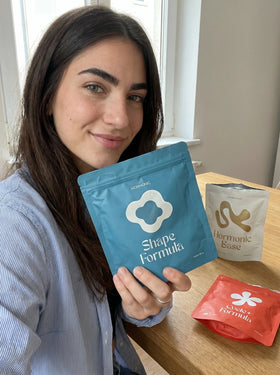
Strength training improves your insulin sensitivity, and this is exactly where Shape Formula comes in. It supports stable blood sugar and your metabolism, so that your training and nutrition work better together.
The female body changes throughout life, and with it, what training can achieve. In younger years, the focus is on building muscle and bone mass, a reserve you'll draw on later. In midlife and around menopause, the focus shifts to maintenance: protecting muscle mass, bone density, and insulin action, which otherwise decline more rapidly.
A frank note on training methods: Which method works best depends on the goal and the starting condition. A network meta-analysis on insulin resistance in PCOS, for example, found that yoga and high-intensity interval training lowered HOMA-IR more significantly than pure strength training (Network Meta-Analysis, 2025). This does not contradict the benefits of strength training; it merely shows that there is no universal best program for everyone. The best training method is one that suits your situation and that you can maintain long-term.
The menstrual cycle also plays a role, albeit a smaller one than often claimed. Some women feel stronger in the first half of their cycle and use this phase for more intense sessions. However, the evidence for strictly cycle-based training control is limited and inconsistent. More important than a rigid plan is to listen to your energy levels and consistently stick with it, rather than making training dependent on individual cycle phases.
What you can do in everyday life
Train with resistance two to three times a week:In most studies, effective programs involved at least three sessions per week. Even two fixed appointments are a good, realistic start.
Progressively overload:The stimulus comes from gradually increasing load. Increase weight or repetitions when an exercise becomes easier.
Use large, multi-joint exercises:Squats, deadlifts, presses, and pulls engage many muscles simultaneously, making them particularly effective hormonally and metabolically.
Eat enough protein:Sufficient protein intake supports muscle maintenance and building, especially during and after menopause.
Get guidance at the beginning:Clean technique protects against injuries and makes training more effective. Professional guidance in the first few weeks is worthwhile.
When you should seek medical advice
Strength training is safe and beneficial for most women. However, talk to a doctor beforehand if you have known cardiovascular problems, are pregnant, suffer from osteoporosis or a diagnosed metabolic disorder, or if you are returning to exercise after a long break or injury. This way, the training can be safely tailored to your situation.
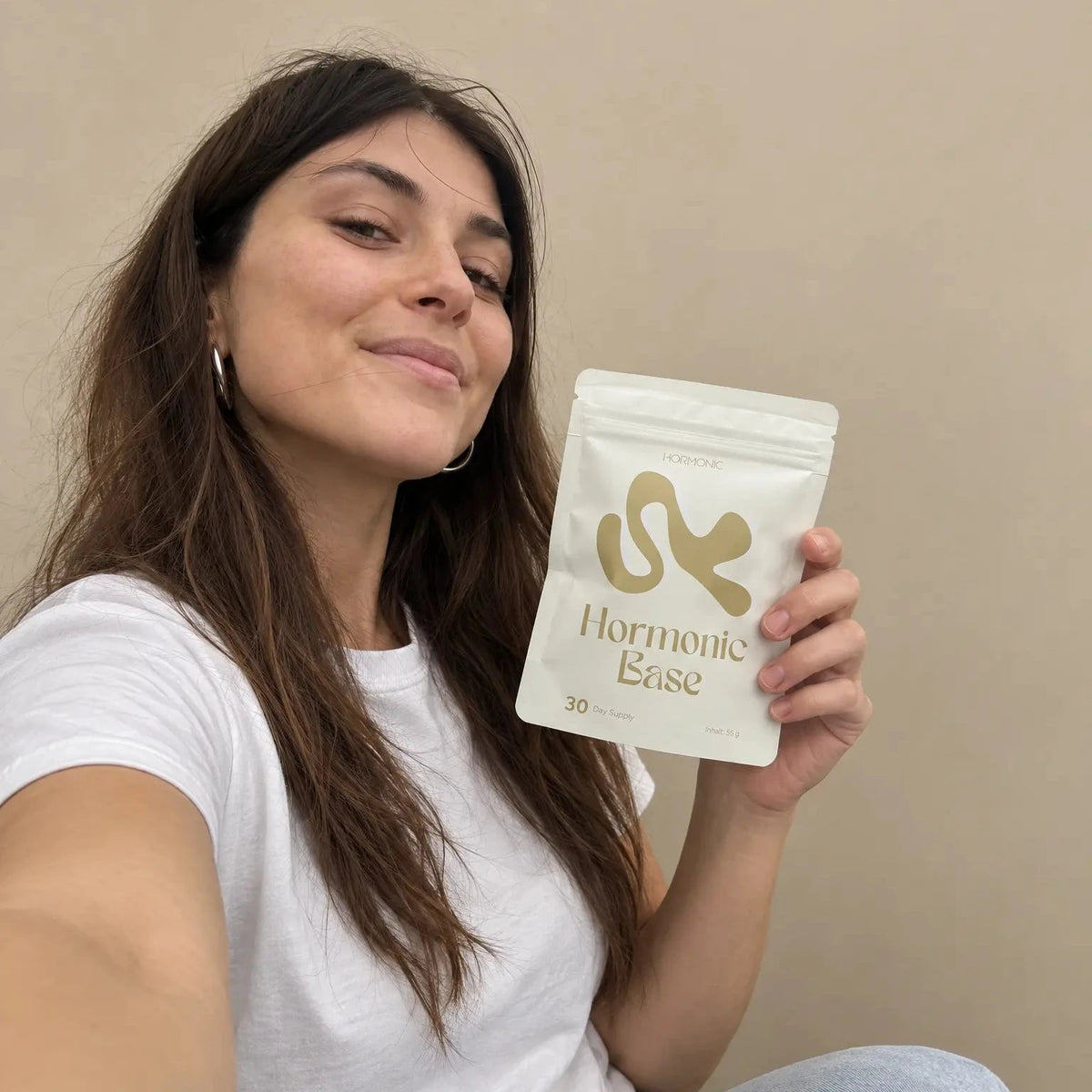
Hormonic Base provides 16 essential active ingredients that support key bodily processes. Shape Formula builds on this, containing clinically studied botanicals for metabolism, insulin, and cravings.
Strength training for women is far more than just a means of body shaping. Through muscle tissue as a hormonal organ, it intervenes in blood sugar, insulin action, and inflammatory processes, and it protects bone density during a phase of life when estrogen no longer provides this protection. The evidence for this is consistent across many meta-analyses.
At the same time, there is no universal best program. How strong the effect is depends on your starting condition, intensity, and regularity. The most important step is to start at all and stick with it, preferably with a form of training that suits your life.
Frequently Asked Questions About Strength Training for Women
Does strength training make women too muscular?
No. Women have significantly less testosterone than men, which is why visible muscle growth is slow and controlled. Instead of bulky muscles, the main results are increased strength, bone protection, and more stable blood sugar. Very pronounced muscle development requires years of targeted training and is not the result of normal strength training two to three times a week.
How often should women strength train?
In most studies, effective programs involved at least three sessions per week, especially for metabolic effects on blood sugar and insulin. Two fixed appointments per week are a good and realistic starting point. More important than the perfect frequency is that you train regularly and progressively increase the load over time.
Hilft Krafttraining gegen Osteoporose?
Ja, Krafttraining gehoert zu den wenigen nicht-medikamentoesen Massnahmen mit guter Evidenz gegen Knochenabbau. Eine Meta-Analyse von 17 randomisierten Studien mit 690 Frauen nach der Menopause zeigte eine signifikante Verbesserung der Knochendichte an Wirbelsaeule, Oberschenkelhals und Huefte. Besonders wirksam ist die Kombination aus Krafttraining und belastenden, gewichttragenden Uebungen. Bei bekannter Osteoporose sollte das Training aerztlich abgestimmt werden.
Ist Krafttraining oder Ausdauer besser für den Hormonhaushalt?
Beides hat seinen Platz, und die beste Wahl haengt vom Ziel ab. Krafttraining ist besonders stark beim Erhalt von Muskelmasse, beim Schutz der Knochen und bei der Insulinsensitivitaet. Ausdauer- und Intervalltraining koennen je nach Situation den Blutzucker ebenfalls deutlich verbessern. In einer Netzwerk-Meta-Analyse zu PCOS senkten zum Beispiel Yoga und intensives Intervalltraining den HOMA-IR staerker als reines Krafttraining. Es gibt also kein universelles bestes Programm, sinnvoll ist oft eine Kombination.
Scientific Sources
Resistance training parameters for bone mineral density in postmenopausal women: a systematic review and meta-analysis (2025). Journal of Orthopaedic Surgery and Research, 20. doi:10.1186/s13018-025-05890-1
Wang, Z., Zan, X., Li, Y., Lu, Y., Xia, Y., Pan, X. (2023). Comparative efficacy of different resistance training protocols on bone mineral density in postmenopausal women: a network meta-analysis. Frontiers in Physiology, 14. doi:10.3389/fphys.2023.1105303
Jamka, M., et al. (2023). The role of resistance training in influencing insulin resistance among adults with overweight or obesity without diabetes: A systematic review and meta-analysis. PMID:37331899
Wang, J., et al. (2025). Resistance training enhances metabolic and muscular health and reduces systemic inflammation in middle-aged and older adults with type 2 diabetes: a meta-analysis. Diabetes Research and Clinical Practice. doi:10.1016/j.diabres.2025.112456
Wojciechowska, A., et al. (2024). Effects of a Circuit Training Program on Myokine Levels in Insulin-Resistant Women: A Randomised Controlled Trial. PMC11620807
Effects of combined exercise training on glucose metabolism and inflammatory markers in sedentary adults: a systematic review and meta-analysis (2024). Scientific Reports, 14. doi:10.1038/s41598-024-51832-y
About the Author
Lee Paulina Pape
Founder · MSc Psychology · Hormonic
Lee is a psychologist (MSc) and co-founder of Hormonic. As CEO, she makes women's hormonal health understandable and accessible.
Note: This article is based on current guidelines and scientific work (as of 2026). It is for informational purposes only and does not replace medical advice, diagnosis, or treatment.