

Creatine is suddenly everywhere in the menopause discussion. We separate hype from evidence: What creatine can really do for muscle strength and bones in midlife and what's important when taking it.
For a long time, creatine was considered something for strength athletes. Now, it appears in every other menopause reel, often with grand promises regarding bones, muscles, and even mood. Is it really worth looking into, or is it just the next hype?
The short answer: Creatine is well-researched, and there are good reasons why it's interesting for women in midlife. But the evidence is more nuanced than the hype suggests.
Support strength and muscle mass, in combination with strength training.
Balance hormones or improve bone density alone.
What happens in the body?
Creatine is formed in the liver, kidneys, and pancreas and is mostly stored in the muscles. There, it helps to quickly recharge ATP, the cell's fast energy currency. This is particularly relevant during short, intense efforts, such as strength training.
During menopause, this becomes more important because the breakdown of muscle strength and mass accelerates with declining estrogen (Wright et al., 2024). This is exactly where the idea comes in: if creatine supports training performance, it could help counteract age-related muscle loss.
Creatine is not a substitute for exercise, but an enhancer. Without movement, most of its benefits are lost.
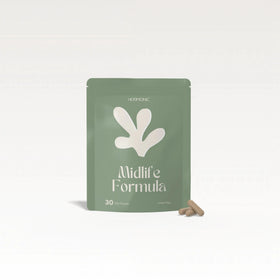
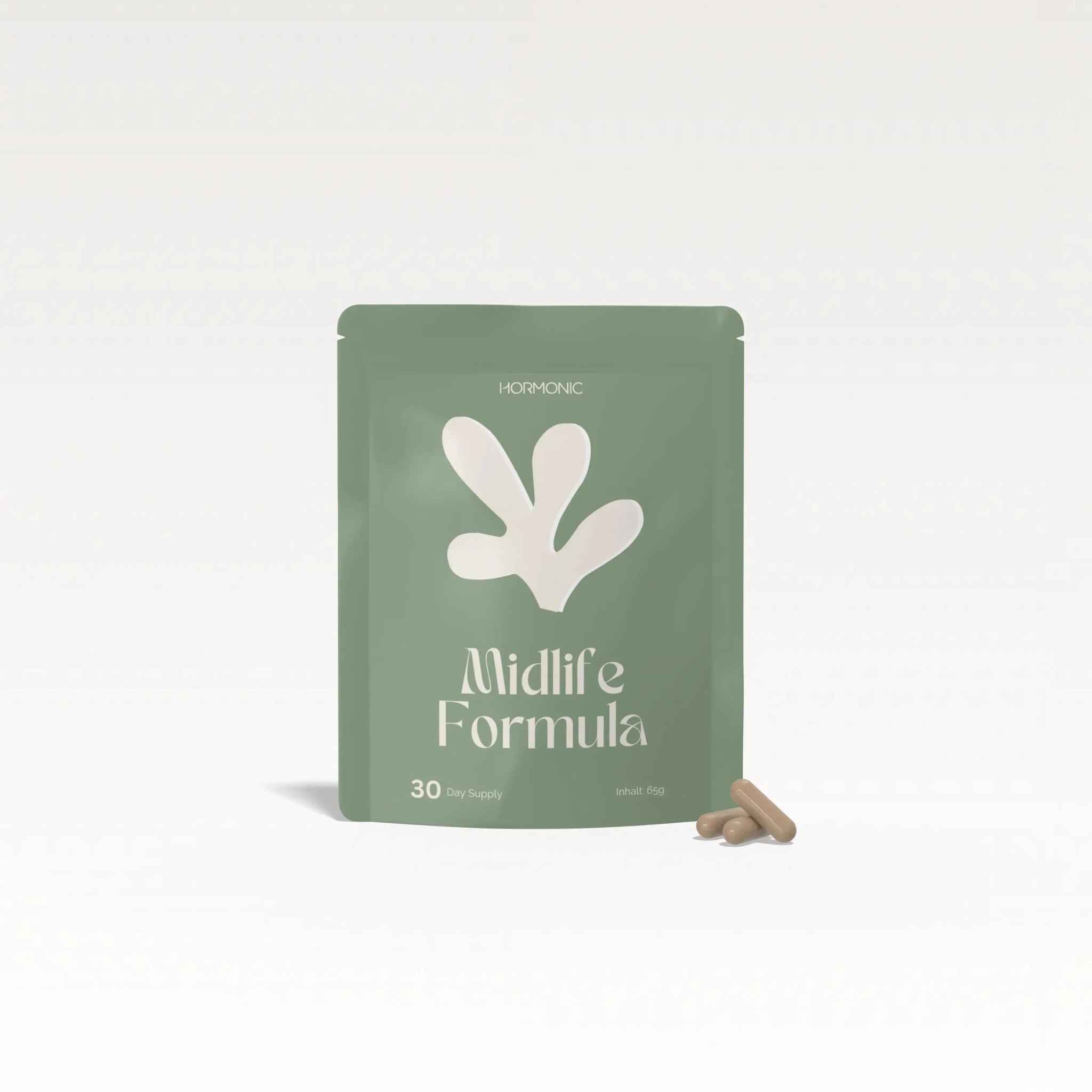
The Midlife Formula contains creatine in addition to saffron, red clover, and polyphenols such as quercetin and resveratrol, thoughtfully combined for women who want to actively navigate the changes from perimenopause onwards.
€75,00

Hormone consultation with our medical team
Your symptoms, your lab results, your plan. In a personal video consultation, we'll work together to find out what suits you best.
Frequent Questions About Creatine in Menopause
Is creatine useful during menopause?
How much creatine should menopausal women take?
Sollte man Kreatin morgens oder abends einnehmen?
Macht Kreatin Wassereinlagerungen oder Gewichtszunahme?
Kann ich Kreatin und Magnesium zusammen einnehmen?
Scientific Sources
- dos Santos EEP et al. (2021). Efficacy of Creatine Supplementation Combined with Resistance Training on Muscle Strength and Muscle Mass in Older Females: A Systematic Review and Meta-Analysis. Nutrients, 13(11), 3757. doi:10.3390/nu13113757
- Sales LP et al. (2020). Creatine Supplementation (3 g/d) and Bone Health in Older Women: A 2-Year, Randomized, Placebo-Controlled Trial. The Journals of Gerontology: Series A, 75(5), 931-938. doi:10.1093/gerona/glz162
- Chilibeck PD et al. (2023). A 2-Year Randomized Controlled Trial on Creatine Supplementation during Exercise for Postmenopausal Bone Health. Medicine & Science in Sports & Exercise, 55(10), 1750-1760. doi:10.1249/MSS.0000000000003202
- Smith-Ryan AE et al. (2021). Creatine Supplementation in Women's Health: A Lifespan Perspective. Nutrients, 13(3), 877. doi:10.3390/nu13030877
- Wright VJ et al. (2024). The musculoskeletal syndrome of menopause. Climacteric, 27(5), 466-472. doi:10.1080/13697137.2024.2380363
- Kreider RB et al. (2017). International Society of Sports Nutrition position stand: safety and efficacy of creatine supplementation. Journal of the International Society of Sports Nutrition, 14, 18. doi:10.1186/s12970-017-0173-z
About the Author

You might also be interested in this.

Magnesium can support sleep, mood, and bones in perimenopause and postmenopause. Here's what the research actually says, which forms work best, and what magnesium can't do.
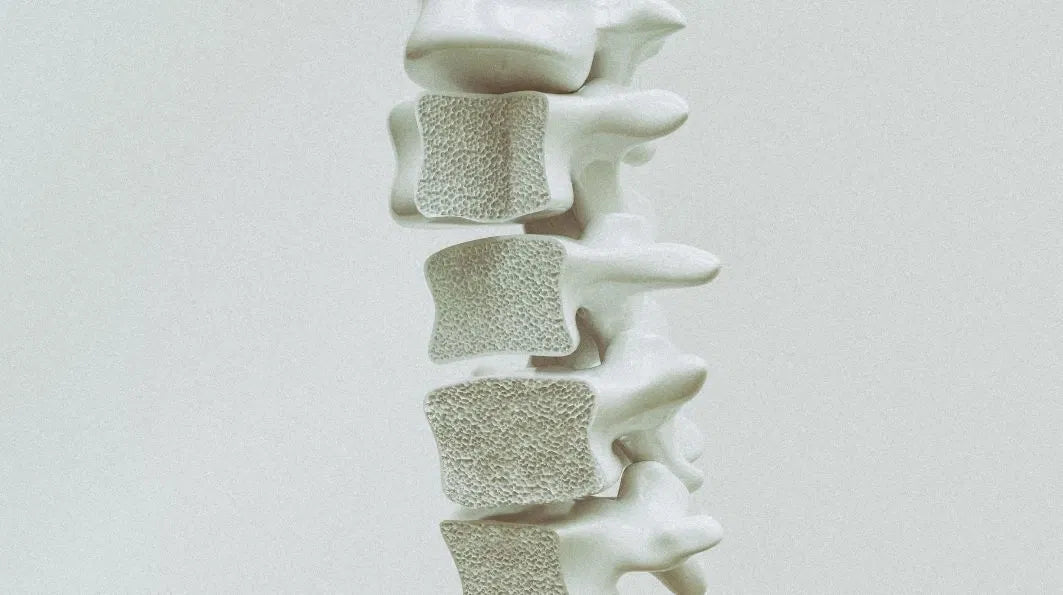
Osteoporosis in women is silent for a long time. Learn what happens in the body, what symptoms and risk factors exist, and how you can specifically prevent bone loss.
What happens during menopause? Stages, symptoms, recognizing perimenopause, and what truly helps. Explained by doctors, scientifically proven.