


For women, weight is rarely just a matter of calories in and calories out. It is closely linked to hormones. This guide clarifies what science says about hormones, insulin, and metabolism, and what studies show actually helps.
What does "hormonal metabolism" mean for women?
Female metabolism describes how your body obtains, stores, and uses energy from food. Hormones such as estrogen, progesterone, testosterone, and especially insulin regulate these processes. If the hormonal system changes, for example, with PCOS, during menopause, or after discontinuing the pill, how your body handles weight and blood sugar often changes too.
Perhaps you're familiar with this: You eat the same as always, you move the same as always, yet your body changes. The scale goes up, your stomach feels different, cravings appear out of nowhere. This is not a lack of discipline. For women, weight is rarely just a matter of calories in and calories out. It is closely linked to your hormones.
This guide clarifies what science currently says about the connection between hormones, insulin, and metabolism in women. We'll look at what happens in the body, why metabolism shifts during certain life stages, and what studies truly show helps. Honestly, without promises that the evidence doesn't support.
- Insulin Resistance in Women: Causes, Symptoms & What Helps
- Naturally Increase GLP-1: What Foods Can Do
- Blood Sugar Spikes: How Bad Are They Really?
- Weight Gain from the Pill
- Weight Gain After Discontinuing the Pill
- Weight Gain During Menopause
- Naturally Support Metabolism
- Intermittent Fasting for Women
What Hormones Have to Do with Your Metabolism
Insulin is the central hormone when it comes to metabolism and weight. It is produced in the pancreas and ensures that glucose from the blood enters the cells, where it is used as energy or stored. As long as the cells respond well to insulin, this process runs smoothly.
Female sex hormones directly intervene here. Estrogen supports insulin action in several ways, including glucose uptake in skeletal muscle and the regulation of glucose production in the liver. Eaton and Sethi (2019), in a review paper, describe how closely estrogen, adipose tissue, and female metabolism are intertwined. Simply put: Stable estrogen levels have a beneficial effect on insulin sensitivity.
Progesterone and testosterone also play a role. Progesterone fluctuates throughout the cycle and can influence appetite and hunger in the second half of the cycle. An excess of androgens, i.e., male hormones, in women is often linked to insulin resistance, as typically seen in PCOS. Metabolism is therefore not an isolated system but reacts to the entire hormonal interplay.
Insulin Resistance: The Common Thread
When cells become less responsive to insulin over time, it is called insulin resistance. The pancreas then produces more insulin to keep blood sugar stable. Persistently high insulin levels promote fat storage, especially around the abdomen, and can intensify cravings. Insulin resistance is thus often the common denominator behind very different complaints.
This is particularly evident in PCOS. Insulin resistance plays a central role in the development of the syndrome and affects a large proportion of those affected, both lean and overweight women. But even independently of PCOS, insulin resistance is key to understanding why weight and metabolism change in women.
How You Can Recognize Insulin Resistance
Insulin resistance usually develops insidiously and goes unnoticed for a long time. However, there are clues that should raise an alarm: stubborn belly fat that hardly changes despite dietary adjustments, frequent cravings especially for sweets, a significant energy slump after carbohydrate-rich meals, or dark, velvety skin changes on the neck and armpits. An irregular cycle or pronounced PCOS symptoms can also be related to it.
Only a medical examination can provide certainty. Fasting blood glucose, fasting insulin, and calculated values such as the HOMA-IR index can be used to assess insulin sensitivity. These values are also helpful because they often reveal a change long before anything shows on the scale. If you suspect this, it's worth talking to your doctor.
Nutrient Support for Metabolism, Weight & Blood Sugar
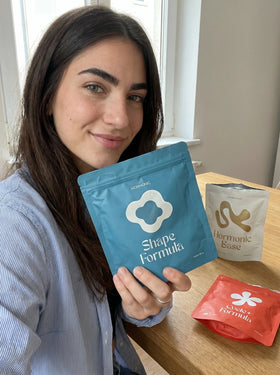
Shape Formula combines micronutrients that can support a balanced diet and a stable metabolism. Developed by doctors based on clinical studies and manufactured in Austria.

Get medical support, comfortably from home
Book your free initial consultation with one of our Hormonic doctors now and ask all your questions. We look forward to accompanying you on your hormonal journey.
Frequently Asked Questions about Metabolism and Hormones
Do hormones really affect metabolism in women?
Why am I gaining weight during menopause, even though I haven't changed anything?
Kann man den Stoffwechsel mit Lebensmitteln oder Supplements ankurbeln?
Hilft Krafttraining bei Insulinresistenz?
Scientific Sources
- Jiang, X. et al. (2025). Hormone therapy and insulin resistance in non-diabetic postmenopausal women: a systematic review and meta-analysis. Climacteric, 28(6). doi:10.1080/13697137.2025.2509844
- Li, J. et al. (2021). Effects of resistance training on insulin sensitivity in the elderly: A meta-analysis of randomized controlled trials. Journal of Exercise Science & Fitness, 19(4), 241-251. doi:10.1016/j.jesf.2021.08.002
- Greff, D. et al. (2023). Inositol is an effective and safe treatment in polycystic ovary syndrome: a systematic review and meta-analysis of randomized controlled trials. Reproductive Biology and Endocrinology, 21(1). doi:10.1186/s12958-023-01055-z
- Effect of dietary glycemic index on insulin resistance in adults without diabetes mellitus: a systematic review (2025). Frontiers in Nutrition, 12, 1458353. doi:10.3389/fnut.2025.1458353
- Eaton, S. A. & Sethi, J. K. (2019). Immunometabolic Links between Estrogen, Adipose Tissue and Female Reproductive Metabolism. Biology, 8(1), 8. doi:10.3390/biology8010008
- German Adiposity Society (DAG). S3 Guideline Prevention and Therapy of Obesity. AWMF Reg. No. 050-001.
About the Author

You might also be interested in this.

How harmful are blood sugar spikes in healthy women really, and do you need a CGM? An honest, evidence-based look behind the glucose hype, including cycle and menopause effects.

Boost metabolism: We separate myth from evidence and show which levers really count for women, from protein and muscles to thyroid, insulin, and the menstrual cycle.

Ozempic effect without injections: Certain foods can boost your GLP-1 production and thus support satiety, blood sugar, and hormonal balance. Learn which foods work—and how to combine them correctly.