


Cart

Your cart is empty

Continue shopping

Trending searches

Featured products

Hormonal Base
Sale price€65,00
(5.0)
Midlife balance
Sale price€75,00
(5.0)
Östrogenmangel: Symptome, Ursachen & was im Körper passiert
HormoneJun 4, 20268 min read

Estrogen Deficiency: Symptoms, Causes & What Happens in the Body

Estrogen deficiency is not solely a menopause diagnosis. It affects women at every stage of life – and symptoms arise precisely where estrogen normally has a regulatory effect.

Key takeaways

Estrogen deficiency does not only affect menopause. It is caused by menopause, FHA, POI or iatrogenic causes and manifests systemically: bones, heart, brain, skin and urogenital system are affected. A single laboratory value is rarely sufficient for diagnosis.

Next StepWhat really helps: Naturally treat estrogen deficiency →

Brief definition

What is Estrogen Deficiency?

Estrogen deficiency (hypoestrogenism) refers to an estrogen level that is too low for a woman's life stage and hormonal status. Since estrogen receptors are present in almost every body tissue, a deficiency can trigger a wide range of symptoms.

  • Not just menopause: Energy deficit, POI, and medical interventions can lead to estrogen deficiency at any stage of life.
  • The most biologically active estrogen during reproductive age is Estradiol (E2). After menopause, Estrone (E1) dominates.
  • A single blood value is hardly meaningful without cycle context.

Estrogen deficiency is not a diagnosis limited to menopause. It can affect women at any stage of life: athletes with chronic energy deficit, women with primary ovarian insufficiency long before menopause, and patients after medical treatments. This article explains what estrogen does in the body, what causes a deficiency, how it manifests symptomatically, and what constitutes sound diagnostics.

Estrogen in the body: far more than a reproductive hormone

When we speak of "estrogen," we are actually referring to a group of steroid hormones. During reproductive age, estradiol (E2) is the most biologically potent form, produced primarily in the ovaries. After menopause, estrone (E1) dominates. Estrogen binds to two receptor types (ERα and ERβ), which are expressed in almost every tissue of the body. This is why the consequences of a deficiency are so far-reaching:

Organ System Role of Estrogen Consequences of Deficiency
Bones Inhibits bone breakdown, stimulates bone formation Bone density loss, osteoporosis risk
Heart and Blood Vessels Lowers LDL, raises HDL, vascular protection Unfavorable lipid profile, increased arteriosclerosis risk
Brain and Mood Modulates serotonin and dopamine, thermoregulation, neuroprotection Hot flashes, sleep disturbances, mood changes
Urogenital System Maintains mucosal moisture of vagina and bladder, stabilizes pH GSM: vaginal dryness, dyspareunia, frequent urinary tract infections
Skin and Hair Collagen and elastin production Reduction in skin thickness and elasticity, hair thinning
Metabolism Fat distribution, insulin sensitivity More visceral fat, altered insulin sensitivity
Cycle and Fertility Follicle maturation, ovulation via HPO axis Cycle irregularities up to amenorrhea, anovulation

Causes: When and why does estrogen level decrease?

The causes of estrogen deficiency are heterogeneous. They differ in mechanism, life stage, reversibility, and clinical urgency. Four main categories are clinically relevant:

1. Perimenopause and Menopause

The physiological decrease in estrogen begins gradually from the mid-30s. In perimenopause, cycles become irregular, follicles mature less efficiently, and estrogen levels fluctuate significantly before permanently declining. Menopause is reached after 12 consecutive months without menstruation. Cause: depleted ovarian reserve. Not reversible.

2. Functional Hypothalamic Amenorrhea (FHA)

FHA is responsible for 20-35% of all cases of secondary amenorrhea (ASRM 2024). The mechanism: Insufficient energy availability, intense training, or chronic stress disrupt pulsatile GnRH secretion in the hypothalamus. LH pulses are absent, follicular maturation does not occur, and estradiol falls to postmenopausal levels. FHA affects women of reproductive age and is usually reversible if the cause is eliminated.

An estimated 17.4 million women of reproductive age worldwide are affected by FHA-related hypoestrogenism. In the USA, this accounts for approximately 1.6 million women between 18 and 44 years old. FHA is therefore not a marginal phenomenon, but a clinically relevant diagnosis in young women.

3. Primary Ovarian Insufficiency (POI)

POI describes the premature loss of ovarian function before the age of 40. According to the updated ESHRE/ASRM guideline 2024, the prevalence of POI is approximately 3.5% of all women, significantly more than previously assumed.

Causes of POI include genetic abnormalities (Turner syndrome, FMR1 premutation), autoimmune diseases (often associated with Hashimoto's or adrenal insufficiency), iatrogenic damage from chemotherapy or radiation, and an idiopathic cause in 50-70% of cases.

Diagnostic criteria according to the guideline: Amenorrhea or cycle irregularities for at least 4 months, combined with FSH above 25 IU/L in two separate measurements at least 4 weeks apart.

4. Iatrogenic Causes

Treatments such as chemotherapy, pelvic radiation, bilateral oophorectomy, or GnRH analogues (e.g., for endometriosis or fibroids) can abruptly and permanently lower estrogen levels. Surgical menopause before the age of 45 is considered a clinical risk indicator for long-term cardiovascular, skeletal, and possible cognitive consequences.

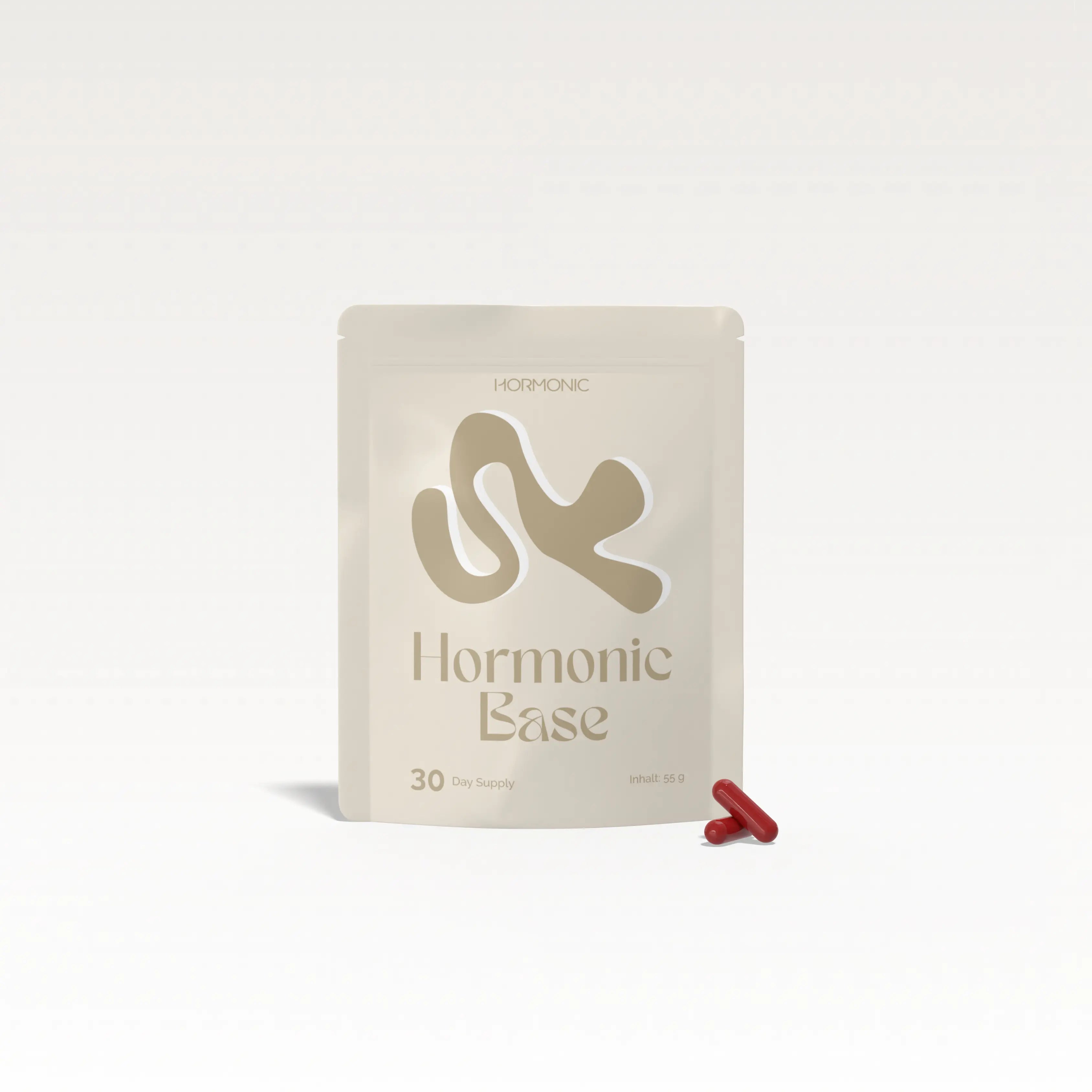
Hormonic Base – The Nutrient Base for Hormonal Regulation

Vitamin D, zinc, magnesium, selenium, B vitamins: Hormonic Base provides the 16 essential micronutrients that have been associated with hormonal balance and cycle health in studies. Doctor-developed, lab-tested, for all stages of life.

€65,00

Discover Hormonic Base

Symptoms: What the body shows

The symptoms of estrogen deficiency directly reflect which systems estrogen normally regulated. They vary depending on the cause, life stage, and individual baseline level.

Vasomotor symptoms: Hot flashes and night sweats

The most characteristic symptoms arise from altered thermoregulation in the hypothalamus. Hot flashes affect 50-80% of postmenopausal women. In young women with FHA, they are less common than menstrual disorders.

Genitourinary Syndrome of Menopause (GSM)

GSM includes vaginal dryness, dyspareunia, vulvovaginal atrophy, urinary urgency, and increased susceptibility to urinary tract infections. GSM affects 27-84% of postmenopausal women (StatPearls 2024). It tends to worsen without treatment. Evidence: very strong.

Bones and joints

Estrogen inhibits osteoclasts. In case of deficiency, bone resorption dominates. In FHA, this process can begin in young women without causing acute symptoms. Silent bone loss often only becomes visible with a DXA scan. Evidence: very strong.

Sleep and psyche

Psychosocial symptoms occur in 30-40% of postmenopausal women (Systematic Review 2023). Estrogen modulates serotonergic and dopaminergic signaling pathways, which explains mood changes and irritability. Sleep is directly disturbed by hot flashes and altered circadian signaling. Evidence: strong.

Heart and circulatory system

Estrogen has a protective effect on blood vessels. Women with estrogen deficiency before the age of 45 have an increased long-term risk of heart disease (Dratva et al., 2025). Evidence: moderate.

Cognition

Estrogen modulates neuroprotection and neuroinflammatory processes. Concentration problems and brain fog are frequently reported in perimenopause. The evidence for long-term cognitive consequences is moderate and still developing. Evidence: moderate.

The temporal perspective: short-term, medium-term, long-term

Estrogen deficiency symptoms do not all develop simultaneously. They follow a typical temporal pattern:

Short-term (weeks to months)

  • Cycle changes, amenorrhea
  • Hot flashes and night sweats
  • Sleep disturbances
  • Mood changes and irritability
  • Loss of libido and difficulty concentrating

Medium-term (1 to 3 years)

  • Vaginal dryness, dyspareunia, more frequent urinary tract infections
  • Skin and hair changes
  • Altered body fat distribution
  • Persistent fatigue and reduced resilience

Long-term (years and decades)

  • Bone density loss, increased risk of osteoporosis
  • Increased cardiovascular risk
  • Possible long-term cognitive changes
  • Chronic genitourinary syndrome without treatment

Diagnostics: what is really informative

A single blood test is rarely sufficient. What actually helps:

1. Estradiol (E2) alone is not enough

E2 fluctuates during the cycle from less than 50 pg/ml in the early follicular phase to over 200 pg/ml shortly before ovulation. Without knowing the timing in the cycle, a low value is difficult to interpret. According to ESHRE/ASRM 2024, the POI diagnosis is not primarily based on estradiol levels.

2. FSH: the crucial marker

Elevated FSH signals that the pituitary gland is trying to compensate for declining ovarian function. For POI:FSH above 25 IU/L in two measurements at least 4 weeks apart, combined with amenorrhea for at least 4 months.

3. Clinical picture and menstrual history

How long have the symptoms been present? How long has the period been irregular? Are there energy deficits, intense exercise, chronic stress, or weight changes that could explain FHA? The overall clinical picture is often more informative than a single lab value.

4. Additional lab diagnostics

AMH (ovarian reserve), LH, prolactin (to rule out other causes of amenorrhea), thyroid values (TSH, fT3), cortisol. In case of early suspicion of POI: Karyotype analysis, autoimmune diagnostics. In case of prolonged deficiency: Bone density measurement (DXA).

When should you see a doctor?

  • Period absent for more than 3 months, without pregnancy, breastfeeding, or contraception
  • Menstrual irregularities with severe accompanying symptoms (sleep, mood, concentration)
  • Hot flashes, vaginal dryness or GSM symptoms before the age of 45
  • Suspicion of POI, especially with a positive family history
  • Bone pain or increased fracture risk without obvious reason
  • Estrogen deficiency after chemotherapy, radiation, or oophorectomy

Early clarification is particularly crucial for young women: Long-term estrogen deficiency without treatment can sustainably affect bone and heart health, even without acute symptoms.

Find out if you have an estrogen deficiency

With the Hormonic Diagnostic Kit, you can conveniently have important hormones and blood markers determined from home. No waiting times, highly precise, including medical supervision.

Test now

Conclusion

Estrogen deficiency is not a uniform syndrome. Its symptoms vary depending on the stage of life, cause, and individual hormonal status. What unites them: they arise exactly where estrogen normally actively regulates.

The greatest diagnostic risk lies in oversimplification. A single estradiol value does not make a diagnosis. And the treatment of FHA in a 28-year-old is fundamentally different from the management of POI or hormonal support during perimenopause.

Early clarification is crucial: long-term estrogen deficiency before the age of 45 demonstrably increases the risk of bone loss and heart disease, even without acute symptoms. Those who know the signals and act early can prevent or minimize secondary damage in many cases. What really helps with functional deficiency is described in the partner article on natural measures.

Common Questions About Estrogen Deficiency

What is the difference between estrogen deficiency and estrogen dominance?

Estrogen deficiency describes an estrogen level that is too low, either absolutely or in relation to the life stage. Estrogen dominance, on the other hand, describes a relative imbalance between estrogen and progesterone, where estrogen predominates proportionally, even if the absolute level is normal or low. The concepts do not automatically overlap. True estrogen deficiency is diagnostically measurable via FSH, estradiol, and clinical picture.

Can estrogen deficiency also affect women under 40?

Yes, and more often than assumed. Two relevant causes: Firstly, functional hypothalamic amenorrhea (FHA), which can occur in women of any reproductive age due to energy deficit, overtraining, or chronic stress. Secondly, primary ovarian insufficiency (POI), which by definition occurs before the age of 40 and affects about 3.5% of all women according to the ESHRE/ASRM guideline 2024.

Wie unterscheiden sich die Symptome bei Menopause und FHA?
Bei der Menopause fällt Östrogen physiologisch und dauerhaft. Hitzewallungen, Nachtschweiß und genitourinäre Atrophie sind typische und häufige Symptome. Bei FHA bei jungen Frauen sind Hitzewallungen seltener, weil der Abfall weniger abrupt ist. Das häufigste Frühzeichen der FHA ist die ausbleibende oder unregelmäßige Periode, begleitet von Müdigkeit, verminderter Belastbarkeit und gelegentlich Schlafstörungen. Der stille Knochenverlust ist in beiden Fällen klinisch relevant, wird aber bei jungen Frauen oft unterschätzt.
Wie lange dauert es, bis Symptome nach einem Östrogenabfall auftreten?
Das hängt von Ursache und Geschwindigkeit des Abfalls ab. Nach einer bilateralen Ovarektomie (chirurgische Menopause) können Hitzewallungen und Schlafstörungen innerhalb weniger Tage einsetzen. Bei FHA entwickeln sich Symptome über Wochen bis Monate. Langzeitfolgen wie Knochendichteverlust entwickeln sich still über Jahre, ohne akute Schmerzen zu verursachen, und werden oft erst bei einer DXA-Messung sichtbar.
Ist Östrogenmangel mit einem einfachen Bluttest feststellbar?
Nicht allein über einen einzelnen Wert. Estradiol schwankt im Zyklusverlauf stark und ist ohne Kenntnis des Zykluszeitpunkts kaum interpretierbar. Aussagekräftiger ist die Kombination aus FSH (erhöht bei schlechter Ovarfunktion), Zyklusanamnese und klinischem Bild. Für POI gelten laut ESHRE/ASRM 2024 klare Diagnosekriterien: Amenorrhoe über mindestens 4 Monate und FSH über 25 IU/L in zwei Messungen im Abstand von mindestens 4 Wochen.

Scientific Sources

  • ESHRE/ASRM/IMS Guideline Development Group (2024). Evidence-based guideline: premature ovarian insufficiency. Human Reproduction Open, 2024(4), hoae065. doi:10.1093/hropen/hoae065
  • Meczkalski, B. et al. (2024). Neuroendocrine disturbances in women with functional hypothalamic amenorrhea. Endocrine, 84(3), 769-785. doi:10.1007/s12020-023-03619-w
  • Pedreira, C.C., Maya, J. & Misra, M. (2022). Functional hypothalamic amenorrhea: Impact on bone and neuropsychiatric outcomes. Front Endocrinol, 13, 953180. doi:10.3389/fendo.2022.953180
  • Health-Related Needs of Females during Menopause: Systematic Review (2023). J Menopausal Med. PMC10183767.
  • Kashani, S. (2024). Genitourinary Syndrome of Menopause. StatPearls NCBI NBK559297.
  • Prokai-Tatrai, K. & Prokai, L. (2024). 17β-estradiol on the estrogen-deficient female brain. Front Endocrinol, 14, 1310432. doi:10.3389/fendo.2023.1310432
  • Den Ruijter, H.M. & Kararigas, G. (2022). Estrogen and Cardiovascular Health. Front Cardiovasc Med, 9, 886592. doi:10.3389/fcvm.2022.886592
  • Dratva, J. et al. (2025). Menopausal Hormone Therapy: Risks, Benefits and Emerging Options. Int J Mol Sci, 26(22), 11098. doi:10.3390/ijms262211098

About the Author

Lee Paulina Pape

Lee Paulina Pape

Founder · MSc Psychology · Hormonic

Lee is a psychologist (MSc) and co-founder of Hormonic. As CEO, she makes women's hormonal health understandable and accessible.

Note: This article is based on current guidelines and scientific work (as of 2026). It is for informational purposes only and does not replace medical advice, diagnosis, or treatment.

Share

You might also be interested in this.

Östrogenmangel – Was hilft wirklich? Natürliche Maßnahmen im Überblick
MikronährstoffeFeb 26, 20269 min read
Estrogen Deficiency – What Really Helps? A Summary of Natural Measures

Do you suspect an estrogen deficiency? This article shows which natural measures actually work according to current studies – starting with the most powerful lever: energy availability. Plus an hon...

Magersucht und keine Periode: Ursachen, Folgen, und was Du tun kannst
ZyklusFeb 25, 20268 min read
Anorexia and amenorrhea: Causes, consequences, and what you can do

Why does anorexia cause periods to stop? Learn about the hormonal causes of functional hypothalamic amenorrhea and what helps with underweight.

Östrogenmangel – Was hilft wirklich? Natürliche Maßnahmen im Überblick
MikronährstoffeFeb 26, 20269 min read
Estrogen Deficiency – What Really Helps? A Summary of Natural Measures

Do you suspect an estrogen deficiency? This article shows which natural measures actually work according to current studies – starting with the most powerful lever: energy availability. Plus an hon...