



Berberine for weight loss is everywhere: touted as natural Ozempic, sold in capsules, praised in forums. But what's the truth, what do studies say about its effects, and what side effects are often kept quiet? We take an honest look at the data and what really matters when it comes to losing weight.
Berberine is a plant-based active ingredient derived from barberry and other plants. It activates the enzyme AMPK, a central energy sensor in the cell, and is therefore frequently studied in relation to weight loss, blood sugar, and insulin. Its biggest weakness: very low bioavailability.
Berberine for weight loss is often promoted online as "natural Ozempic." This is catchy but oversimplified. Let's look at what berberine really does in the body, what studies show about its effect on weight loss, what side effects there are, and what its limitations are, honestly and without miracle promises.
What is berberine?
Berberine is an alkaloid, a secondary plant compound found in barberry and goldenseal, among other plants. It has been used in traditional medicine for centuries. In the last two decades, research has primarily investigated its effect on metabolism because berberine acts at a central control point of energy production.
Exactly this mechanism explains why berberine receives so much attention. Let's look at it next.
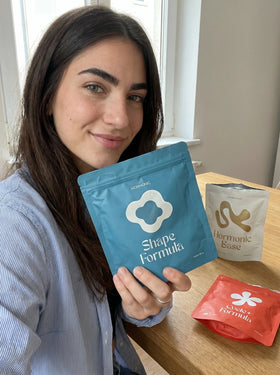
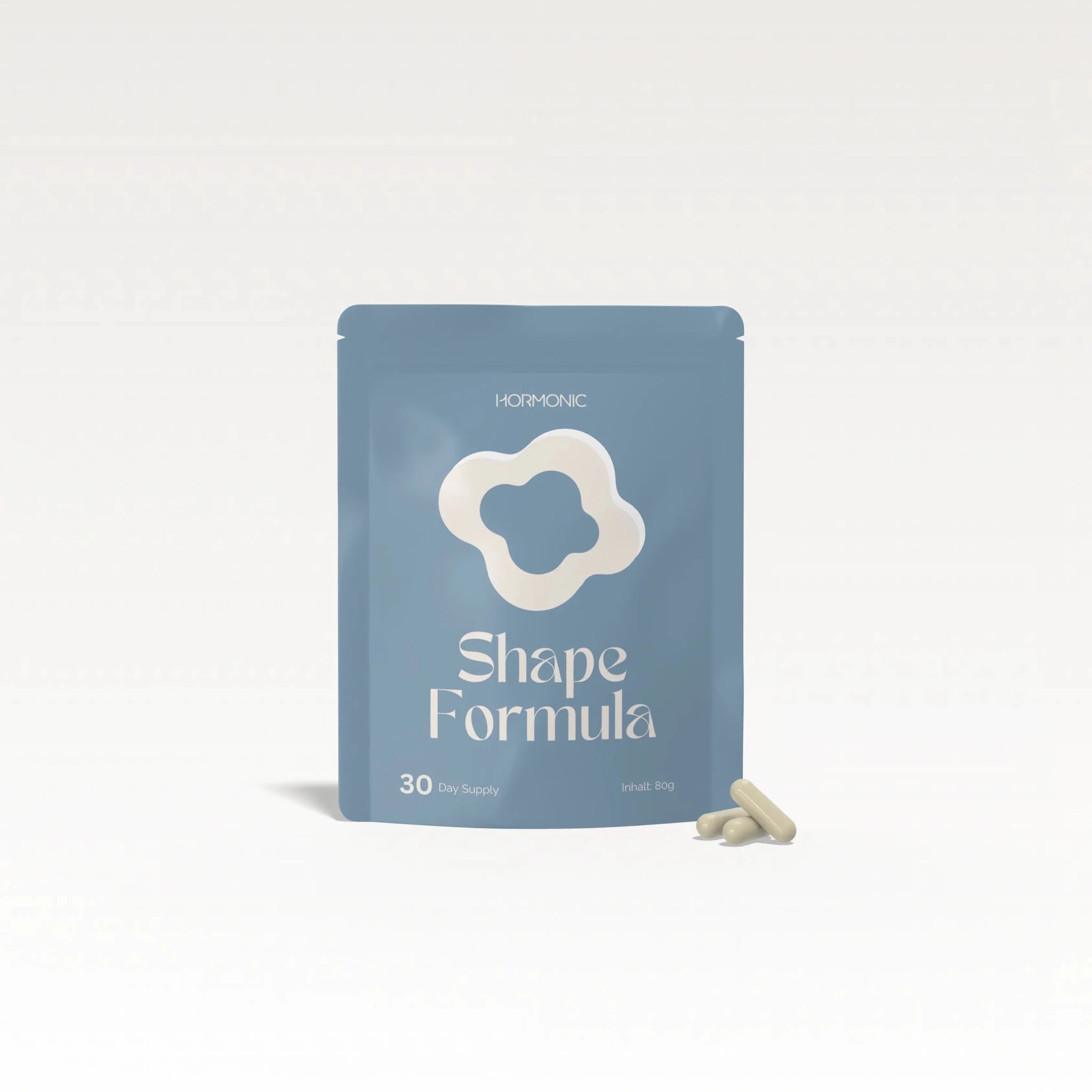
Smart metabolism support: Shape Formula
Instead of a single, poorly absorbed active ingredient, the Shape Formula combines 10 well-researched substances such as L-carnitine, chromium, alpha-lipoic acid, and green tea extract, which act on metabolic pathways. Developed by doctors, produced in Austria.
€75,00

Which metabolic approach is right for you?
Whether a single active ingredient or a combination, whether a supplement makes sense at all, depends on you. Take the Hormonic Metabolism Test now and find out what your next steps should be.
Frequently Asked Questions about Berberine
Does berberine really help with weight loss?
Is berberine or a combination of active ingredients more effective?
Welche Nebenwirkungen hat Berberin?
Worauf sollte ich achten, wenn ich Berberin kaufen will?
Scientific Sources
- Ye Y, et al. Efficacy and safety of berberine on the components of metabolic syndrome: a systematic review and meta-analysis of randomized placebo-controlled trials. Front Pharmacol. 2025;16:1572197. doi:10.3389/fphar.2025.1572197
- Asbaghi O, et al. The effect of berberine supplementation on obesity parameters, inflammation and liver function enzymes: A systematic review and meta-analysis of randomized controlled trials. Complement Ther Med. 2020;51:102391. doi:10.1016/j.ctim.2020.102391
- Liang Y, et al. Efficacy and Safety of Berberine Alone for Several Metabolic Disorders: A Systematic Review and Meta-Analysis of Randomized Clinical Trials. Front Pharmacol. 2021;12:653887. doi:10.3389/fphar.2021.653887
- Och A, et al. Biological Activity of Berberine, Bioavailability and Pharmacological Aspects. Molecules. 2020;25(23):5577. doi:10.3390/molecules25235577
- Lu Y, et al. The effects of berberine on inflammatory markers in Chinese patients with metabolic syndrome and related disorders: a meta-analysis of randomized controlled trials. Inflammopharmacology. 2022;30(3):793-806. doi:10.1007/s10787-022-00976-2
About the Author

You might also be interested in this.

L-Carnitine transports fatty acids into the mitochondria for energy production. What studies on weight loss and fat metabolism show, how to dose it, and for whom it is useful.

Alpha-lipoic acid activates the energy sensor AMPK and can support insulin sensitivity and fat metabolism. What studies show, how to dose it, and for whom it is beneficial.

Insulin resistance affects many women, but often remains undetected for a long time. Learn how hormones and metabolism are connected and what can specifically help with insulin resistance.