


Fatty liver is often considered a typical male or alcohol-related issue, yet it affects many women, often without their knowledge. This article explains why the risk increases around menopause and with PCOS, how to recognize a fatty liver, and what truly helps to reverse it.
Key takeaways
- Non-alcoholic fatty liver is the accumulation of fat in the liver and is closely linked to insulin resistance and metabolism.
- It usually causes no symptoms and is often discovered incidentally through liver enzyme tests or an ultrasound.
- Women are relatively protected by estrogen before menopause, after which the risk significantly increases, as it does with PCOS.
- In its early stages, it is highly reversible: the most important levers are moderate weight loss, along with diet and exercise.
- Elevated liver enzymes should be investigated rather than self-treating them with liver detox cures.
When I talk to women about their blood test results, one sentence comes up surprisingly often: My liver values were slightly elevated, but I hardly drink any alcohol. This is precisely where the misunderstanding lies. The most common liver disease has little to do with alcohol, but rather with metabolism, and it affects far more women than most people think. As someone who reads studies on metabolic topics daily, I want to calmly explain to you what's behind it, why our risk changes with hormones, and what truly helps.
Non-alcoholic fatty liver means that too much fat accumulates in liver cells, without alcohol being the main cause. In the medical community, it is now mostly called metabolic fatty liver, because the name emphasizes what it's really about: metabolism. It is estimated that about a quarter to a third of adults are affected, and the trend is rising. Crazy, isn't it?
Did you know?
Before menopause, women are less likely to develop fatty liver than men because estrogen protects the liver. After menopause, this protection diminishes, and the risk rises to or above men's levels. Fatty liver is therefore also a hormonal issue for women.
Why the risk increases with hormones in women
This is the point that is missing in most guidebooks. Estrogen has a protective effect on the liver: it helps to distribute fat more favorably, maintains high insulin sensitivity, and dampens fat storage in the liver. As long as you have regular ovulations and stable estrogen levels, you are relatively well protected. In perimenopause and after menopause, this protection diminishes, while the body stores more abdominal fat, and both together significantly increase the risk of fatty liver. You can read how metabolism changes during this phase in the article on weight gain during menopause.
Fatty liver is also significantly more common with PCOS because insulin resistance often underlies it. This very insulin resistance is the actual common thread: if cells respond poorly to insulin, more fat is stored in the liver. Important to know: Fatty liver does not only affect overweight women. There is also so-called lean fatty liver in women of normal weight, usually with insulin resistance or a genetic predisposition. A normal weight is therefore no guarantee.
Overview of causes and risk factors
At its core, fatty liver is an expression of a metabolism that has become unbalanced. The most important factors work together:
| Risk Factor | Why it matters |
|---|---|
| Insulin Resistance | the core driver, stores fat in the liver |
| Abdominal Fat and Overweight | strongest modifiable factor |
| High Sugar and Fructose Intake | boosts fat production in the liver |
| Lack of Exercise | worsens sugar metabolism |
| Menopause and PCOS | hormonal shifts increase the risk |
These factors are largely modifiable, and that's precisely why fatty liver is so responsive in its early stages: it can often be reversed.
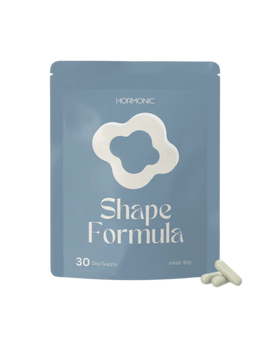
Shape Formula: Targeted support for your metabolism
Since impaired sugar and fat metabolism is almost always behind fatty liver, it is worth starting right there. Shape Formula contains 10 active ingredients that have been investigated in research related to glucose and fat metabolism, such as L-carnitine and alpha-lipoic acid, as well as chromium, which contributes to the maintenance of normal blood glucose levels.
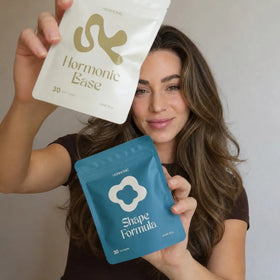
The duo for hormones, cells & metabolism
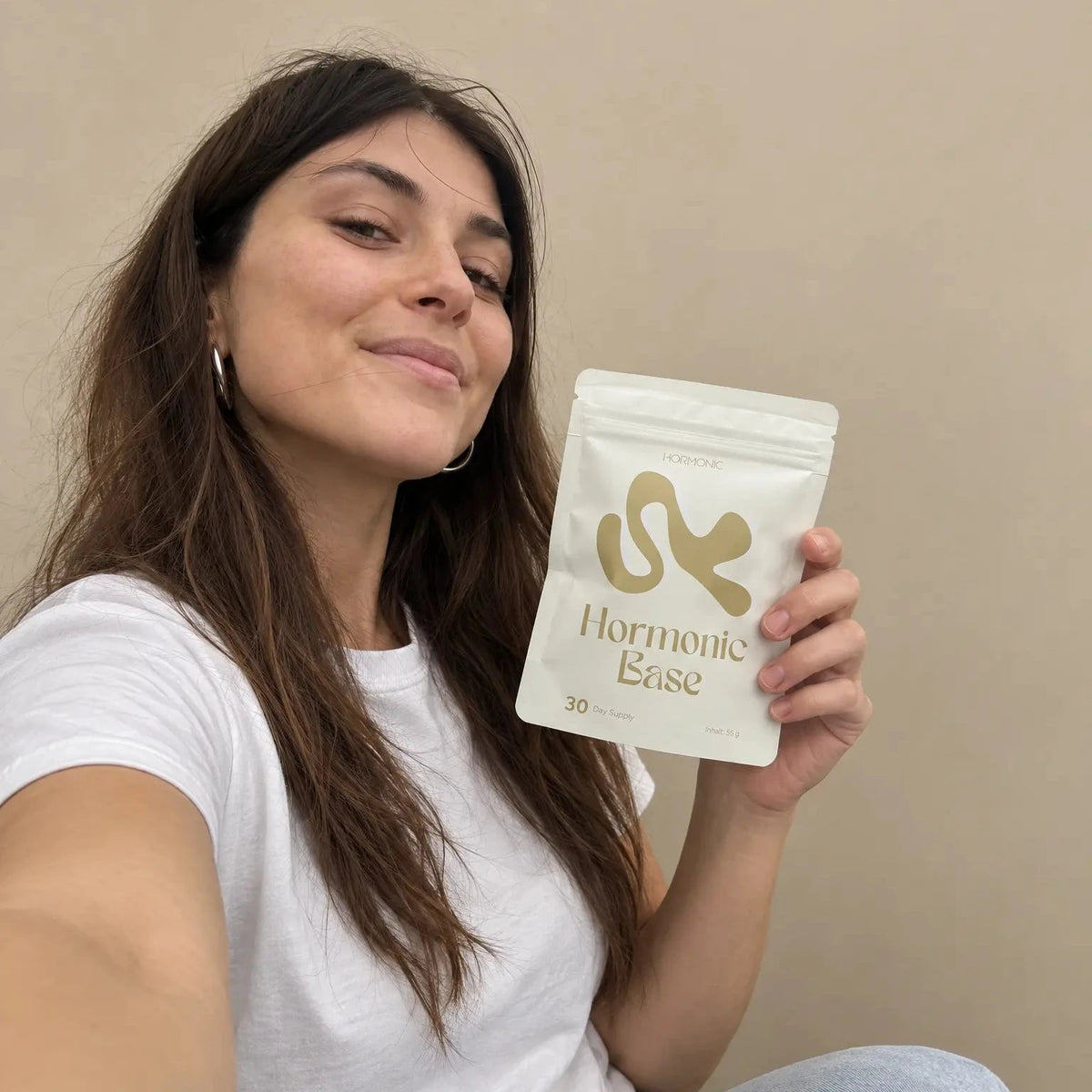
Hormonic Base provides you daily with the 16 active ingredients that are essential for central bodily processes. These include vitamins D3, K2, B6, and zinc. Shape supplements 10 active ingredients that have been studied in relation to glucose and fat metabolism, such as L-carnitine and alpha-lipoic acid, as well as chromium, which contributes to the maintenance of normal blood glucose levels.
Common Questions About Fatty Liver in Women
Can you get rid of a fatty liver?
Why do women more frequently develop fatty liver during menopause?
Welche Symptome hat eine Fettleber?
Helfen Leber-Detox oder Mariendistel gegen eine Fettleber?
Scientific Sources
- Rinella, M. E. et al. (2023). A multisociety Delphi consensus statement on new fatty liver disease nomenclature (NAFLD to MASLD). Hepatology, 78(6), 1966-1986. doi:10.1097/HEP.0000000000000520
- EASL-EASD-EASO (2024). Clinical Practice Guidelines on the management of MASLD. J Hepatol, 81(3), 492-542. doi:10.1016/j.jhep.2024.04.031
- Younossi, Z. M. et al. (2023). Global epidemiology of MASLD. Hepatology, 77(4), 1335-1347. doi:10.1097/HEP.0000000000000004
- Vilar-Gomez, E. et al. (2015). Weight Loss Through Lifestyle Modification Significantly Reduces Features of NASH. Gastroenterology, 149(2), 367-378. PMID: 25865049
- Sanyal, A. J. et al. (2010). Pioglitazone, Vitamin E, or Placebo for Nonalcoholic Steatohepatitis (PIVENS). N Engl J Med, 362(18), 1675-1685. doi:10.1056/NEJMoa0907929
- Ramezani-Binabaj, M. et al. (2014). Are women with PCOS at a high risk of NAFLD? A meta-analysis. Hepat Mon, 14(11), e23235. PMID: 25598791
- Schwarz, J. M. et al. (2017). Effects of Dietary Fructose Restriction on Liver Fat. Gastroenterology, 153(3), 743-752. PMID: 28579536
- Sabag, A. et al. (2023). Exercise and ectopic fat in NAFLD: a systematic review and meta-analysis. PMID: 36705333
- Liu, A. et al. (2023). Effect of L-carnitine supplementation on NAFLD: a systematic review and meta-analysis. Syst Rev, 12, 74. doi:10.1186/s13643-023-02238-w
- Mahmoodi, M. et al. (2020). Effects of green tea on liver enzymes: a systematic review and meta-analysis. Phytother Res, 34(7), 1587-1598. PMID: 32067271
- Asbaghi, O. et al. (2020). Effects of chromium supplementation on glycemic control: a meta-analysis. Pharmacol Res, 161, 105098. PMID: 32730903
- EFSA (2018). Scientific opinion on the safety of green tea catechins. EFSA Journal, 16(4), 5239. doi:10.2903/j.efsa.2018.5239
- Miller, E. R. et al. (2005). High-dosage vitamin E supplementation may increase all-cause mortality. Ann Intern Med, 142(1), 37-46. PMID: 15537682
- Regulation (EU) No 432/2012; EFSA Journal 2010;8(10):1732 (chromium, normal blood sugar levels & macronutrient metabolism) and 2010;8(10):1816 (vitamin E, protection of cells from oxidative stress).
You might also be interested in this.

Insulin resistance affects many women, but often remains undetected for a long time. Learn how hormones and metabolism are connected and what can specifically help with insulin resistance.

Why do women gain weight during menopause and what really helps? Learn about the hormonal causes, common mistakes, and science-based strategies for weight loss.

How harmful are blood sugar spikes in healthy women really, and do you need a CGM? An honest, evidence-based look behind the glucose hype, including cycle and menopause effects.