In my practice, women often show me their hormone results where a value is marked in red: the FSH level. Some are in their early 40s and wonder if this is already menopause. Others want to have a child and have read that a high FSH level is a bad sign. Almost always, the same uncertainty lies behind it: What does this one number actually say about my body?
The short answer is: surprisingly a lot, but only in the right context. The FSH value is one of the most significant markers for the function of your ovaries, but it cannot be read in isolation. In this article, we will go through what FSH does in the body, which reference values apply depending on the cycle phase and life stage, and how to interpret a high or low value.
What does the FSH value mean?
The FSH value measures how much follicle-stimulating hormone your pituitary gland releases to stimulate the ovaries to mature an egg. The less responsive the ovaries are to this signal, the more FSH the body produces. A high FSH level therefore usually means that the ovaries need to be stimulated more strongly. A low value indicates that either everything is running smoothly or the signal from above, from the hypothalamus and pituitary gland, is dampened.
Cycle phase / Life stage
Typical FSH range (IU/l)
Follicular phase (cycle day 3 to 5)
approx. 3 to 12
Ovulation (mid-cycle)
approx. 5 to 20
Luteal phase (second half of cycle)
approx. 2 to 8
Perimenopause (late transition)
often above 25
Postmenopause
approx. 25 to 135 (often over 30)
Note: The values are approximate ranges and depend on the measurement method and cycle day. The reference range indicated on your own results is always decisive.
What FSH does in the body
FSH, together with luteinizing hormone (LH), controls ovulation: it stimulates the growth of follicles in the ovaries, where egg cells mature. It is produced in the pituitary gland, controlled by the hypothalamus via the superordinate signal hormone GnRH.
The process is a finely tuned regulatory loop. At the beginning of the cycle, FSH rises and drives the growth of several follicles. The maturing follicles produce estradiol and the messenger substance inhibin B, both of which report back to the pituitary gland: 'That's enough, you can secrete less FSH.' This negative feedback mechanism usually ensures that only one dominant follicle prevails and that the FSH level drops again in the second half of the cycle (Orlowski and Sarao, 2023).
Because FSH is so closely linked to the cycle, a value only means something if you know on which day of the cycle it was measured. To assess ovarian function, FSH is classically determined on the second or third day of the cycle. A value above approximately 10 IU/l at this early stage is considered an indication of declining egg cell reserve; a value above approximately 40 IU/l suggests largely exhausted ovarian function (Santoro and Randolph, 2011).
For this reason, the FSH value is never interpreted on its own. It is considered together with the estradiol value and often with the AMH value, the most important marker of ovarian reserve. Only this interplay creates a coherent picture: a high FSH value with simultaneously low estradiol and low AMH points in a completely different direction than a low FSH value with an absent period.
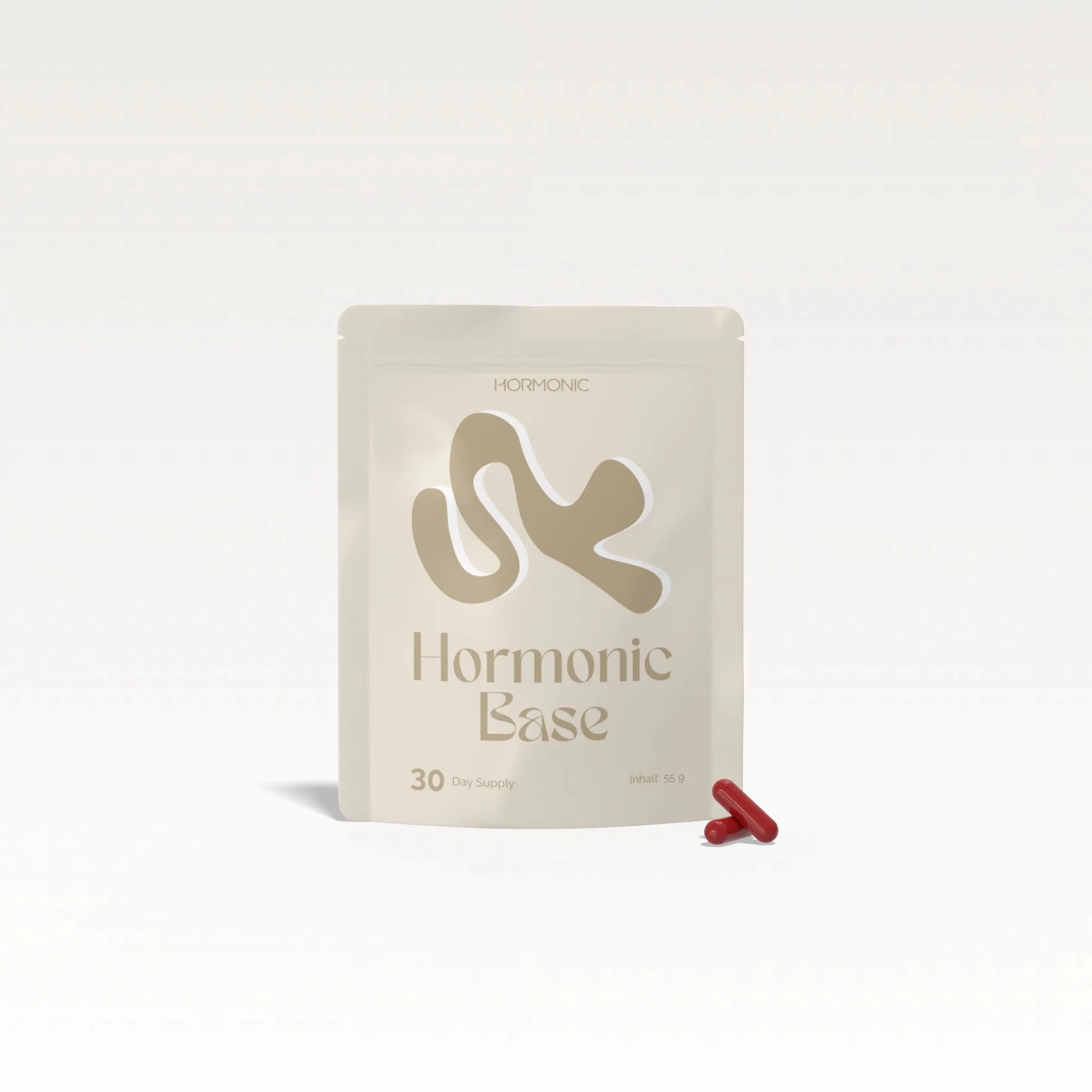
Whether your FSH level raises questions about fertility or menopause: a solid foundation of nutrients supports your hormone balance at any stage. Hormonic Base provides 16 essential micronutrients as a daily foundation, including zinc, which contributes to fertility and reproduction. Produced in Austria and expert-developed.
In most cases, a high FSH level means that the ovaries are responding less to the hormonal signal, and the body counteracts this by releasing more FSH. The most common reasons are a declining egg reserve with age and the transition to menopause.
In the late menopausal transition, an FSH level of 25 IU/l or more, measured independently of the cycle day, is considered a typical indicator (Harlow et al., 2012). After the last menstrual period, the level remains consistently high. More rarely, an elevated FSH level is due to premature ovarian failure, also known as premature ovarian insufficiency, which can occur before the age of 40. You can read about the overall transition in the Guide to Menopause and Perimenopause.
What does a low FSH level mean?
A low FSH level means that the pituitary gland is releasing little stimulating hormone. With a regular cycle, this is often unremarkable. However, if periods stop and FSH is still low or normal, the cause is usually not in the ovaries, but one level higher, in the hypothalamus or pituitary gland.
A common example is functional hypothalamic amenorrhea: with severe underweight, very intense training, an energy deficit, or persistent stress, the body reduces the release of GnRH and thus of FSH and LH (Gordon et al., 2017). Pituitary gland diseases can also keep levels inappropriately low. If your period is absent, it is therefore worth taking a closer look at the possible causes of a missed period.
Important for both directions: A single FSH value can fluctuate considerably from cycle to cycle. A single elevated or lowered value is an indication, but not yet a diagnosis.
A single value often leaves questions open. In a free 15-minute intro call, our wellness team will help you make sense of your values first, and you can ask all your questions, with no obligation.
FSH is most informative when measured early in the cycle, typically on the second or third day of the cycle. This is the standard for assessing ovarian reserve when trying to conceive.
In mid-life, the timing is less strict because the cycle becomes irregular anyway. However, a single value is rarely sufficient here. Because FSH fluctuates greatly, guidelines recommend not basing the assessment of menopause on a single measurement, but rather on the clinical picture, your age, and the course of bleeding. Sometimes the value is checked again after a few weeks.
It makes sense to look at FSH together with other values such as estradiol, LH, and AMH to get a complete picture. If you are unsure how to interpret your findings, you can talk it through in a free intro call with our wellness team.
Important to know: FSH itself is measured through a professional hormone check rather than at home, so it is not part of an at-home kit. An at-home option like the Hormonic At-Home Hormone Check-In Kit covers closely related markers of egg reserve such as AMH and estradiol, but not FSH itself – so for your FSH value, a professional hormone check-in is the way to go.
Conclusion
The FSH value is a strong, but context-dependent marker. It shows how much your body needs to stimulate the ovaries, and thus provides important information about your cycle, fertility, and menopause. It is crucial to interpret it in the right context: on the appropriate cycle day, together with other hormone values, and always embedded in your personal symptoms. A single number rarely answers everything, but when properly interpreted, it gives you and your healthcare professional reliable guidance.
Frequently Asked Questions about FSH Levels
What is a normal FSH level?
A normal FSH value depends on the cycle phase. In the follicular phase, i.e., the first half of the cycle, it is usually around 3 to 12 IU/l, and temporarily higher around ovulation. In the luteal phase, it drops again to approximately 2 to 8 IU/l. After menopause, a consistently elevated value is normal. Your own reference range is always the decisive one.
What does a high FSH level mean?
A high FSH level usually indicates that the ovaries are responding less effectively to the hormonal signal, and the body is counteracting this with more FSH. Common reasons include a declining ovarian reserve and the transition into menopause. In the late menopausal transition, a value of approximately 25 IU/l or higher is considered typical. However, a single elevated value should be interpreted in context and over time.
Which FSH level indicates menopause?
A consistently elevated FSH level is an important sign of menopause. In the late transition, a value of about 25 IU/l or more is considered characteristic, and after the last period it is often around 30 IU/l and well above. Because FSH fluctuates so much, however, menopause is not established from a single value but from your age, your symptoms, and the pattern of your bleeding.
When should you measure FSH levels?
To assess ovarian reserve, for example when you would like to have a child, FSH is best measured early in the cycle, classically on the second or third cycle day. If menopause is suspected, the exact cycle day matters less; instead, the value should be looked at in the context of your symptoms and, if needed, more than once. It is helpful to look at it together with estradiol, LH, and AMH.
Scientific Sources
Harlow SD, Gass M, Hall JE, et al. (2012). Executive summary of the Stages of Reproductive Aging Workshop +10 (STRAW+10). J Clin Endocrinol Metab. doi:10.1210/jc.2011-3362
Santoro N, Randolph JF. (2011). Reproductive hormones and the menopause transition. Obstet Gynecol Clin North Am. doi:10.1016/j.ogc.2011.05.004
Practice Committee of the ASRM. (2020). Testing and interpreting measures of ovarian reserve. Fertil Steril. doi:10.1016/j.fertnstert.2019.11.025
Gordon CM, Ackerman KE, Berga SL, et al. (2017). Functional Hypothalamic Amenorrhea: An Endocrine Society Clinical Practice Guideline. J Clin Endocrinol Metab. doi:10.1210/jc.2017-00131
AWMF (DGGG). S3 Guideline Peri- and Postmenopause: Diagnostics and Interventions (062-015).
About the Author
Lisa Maria Emmer
Founder · Physician · Hormonic
Lisa Maria Emmer is co-founder and medical director at Hormonic. She supports women with hormonal problems every day and specializes in cycle health, PCOS, and menopause.
Note: This article is based on current guidelines and scientific work (as of 2026). It is for informational purposes only and does not replace medical advice, diagnosis, or treatment.