Joint pain during menopause affects many women: stiff fingers in the morning, aching knees, a shoulder that no longer cooperates. Usually, a drop in estrogen levels is behind it. We explain the causes, which joints are affected, whether the pain will go away again, and what studies say really helps.
Key takeaways
Declining estrogen simultaneously changes cartilage, tendons, muscles, and inflammatory processes. Over 70 percent of women experience musculoskeletal complaints during menopause. Strength training, adequate protein intake, and an anti-inflammatory diet are the most well-documented interventions. For severe or unilateral symptoms, a medical evaluation is necessary to rule out conditions such as osteoarthritis or rheumatism.
Last updated: September 2026
Your knees tweak when you climb stairs, your fingers are stiff in the morning, and you can barely lift your shoulder. And yet, the X-ray shows nothing. When this starts in midlife, it is rarely a coincidence, and it is almost never "just old age."
Many women experience persistent joint discomfort for the first time around the perimenopause. For a long time, this was dismissed as wear and tear. Now, research shows that estrogen deficiency itself plays a central role.
If you are concerned less about specific joints and more about muscle ache-like pain or the feeling that "everything hurts everywhere," it is best to read our article on muscle pain during menopause. This article focuses specifically on the joints, from the knees to the finger joints.
>70 %
of women experience musculoskeletal symptoms during the transition
~25 %
are significantly limited in their daily lives as a result
Source: Wright et al., 2024, Climacteric
In a widely noted review article, Wright et al. (2024) describe for the first time an independent "musculoskeletal syndrome of menopause," thereby clearly attributing joint discomfort to hormonal changes.
What happens in the body?
Estrogen is much more than just a reproductive hormone. It acts directly on cartilage, tendons, ligaments, muscles, and bones, as these tissues carry estrogen receptors. When estradiol levels drop, a protective factor that previously worked in the background is lost.
Three mechanisms at a glance
Inflammation: Estrogen dampens pro-inflammatory messengers. If it is lost, susceptibility to "silent inflammation" (inflammaging) increases.
Cartilage: Estrogen influences the water and collagen balance in cartilage and synovial fluid, which can alter elasticity.
Musculature: As estrogen decreases, strength and muscle mass diminish, resulting in poorer joint stabilization.
Which joints are painful during menopause?
The most frequently affected areas are the knees, hips, shoulders, neck, and the small finger joints. Morning stiffness that eases with the first movements of the day is typical. The following overview shows the typical patterns.
Joint pain in midlife is not purely a wear-and-tear problem, but often a hormonal signal that should be taken seriously.
Common causes of joint pain during menopause, ranked by evidence
Not all joint pain during midlife is caused by hormonal changes. This is precisely what makes careful assessment so important.
Estrogen deficiency and the musculoskeletal syndrome of menopause
The strongest current hypothesis: Declining estrogen levels simultaneously affect cartilage, tendons, muscles, and inflammatory processes. Wright et al. (2024) synthesize the existing evidence, though they emphasize themselves that this is a newly described syndrome and that large-scale intervention studies are still pending. You can read more about the underlying estrogen deficiency and its symptomsin the linked article.
Loss of muscle mass (sarcopenia)
With declining estrogen and advancing age, muscle mass decreases. Weaker muscles provide less stability for joints, putting more load on cartilage and ligaments. This can exacerbate joint discomfort.
When it's not just the joints that hurt
During menopause, many women feel not only joint pain but also muscle-ache-like discomfort (myalgia) or the feeling that “everything hurts everywhere.” This is part of the same hormonal process, but it is a separate topic: If your muscles and your whole body are the primary concern, you will find the appropriate causes and strategies in the article on muscle pain during menopause. This article focuses on joints.
Other causes that should be ruled out
Joint pain during menopause is a diagnosis of exclusion. Osteoarthritis, rheumatoid arthritis, and other inflammatory rheumatic diseases, thyroid disorders, or a vitamin D deficiency can cause the same symptoms and require specific treatment.
Osteoarthritis: pain related to activity, often in the knees, hips, or fingers
Many women notice the first joint discomfort specifically in their fingers and hands. There is a reason for this: the small finger joints are particularly sensitive to declining estrogen levels. Estrogen influences water content in the cartilage, the elasticity of tendons, and inflammatory processes. If levels drop during perimenopause and menopause, finger joints can feel stiffer, swollen, or tender.
Morning stiffness of the finger joints is typical: the fingers feel stiff immediately upon waking and can only be flexed easily again after the first movements of the day. If this stiffness dissipates within a few minutes, it fits well with the hormonally driven pattern of menopause.
Differentiating this from other conditions is important. Finger polyarthrosis, or osteoarthritis of the finger joints, tends to cause pain related to activity and knobby thickenings at the joints. Rheumatoid arthritis often manifests through symmetrical swelling and morning stiffness that lasts significantly longer than 30 minutes. If individual finger joints remain permanently swollen, red, or warm, or if symptoms persist stubbornly, you should have them medically evaluated to specifically rule out osteoarthritis, rheumatism, or a vitamin D deficiency.
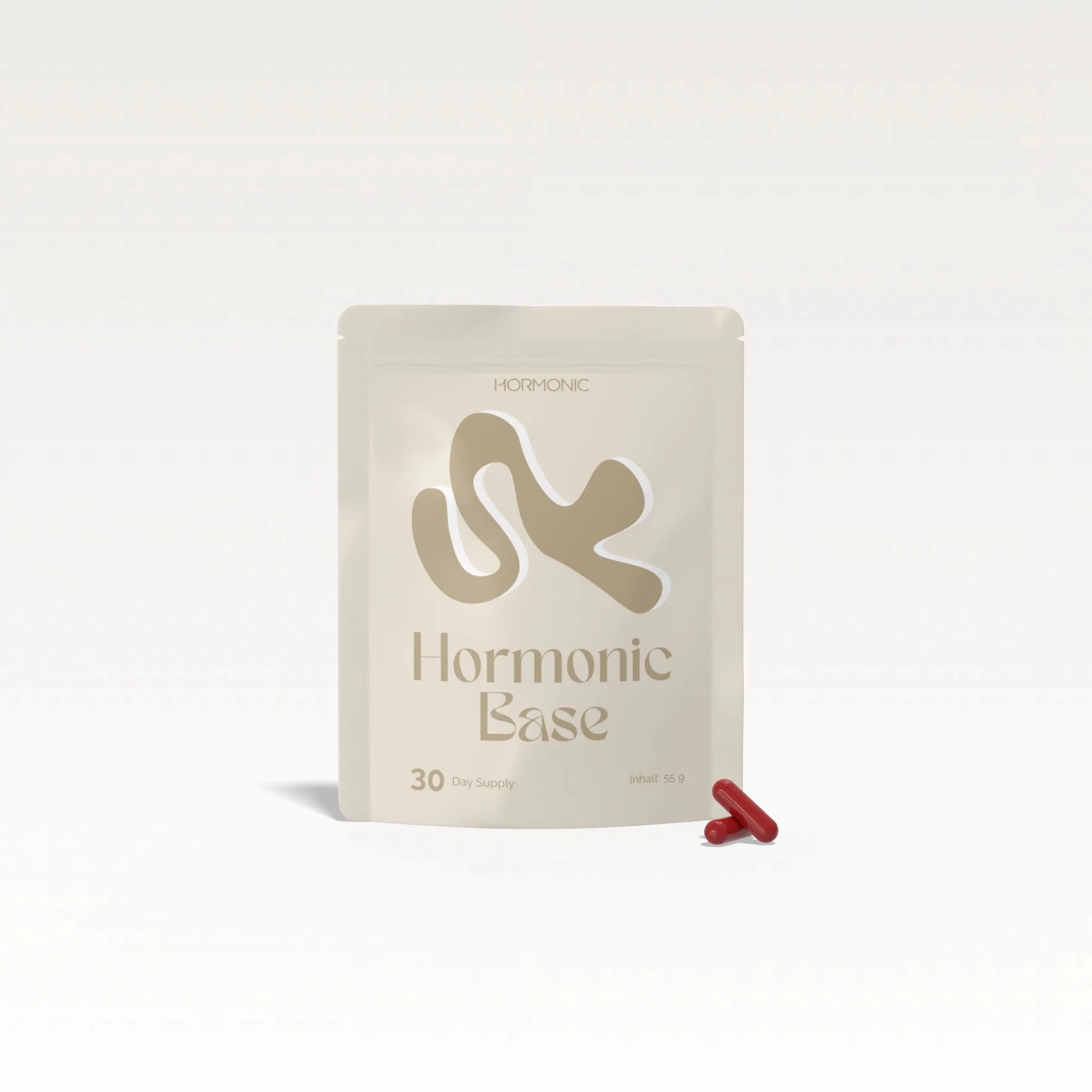
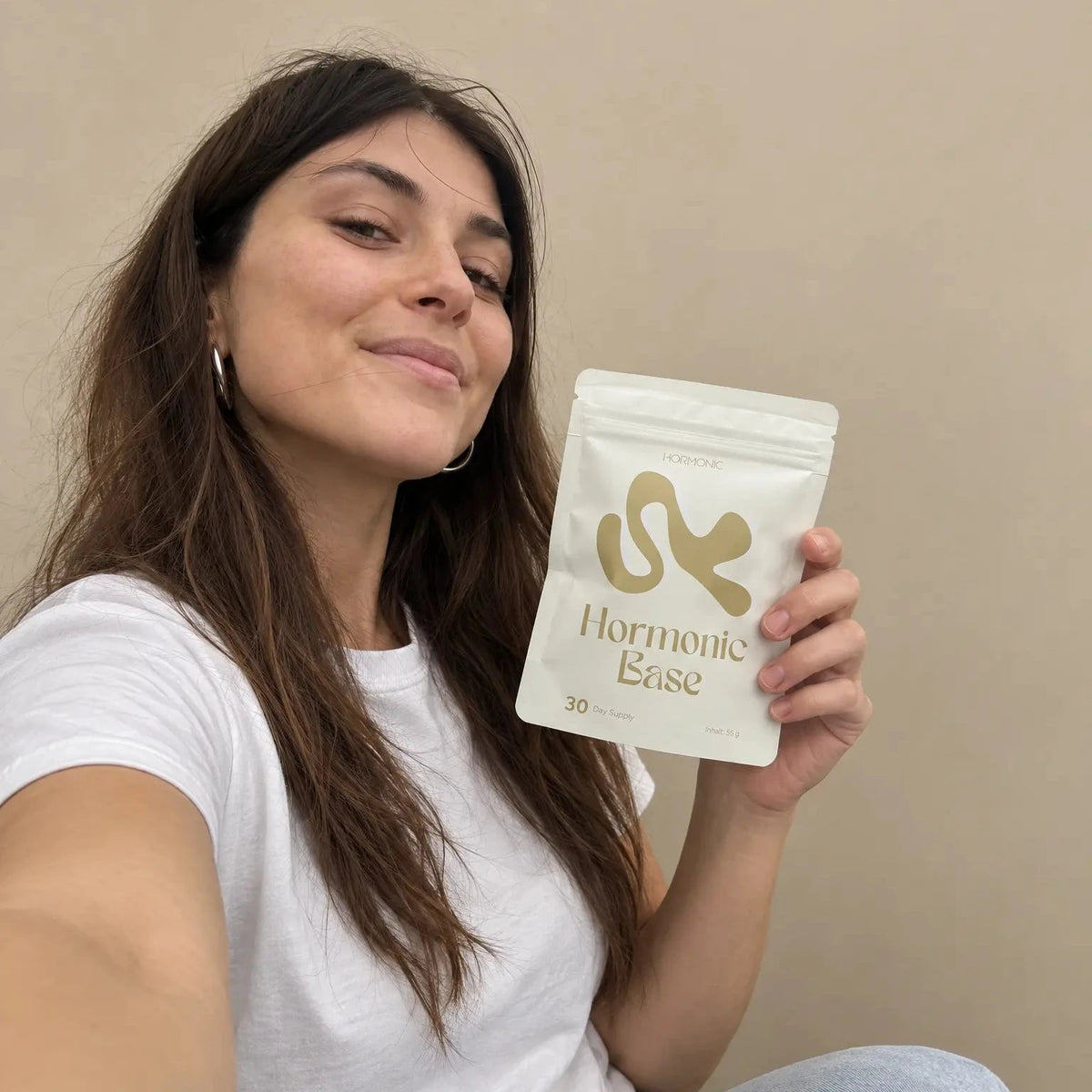
Hormonic Base provides a magnesium complex of bisglycinate, malate, and citrate, as well as vitamin D3, both of which contribute to normal muscle function. Selenium, vitamin E, and zinc contribute to the protection of cells from oxidative stress, an aspect that plays a role in inflammatory processes during menopause. Not a substitute for exercise and medical clarification, but a solid daily foundation.
What really helps with joint pain during menopause
The good news: Joint discomfort during menopause is not an inevitable fate. The strategies with the best evidence base focus on movement, muscle strength, and inflammation, and apply equally to women in Germany and Austria.
Strength training: the measure with the best evidence
Across all sources, physical activity—and especially strength training—is the most consistently recommended strategy. A systematic review by Capel-Alcaraz et al. (2023) found that targeted strength training can alleviate menopausal symptoms. Stronger muscles stabilize joints and relieve pressure on cartilage. Low-impact endurance activities such as swimming, cycling, or walking are also recommended.
Anti-inflammatory diet and omega-3
A diet rich in vegetables, omega-3 fatty acids from fish and walnuts, and sufficient protein supports muscles and can favorably influence inflammation-promoting processes. It is best to get omega-3 from fatty fish or a separate supplement; it is not part of our formulas. Sufficient protein is particularly important during this phase to counteract muscle loss.
Does joint pain go away after menopause?
For many women, joint discomfort improves once hormone levels have leveled off at a new, more stable baseline after menopause. The strong fluctuations of perimenopause, which often make the symptoms particularly noticeable, then subside. However, this is not guaranteed: some women continue to experience symptoms, and joint changes that have already occurred, such as osteoarthritis, do not reverse themselves. What matters is what you do during this time. Those who build muscle, stay active, and keep an eye on their vitamin D levels influence the progression favorably rather than just waiting.
Hormone replacement therapy (HRT) as a medical option
Hormone replacement therapy can relieve menopause-related joint pain for some women as it stabilizes estrogen levels. Wright et al. (2024) list it as a possible option within the context of musculoskeletal syndrome. Whether HRT is an option for you depends on your individual risk profile and should be discussed with a doctor.
Nutrients do not replace exercise; they cover the basics. The most important are vitamin D and sufficient protein for bones and muscles. In the event of symptoms, vitamin D levels should be tested and targeted supplementation provided in case of a deficiency, as a vitamin D deficiencycan contribute to muscle and joint pain and is also important for bones, a topic closely linked to osteoporosis. Vitamin D contributes to normal muscle function and the maintenance of normal bones. A magnesium complexalso supports normal muscle function and the nervous system. Selenium, vitamin E, and zinc contribute to the protection of cells from oxidative stress, which is interesting with regard to inflammatory processes during menopause. Collagen peptides are frequently discussed, but the evidence specifically for menopausal joint pain is still limited.
What you can do yourself
Strength training two to three times a week, including with your own body weight or resistance bands
Ensure adequate protein intake, distributed throughout the day
Regularly include omega-3-rich foods
Get your vitamin D status tested and supplement medically if you are deficient
Reduce stress, as stress can intensify pain perception and inflammation
When to see a doctor?
Seek medical advice for joint pain if a joint is swollen, red, or warm, if morning stiffness lasts longer than 30 minutes, if the symptoms are one-sided and severe, or if they significantly limit your everyday life. This allows for the reliable diagnosis and targeted treatment of conditions such as osteoarthritis, rheumatic diseases, or vitamin D deficiency. You can find an overview of the entire transition phase in our guide to perimenopause and menopause.
You don't have to evaluate this alone. In a free 15-minute introductory call, one of our doctors will provide an initial assessment and you can ask all your questions, with no obligation.
Joint pain during menopause is real, widespread, and not purely an age-related phenomenon. Declining estrogen levels simultaneously alter cartilage, tendons, muscles, and inflammatory processes, an interplay that research has only recently described as a distinct syndrome.
The most well-supported approach is a combination of regular strength training, sufficient protein, and an anti-inflammatory diet. For more severe symptoms, a consultation with a doctor is advisable, both to rule out other causes and to see if hormone replacement therapy is suitable for you.
Common questions about joint pain during menopause
Can joint pain be a sign of menopause?
Yes. More than half of women report joint or muscle pain during menopause. Experts now refer to this as the musculoskeletal syndrome of menopause, which is attributed to declining estrogen levels (Wright et al., 2024). Nevertheless, it is important to have other causes such as osteoarthritis, rheumatism, or vitamin D deficiency medically investigated.
What's the best remedy for joint pain during menopause?
The best evidence is for exercise, especially strength training, which strengthens muscles and relieves pressure on joints. Additionally, an anti-inflammatory, protein-rich diet with omega-3 fatty acids and a balanced vitamin D status are beneficial. In cases of more severe symptoms, hormone replacement therapy may be considered by a doctor.
Welche Gelenke schmerzen in den Wechseljahren am häufigsten?
Am häufigsten betroffen sind Knie, Hüfte, Schultern, Nacken und die kleinen Fingergelenke. Typisch ist eine Morgensteifigkeit, die sich nach wenigen Minuten löst. Halten Schwellung, Rötung oder eine Steifigkeit über 30 Minuten an oder betrifft es nur ein Gelenk einseitig, gehört das ärztlich abgeklärt, um Arthrose oder Rheuma auszuschließen.
Hilft Magnesium oder Vitamin D bei Gelenkschmerzen in den Wechseljahren?
Vitamin D trägt zu einer normalen Muskelfunktion und zum Erhalt normaler Knochen bei; ein Mangel kann Muskel- und Gelenkbeschwerden mitverursachen und sollte bei Beschwerden getestet werden. Ein Magnesium-Komplex unterstützt ebenfalls die normale Muskelfunktion. Beides steckt in Hormonic Base. Nährstoffe ersetzen aber weder Bewegung und Krafttraining noch eine ärztliche Abklärung.
Hilft Magnesium gegen Gelenkschmerzen in den Wechseljahren?
Magnesium ist wichtig für Muskel- und Nervenfunktion, und ein Mangel kann Muskelbeschwerden begünstigen. Ein direkter, gut belegter Effekt speziell gegen menopausale Gelenkschmerzen ist jedoch nicht nachgewiesen. Sinnvoller ist es, die Grundlagen abzudecken: ausreichend Eiweiß, ein geprüfter Vitamin-D-Status und regelmäßiges Krafttraining. Magnesium kann eine sinnvolle Ergänzung sein, ersetzt diese Maßnahmen aber nicht.
Scientific Sources
Wright VJ, Schwartzman JD, Itinoche R, Wittstein J. (2024). The musculoskeletal syndrome of menopause. Climacteric, 27(5), 466-472. doi:10.1080/13697137.2024.2380363
Chidi-Ogbolu N, Baar K. (2019). Effect of Estrogen on Musculoskeletal Performance and Injury Risk. Frontiers in Physiology, 9, 1834. doi:10.3389/fphys.2018.01834
Capel-Alcaraz AM et al. (2023). The Efficacy of Strength Exercises for Reducing the Symptoms of Menopause: A Systematic Review. Journal of Clinical Medicine, 12(2), 548. doi:10.3390/jcm12020548
Buckinx F, Aubertin-Leheudre M. (2022). Sarcopenia in Menopausal Women: Current Perspectives. International Journal of Women's Health, 14, 805-819. doi:10.2147/IJWH.S340537
Martin-Millan M, Castaneda S. (2013). Estrogens, osteoarthritis and inflammation. Joint Bone Spine, 80(4), 368-373. doi:10.1016/j.jbspin.2012.11.008
Lobo RA, Gompel A. (2022). Management of menopause: a view towards prevention. Lancet Diabetes & Endocrinology, 10(6), 457-470. doi:10.1016/S2213-8587(21)00269-2
About the Author
Lisa Maria Emmer
Founder · Physician · Hormonic
Lisa Maria Emmer is co-founder and medical director at Hormonic. She supports women with hormonal problems every day and specializes in cycle health, PCOS, and menopause.
Note: This article is based on current guidelines and scientific work (as of 2026). It is for informational purposes only and does not replace medical advice, diagnosis, or treatment.