



Do you feel like you've gained weight since starting the pill? You're not alone – almost every other woman reports this. The good news: science says the pill alone doesn't make you fat. The even better news: there are three concrete mechanisms that explain why the scale might still show more, and targeted ways to change that.
Do you really gain weight from the pill? Science says…
First off: Does the pill really make you fat? From a scientific perspective, the answer is: Generally no. Large studies and reviews have not found convincing evidence that the birth control pill causes significant weight gain. A comprehensive Cochrane analysis evaluated several placebo-controlled studies – the result: no significant difference in weight between women on the pill and women not using hormones.
At the same time: weight fluctuations of 1–2 kg are physiologically normal and have many causes. Studies show that women who start taking the pill gain an average of less than 2 kg in the first 6–12 months – a value that does not statistically differ from normal weight development without the pill.
Nevertheless, millions of women subjectively report changes. This is not imagination – but has biological reasons.
Which pill doesn't make you gain weight? The crucial differences
Not all pills are the same. The decisive factor is the progestin – the second active ingredient alongside estrogen in combined pills.
Drospirenone pill
e.g., Yasmin, Yaz
Slightly diuretic — actively keeps water retention in check. Best choice for those prone to water retention.
Dienogest / Chlormadinone pill
e.g., Valette, Belara
Low androgenic — less impact on body composition than older progestins. Well suited if muscle mass is a concern.
Levonorgestrel pill
e.g., Microgynon, Leios
Older progestin with a stronger androgenic profile. More frequently associated with the feeling of body changes — highly individual.
Three-month injection
Depot-MPA
The only method with a proven average weight gain of 2–4 kg after one year. Not comparable to the daily pill.
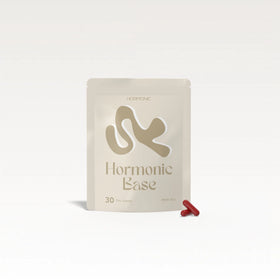
Hormonic for your hormonal metabolism
Developed specifically for women who struggle with insulin resistance, weight, and hormonal imbalance. Capsaicin, magnesium, coenzyme Q10, and 11 other active ingredients, clinically dosed.
€65,00

Unsure what's causing your symptoms? Talk to a doctor. For free.
In a personal video consultation, we will explore together what is behind your symptoms. Completely without obligation and comfortably from home with an experienced Hormonic doctor.
Frequent Questions About Weight Gain Caused by the Pill
Does the pill make you gain or lose weight?
Which birth control pill doesn't cause weight gain?
Scientific Sources
- Berenson, A. B., Rahman, M., & Wilkinson, G. (2009). Weight gain among depot medroxyprogesterone acetate users: A systematic review.Obstetrics & Gynecology, 113(2 Pt 2), 403–410
- Beksinska, M. E., Smit, J. A., Kleinschmidt, I., & Farley, T. M. M. (2012). Weight changes in adolescent users of DMPA, norethisterone enanthate and combined oral contraceptives.Contraception, 86(1), 44–50
- Cibula, D. (2010). Women's contraceptive use and venous thromboembolism risk.Human Reproduction Update, 16(5), 621–635
- Edelman, A. B., Carlson, N. E., Cherala, G., Munar, M. Y., Stouffer, R. L., & Cameron, J. L. (2007). Impact of oral contraceptives on body composition.Obstetrics & Gynecology, 109(2 Pt 1), 267–273
- Gallo, M. F., Lopez, L. M., Grimes, D. A., Carayon, F., & Schulz, K. F. (2014). Combination contraceptives: Effects on weight.Cochrane Database of Systematic Reviews, 2014(1), CD003987
- Gruber, C. J., Tschugguel, W., Schneeberger, C., & Huber, J. C. (2002). Production and actions of estrogens.The New England Journal of Medicine, 346(5), 340–352
- Kuhnz, W., Heuner, A., Hümpel, M., & Jung-Hoffmann, C. (1995). Pharmacokinetics of drospirenone in women after single and repeated oral administration.Contraception, 51(5), 379–386
- Schindler, A. E. (2003). Non-contraceptive benefits of hormonal contraceptives.The European Journal of Contraception and Reproductive Health Care, 8(1), 1–3
- Seli, E., & Arici, A. (2002). Hormonal contraception and the central nervous system.Obstetrics and Gynecology Clinics of North America, 29(4), 751–768
- Skovlund, C. W., Mørch, L. S., Kessing, L. V., & Lidegaard, Ø. (2016). Association of hormonal contraception with depression.JAMA Psychiatry, 73(11), 1154–1162
- Zimmermann, T., Ackermann, R. T., & Haller, B. (2019). Drospirenone-containing contraceptives and weight gain: A literature review.Geburtshilfe und Frauenheilkunde, 79(6), 620–626
About the Author

You might also be interested in this.

You’ve stopped taking the pill and are suffering from hair loss? You’re not alone. According to a recent study, this affects a full 26% of all women who stop taking the pill. Despite the significan...

More and more women are choosing to stop taking the pill and are looking for hormone-free alternatives. This blog post offers a comprehensive guide to making this transition safe and smooth. It exp...

The pill or the hormonal IUD? We explain the scientifically sound effects, advantages, and risks of both contraceptives and provide you with medically reviewed guidance to help you make an informed...