

Skin problems, mood swings, an irregular cycle? Often, a hormonal imbalance is behind it. This article explains what hormonal balance means and how you can support it with nutrition, sleep, exercise, and stress reduction.
The most important things in brief
- Hormones usually get out of sync due to several factors: stress, nutrition, lack of sleep, contraception, and environmental influences.
- The signs are diverse, from skin, hair, and cycle to mood, sleep, and weight.
- The strongest levers are nutrition, sleep, moderate exercise, and genuine stress reduction.
- Vitamin B6 contributes to the regulation of hormonal activity, magnesium and B vitamins to reduced fatigue.
- For severe or persistent symptoms, the cause should be medically clarified.
When I co-founded Hormonic, it didn't come out of nowhere: For years, I myself felt that my body was doing things I didn't understand – sometimes my skin, sometimes my mood, sometimes a cycle that didn't follow the rules. It wasn't until I started to truly understand the mechanisms behind it that helplessness turned into agency. That's exactly what I want to pass on to you here.
Hormonal balance refers to the finely tuned interplay of your body's own messengers. It determines energy, mood, skin, and a regular cycle, and even small shifts are noticeable. The good news: You can do a lot for it, based on medical facts and without esoteric mumbo jumbo.
Why hormones get out of balance
A hormonal imbalance rarely has only one cause; usually, several factors come together. Chronic stress is one of the most important: persistently high cortisol inhibits the control of ovulation and progesterone and can intensify PMS. Diet also plays a role, because a diet very high in sugar and carbohydrates and low in protein drives up insulin levels, and persistently high insulin can stimulate the production of male hormones in the ovaries.
In addition, lack of sleep and a disrupted biorhythm shift hunger and stress hormones, as does hormonal contraception, which suppresses the natural cycle and brings with it an adjustment phase after discontinuation. Environmental influences such as hormone-like substances from plastics and cosmetics, natural life stages, and conditions such as thyroid disorders or PCOS can also shift the balance. Important: Medical conditions should be clarified by a doctor; lifestyle is the basis on which everything else is built.
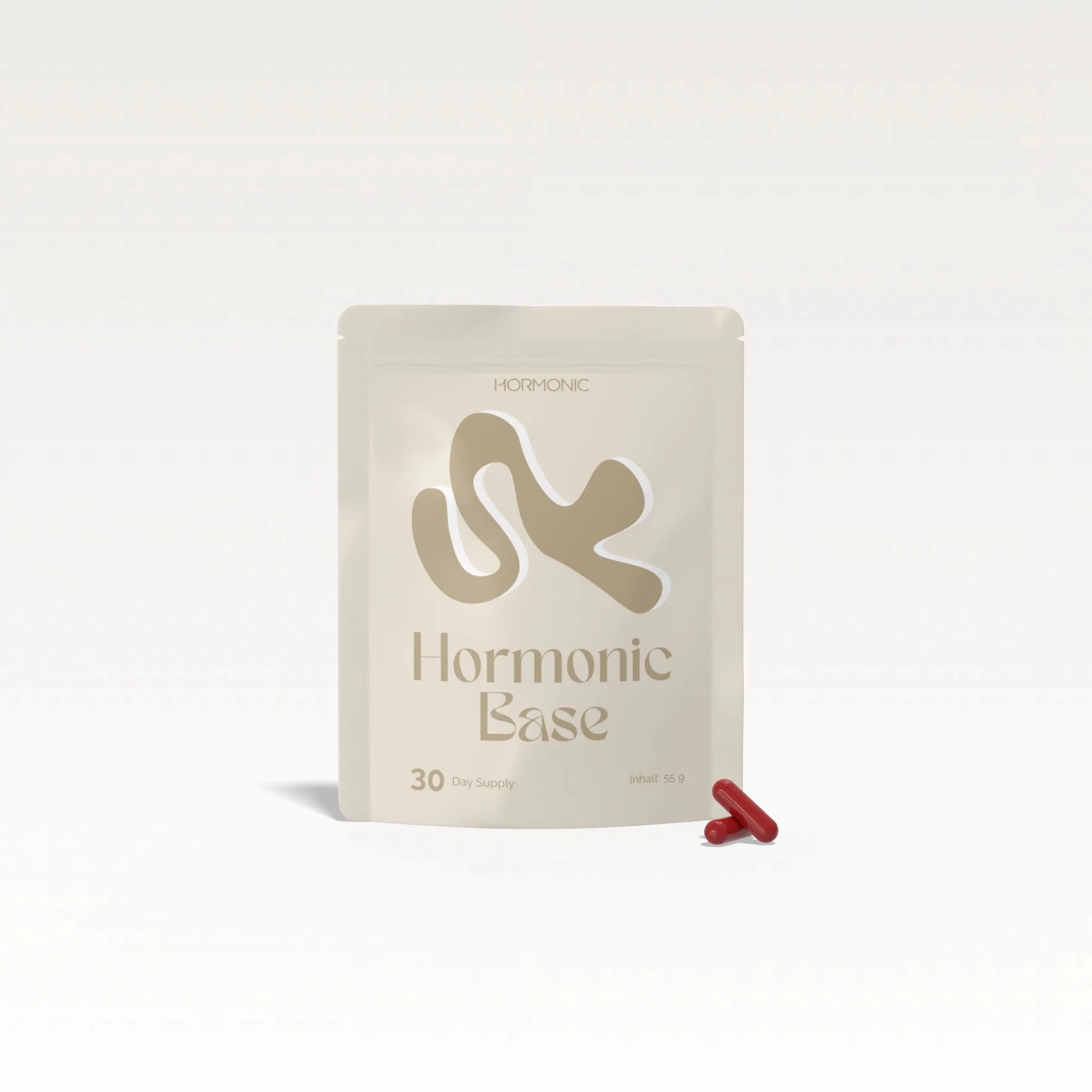
Hormonic Base: Your Daily Foundation for Balance
Hormonic Base provides 16 essential micronutrients daily, including vitamin B6, which contributes to the regulation of hormonal activity, as well as magnesium and B vitamins, which contribute to normal energy metabolism and the reduction of tiredness and fatigue. Physician-developed as a thoughtful daily foundation for your hormonal health.
€65,00
Unsure what your symptoms mean?
In a free 15-minute consultation, one of our doctors will address your questions about cycles, hormones, and possible next steps – completely non-binding and tailored to your needs.
Frequently Asked Questions about Hormonal Balance
How long does it take to balance hormones again?
How can I tell if my hormones are out of balance?
Kann Ernährung allein die Hormone wieder ins Gleichgewicht bringen?
Welche Nährstoffe sind für die hormonelle Balance besonders wichtig?
Sources
- Endocrine Society (2022). Reproductive Hormones. Endocrine Society Patient Resources.
- Baker, J. M. et al. (2017). Estrogen-gut microbiome axis: Physiological and clinical implications. Maturitas, 103, 45-53. doi:10.1016/j.maturitas.2017.06.025
- Whittaker, J. & Wu, K. (2021). Low-fat diets and testosterone in men: Systematic review and meta-analysis. J Steroid Biochem Mol Biol, 210, 105878. doi:10.1016/j.jsbmb.2021.105878
- European Food Safety Authority (2010). Scientific Opinion on the substantiation of health claims related to vitamin B6. EFSA Journal, 8(10), 1759.
- Pilz, S. et al. (2018). The Role of Vitamin D in Fertility and during Pregnancy and Lactation. Int J Environ Res Public Health, 15(10), 2241. doi:10.3390/ijerph15102241
- Whirledge, S. & Cidlowski, J. A. (2010). Glucocorticoids, stress, and fertility. Minerva Endocrinol, 35(2), 109-125.
You might also be interested in this.

Lowering cortisol is a trend, but much of it is exaggerated. What truly influences your cortisol, what studies suggest helps, and when you should see a doctor.

Insulin resistance affects many women, but often remains undetected for a long time. Learn how hormones and metabolism are connected and what can specifically help with insulin resistance.
These 4 supplements are recommended daily by science for women: Micronutrient basis, Omega-3, Creatine, and targeted gut-hormone add-ons. Without hype, with a study basis.