

Cart

Your cart is empty

Continue shopping

Popular searches

Featured products

Hormonal Base
Sale price€65,00
(5.0)
Midlife balance
Sale price€75,00
(5.0)
Intervallfasten für Frauen: Was die Studien wirklich zeigen
StoffwechselJun 2, 20268 min read

Intermittent Fasting for Women: What the Studies Really Show

Intermittent fasting is touted as both a miracle cure and a hormone killer. This article categorizes human studies for women: What does it really achieve, and what matters most?

Key takeaways

Intermittent fasting moderately reduces weight and fasting insulin in overweight women. The benefit primarily comes from fewer total calories, not from timing. Cycle-related hormones remain stable in human studies with moderate eating windows; the risk lies in too severe a deficit.

Intermittent fasting is considered the ultimate tool when it comes to weight, blood sugar, and metabolism. At the same time, there's a circulating warning that it messes with women's hormones. Both cannot be true. Here's what human studies actually show, and what just sounds good.

What intermittent fasting is, and what it isn't

Intermittent fasting describes not what you eat, but when. Food intake is restricted to a specific time window; the rest of the day remains fasted. Three forms are best studied:
Time-Restricted Eating

Window of 8 to 10 hours, e.g., 16:8. Most commonly chosen, best tolerated.

5:2

Five days normal, two days with significantly reduced energy intake.

Alternate-Day

Fasting every other day. Strictest form, highest dropout rates.

Important beforehand: Intermittent fasting is not a separate metabolic state that triggers "magic" regardless of calorie intake. This very point determines how you interpret the following studies.

What the study situation truly shows for women

The data basis is now solid, including for women. A systematic review with meta-analysis of 13 randomized controlled trials and 612 participants (exclusively women with overweight or obesity) found that time-restricted eating moderately reduced body weight, by an average of just under two kilograms, and reduced fasting insulin levels.
Weight
≈ −2 kg
moderate, significant
Fasting Insulin
↓ reduced
significant
BMI · Fat · Blood Pressure
≈ no effect
not significant
In this analysis, there was no significant effect on BMI, fat mass, visceral fat, blood lipids, glucose, and blood pressure. The conclusion is therefore more sober than advertising suggests: a clear but limited benefit. A large umbrella review of 23 meta-analyses of randomized studies (Sun et al., 2024) confirms the overall picture. Across various population groups, including premenopausal women, intermittent fasting improves cardiometabolic risk factors such as weight, waist circumference, insulin resistance, and blood lipids. The effects are real, but mostly moderate and highly dependent on whether less energy is ultimately consumed.
Did you know

In the randomized crossover study ChronoFast (2025), 31 women ate at deliberately the same calorie intake once early and once late in the day. Their internal clock shifted measurably, but cardiometabolic markers did not. A large part of the benefit thus simply arises from a shorter eating window reducing total calories, not from the timing itself.
Does intermittent fasting mess with female hormones?

This is the question that most articles either use to reassure or to panic. Human data allows for a more nuanced answer.

In a controlled study by Kalam et al. (2022), researchers led by Krista Varady specifically investigated how a very narrow eating window affects the sex hormones of pre- and postmenopausal women. The result: androgens and sex hormone-binding globulin (SHBG) remained unchanged in premenopausal women, as did estrogen and progesterone in postmenopausal women. The main change observed was in DHEA, a precursor hormone, which slightly decreased in both groups. Thus, the hormones central to the menstrual cycle and fertility were largely unaffected.

Other controlled studies also support this. A review showed no changes in FSH, LH, or testosterone in premenopausal women after several weeks of 8-hour TRE. The widespread notion that even a 16:8 rhythm inevitably disrupts hormone balance cannot be substantiated with the available human data.

The legitimate concern relates to something else: not the moderate time window, but the extent of the energy deficit. A review from the Proceedings of the Nutrition Society (2025) summarizes that significant energy deficits can inhibit the pulsatility of gonadotropin-releasing hormone (GnRH) and thus disrupt the cycle; shortened luteal phases, anovulation, and irregular cycles were observed, but only with a clear negative energy balance over several cycles. It is not fasting itself that is the risk, but chronic under-eating. In addition, fasting can be unfavorable if women are already experiencing a lot of stress. Fasting adds an additional stress factor, which in that case could have adverse effects.

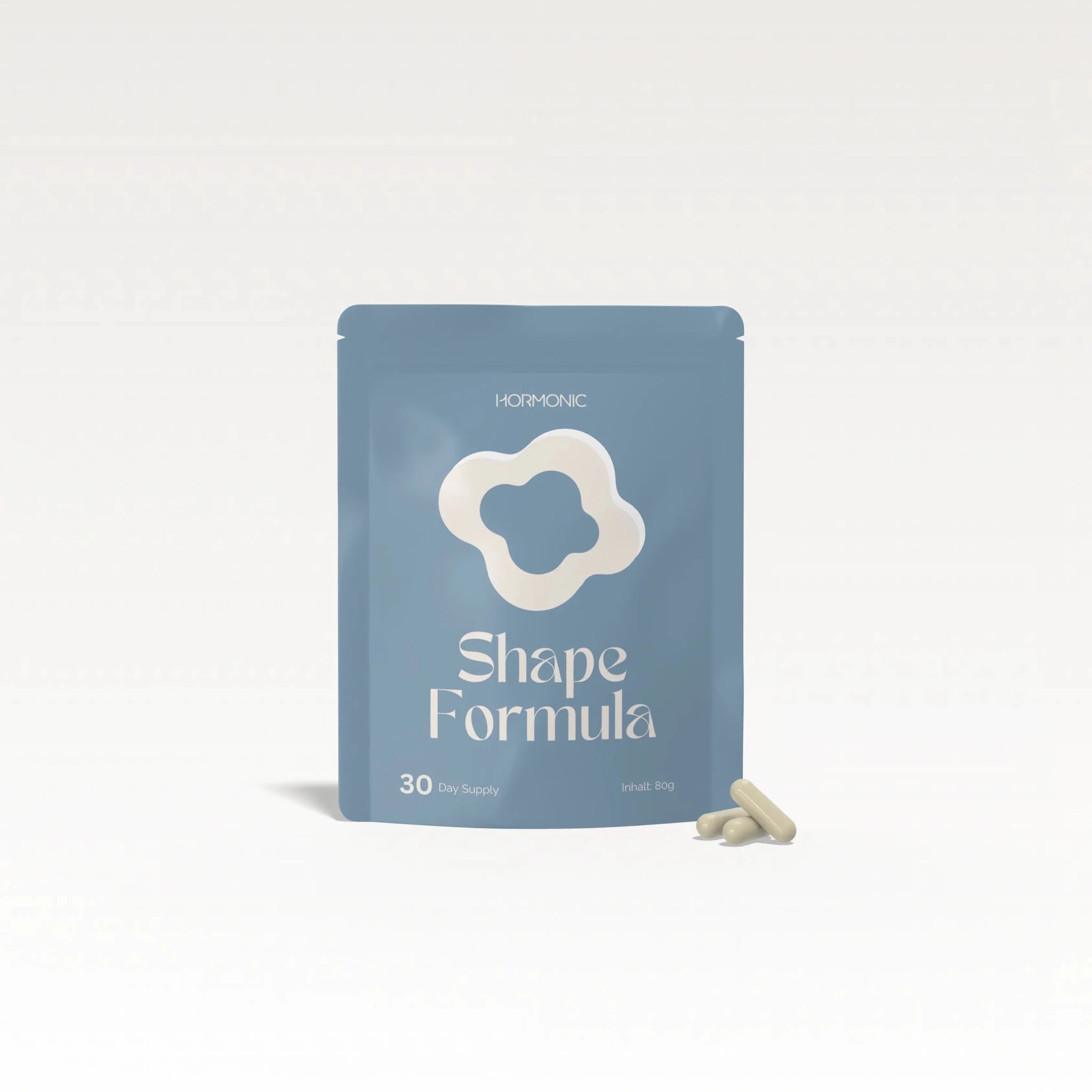
Shape Formula for your Metabolism

Intermittent fasting works through insulin and energy balance. Shape Formula is designed to specifically support metabolism and blood sugar regulation when weight and cravings are hormonally influenced. Doctor-developed.

€75,00

Save 20% with a subscription

Why Timing Matters Less Than You Think

A persistent myth suggests that simply shifting meal times, regardless of quantity, reprograms metabolism. The ChronoFast study (2025) specifically investigated this: women ate either early in the day (8 AM to 4 PM) or late (1 PM to 9 PM), with deliberately identical calorie intake. While their internal clocks shifted measurably, insulin sensitivity and other cardiometabolic markers did not improve.

Although a smaller study on healthy individuals (Nature Communications, 2022) indicates that an earlier eating window might improve insulin sensitivity somewhat more than a later one, across all studies, the practically relevant lever remains total energy, not the time of day. This is a reassuring message: you don't have to eat breakfast at 8 AM for intermittent fasting to work. You need to find a window that you can reliably maintain without falling into a spiral of intense hunger in the evening.

This also clarifies why the breakfast debate is overestimated. Whether the first meal is at 8 AM or 12 PM is secondary for most women. What is crucial is that the overall quality of the diet is good and the deficit remains moderate.

Which Benefits Are Supported by Studies, and Which Are Not

The internet is full of long lists of alleged fasting benefits, from autophagy to detoxification to hormonal healing. Let's separate what is reliable from what just sounds good.

A moderate weight loss and a reduction in fasting insulin are well-documented in women with overweight. The umbrella review by Sun et al. (2024) also observed beneficial effects on insulin resistance, waist circumference, and individual blood lipid levels across many studies, with the important caveat that the effect sizes are usually moderate and the methodological quality of the underlying studies varies.

However, frequently cited effects such as a significant reduction in inflammatory markers, greater diversity of gut flora, or improved cognitive performance are currently supported predominantly by small, short, or inconsistent studies. These findings are interesting but preliminary. They cannot serve as the main argument for intermittent fasting, and serious advice should not sell them as guaranteed benefits.

The honest summary is therefore: intermittent fasting is an effective, well-tolerated tool for many women to more easily maintain a moderate energy deficit and thereby improve weight and insulin levels. It is not a reset button for metabolism and no substitute for an overall good diet.

Unsure where to start?

Whether you have questions about weight, symptoms, or hormonal changes. In a personal video consultation, you can discuss all your questions with our specialized doctors. Book a free initial consultation now.

Book a consultation

How to implement intermittent fasting effectively as a woman

If you want to try intermittent fasting, the best method isn't the strictest one, but rather the one you can stick to without constant stress. These points are supported by studies:

  1. Start moderately: A 12- to 14-hour fasting window (for example, 7:30 PM to 7:30 AM) is sufficient for many women to see an effect without falling into a severe deficit. 16:8 is the next step, not the mandatory standard.
  2. Eat nutrient-dense foods during eating phases: Protein-rich foods, complex carbohydrates, vegetables, and high-quality fats. A short eating window is not a free pass for lower quality.
  3. Focus on the overall deficit, not the clock: If you are constantly tired, cold, sleeping poorly, or your cycle becomes irregular, you are probably eating too little, not too late.
  4. Avoid extreme forms during stressful periods: With high stress, lack of sleep, or intense training, a narrow window or 5:2 is rather counterproductive.
  5. Monitor your cycle: If your cycle length, bleeding, or PMS noticeably change, that's a signal to loosen the window.

For whom intermittent fasting is less suitable

Intermittent fasting is not a universal tool. Caution is advised if you have or have had an eating disorder, are underweight, are pregnant or breastfeeding, have unregulated diabetes, or have an absent or irregular cycle. In these situations, the decision should be made under medical supervision.

The most important points at a glance

  • Intermittent fasting moderately reduces weight and fasting insulin in overweight women; the effects on other markers are smaller than often claimed.
  • The benefit primarily arises from a lower total energy intake, not from the timing itself.
  • Cycle-related hormones largely remain stable in human studies with moderate windows. The risk lies in too large a deficit, not in fasting itself.
  • The best method is the one you can sustain without constant stress and without cravings.

Frequent Questions About Intermittent Fasting for Women

Is intermittent fasting healthy for women?

For healthy overweight women, randomized studies show a moderate benefit for weight and fasting insulin, without significantly affecting cycle-related hormones with moderate eating windows (Kalam et al., 2022). It is especially healthy if the energy deficit remains moderate and the diet during eating phases is nutrient-dense. Caution is advised in cases of underweight, eating disorders, desire for children, or irregular cycles.

How much weight can you lose with intermittent fasting?

In a meta-analysis of 13 studies involving 612 women, time-restricted eating reduced body weight by an average of just under two kilograms. This is a real, but moderate effect. It primarily arises from the fact that a shorter eating window reduces overall calories. Intermittent fasting is therefore a tool to help stay in a deficit more easily, not an independent fat-burning mechanism.

Which intermittent fasting is best for women?

For most women, time-restricted eating with a 12- to 16-hour fasting window is the most tolerable option. Strict forms such as Alternate-Day Fasting or 5:2 have higher dropout rates and a greater risk of an excessive energy deficit. What matters is not the strictness, but the consistency.

Does intermittent fasting disrupt the female cycle?

According to existing human studies, a moderate eating window generally does not disrupt the cycle. Problems arise with a significant, sustained energy deficit: this can lead to shortened luteal phases or irregular cycles due to the inhibition of GnRH pulsatility (Proceedings of the Nutrition Society, 2025). If your cycle changes, it's a signal to fast less strictly.

Do I have to eat breakfast early for intermittent fasting to be effective?

No. While one study suggests that an early eating window may improve insulin sensitivity slightly more (Nature Communications, 2022), in the isocaloric ChronoFast study (2025), timing alone did not provide a cardiometabolic advantage. More important than the time of day is an eating window that you can consistently maintain.

Scientific Sources

  • Pan Y et al. (2025). Effects of time-restricted eating on body composition and metabolic parameters in overweight and obese women: a systematic review and meta-analysis. Front Nutr. PMID/PMC12479299.
  • Sun M-L et al. (2024). Intermittent fasting and health outcomes: an umbrella review of systematic reviews and meta-analyses of randomised controlled trials. eClinicalMedicine. doi:10.1016/j.eclinm.2024.102519.
  • Kalam F et al. (2022). Effect of time-restricted eating on sex hormone levels in premenopausal and postmenopausal females. Obesity (Silver Spring). doi:10.1002/oby.23562.
  • ChronoFast Trial (2025). Intended isocaloric time-restricted eating shifts circadian clocks but does not improve cardiometabolic health in women with overweight. Sci Transl Med. doi:10.1126/scitranslmed.adv6787.
  • Proceedings of the Nutrition Society (2025). The impact of intermittent energy restriction on women's health. Cambridge University Press.
  • Xie Z et al. (2022). Randomized controlled trial for time-restricted eating in healthy volunteers without obesity. Nat Commun. doi:10.1038/s41467-022-28662-5.

About the Author

Amelie Weiss

Amelie Weiss

Research Fellow, PhD · Hormonic

Amelie Weiss is a Research Fellow at Hormonic and conducts scientific research on hormonal health, micronutrients, and evidence-based women's health.

Note: This article is based on current guidelines and scientific work (as of 2026). It is for informational purposes only and does not replace medical advice, diagnosis, or treatment.

Share

You might also be interested in this.

Intervallfasten bei PCOS: Was die Forschung wirklich zeigt
PCOSMay 31, 202610 min read
Intervallfasten bei PCOS: Was die Forschung wirklich zeigt

Intervallfasten kann bei PCOS Insulinresistenz verbessern und aktives Testosteron senken. Was eine aktuelle Nature-Medicine-Studie zeigt – und für wen das Protokoll geeignet ist.

Frau liegt erschöpft im Bett, Symbolbild für Müdigkeit bei Insulinresistenz
StoffwechselApr 10, 20268 min read
Insulin Resistance in Women: Causes, Symptoms & What Helps

Insulin resistance affects many women but often goes undiagnosed for a long time. Learn how hormones and metabolism are connected and what can specifically help.

Text über dem Bild einer trainierenden Person: „Warum dein Training nur 20 % deines Erfolges ausmacht“. Training für Frauen.
SportNov 21, 20248 min read
Why Training Is Only 20%: The Hidden Keys to Women’s Fitness Success

Training alone makes up just 20% of your fitness success. In this article, you’ll learn how nutrition, quality sleep, and a smart, cycle-optimized training approach account for the other 80% – help...