

Testosterone is considered a male hormone, but it also plays an important role in women's energy, libido, muscle mass, and mood. A deficiency often goes undiagnosed because the symptoms are diffuse and rarely directly associated with testosterone. This article explains how to recognize a testosterone deficiency, what causes it, and what really helps.
Fatigue, loss of libido, the feeling of no longer being fully in tune with one’s body: Testosterone deficiency in women often goes undiagnosed for years because the symptoms are diffuse and no one thinks of it. Yet it affects women of all age groups, not just during menopause.
Energy
Persistent fatigue, lack of drive despite sufficient sleep
Libido
Lack of sexual interest, reduced arousal
Body
Muscle loss, weight gain despite unchanged diet
Mood
Depressive mood, concentration problems, irritability
What is testosterone in women and why do we need it?
The normal total testosterone range for women is between 0.1 and 0.8 ng/ml, depending on the laboratory, with levels fluctuating throughout the day and the cycle. However, the deciding factor is not just the total testosterone, but the free testosterone, i.e., the portion that is actually biologically active. The rest is bound to SHBG (sex hormone-binding globulin) and is therefore inactive. A high SHBG level can lead to a functional deficiency despite normal total testosterone.
Symptoms: How testosterone deficiency manifests in women
The symptoms are often nonspecific and are frequently attributed to stress, exhaustion, or depression. This makes diagnosis difficult. This combination should be a red flag:
| Symptom area | Typical complaints | Frequency |
|---|---|---|
| Energy & Drive | Chronic fatigue, lack of motivation, exhaustion after minor exertion | Very common |
| Sexuality | Loss of libido, reduced arousal, difficulty reaching orgasm | Very common |
| Body composition | Muscle loss, difficulty building muscle, weight gain especially around the abdomen | Common |
| Psyche & Cognition | Depressive mood, irritability, concentration problems, brain fog | Common |
| Skin & Hair | Dry skin, brittle nails, thinning pubic hair | Less common |
| Bones | Increased long-term risk of osteoporosis, joint and muscle pain | Long-term |
Diagnosis: Which blood values are truly relevant
| Marker | Reference range woman | Why relevant |
|---|---|---|
| Total testosterone | 0.1 to 0.8 ng/ml | Starting point, but of little significance on its own |
| Free testosterone | 0.3 to 1.9 pg/ml (lab-dependent) | The biologically active portion, the most important value |
| SHBG | 20 to 130 nmol/l | High when on the pill: binds up testosterone |
| DHEA-S | 65 to 380 µg/dl | Shows adrenal function, precursor to testosterone |
| LH / FSH | Cycle-dependent | Shows whether ovaries are being stimulated |
Important: Blood should ideally be drawn in the morning between 8 and 10 a.m., as testosterone reaches its daily low in the afternoon. For women with a cycle, measure as early as possible in the follicular phase (cycle days 2 to 5).
The most common causes of testosterone deficiency in women
Menopause and perimenopause
Testosterone production declines continuously from the age of 30. With the onset of perimenopause and the decline in ovarian function, testosterone levels can drop to a third of what they were in youth. This is the most common cause and is often overlooked due to the dominant discussion surrounding estrogen.
Combination pill and high SHBG
The pill increases the liver's production of SHBG three- to fourfold. This binds up free testosterone and leads to a functional deficiency. The problem: SHBG can remain elevated even months after stopping the pill, known as the post-pill SHBG phenomenon. Read more about this in the guide to stopping the pill.
Chronic stress and cortisol excess
Cortisol and testosterone compete for the same precursor: pregnenolone. During periods of prolonged high stress, pregnenolone is preferentially converted to cortisol, and testosterone production drops. This mechanism is sometimes referred to as "pregnenolone steal," even though the term is a simplification.
Hypopituitarism and adrenal insufficiency
If the pituitary gland or adrenal glands do not stimulate or produce enough, testosterone levels fall. This is rarer but clinically important to rule out, especially if LH and FSH levels are also low.
Underweight, restrictive dieting, and overtraining
The body requires sufficient calories and fat for hormone production. Insufficient energy, too little fat in the diet, or too much training without adequate recovery can inhibit testosterone production. This is more common than one might think, especially among competitive athletes.
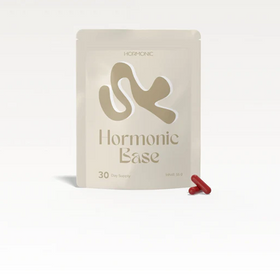
Hormonic Base: 16 active ingredients for healthy hormone production
Zinc contributes to the maintenance of normal testosterone levels in the blood and to a normal hormonal balance. Hormonic Base combines zinc with 15 other micronutrients such as vitamin D, folate, and magnesium as a well-thought-out daily foundation for your hormonal health. Developed and manufactured in Austria. Get 20 percent off permanently with a subscription, free shipping, cancel anytime, with a 30-day money-back guarantee.
€65,00

Testosterone is rarely measured routinely in women, and the reference range alone says little about whether your level correlates with your symptoms. In a free initial consultation, a licensed physician will assess whether testing is worthwhile for you and what else might be causing your symptoms.
Frequently Asked Questions about Testosterone Deficiency in Women
What are typical signs of low testosterone in women?
How is testosterone deficiency diagnosed in women?
Kann man Testosteron bei Frauen natürlich erhöhen?
Macht die Pille Testosteronmangel schlimmer?
Ist Testosteron bei Frauen in den Wechseljahren relevant?
Scientific Sources
- Davis SR, Wahlin-Jacobsen S. Testosterone in women: the clinical significance. Lancet Diabetes Endocrinol, 2015;3(12):980-992.
- Wierman ME, Arlt W, Basson R, et al. Androgen therapy in women: a reappraisal. J Clin Endocrinol Metab, 2014;99(10):3489-3510.
- Panay N, Anderson RA, Nappi RE, et al. Testosterone therapy in women: an Endocrine Society position statement. J Clin Endocrinol Metab, 2019;104(10):4660-4666.
- Goldstat R, Briganti E, Tran J, Wolfe R, Davis SR. Transdermal testosterone therapy improves well-being, mood, and sexual function in premenopausal women. Menopause, 2003;10(5):390-398.
- Worboys S, Kotsopoulos D, Teede H, McGrath B, Davis SR. Evidence that parenteral testosterone therapy may improve endurance capacity in postmenopausal women. J Clin Endocrinol Metab, 2001;86(10):4829-4835.
- Simon JA, Braunstein GD, Nachtigall L, et al. Testosterone patch increases sexual activity and desire in surgically menopausal women with hypoactive sexual desire disorder. J Clin Endocrinol Metab, 2005;90(9):5226-5233.
- Fooladi E, Bell RJ, Jane F, Robinson PJ, Kulkarni J, Davis SR. Testosterone improves antidepressant-emergent loss of libido in women. J Sex Med, 2014;11(3):831-839.
- Somboonporn W, Davis S, Seif MW, Bell R. Testosterone for peri- and postmenopausal women. Cochrane Database Syst Rev, 2005;(4):CD004509.
- Burger HG, Hailes J, Menelaus M, Nelson J, Hudson B, Balazs N. The management of persistent menopausal symptoms with oestradiol-testosterone implants. Maturitas, 1984;6(4):351-358.
- Traish AM, Vignozzi L, Simon JA, Goldstein I, Kim NN. Role of androgens in female genitourinary tissue structure and function. J Sex Med, 2018;15(3):322-344.
- Hamalainen E, Adlercreutz H, Puska P, Pietinen P. Diet and serum sex hormones in healthy men. J Steroid Biochem, 1984;20(1):459-464.
- Prasad AS, Mantzoros CS, Beck FW, Hess JW, Brewer GJ. Zinc status and serum testosterone levels of healthy adults. Nutrition, 1996;12(5):344-348.
About the Author

You might also be interested in this.
Does polyester cause infertility? What research reveals about synthetic fibers, microplastics, and hormones, honestly assessed, plus practical steps you can take in everyday life.
After the same meal, women release two to three times as much GLP-1 as men. What this means, which foods have actually increased secretion in human studies, and which popular tips do not stand up t...

PCOS, now also known as PMOS, affects 8 to 13 percent of women of reproductive age. This guide explains causes, symptoms, diagnosis, and what the evidence says about lifestyle, inositol, and micron...