
Cart

Your cart is empty

Continue shopping

Trending searches

Featured products

Hormonic Base - Hormonic - Nahrungsergänzungsmittel
Sale price€65,00
(5.0)
Midlife Formula - Hormonic - Nahrungsergänzungsmittel
Sale price€75,00
(5.0)
Vitamin Gummibärchen: sinnvoll oder nur süße Nahrungsergänzung? - Hormonic
Supplement-WissenJul 14, 20268 min read

Vitamin Gummy Bears: useful or just sweet supplements?

This article is part of: Capsule, gum, patch, spray, or powder: which form is best?

Vitamin gummies look and are advertised like sweets. But do they really make sense? This article honestly explains where vitamin gummies reach their limits and for whom they are still okay.

The most important facts in brief

  • The biggest problem with gummies is not their absorption, but the usually low and fluctuating dose over their shelf life.
  • Minerals like magnesium or iron can hardly be incorporated into a gummy bear in meaningful quantities.
  • Gummies often contain many additives as well as sugar (according to the Verbraucherzentrale, up to 50g per 100g) or sugar alcohols.
  • Because they taste like sweets, it's easy to take too much, which is a real risk, especially for children.
  • Their fair advantage: taste and acceptance, for example, if someone doesn't like swallowing capsules.

Let me say this upfront: I'm not a fan of vitamin gummies. Not because they are dangerous or ineffective, but because they combine a great marketing promise with a rather mediocre product. When supplements taste and look like gummy bears, they sell great, but unfortunately often at the expense of what really matters.

To keep this fair, I have closely examined the studies and the assessments of consumer advocates. The short version: supplement gummies have some tangible weaknesses, but also a legitimate justification. Let's look at both.

Are vitamin gummies useful? The short answer

For most healthy adults, gummies are not the best choice when it comes to reliable nutrient supply. They usually provide only a few, cheap vitamins, vary in dosage, and come with sugar. They can be useful if someone absolutely refuses to swallow capsules and the gummy form is the only way to take something regularly. As a treat with an added benefit, they are fine, but as a foundation for nutrient supply, rather not.

Why gummies often deliver less than they promise

Interestingly, the problem is not where most people suspect it, namely with absorption. The actual hitch lies in the manufacturing, the limited space, and the sugar. The four most important points in order.
1. The dosage fluctuates and changes over time

Gummies are among the most difficult forms to dose accurately. The active ingredients are mixed into a hot, viscous sugar mass and poured into molds, whereby the content is not distributed as evenly as in a pressed tablet. Independent laboratory tests therefore find deviations from the specified value in gummies more often than average.

In addition, there is a second effect: Sensitive nutrients degrade in moist gummies over their shelf life. Manufacturers therefore often fill more from the beginning so that enough is still contained at the end of the minimum shelf life. However, this also means that the same gummy bear can be overdosed when fresh and underdosed later. How extremely a poorly dosable substance can fluctuate was shown with melatonin gummies, where laboratory tests found values far above and below the specified amount, a special case that nevertheless illustrates the fundamental problem of the form well.

Behind this is a manufacturing problem that many underestimate. When cooking the gummy mass, temperatures well above 90 degrees are created, and this is precisely what affects heat-sensitive active ingredients. Vitamin C and some B vitamins lose some of their effectiveness, and live cultures like probiotics can die. To produce gummies cleanly, these substances must therefore be elaborately protected, for example by encapsulation or by adding them only after cooling, in addition to strict temperature and quality controls. This is expensive, and not every manufacturer makes this effort, which is why the actual content in inexpensive products often suffers. How large the margins are is shown by a curiosity of the testing standards: The US standard USP allows about 245 percent for folic acid and about 250 percent for vitamin C of the specified value in gummies, so that they still comply with the standard despite degradation.

2. Minerals hardly fit in

A gummy bear weighs only a few grams, and most of it is sugar and gelling agents. There is hardly any room for bulky minerals. Magnesium, iron, or calcium would require so much mass in a sensible amount that it would taste metallic or require several large gummies. Therefore, gummies almost always focus on a few, light, and inexpensive vitamins such as C, D, B12, or biotin.

So, anyone who wants to cover their magnesium or iron needs with gummies will usually be disappointed: Either these substances are completely absent, or they are only present in trace amounts. Thus, this form is unsuitable for a true micronutrient foundation.

3. Sugar and sugar alcohols

Gummies are essentially sweets. The consumer advice center states values of up to 50 grams of sugar per 100 grams for vitamin gummies. Sugar-free variants instead rely on sugar alcohols such as maltitol or sorbitol, which in larger amounts draw water into the intestines and can cause bloating or have a laxative effect.

Gummies are also unfavorable for teeth, less because of the sweetener itself than because of the sticky consistency and the often contained fruit acids, which adhere to the enamel and attack it. A daily portion of vitamins should not also be a daily portion of sweets.

Hormonic Base: Full dose instead of sugarcoating

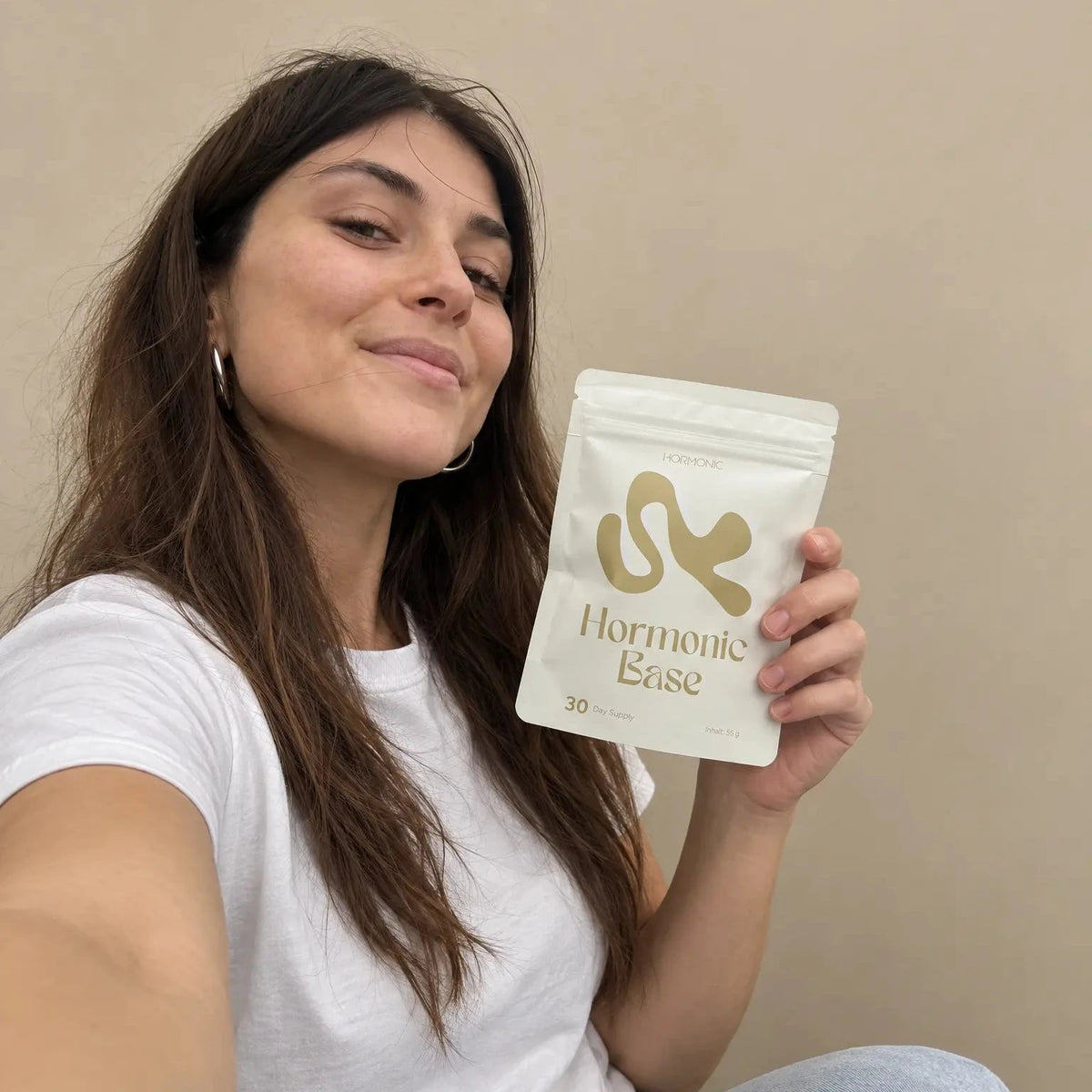
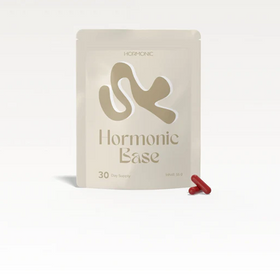
If you are serious about your supplement regimen, the capsule form is worthwhile. Hormonic Base provides 16 micronutrients that your body needs daily for central processes, in precisely defined doses, including minerals such as magnesium and zinc, which do not fit into a gummy bear, and completely sugar-free. Developed by doctors and manufactured in Austria.

Discover Hormonic Base

4. They are sweets, and that encourages overconsumption

Because gummies taste like candy, it's hard to stick to the recommended amount. This is particularly critical for children, who can barely distinguish colorful vitamin gummies from sweets. In the USA, reports to poison control centers due to accidental overdoses by children have risen sharply, predominantly involving melatonin gummies. The vast majority of these cases had no serious consequences, but they show how easily the candy form encourages overconsumption.

With fat-soluble vitamins like A and D, a persistent excess is not harmless because they can accumulate in the body. This depends on the dose and product and is no cause for panic, but a good reason not to treat gummies like wine gums and to keep them out of reach of children.

What consumer advocates say about this

For a German audience, a look at independent institutions is insightful. The consumer advice center explicitly advises against dietary supplements in candy form for children and criticizes high sugar content and frequent overdoses. In a test of dietary supplements for children, Stiftung Warentest rated 17 out of 18 products as inadequate, many of them overdosed. And the Federal Institute for Risk Assessment generally considers dietary supplements for healthy children unnecessary and warns against excessively high amounts of vitamins A and D. That is a clear message.

And the absorption? The fair part

Now for honesty, because one accusation does not stand up to scrutiny: that gummies are poorly absorbed. This is not true. In the few direct comparisons, vitamin C from gummies was absorbed just as well as from capsules, and for vitamin D, one study even found slightly better availability from the gummy. So anyone who claims that the body cannot utilize gummies is exaggerating.

And there is a real advantage: gummies are taken willingly and regularly because they taste good. For people with swallowing difficulties, a strong aversion to tablets, or for children who otherwise would not take anything at all, this can make all the difference. So the form has its justification, but not as a standard solution for everyone.

Unsure what nutrients you really need?

Take the free hormone quiz now and find out in 3 minutes where you stand and what your body really needs.

To the quiz

Conclusion: Who gummies are for, and who they are not for

Vitamin gummies are not a scandal, but they are not a clever standard either. Their weaknesses are fluctuating dosages, the lack of space for minerals, and the sugar content, which can tempt people to consume too much. Their strength is their palatability. If taste is the only way to ensure regularity, they are a justifiable choice, but for everyone else, there are better forms.

If you want to know which dosage form truly makes sense when, from capsules to drops to patches, you can find a detailed comparison in our article on Dosage Forms of Dietary Supplements.

Frequently Asked Questions About Vitamin Gummies

Are vitamin gummies effective?

For most healthy adults, they are not the best choice because they provide few vitamins, fluctuate in dosage, and contain sugar. They can be useful if someone does not like to swallow capsules and the gummy form is the only way to ensure regular intake. They are less suitable as a foundation for nutrient supply.

Are vitamin gummies unhealthy or harmful?

In normal quantities, approved vitamin gummies are not harmful. The main critical factors are their sugar content, the temptation to consume too many, and, especially in children, the risk of overdosing on fat-soluble vitamins like A and D. Therefore, they should not be treated like sweets and should be kept out of reach of children.

Wie viele Vitamin Gummibärchen sollte man pro Tag nehmen?
Nur so viele, wie auf der Packung als Tagesdosis angegeben sind, meist ein bis zwei Stück. Mehr bringt keinen Zusatznutzen und erhöht bei fettlöslichen Vitaminen das Risiko einer Überdosierung. Wichtig ist, die Gummis nicht als Nascherei zu behandeln, gerade weil sie so schmecken.
Sind Vitamin Gummis schlechter als Kapseln?
Nicht bei der Aufnahme, hier sind sie vergleichbar. Schwächer sind Gummis bei der Genauigkeit der Dosis, bei der Haltbarkeit empfindlicher Nährstoffe, beim Zuckergehalt und dabei, dass kaum Mineralstoffe hineinpassen. Für ein umfassendes Nährstoff-Fundament ist die Kapsel deshalb die verlässlichere Form.

Scientific Sources

  • Verbraucherzentrale (2025). Dietary supplements in candy and gummy bear form: Criticism of sugar content and overdosing. verbraucherzentrale.de
  • Stiftung Warentest (2025). Dietary supplements for children tested: 17 out of 18 inadequate. test.de
  • German Federal Institute for Risk Assessment (BfR). Dietary supplements for children: (not) a good idea. bfr.bund.de
  • Cohen, P. A. et al. (2023). Quantity of Melatonin and CBD in Melatonin Gummies Sold in the US. JAMA, 329(16), 1401-1402. doi:10.1001/jama.2023.2296
  • Wagner, C. L. et al. (2019). Comparative bioavailability of vitamin D from a gummy vs tablet. (PMC6566230)
  • Lelak, K. et al. (2022). Pediatric Melatonin Ingestions, United States 2012-2021. MMWR, 71(22), 724-731.
  • Encapsulation to improve vitamin C stability in vitamin gummies (Food Hydrocolloids, 2021).
  • United States Pharmacopeia (USP): Tolerances for gummy supplements allow significant overdosing (up to approx. 245 percent folic acid or 250 percent vitamin C of the label value).
  • Regulation (EU) No 432/2012; EFSA Journal (Health Claims refer to the nutrient and the quantity, not the dosage form).

About the Author

Lee Paulina Pape

Founder · Hormonic

Lee Paulina Pape is the co-founder of Hormonic and focuses intensively on hormonal health, menstrual cycles, and evidence-based education for women.

Note: This article is based on current scientific studies, reviews, and regulatory assessments and has been prepared with the utmost care. It is for informational purposes only and does not replace medical or nutritional advice.

Share

You might also be interested in this.

Kapsel, Gummi, Pflaster, Spray oder Pulver: welche Form ist die beste? - Hormonic
Supplement-WissenJul 14, 20269 min read
Capsule, gum, patch, spray, or powder: which form is best?

Capsules, gummies, patches, sprays, powders: An honest and scientific comparison of which supplement forms are truly effective.

Vitaminpflaster – was steckt hinter dem neuen Supplement Hype? - Hormonic
MikronährstoffeMar 19, 202613 min read
Vitamin patches – what's behind the new supplement hype?

Vitamin patches are booming – but can nutrients really be absorbed through the skin? We take a look at the studies on supplement patches.

Welche Supplements sollten Frauen täglich nehmen? Der evidenzbasierte Stack - Hormonic
MikronährstoffeDec 8, 20259 min read
Which supplements should women take daily? The evidence-based stack

These 4 supplements are recommended daily by science for women: Micronutrient basis, Omega-3, Creatine, and targeted gut-hormone add-ons. Without hype, with a study basis.