Offer ends in10:00

Cart

Your cart is empty

Continue shopping

Trending searches

Featured products

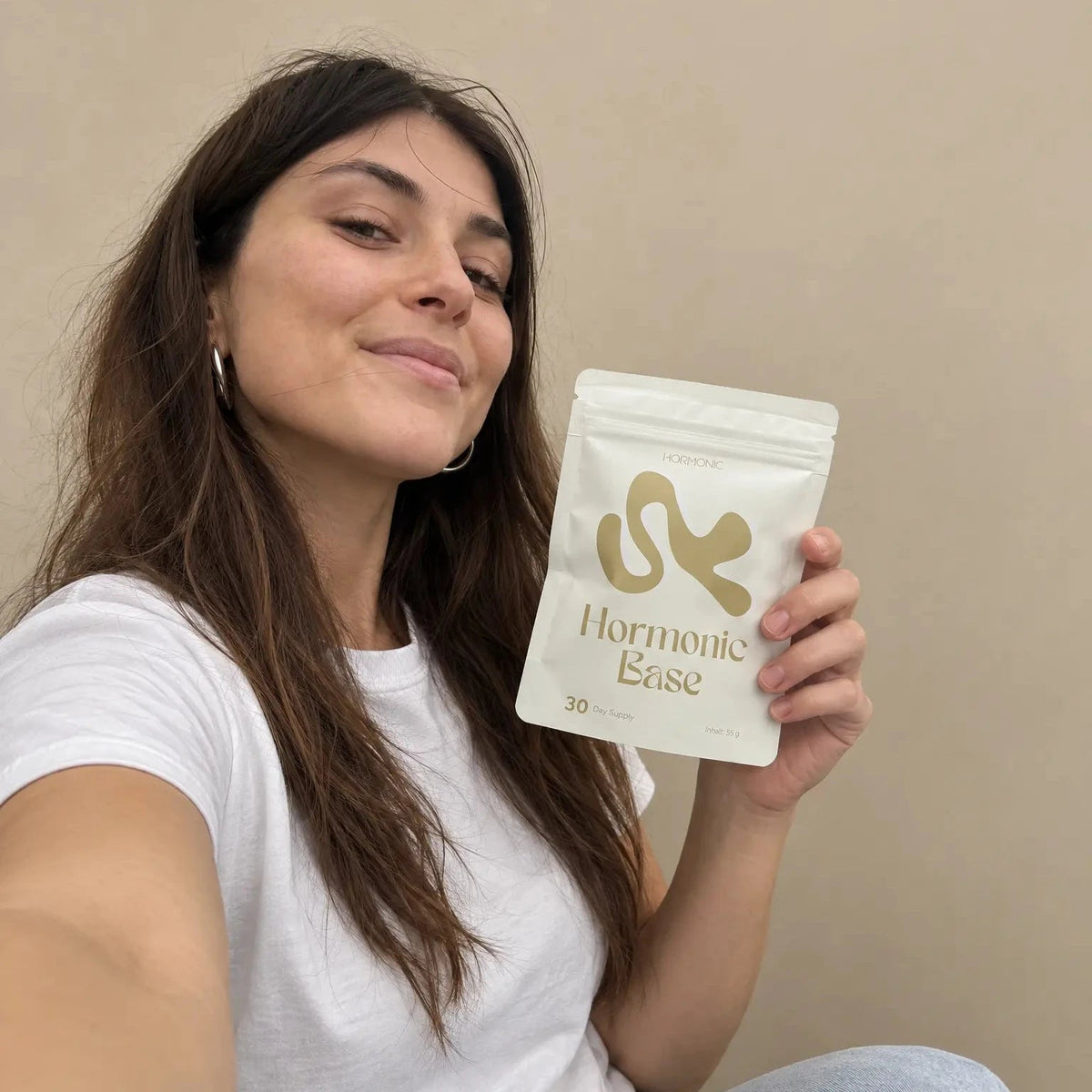
Hormonic Base - Hormonic - Nahrungsergänzungsmittel
Sale price€65,00
(5.0)
Midlife Formula - Hormonic - Nahrungsergänzungsmittel
Sale price€75,00
(5.0)
Vitaminpflaster – was steckt hinter dem neuen Supplement Hype? - Hormonic
MikronährstoffeMar 19, 202611 min read

Vitamin Patches: What's Behind the Supplement Hype?

This article is part of: Micronutrients and Hormones: The Female Guide

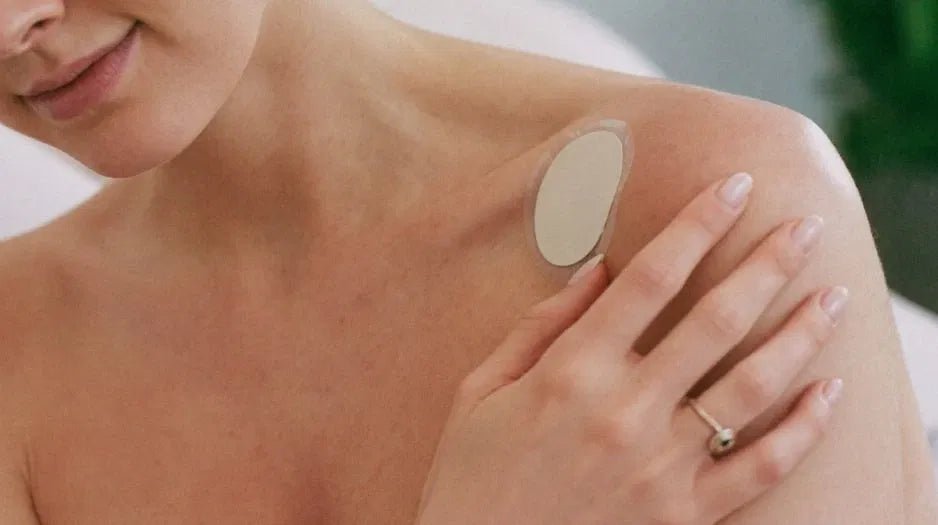
They stick to upper arms, shoulders, and wrists, colorful and minimalist, with names like Energy, Sleep, or Balance. Vitamin patches, also known as supplement patches or nutrient patches, promise to deliver nutrients directly into the bloodstream through the skin: no swallowing, no digestive tract, no loss. Sounds tempting. But can vitamins and minerals even reach the blood in measurable quantities through the skin? This article analyzes the physics of the skin and the relevant clinical literature, and shows what science really knows about the best-selling nutrients in patch form.

My personal motivation behind this analysis

As a co-founder of Hormonic, I deal daily with the question of what women really need to support their health. We develop supplements, and yet—or perhaps precisely because of that—I take a very close look at every new trend in this industry. Vitamin patches have been everywhere for some time: on TikTok, in my feed, and in messages from customers asking, "Are these any good?" I could have simply said no. But that wouldn't have been an answer; it would have been an opinion. So, we looked at the research. This article is my honest look at the science behind vitamin patches, without hiding my own bias: Yes, we sell supplements in capsule form, but with the claim that Hormonic has had from the beginning: facts before hype.

How does transdermal drug delivery work?

The skin is not an impenetrable shield, but its outermost layer, the stratum corneum, is evolutionarily optimized to block almost everything. Imagine a brick wall: dead skin cells as bricks, fat layers as mortar. Small, fat-soluble molecules can slip through this fat layer and be absorbed by the fine blood vessels underneath, without detouring through the stomach and liver. This is exactly what makes medical patches so interesting: estrogen, nicotine, and the like meet these conditions and are needed daily in only tiny amounts (Prausnitz and Langer, 2008).

The key principle: For an active ingredient to get through the skin into the blood, it must be small enough, fat-soluble enough, and work in very small quantities. Most vitamins and minerals do not meet at least one of these conditions.

The 500-Dalton rule

In pharmacology, there is a rule of thumb for what fits through intact skin: the 500-Dalton rule, described by Bos and Meinardi (2000). Their observation: All known active ingredients that have been proven to reach the bloodstream through intact skin weigh less than 500 Daltons. All approved medical patches adhere to this limit. Simply put: The skin barrier is a fine sieve. Tiny molecules fit through; larger ones get stuck. Vitamin B12 is almost three times as large as what can pass through, no matter how much of it is stuck on the patch.

Fat-soluble or water-soluble

The second condition is fat solubility, because the barrier consists of fat, and fat and water do not mix. Water-soluble molecules like vitamin C or B12 roll off the fat barrier. Vitamin D is an interesting special case: small enough and fat-soluble, but too fat-soluble. It gets stuck in the fat layer of the stratum corneum instead of diffusing deeper, like a sponge that absorbs water but doesn't pass it on.

And the quantity?

Even if a nutrient were to get through the skin: Medical patches work because their active ingredients are effective in microgram amounts. The body, however, needs over 300 milligrams of magnesium a day. Roughly speaking, that is like trying to push a full semi-truck through a mouse hole. Independent analyses of a popular multivitamin patch revealed: The patch weighed a total of about 80 milligrams, but claimed to contain over 3,600 milligrams of nutrients. That is physically impossible.

Which nutrients actually get through the skin? The study check

Theory is good, but what do studies on humans show? The most comprehensive review to date on transdermal micronutrient delivery (Grammatikopoulou et al., 2021), combined with available individual studies, presents this picture:

Active Ingredient Patch effective? What studies say
Melatonin Proven Only active ingredient with randomized studies on absorption through the skin
Vitamin D3 Insufficient Gets stuck in the stratum corneum; patch users less well supplied than capsule users
Berberine Questionable Small enough, but strongly hydrophilic; no RCT on patches
Resveratrol Questionable No human studies on absorption via patch
Vitamin C Not proven Too water-soluble for the skin barrier
Vitamin B12 Not plausible Almost 3 times too large for the skin barrier; comparative data show inferiority
Vitamin K2 Not proven Too large; lab experiments only, no human study
Folate (B9) Not proven Animal data only with special carrier systems
Magnesium Not proven Charged ion; daily requirement of over 300 mg could not be delivered anyway
Iron Not proven Only RCT (444 infants) showed no effect on blood count
Zinc Not proven Charged ion, animal studies only
Omega-3 / DHA Not proven No high-quality human study on blood levels
NAD+ / NMN Not proven NAD+ too large and charged; for NMN, no RCT on systemic effect
Coenzyme Q10 Not plausible Too large, gets stuck in the stratum corneum; only works locally in cosmetics
Collagen Not plausible At 2,000 to 300,000 Daltons, well above any limit

Melatonin: the only true exception

Melatonin is the only widely used supplement for which there are controlled studies on transdermal absorption. This is due to its size (small enough) and solubility (neither too fat- nor too water-soluble). In 2009, Aeschbach and colleagues tested a melatonin patch in a randomized, double-blind trial: blood levels increased significantly, and participants woke up less frequently at night (Aeschbach et al., 2009). Another randomized study tested melatonin patches after surgeries, also with measurable effects. However, the sample sizes were small, making generalization impossible. Conclusion: methodologically sound, but limited evidence. Melatonin sleep patches are among the few products in this category that may be worth a try.

What about microneedles, nanotechnology, and the like?

Those who research deeper will come across technologies designed to bypass the skin barrier. Microneedle patches feature thousands of microscopic needles that deliver the active ingredient directly into the upper layer of the skin. This works impressively in animal studies, but to date, there is no published, controlled human trial showing that microneedle patches measurably improve nutrient supply in the blood. The situation is similar for nanoemulsions and liposomes: promising animal data, no human studies on systemic supply. And iontophoresis, in which a weak electrical current drives active ingredients into the skin, showed only local skin effects in a small vitamin C study.

In short: Advanced technologies could eventually increase the potential. But most of what is sold today for 20 to 50 euros a month does not use them in the vast majority of cases. A recent review summarizes the situation in sobering terms: the field suffers from a lack of studies, a lack of quality standards, and insufficient safety data (Fan et al., 2024).

Why hormone patches work and vitamin patches usually don't

This question often arises: If estrogen patches work, why don't vitamin patches? The comparison is obvious, but it is flawed for three reasons.

  • Dosage: Estrogen is required in microgram amounts, i.e., thousandths of a milligram, which a patch delivers without any issues. The body needs vitamin B12, magnesium, or iron in milligram to gram amounts, which is 100 to 10,000 times as much.
  • Molecule: Estrogen and nicotine are small and fat-soluble enough for the skin barrier. Many nutrients are too large, too water-soluble, or electrically charged.
  • Evidence: Every approved patch active ingredient has undergone years of clinical testing programs. Nicotine patches are backed by a Cochrane review involving 136 studies and over 64,000 participants (Hartmann-Boyce et al., 2018). For commercial vitamin patches, there is at best a handful of small studies, and at worst, nothing at all.

Hormonic Base: Science instead of patch-based magic

16 nutrients in forms your body is proven to absorb: magnesium as bisglycinate, malate, and citrate, vitamin D3 instead of D2, plus B6, which contributes to the regulation of hormonal activity. Developed by doctors, each batch tested in a German laboratory. No hype, just thoughtful oral supplementation for women.

Discover base

The only comparative studies on actual products

Worldwide, there are exactly two published, peer-reviewed studies comparing a commercial vitamin patch with oral supplementation, both conducted on the best-selling multivitamin patch in the USA.

Study 1: Saurabh et al. (2019) examined 17 patch users and 27 capsule users following gastric bypass surgery—people who are particularly reliant on a reliable supply of nutrients. Result: 82 percent of the patch group had at least one nutrient deficiency, compared to 41 percent in the capsule group. The difference was statistically significant; Vitamin D, B1, and B12 levels were consistently lower in patch users.

Study 2: Culpepper et al. (2022) observed 92 bariatric patients for one year using only patches; it lacked a control group and was therefore methodologically weaker. After one year, 19 percent of the fully examined patients had two or more micronutrient deficiencies. The authors themselves urgently call for controlled studies.

The conclusion from both studies: They were conducted precisely on a patient group where functioning supplements are most urgently needed, and even there, the patches failed. For healthy individuals with intact digestion, not a single patch product has ever been tested in a controlled manner.

Legal gray area: What is actually on the label?

Anyone buying a vitamin patch is, from a legal standpoint, not buying a dietary supplement. EU Directive 2002/46/EC defines dietary supplements as products intended for ingestion: capsules, tablets, powders, liquids. A patch is not swallowed and therefore falls outside of this definition. At the same time, it is neither an approved medicinal product nor a medical device. The BfR and EFSA have not yet published any statements on vitamin patches, and Stiftung Warentest has not tested them. In the USA, the FDA clarified that topical patch products are not dietary supplements.

What this means: No manufacturer has to prove that their vitamin patch works. There is no requirement for studies and no authority that verifies effectiveness. The disclaimer "not intended to treat diseases" on the packaging is not a seal of quality, but a free pass.

You can read about how to get the most out of oral supplementation instead—from the right form to the timing—in the article Supplements don't work? 7 reasons and what you can do. And if you are unsure what you actually need: In a free 15-minute initial consultationyou can clarify exactly that with one of our doctors, obligation-free and from the comfort of your home.

Not sure which supplements you really need?

No trendy product can replace a real conversation with a doctor. In a free 15-minute video consultation, a licensed physician will take the time to discuss your symptoms and goals and develop a strategy tailored to your body rather than an algorithm. Conveniently from home, with no obligation.

Book your free initial consultation

Conclusion: Useful or hype?

Based on all the research, my conviction as a founder remains the same as it was in the beginning, only now it is supported by data: oral intake is the gold standard for micronutrients. Not because we sell capsules, but because that is how the body is built. The digestive tract is not a bug in the system; it is the system, optimized over millions of years to absorb nutrients and deliver them where they are needed.

The idea of transdermal active ingredients is legitimate and, in medical contexts, even brilliant; estrogen and nicotine patches are the best example. But it does not work for all active ingredients. What bothers me is the promise without evidence. Women who are seriously working on their hormonal health deserve transparency, not colorful packaging and a vague feeling. Anyone who invests their money in supplement patches, with the exception of melatonin, is paying for an idea and a trend, not for proven efficacy.

Frequently Asked Questions about Vitamin Patches

Can vitamins really be absorbed through the skin?

In individual cases, yes, if the molecule is small, fat-soluble, and effective in tiny amounts. Melatonin meets these conditions. Most common vitamins and minerals, however, do not: B12 is too large, vitamin C too water-soluble, magnesium too highly charged. For these nutrients, research provides no evidence that patches lead to measurable increases in blood levels.

Is a vitamin patch better than a capsule?

No, on the contrary. The best available comparative study showed that patch users had significantly more frequent nutrient deficiencies than capsule users (Saurabh et al., 2019). Oral intake is the path the body has evolved to use, and with a high-quality formulation, it is hard to beat for most active ingredients.

Was ist der Unterschied zwischen Hormonpflaster und Vitaminpflaster?
Ein sehr grundlegender. Medizinische Hormonpflaster enthalten Wirkstoffe, die in Mikrogramm-Mengen wirken, klein genug für die Haut sind und jahrelange klinische Prüfprogramme durchlaufen haben. Vitaminpflaster enthalten Nährstoffe, die der Körper in Milligramm bis Gramm braucht, die oft zu groß oder zu wasserlöslich für die Haut sind, und für die keine vergleichbare klinische Evidenz existiert.
Sind Supplement Patches aus der Drogerie sinnvoll?
In der Regel nicht, zumindest nicht für die beworbenen Nährstoffe. Kein Massenmarkt-Vitaminpflaster hat je eine unabhängige, placebokontrollierte Studie zur Wirksamkeit vorgelegt. Für Melatonin-Schlafpflaster ist die Evidenz etwas freundlicher, für Multivitamin-, Energie- oder Magnesiumpflaster gibt es keine überzeugenden Belege.

Scientific Sources

  • Bos JD, Meinardi MM (2000). The 500 Dalton rule for the skin penetration of chemical compounds and drugs. Experimental Dermatology 9(3):165-169. doi:10.1034/j.1600-0625.2000.009003165.x
  • Prausnitz MR, Langer R (2008). Transdermal drug delivery. Nature Biotechnology 26(11):1261-1268. doi:10.1038/nbt.1504
  • Grammatikopoulou MG et al. (2021). Transdermal micronutrient delivery: a scoping review of the evidence. Metabolism Open.
  • Saurabh S et al. (2019). Is transdermal multivitamin patch effective in gastric bypass patients? Obesity Surgery 29:3818-3823. doi:10.1007/s11695-019-04070-5
  • Culpepper T et al. (2022). Micronutrient deficiencies in patients using transdermal multivitamin patches after bariatric surgery. Cureus.
  • Aeschbach D et al. (2009). Use of transdermal melatonin delivery to improve sleep maintenance during daytime. Clinical Pharmacology and Therapeutics 86(4):378-382. doi:10.1038/clpt.2009.109
  • Apte A et al. (2021). Efficacy of transdermal delivery of iron through iontophoretic patch in infants: a randomized controlled trial. BMC Nutrition.
  • Fan Y et al. (2024). Transdermal delivery of nutraceuticals: current state and future directions. Experimental Dermatology.
  • Hartmann-Boyce J et al. (2018). Nicotine replacement therapy versus control for smoking cessation. Cochrane Database of Systematic Reviews. doi:10.1002/14651858.CD000146.pub5
  • Directive 2002/46/EC of the European Parliament and of the Council on the approximation of the laws of the Member States relating to food supplements.

About the Author

Lee Paulina Pape

Lee Paulina Pape

Founder · MSc Psychology · Hormonic

Lee is a psychologist (MSc) and co-founder of Hormonic. As CEO, she makes women's hormonal health understandable and accessible.

Note: This article is based on current scientific studies, reviews, and meta-analyses and is for informational purposes only. It does not replace medical advice, diagnosis, or treatment. Food supplements are not a substitute for a balanced, varied diet and a healthy lifestyle.

Share

You might also be interested in this.

Supplements wirken nicht? Gründe und was Du tun kannst - Hormonic
MikronährstoffeJul 22, 202510 min read
Supplements Not Working? 7 Reasons and What You Can Do

Are your nutritional supplements not working? Here are the 7 most common reasons why supplements fail to have an effect, and how you can finally feel the results by improving intake, bioavailabilit...

Welche Supplements sollten Frauen täglich nehmen? Der evidenzbasierte Stack - Hormonic
MikronährstoffeDec 8, 20259 min read
Which supplements should women take daily? The evidence-based stack

These 4 supplements are recommended daily by science for women: Micronutrient basis, Omega-3, Creatine, and targeted gut-hormone add-ons. Without hype, with a study basis.

Vitamin Gummibärchen: sinnvoll oder nur süße Nahrungsergänzung? - Hormonic
Supplement-WissenJul 14, 20268 min read
Vitamin Gummy Bears: useful or just sweet supplements?

Vitamin gummies taste like candy, but do they deliver on their promises? The honest downsides of vitamin gummies, scientifically classified.