


Do you feel like you've gained weight since starting the pill? You're not alone. Almost every other woman reports this. The good news: Science says the pill alone doesn't make you fat. The better news: There are three specific mechanisms that explain why the scale still shows more, and targeted ways to change that.
"Do I gain weight from the pill?" This is one of the questions I hear most often. I've asked it myself, heard it from friends, and it comes up in almost every conversation about contraception. So, I looked at what the studies really say, and the answer is more nuanced and reassuring than most people think.
In this post, we'll clarify whether the pill really makes you gain weight, which preparations differ, and what you can do about water retention and a changed body sensation. Honestly and without scaremongering.
Key takeaways
- Large studies and a Cochrane analysis found no conclusive evidence that the birth control pill causes significant weight gain.
- What many experience as weight gain is usually water retention due to estrogen, not new body fat. This often subsides after 3 to 4 months.
- The progestin also plays a role: drospirenone pills have a mild diuretic effect, while the three-month injection is the only method with proven weight gain.
- Those who experience significant weight gain while on the pill should have their insulin, thyroid, and potential PCOS background checked by a doctor.
- What happens to your weight after stopping the pill can be found in a separate post.
Do you really gain weight from the pill? What science says
First off: Does the pill really make you fat? From a scientific perspective, the answer is: Generally no. Large studies and reviews have not found convincing evidence that the birth control pill causes significant weight gain. A comprehensive Cochrane analysis evaluated several placebo-controlled studies, concluding: no significant difference in weight between women on the pill and women not taking hormones.
At the same time, weight fluctuations of 1 to 2 kg are physiologically normal and have many causes. Studies show that women who start taking the pill gain, on average, less than 2 kg in the first 6 to 12 months, a value that does not statistically differ from normal weight development without the pill.
Nevertheless, millions of women subjectively report changes. This is not imagination; it has biological reasons.
Which pill doesn't make you gain weight? The crucial differences
Not all pills are the same. The decisive factor is the progestin, the second active ingredient alongside estrogen in combined pills.
Drospirenone Pill
e.g., Yasmin, Yaz
Has a mild diuretic effect, actively keeps water retention in check. Best choice for those prone to water retention.
Dienogest / Chlormadinone Pill
e.g., Valette, Belara
Low androgen, less impact on body composition than older progestins. Well-suited if muscle mass is a concern.
Levonorgestrel Pill
e.g., Microgynon, Leios
Older progestin with a stronger androgenic profile. More frequently associated with the feeling of a body change, highly individual.
Three-month injection
Depot-MPA
The only method with a proven average weight gain of 2 to 4 kg after one year. Not comparable to the daily pill.
If you're considering a change, it's worth looking beyond the pill. In our comparison of the pill and hormonal IUD and in the guide on stopping the pill, you'll find guidance on which method suits your body. Important: Always discuss any change with your gynecologist.
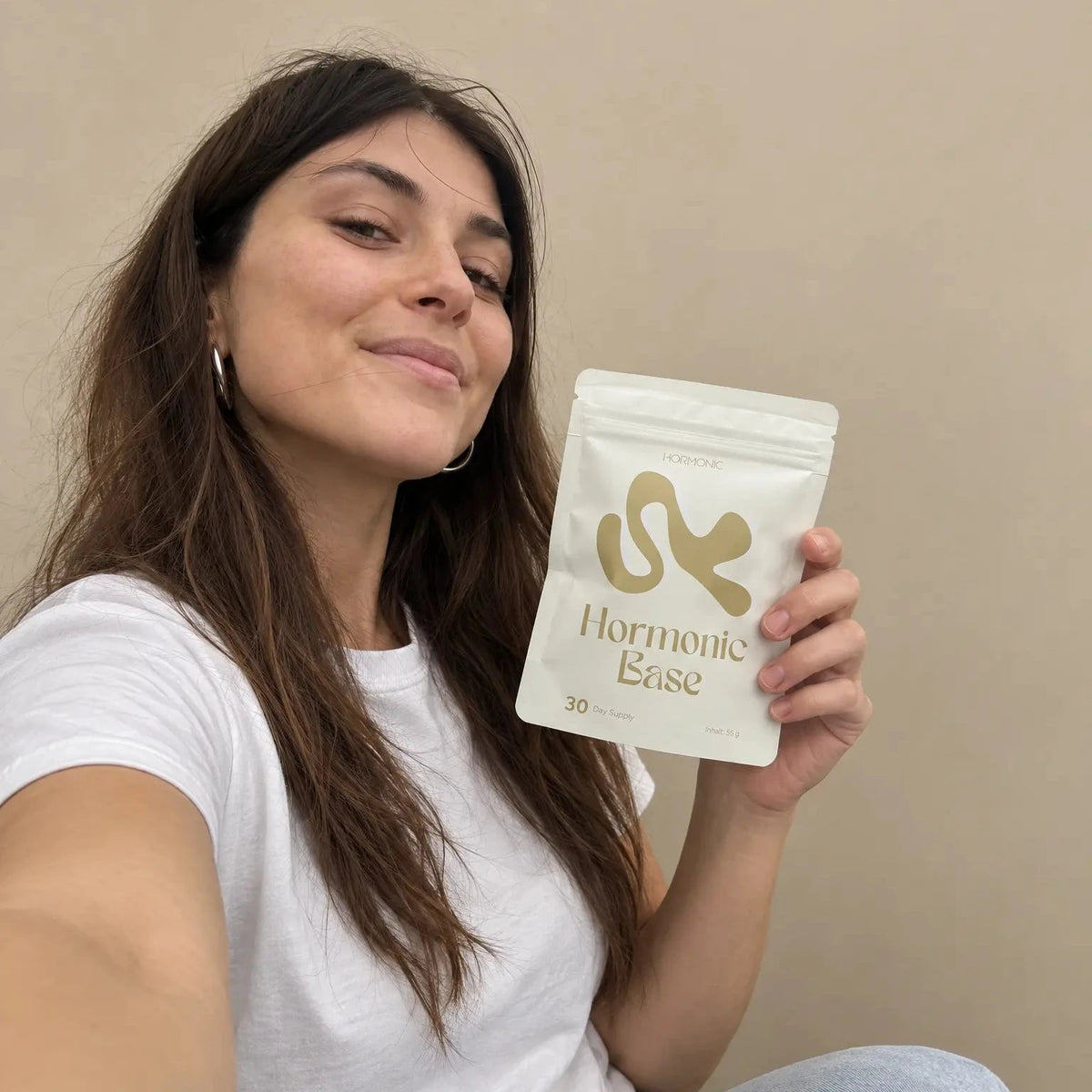
Hormonic Base: Your nutritional foundation around the pill
Combined birth control pills demonstrably lower levels of several micronutrients, especially vitamin B6, folate, magnesium, and zinc, as well as vitamins B2, C, and E (review by Palmery et al., 2013). These are precisely the nutrients contained in Hormonic Base: Vitamin B6 contributes to the normal regulation of hormonal activity, B6, folate, and magnesium contribute to the reduction of tiredness and fatigue, and magnesium supports the nervous system and psychological function. This allows you to specifically compensate for what the pill depletes. Base does not work against water retention or weight gain, but it reliably replenishes your micronutrient stores as long as you take the pill.
Discover Hormonic BaseAnd after stopping the pill?
In short: usually less than you might feel. Immediately after stopping, fluctuations on the scale are almost always a mixture of water retention, a returning natural cycle, and changed daily habits, not suddenly new body fat. How many kilos are realistic, how long the adjustment takes, and what truly helps during this phase, we have thoroughly broken down in the article Weight gain after stopping the pill. Here we will stick to the time while on the pill.
Hormonic Base: Nutrients for Pill Users
Combined oral contraceptives have been proven to deplete several micronutrients, especially vitamin B6, folate, magnesium, and zinc (review by Palmery et al., 2013). Hormonic Base provides exactly these: vitamin B6 contributes to the regulation of hormonal activity, B6, folate, and magnesium contribute to the reduction of tiredness and fatigue, and magnesium supports the nervous system and psychological function. This is how you specifically replenish what the pill depletes—no promise regarding weight, but a reliable daily foundation for as long as you take the pill. Get 20 percent off permanently with a subscription, free shipping, cancel anytime, and includes a 30-day money-back guarantee.
€75,00

Shape Bundle: Hormonic Base + Shape Formula
The daily basis for hormonal balance combined with targeted metabolic support. Specially formulated for women who actively want to support body composition and energy.
Frequent Questions About Weight Gain from the Pill
Does the pill make you gain or lose weight?
Which birth control pill doesn't cause weight gain?
Warum nimmt man durch die Pille zu, obwohl man nichts ändert?
Wie lange dauern Wassereinlagerungen durch die Pille?
Scientific Sources
- Berenson, A. B., Rahman, M., & Wilkinson, G. (2009). Weight gain among depot medroxyprogesterone acetate users: A systematic review.Obstetrics & Gynecology, 113(2 Pt 2), 403–410
- Beksinska, M. E., Smit, J. A., Kleinschmidt, I., & Farley, T. M. M. (2012). Weight changes in adolescent users of DMPA, norethisterone enanthate and combined oral contraceptives.Contraception, 86(1), 44–50
- Cibula, D. (2010). Women's contraceptive use and venous thromboembolism risk.Human Reproduction Update, 16(5), 621–635
- Edelman, A. B., Carlson, N. E., Cherala, G., Munar, M. Y., Stouffer, R. L., & Cameron, J. L. (2007). Impact of oral contraceptives on body composition.Obstetrics & Gynecology, 109(2 Pt 1), 267–273
- Gallo, M. F., Lopez, L. M., Grimes, D. A., Carayon, F., & Schulz, K. F. (2014). Combination contraceptives: Effects on weight.Cochrane Database of Systematic Reviews, 2014(1), CD003987
- Gruber, C. J., Tschugguel, W., Schneeberger, C., & Huber, J. C. (2002). Production and actions of estrogens.The New England Journal of Medicine, 346(5), 340–352
- Kuhnz, W., Heuner, A., Hümpel, M., & Jung-Hoffmann, C. (1995). Pharmacokinetics of drospirenone in women after single and repeated oral administration.Contraception, 51(5), 379–386
- Schindler, A. E. (2003). Non-contraceptive benefits of hormonal contraceptives.The European Journal of Contraception and Reproductive Health Care, 8(1), 1–3
- Seli, E., & Arici, A. (2002). Hormonal contraception and the central nervous system.Obstetrics and Gynecology Clinics of North America, 29(4), 751–768
- Skovlund, C. W., Mørch, L. S., Kessing, L. V., & Lidegaard, Ø. (2016). Association of hormonal contraception with depression.JAMA Psychiatry, 73(11), 1154–1162
- Zimmermann, T., Ackermann, R. T., & Haller, B. (2019). Drospirenone-containing contraceptives and weight gain: A literature review.Geburtshilfe und Frauenheilkunde, 79(6), 620–626
About the Author

You might also be interested in this.

You’ve stopped taking the pill and are suffering from hair loss? You’re not alone. According to a recent study, this affects a full 26% of all women who stop taking the pill. Despite the significan...

Are you considering discontinuing the pill, or have you already done so? This guide provides evidence-based information on what happens in your body, typical side effects and symptoms, and how long...

The pill or the hormonal IUD? We explain the scientifically sound effects, advantages, and risks of both contraceptives and provide you with medically reviewed guidance to help you make an informed...