

Zinc is a trace element that the female body needs for hundreds of enzymes, including those for fertility, thyroid, skin, and cell defense. This article shows what zinc does for women, typical symptoms of zinc deficiency, and what the study data reveals.
Key takeaways
- Zinc is involved in fertility, thyroid function, skin, and cellular protection against oxidative stress.
- Zinc deficiency manifests non-specifically: hair loss, impure skin, infections, menstrual cycle irregularities.
- For menstrual pain, the evidence is surprisingly good: a 2024 meta-analysis shows significant relief.
- Due to solid study data, the EFSA permits claims for zinc regarding fertility, skin, and thyroid.
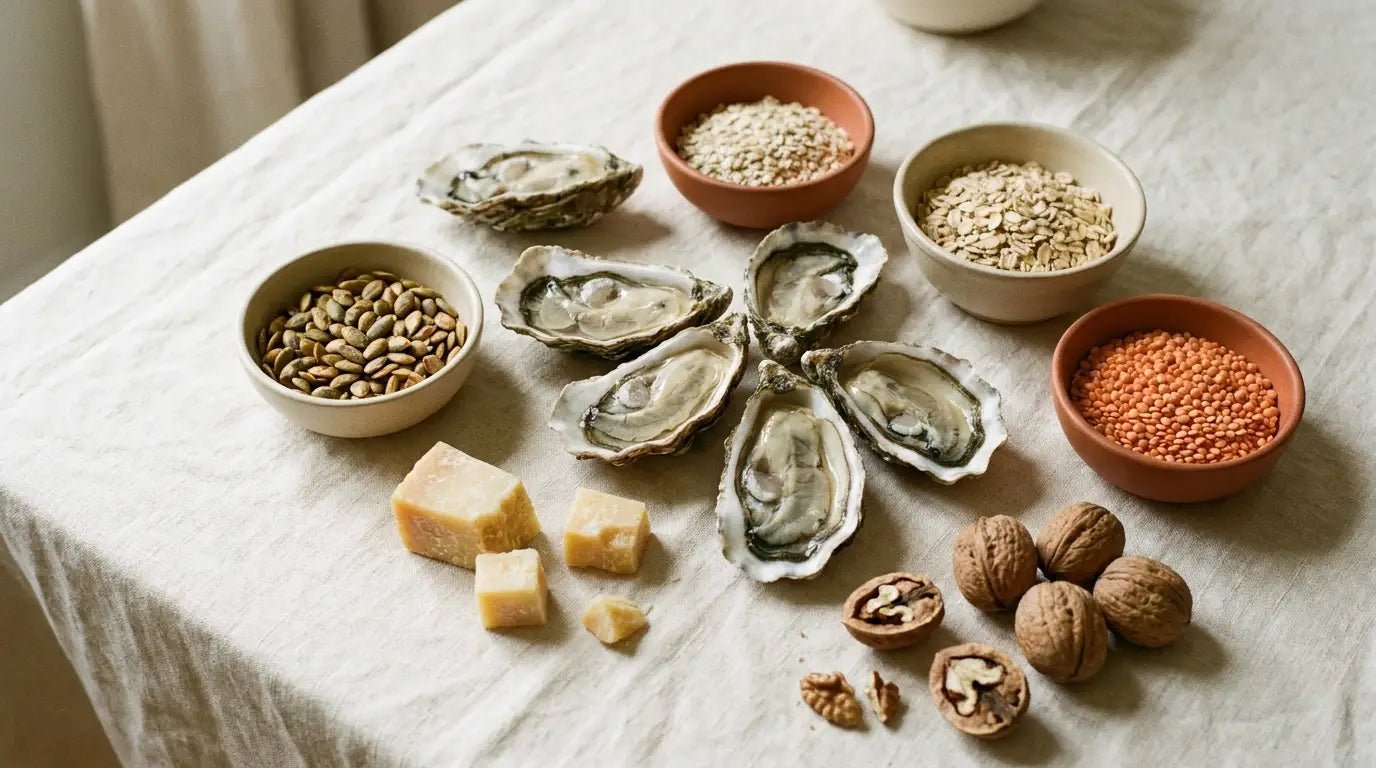
- The daily requirement of approximately 7 to 10 mg can be met through diet for some women. Anything beyond that usually requires supplementation.
I read a lot about micronutrients, and with hardly any other has the study data surprised me as much as with zinc and menstrual pain. A simple trace element, which many only associate with colds, significantly reduces the intensity of menstrual pain in current studies. This is a good reason to take a closer look at zinc from a female perspective, as its role extends far beyond the immune system.
Zinc is found in almost every body cell and is a building block of over 300 enzymes. It keeps the skin intact, is involved in thyroid metabolism, protects cells from oxidative stress, and plays a role in fertility and the menstrual cycle. This is precisely why a deficiency in women often manifests itself in several areas simultaneously.
Did you know?
In a 2024 meta-analysis, the pain-relieving effect of zinc was observed in some women at a dose of about 7 mg per day, which corresponds to the daily requirement.
Zinc deficiency in women: the most common symptoms
Zinc deficiency in women often manifests in several areas simultaneously because zinc is involved in so many processes. The symptoms are non-specific and do not replace a blood test, but these signs typically occur:
- Skin, hair, and nails: impure or dry skin, increased hair loss, brittle nails, and white spots.
- Immune system: more frequent infections and slower wound healing.
- Menstrual cycle and fertility: menstrual cycle irregularities and more pronounced menstrual pain.
- Psychology and cognition: fatigue, concentration problems, and low mood.
- Taste and appetite: reduced sense of taste or smell and decreased appetite.
Because these complaints can have many causes, a zinc deficiency can only be reliably diagnosed via a blood test, ideally with medical supervision.
What zinc does in the female body
Zinc is an essential trace element that the body cannot produce itself and therefore needs daily through food. It acts as a cofactor for hundreds of enzymes and is thus involved in very different processes, from cell division to immune defense to the hormone system. For the female body, the following EFSA-recognized functions are particularly relevant:
| Area | What zinc contributes according to EFSA |
|---|---|
| Fertility | to normal fertility and reproduction |
| Skin, hair, nails | to the maintenance of normal skin, hair, and nails |
| Thyroid | to normal thyroid function |
| Cell protection | to the protection of cells from oxidative stress |
| Cognition | to normal cognitive function |
An important clarification right away: Contrary to what is often claimed, there is no approved statement for zinc regarding "normal hormone balance". This wording belongs to vitamin B6. So you can reliably associate zinc with fertility, thyroid, and cell protection, but not generally market it as a hormone balancer.
The popular all-in-one supplement with zinc
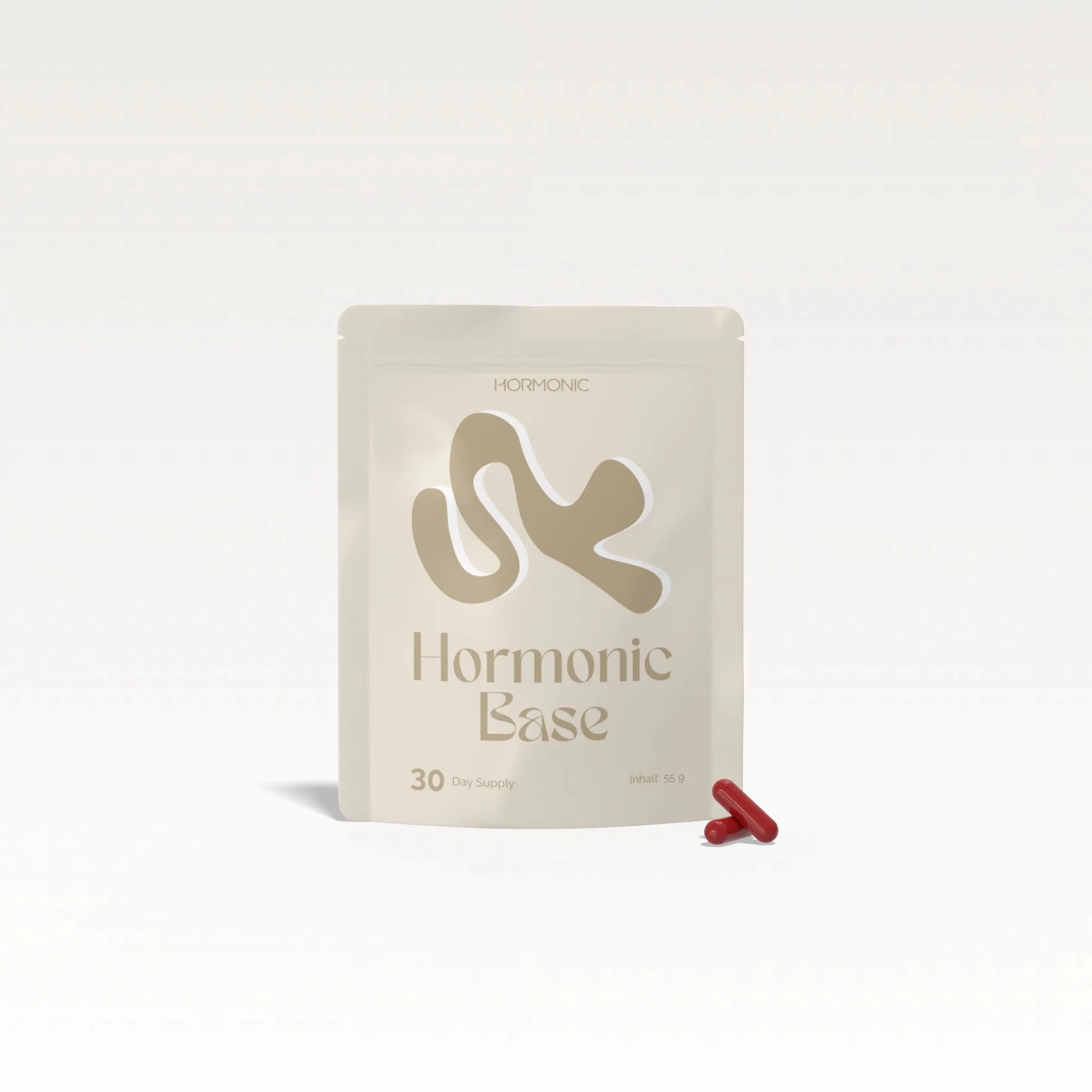
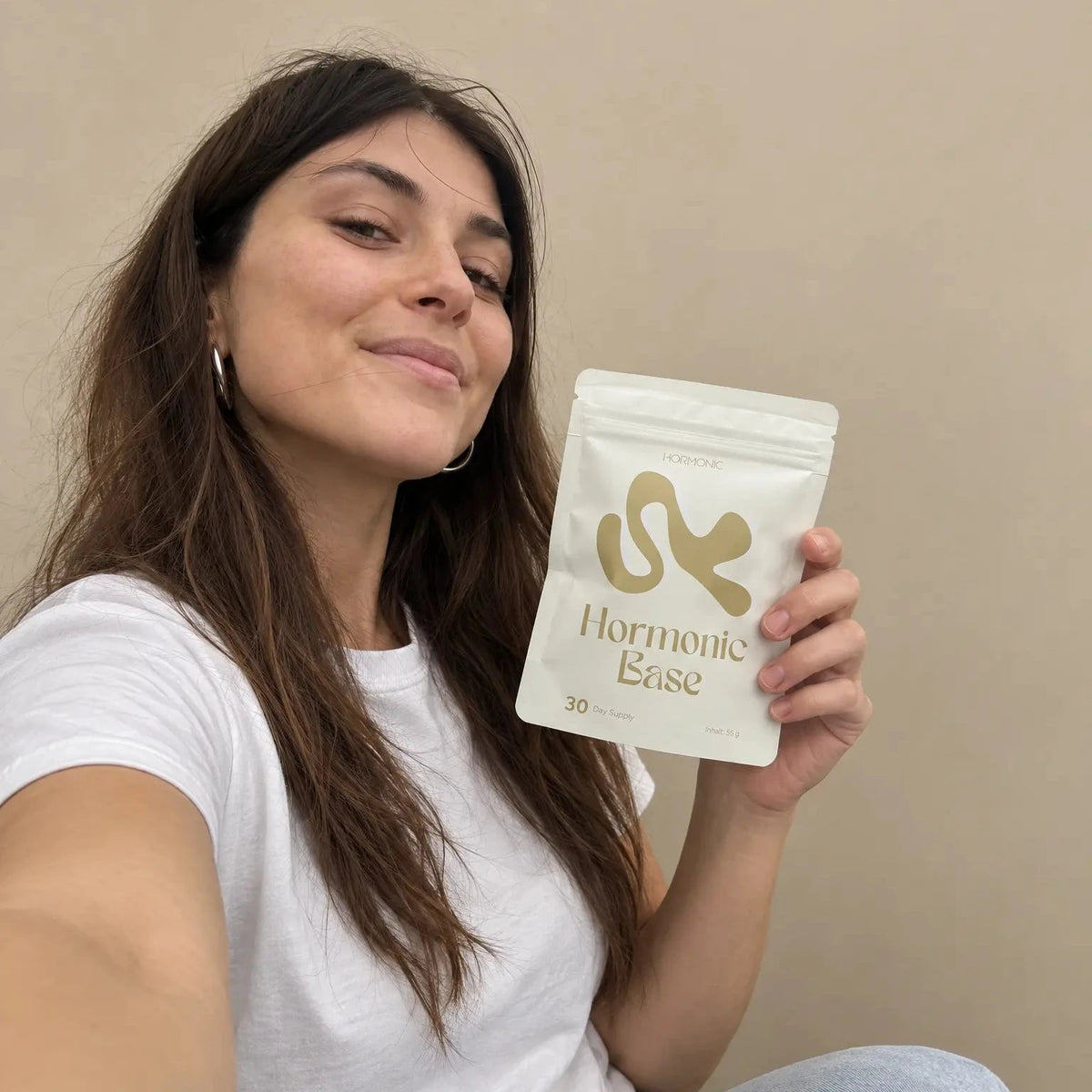
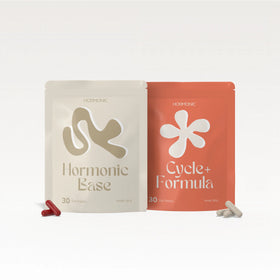
Zinc is one of 16 essential active ingredients in Hormonic Base. It contributes to normal fertility and reproduction, and to the protection of cells from oxidative stress. Developed by doctors to meet your daily nutritional needs.
The full program for hormones & cycle
Hormonic Base provides you daily with the 16 micronutrients your body needs for key processes, including vitamin D, selenium, and magnesium. Cycle+ builds on this, specifically addressing cycle-related issues. Doctor-developed for maximum synergies.
Common questions about zinc in women
What are the symptoms of zinc deficiency in women?
Does zinc help with period pain and PMS?
Ist Zink gut gegen hormonell bedingte Akne?
Wie viel Zink am Tag braucht eine Frau?
Scientific Sources
- Hsu, C. et al. (2024). The Effect of Zinc Supplementation on Primary Dysmenorrhea: A Systematic Review and Meta-Analysis. Nutrients, 16(23), 4116. doi:10.3390/nu16234116
- Haider, A., Sajjad, N. & Zahid, R. (2025). Effect of zinc supplementation on premenstrual syndrome: a systematic review and meta-analysis. Eur J Obstet Gynecol Reprod Biol, 312, 114082. doi:10.1016/j.ejogrb.2025.114082
- Yee, B. E. et al. (2020). Serum zinc levels and efficacy of zinc treatment in acne vulgaris: A systematic review and meta-analysis. Dermatologic Therapy, 33(6), e14252. doi:10.1111/dth.14252
- EFSA NDA Panel (2009). Scientific Opinion on health claims related to zinc (fertility, reproduction, cognitive function, oxidative stress). EFSA Journal, 7(10), 1229. doi:10.2903/j.efsa.2009.1229
- EFSA NDA Panel (2009). Scientific Opinion on health claims related to zinc (skin, hair, nails, thyroid, metabolism). EFSA Journal, 7(10), 1819. doi:10.2903/j.efsa.2009.1819
- Jazinaki, M. S. et al. (2024). Zinc supplementation and sleep quality: a systematic review. Health Science Reports, 7(10), e70019. doi:10.1002/hsr2.70019
About the Author

You might also be interested in this.

Severe period pain is mostly caused by elevated prostaglandins. What causes them and what natural approaches can help according to studies.
Hormonal acne often appears on the chin and jawline, usually before one's period. We explain the role of androgens, the menstrual cycle, and nutrition, and clarify which active ingredients and appr...

Which micronutrients truly support your hormones? The honest, evidence-based guide to magnesium, vitamin D, omega-3, and B vitamins, with a clear evaluation of the study situation.