
Offer ends in10:00

Cart

Your cart is empty

Continue shopping

Trending searches

Featured products

Hormonic Base - Hormonic - Nahrungsergänzungsmittel
Sale price€65,00
(5.0)
Midlife Formula - Hormonic - Nahrungsergänzungsmittel
Sale price€75,00
(5.0)
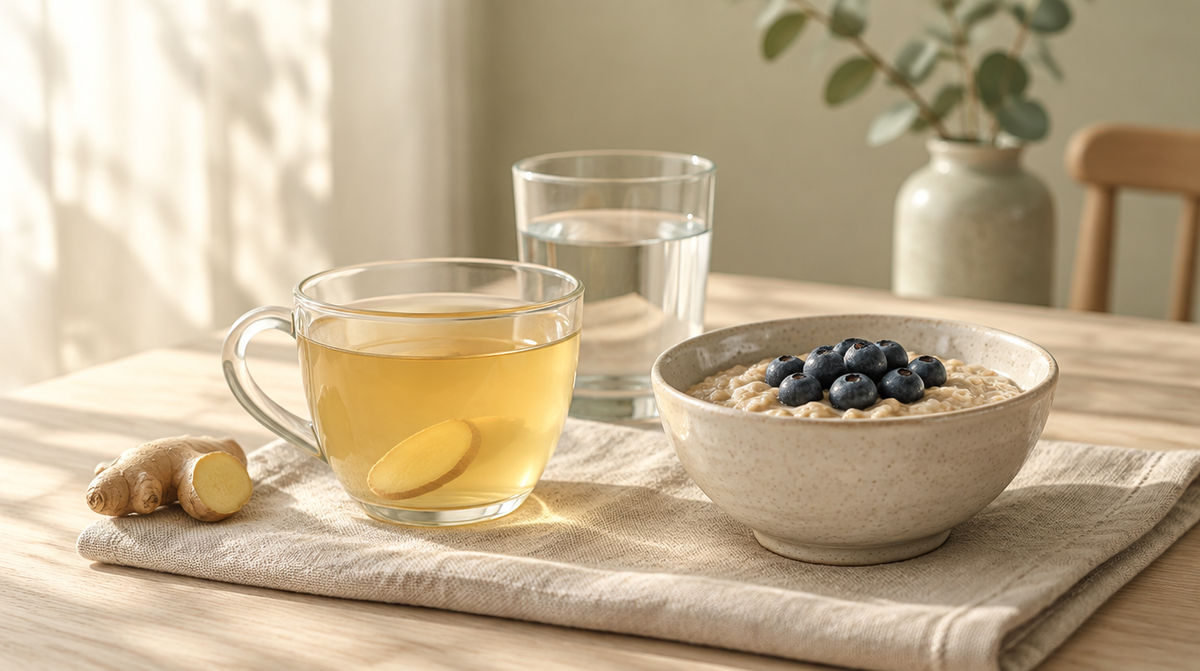
Ingwertee, Wasserglas und Haferflocken mit Blaubeeren auf Leinenstoff, Thema Ernährung bei Übelkeit unter der Abnehmspritze
StoffwechselOct 7, 202611 min read

Weight loss injections: nausea, constipation, and diarrhea – what really helps

This article is part of: GLP-1 and Female Hormones: Cycle, Menopause, and the Shot

When I went through the figures from a 2025 cross-sectional study, one of them stuck with me: of 69 people undergoing GLP-1 therapy, including 55 women, only 43 percent reached the recommended 1.2 grams of protein per kilogram of body weight (Johnson et al., 2025). People talk a lot about nausea from weight-loss injections, but rarely about what is missing from their plates. Yet, these things are closely related.

Nausea, vomiting, diarrhea, and constipation are among the most common complaints when using Ozempic, Wegovy, Mounjaro, and similar medications. They are generally mild to moderate and can be noticeably mitigated with a few everyday adjustments. Part of this also depends on how little you are suddenly eating and drinking. That is exactly where this article comes in.

Here, you will find information on how frequently each symptom occurs, what helps with nausea, constipation, and diarrhea based on current research, which nutrient gaps can arise during treatment, and where a supplementary routine is beneficial. For an overview of all Ozempic side effects in women, from muscles to the menstrual cycle and fertility, see our article Ozempic side effects in women: honestly explained.

How common are nausea, constipation, and diarrhea with weight-loss injections?

At 15 to 50 percent, nausea is the most frequent gastrointestinal complaint, followed by diarrhea, vomiting, and constipation. Symptoms usually occur during the dose escalation phase, are mild to moderate, and subside on their own (Gorgojo-Martínez et al., 2023).

Symptom Frequency Typical Duration What helps in daily life
Nausea 15 to 50% usually under 8 days Small portions, low fat and sugar
Vomiting 5 to 20% 1 to 8 days Fluids in small sips
Diarrhea 5 to 25% about 3 days Drink enough, bland diet
Constipation 4 to 12%, up to 35% in obesity studies average 47 days Water, fiber, movement

Source: Expert consensus, Gorgojo-Martínez et al., 2023. Ranges apply to GLP-1 receptor agonists as a whole.

The STEP-1 study with semaglutide shows just how significant the difference from placebo is: nausea occurred in 44.2 percent (placebo 17.4 percent), diarrhea in 31.5 percent (15.9), vomiting in 24.8 percent (6.6), and constipation in 23.4 percent (9.5). Only 4.5 percent discontinued therapy due to gastrointestinal complaints, compared to 0.8 percent in the placebo group (Takrori et al., 2025). Under tirzepatide, rates were lower in the SURMOUNT-4 study, but the study designs differ so significantly that the numbers cannot be compared directly.

The injection works, and that is why sticking with it is worth it: in STEP 1, participants lost an average of 14.9 percent of their body weight (placebo 2.4 percent); with tirzepatide, the loss in the SURMOUNT-1 study was 15.0 to 20.9 percent, depending on the dose (Wilding et al., 2021; Jastreboff et al., 2022). The price for this is side effects, which can be managed effectively.

Why do weight loss injections cause nausea and constipation?

Weight loss injections slow down gastric emptying and suppress appetite in the brain. As a result, food remains in the stomach longer and the bowels work more slowly, which explains the nausea and constipation.

This is exactly the intended effect, as it ensures that you feel full faster and eat less. However, the body needs time to get used to it. This is why symptoms are more frequent at the start of therapy and after each dose increase, and why they tend to become milder for many over time. Furthermore, there is a vicious cycle explicitly mentioned by a consensus of experts: those who feel full often drink too little, and insufficient fluid intake exacerbates constipation (Gorgojo-Martínez et al., 2023).

The same group of experts recommends "start low, go slow": in the case of persistent gastrointestinal symptoms, the dose increase interval can be extended by two to four weeks, the dose can be temporarily maintained, or the dosage can be reduced by one step. This is an expert recommendation, not a study, and must be handled exclusively by a physician. If nausea severely limits your daily life, discuss this openly at your next check-up instead of changing the dose yourself. These recommendations refer to GLP-1 receptor agonists such as semaglutide. Tirzepatide (Mounjaro) also acts via the hormone GIP but similarly slows gastric emptying; therefore, these everyday tips can be applied accordingly.

What helps against nausea and vomiting while taking weight loss injections?

To combat nausea, small, frequent meals low in fat and sugar, eating slowly, and adequate fluid intake are most effective. Expert recommendations explicitly advise avoiding large portions as well as very fatty and very sweet foods (Gorgojo-Martínez et al., 2023).

In practical terms, this means: prefer five small meals over three large ones, and stop as soon as the first feeling of satiety occurs. Because the stomach empties slowly, one extra bite can make the difference between "satisfied" and "queasy." High-fat foods such as fried items, cream sauces, or fast food remain in the stomach for an especially long time and trigger nausea more frequently. Steamed vegetables, rice, potatoes, yogurt, chicken, or fish are easier to digest. In the case of vomiting, focus on fluids in small, regular sips so that the body does not become dehydrated.

Ginger is a popular home remedy tip. It is well-studied for nausea during pregnancy: a meta-analysis evaluated several studies on this (Viljoen et al., 2014). There are no specific studies for weight loss injections, so it is unclear whether it helps in this context. In standard culinary amounts, such as fresh ginger tea, it is well-tolerated by most people and thus worth a try. Medications for nausea also exist, but these should only be used under medical supervision.

What helps against constipation and diarrhea while taking weight loss injections?

To combat constipation, the primary remedies are more fluids, more fiber, and more physical activity. For diarrhea, focus on sufficient fluid intake, a bland diet, and a review of accompanying medications. The expert consensus recommends both (Gorgojo-Martínez et al., 2023).

Constipation affects fewer people than nausea but lasts the longest: the median duration is 47 days. This is a period where establishing a solid routine is worthwhile. The first lever is water, because fiber only swells with enough fluid and can even worsen constipation without it. The second lever is fiber itself. In the aforementioned cross-sectional study, the average intake was 14.5 grams per day, while 28 grams are recommended (Johnson et al., 2025). Increase the amount slowly, over one to two weeks, using oatmeal, berries, vegetables, flaxseeds, or chia seeds to avoid adding bloating to the mix. You can read about which foods additionally support satiety and digestion in our article on GLP-1 foods. The third lever is movement; even a daily walk stimulates the bowels.

For diarrhea while taking Ozempic or other weight loss injections, which usually subsides after about three days, the priority is fluid intake. If you are additionally taking metformin, it may contribute to diarrhea. This should also be part of the conversation with your doctor. The consensus also mentions probiotics and anti-diarrheal medications; their use should be decided by a physician.

What nutritional gaps occur with weight loss injections?

Many symptoms during weight loss injections occur indirectly because you eat significantly less and therefore consume less protein, fiber, and essential micronutrients. A small cross-sectional study makes this clearly visible.

In the study by Johnson et al. (2025) involving 69 people on GLP-1 therapy, only 1.4 percent reached the recommended vitamin D intake; 89.9 percent were below the requirement for magnesium, 88.4 percent for iron, and 98.6 percent for potassium. Protein intake was also often too low. The study is small and shows a snapshot rather than a cause-and-effect relationship, but the direction aligns with what professional societies state: a joint expert paper by several US societies from 2025 lists managing gastrointestinal symptoms, preventing micronutrient deficiencies, and consuming sufficient protein along with strength training to maintain muscle mass as priorities during therapy (Mozaffarian et al., 2025).

The reasoning behind this is simple: less food, fewer nutrients, and some nutrients are involved in energy metabolism, muscle function, or hair growth. Whether you experience fatigue or hair loss depends on many factors. We have written about how hair loss occurs during injections and what helps in a separate article: Hair loss with Ozempic: Causes and what helps women. It remains important to note: persistent fatigue can also stem from too little fluid, too few calories, an iron deficiency, or the thyroid, and should be medically clarified if it lasts.

Shape Formula: Your routine alongside the injection

With the weight-loss injection, you eat less, and your routine needs a solid foundation. Shape Formula complements the Hormonic Base with 10 active ingredients for your metabolism, including chromium, which contributes to normal macronutrient metabolism and the maintenance of normal blood glucose levels. Physician-developed, to accompany the injection.
Discover Shape Formula

What helps in everyday life alongside the injection: protein, strength training, and hydration?

Three routines contribute the most: enough protein, spread throughout the day, regular strength training, and conscious hydration. They cost nothing and address exactly where the injection leaves gaps.

Proteinfirst. The intake measured in the aforementioned study is 1.2 grams per kilogram of body weight. For a 70-kilogram woman, that is 84 grams a day. If your appetite is low, it helps to prioritize protein on your plate: yogurt, Skyr, eggs, legumes, fish, or poultry, spread over several small meals instead of one large one. This is important because a significant portion of the weight lost while on the injection comes from lean mass, as the STEP-1 study showed (Wilding et al., 2021). You can read more about this in the article Ozempic side effects in women.

Strength trainingis the second half of muscle protection. The 2025 expert paper explicitly mentions protein and strength training together (Mozaffarian et al., 2025). Two sessions per week targeting the major muscle groups are a sensible start, adaptable to your fitness level.

Hydrationis the third point and the most underestimated one. If you feel full, you forget to drink, and constipation, fatigue, and dizziness often worsen as a result. Establish fixed anchors: a glass of water after waking up, one with every meal, plus tea or clear broth if solid food isn't an option.

What role do micronutrients and Shape Formula play?

A basic supply of micronutrients can support the gaps that arise with small portions. Hormonic Base and Shape Formula are intended as a accompaniment to your routine, not as a remedy for side effects.

The Hormonic Basecontains 16 micronutrients. Magnesium (as a complex of bisglycinate, malate, and citrate), vitamin B6, and folate contribute to the reduction of tiredness and fatigue according to EFSA. Vitamin D3 contributes to normal muscle function, and zinc and selenium to the maintenance of normal hair. In the cross-sectional study, vitamin D and magnesium were among the nutrients with the largest gaps. The Base can therefore step in where something is most likely to be missing while on the injection. Iron is deliberately not included: whether you need it should be clarified by a blood count including ferritin, and supplementation is only worthwhile if there is a proven need.

The Shape Formulasupplements the Base with 10 active ingredients for your metabolic routine: L-carnitine, green coffee extract, EGCG from green tea, acacia fiber, alpha-lipoic acid, cinnamon, fenugreek, tryptophan, chromium, and piperine. An EFSA-approved health claim exists only for chromium: it contributes to normal macronutrient metabolism and to the maintenance of normal blood glucose levels. For the remaining active ingredients, they are being researched but do not have an approved health claim. We are deliberately transparent about this.

An example of an honest assessment is acacia fiber, a prebiotic. In a randomized study with healthy adults, 20 to 40 grams of acacia gum increased the feeling of satiety and lowered blood sugar spikes after a meal, but caused dose-dependent bloating (Larson et al., 2021). Such study quantities cannot be transferred to the amount in a dietary supplement, which is why we do not derive any specific health effects from it. Shape does not promise that you will lose weight faster or that side effects will disappear. It is a routine that accompanies your metabolism from a nutritional perspective while the injection does its work. Our Metabolism Guide for Womenexplains how metabolism, hormones, and weight are related.

A safety note is required here: chromium, cinnamon, fenugreek, and alpha-lipoic acid can influence blood sugar, and GLP-1 medications do so as well. If you are taking diabetes medication or insulin, clarify any supplementation with your doctor beforehand. Fenugreek is not suitable during pregnancy or breastfeeding. The same applies to liver diseases or regular medication use: consult a doctor first, then supplement.

When should you seek medical advice?

Persistent vomiting accompanied by dizziness, confusion, or severe fatigue, as well as severe abdominal pain, must be clarified by a doctor immediately. Expert consensus explicitly names dizziness, confusion, and fatigue during severe vomiting as warning signs of dehydration, which in rare cases may require an infusion (Gorgojo-Martínez et al., 2023).

Severe, persistent pain in the upper abdomen that may radiate to the back, with or without vomiting, can indicate pancreatitis and is mentioned as a warning signal in the package insert. Even if symptoms do not improve after several weeks, this is a reason to readjust the therapy with your prescribing doctor. You can find everything else regarding your cycle, menopause, and hormones while on the injection in our GLP-1 Guide for Women.

If you have questions about your accompanying routine, you can discuss them in a free 15-minute introductory consultationwith one of our doctors.

Shape Bundle: Base and Shape together

With small portions, micronutrients are easily neglected. The Shape Bundle combines Hormonic Base (16 essential micronutrients, including magnesium complex, vitamin D3, B6, and folate) with Shape Formula (10 active ingredients) for a total of 26 active ingredients. Developed by doctors as a daily companion.

Start with a price advantage

Conclusion

Side effects of the weight-loss injection are common, but usually mild and temporary. Small, low-fat meals, sufficient water intake, gradually increased fiber, and exercise noticeably alleviate nausea and constipation, and any dosage adjustment is a medical decision, if necessary.

At least as important is what you do alongside the injection: sufficient protein, strength training, hydration, and a solid nutritional foundation. Hormonic Base and Shape Formula can support this routine without replacing the therapy or promising to prevent side effects. This way, the support remains where it belongs: by your side, not in place of your doctor.

Frequently asked questions about nausea and constipation while using the weight-loss injection

How long do nausea and constipation last while taking the weight-loss injection?

This depends on the symptom. According to expert consensus, nausea usually subsides in less than eight days, vomiting after one to eight days, and diarrhea after about three days. Constipation lasts the longest, with a median duration of 47 days. Symptoms peak at the beginning and with each dose increase.

What helps with nausea caused by Ozempic and other weight-loss injections?

Small, frequent meals low in fat and sugar, eating slowly, and drinking enough fluids are most helpful. Stop eating as soon as you feel full. Ginger tea is well tolerated by most, but its benefits are only proven for morning sickness. If the nausea remains severe, speak with your doctor about dosage and medication.

Was hilft gegen Verstopfung durch Ozempic?
Trinke mehr Wasser, bewege Dich täglich und steigere die Ballaststoffe langsam, zum Beispiel mit Haferflocken, Beeren, Gemüse oder Leinsamen. Ballaststoffe wirken nur mit genug Flüssigkeit. Hält die Verstopfung an oder wird sie schlimmer, kann Deine Ärztin oder Dein Arzt weitere Maßnahmen oder eine Dosisanpassung besprechen.
Was hilft bei Durchfall unter Ozempic und der Abnehmspritze?
Meist klingt Durchfall nach etwa drei Tagen von selbst ab. Wichtig sind in dieser Zeit ausreichend Flüssigkeit und leichte Kost. Nimmst Du zusätzlich Metformin, kann es den Durchfall mitverursachen, das gehört in das Gespräch mit Deiner Ärztin oder Deinem Arzt. Hält der Durchfall an, ist Blut im Stuhl oder zeigen sich Zeichen von Austrocknung, lass es ärztlich abklären.

Scientific Sources

  • Gorgojo-Martínez JJ et al. (2023). Clinical Recommendations to Manage Gastrointestinal Adverse Events in Patients Treated with Glucagon-like Peptide-1 Receptor Agonists: A Multidisciplinary Expert Consensus. J Clin Med 12(1):145. doi:10.3390/jcm12010145
  • Takrori E, Peshin S, Singal S (2025). Gastrointestinal Adverse Effects of Anti-Obesity Medications in Non-Diabetic Adults: A Systematic Review. Medicina 61(11):1987. doi:10.3390/medicina61111987
  • Wilding JPH et al. (2021). Once-Weekly Semaglutide in Adults with Overweight or Obesity (STEP 1). N Engl J Med 384:989-1002. doi:10.1056/NEJMoa2032183
  • Jastreboff AM et al. (2022). Tirzepatide Once Weekly for the Treatment of Obesity (SURMOUNT-1). N Engl J Med 387:205-216. doi:10.1056/NEJMoa2206038
  • Johnson B et al. (2025). Investigating nutrient intake during use of glucagon-like peptide-1 receptor agonist: a cross-sectional study. Front Nutr. doi:10.3389/fnut.2025.1566498
  • Mozaffarian D et al. (2025). Nutritional Priorities to Support GLP-1 Therapy for Obesity: A Joint Advisory from ACLM, ASN, OMA and TOS. Obesity Pillars. doi:10.1016/j.obpill.2026.100269
  • Viljoen E et al. (2014). A systematic review and meta-analysis of the effect and safety of ginger in the treatment of pregnancy-associated nausea and vomiting. Nutr J 13:20. doi:10.1186/1475-2891-13-20
  • Larson R et al. (2021). Acacia Gum Is Well Tolerated While Increasing Satiety and Lowering Peak Blood Glucose Response in Healthy Human Subjects. Nutrients 13(2):618. doi:10.3390/nu13020618
  • Wegovy (semaglutide), package leaflet, Rote Liste PatientenInfo-Service.

About the Author

Amelie Weiss

Amelie Weiss

Research Fellow, PhD · Hormonic

Amelie Weiss is a Research Fellow at Hormonic and conducts scientific research on hormonal health, micronutrients, and evidence-based women's health.

Note: This article is based on current guidelines and scientific research (as of 2026). It is intended for informational purposes only and does not replace medical advice, diagnosis, or treatment. GLP-1 medications require a prescription. Never discontinue them on your own and always discuss initiation, dosage, and discontinuation with your healthcare provider.

Share

You might also be interested in this.

Ozempic Nebenwirkungen bei Frauen: ehrlich erklärt - Hormonic
StoffwechselJun 15, 20268 min read
Ozempic Side Effects in Women: An Honest Explanation

Nausea, Muscle Loss, Cycle Effects: The Honest Truth About GLP-1 Side Effects in Women, Plus How to Support Your Body.

Haarausfall unter Ozempic: Ursachen und was Frauen hilft - Hormonic
Haut & HaareJul 10, 20268 min read
Hair Loss on Ozempic: Causes and What Helps Women

Do women lose hair on Ozempic? Why GLP-1 causes hair loss, how long it lasts, and what truly helps with regeneration.

Ozempic ohne Rezept: So steigerst du GLP‑1 natürlich mit Lebensmitteln - Hormonic
ErnährungAug 5, 202511 min read
GLP-1 foods: Which foods stimulate satiety

After the same meal, women release two to three times as much GLP-1 as men. What this means, which foods have actually increased secretion in human studies, and which popular tips do not stand up t...