Online, cortisol is considered a villain: cortisol face, cortisol belly, coffee and fasting as hormone killers. This fact check scientifically examines 8 common myths, specifically for women.
Key takeaways
Cortisol is vital; only a chronically dysregulated rhythm is harmful. Coffee in moderation does not destroy hormones, morning exercise is usually helpful, and intermittent fasting in moderation is unproblematic. Adaptogens are a supplement, not a miracle cure, and take weeks to work. Lifestyle is the basis of cortisol regulation.
On social media, cortisol has become the villain: "Cortisol Face," "Cortisol Belly," coffee destroys your hormones, fasting stresses the female body. Many women are alarmed at the thought of their stress hormone. But what truth is there to these claims?
In this fact check, we scientifically examine the most common cortisol myths, with a focus on women. You'll get an honest assessment of what is proven and what is greatly exaggerated online.
Myth 1: "Cortisol is bad"
Viewing cortisol solely as a stress hormone and villain falls short. As a steroid hormone produced by the adrenal glands, it fulfills vital functions: It provides energy in the morning and mobilizes glucose, it regulates blood sugar together with insulin, it has anti-inflammatory effects, it keeps blood pressure and circulation stable, and through its daily rhythm, it influences your energy during the day and your sleep at night.
A healthy rhythm means: high in the morning, low in the evening. Problems only arise when cortisol becomes chronically imbalanced. Chronically high levels, for example due to persistent stress, can lead to sleep problems, abdominal weight gain, high blood pressure, menstrual cycle irregularities, and a weakened immune system. Too little cortisol, on the other hand, causes fatigue and weakness. So, cortisol is "bad" only when its delicate balance is disrupted, not in itself.
And what about "Cortisol Face" and "Cortisol Belly"? There is a kernel of truth behind them: In cases of truly extremely elevated cortisol, such as the rare Cushing's syndrome, a rounder face due to water retention and increased abdominal fat can occur. However, this is a medical condition and not the normal everyday stress suggested by the social media terms. A swollen face in the morning or a little more belly fat can have many causes, from lack of sleep to salt to alcohol, and are only rarely directly "the cortisol."
Cortisol is not the problem, but a chronically disrupted rhythm.
Myth 2: "Coffee on an empty stomach destroys hormones"
Coffee can temporarily increase cortisol slightly, but not in a hormone-destroying way. Cortisol already follows a diurnal rhythm with a natural peak in the morning, regardless of coffee. If you drink coffee immediately after that, the level may rise a little more. However, studies show that regular coffee drinkers develop a tolerance, so this additional boost becomes increasingly smaller.²
There is no reliable evidence that coffee disrupts estrogen or progesterone balance. What can occur individually: On an empty stomach, coffee can irritate the stomach or increase nervousness. Every woman reacts differently to this.
Myth 3: "No exercise immediately after waking up in the morning"
Women are often advised to avoid early morning workouts because cortisol levels are already high in the morning. In fact, exercise is fundamentally good for your hormonal balance and stress management, regardless of the time of day. While cortisol is naturally elevated in the morning, which helps with waking up, exercising shortly after getting up is not harmful.
Regular exercise even lowers basal cortisol levels in the long term, improves stress resilience, and supports a healthy day-night rhythm. During a workout, cortisol temporarily increases, which is a normal, useful adaptation. Studies show that active people have faster cortisol recovery and lower resting levels over time compared to inactive people.
Hormonally, there is no reason not to exercise in the morning, unless the total amount of stress is too high, for example due to lack of sleep plus intense training plus a lot of mental pressure. If you are very stressed, gentler sessions or a small snack before training are often the better choice. Listen to your energy levels and note that these can vary depending on your cycle phase.
Myth 4: "Fasting is bad because it increases cortisol"
Fasting is indeed a mild stressor, as it activates similar axes to other stressors. However, this does not mean that it is fundamentally bad. This is referred to as hormesis: a controlled stimulus can initiate adaptation processes that are beneficial in the long term. Controlled fasting is associated with improved insulin sensitivity, more flexible fat burning, and lower inflammatory markers.
With short fasting intervals such as 14 to 16 hours, the increase in cortisol remains moderate and temporary. With very long fasting over 24 hours or more, it can be more pronounced. The female context is important: the body often reacts more sensitively to energy deficiency because reproduction and metabolism are closely linked. Excessive fasting can disrupt the cycle via the stress axis, even leading to irregular or absent periods.
In moderation, for example as a 16/8 rhythm, intermittent fasting usually shows no such negative effects in healthy women in studies, and in PCOS it can even be beneficial by improving insulin sensitivity. However, if your cycles become irregular or you experience exhaustion and hair loss, you should adjust your fasting practice.
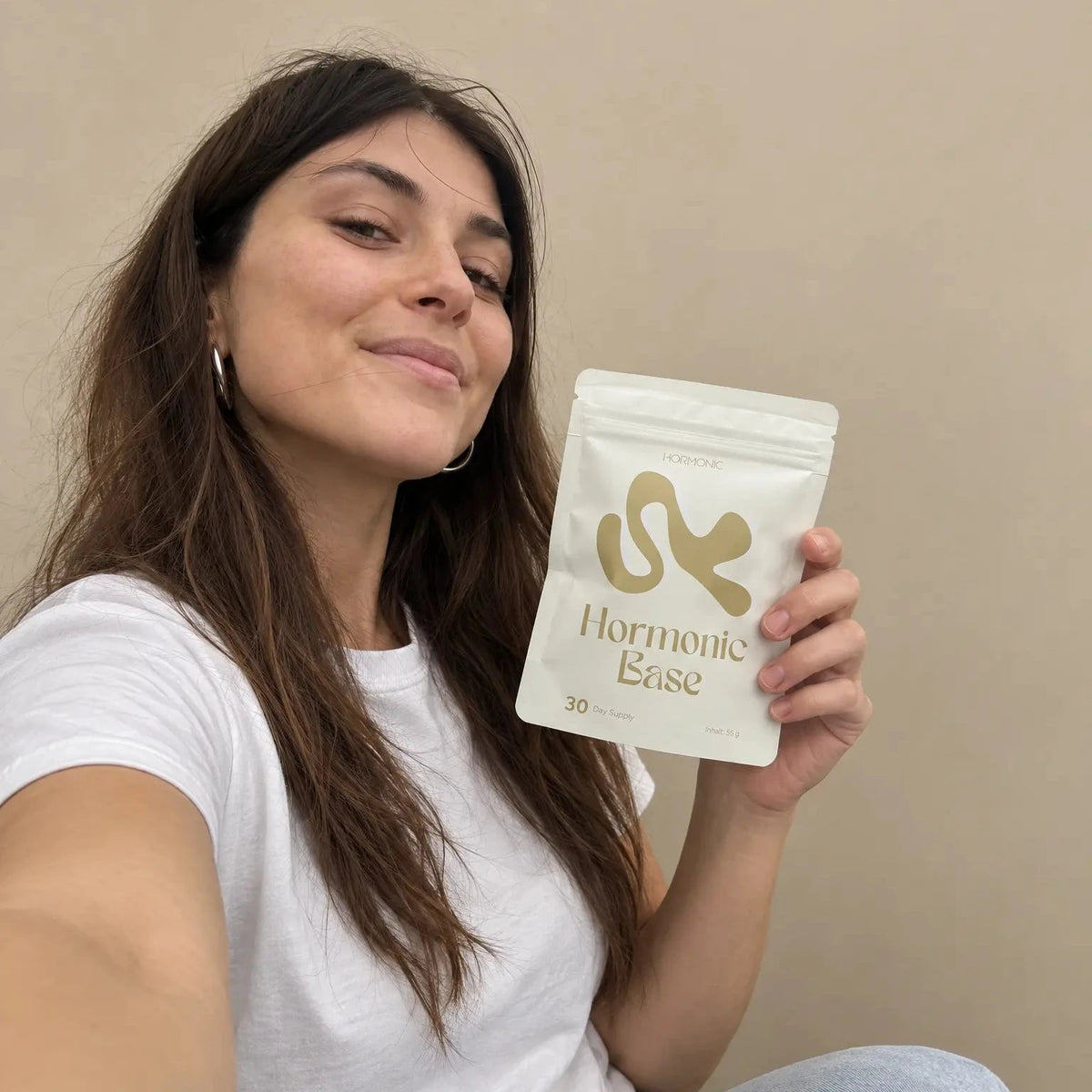
Viral cortisol hacks don't do much, but a good micronutrient foundation does. Hormonic Base provides 16 micronutrients, including a magnesium complex and vitamin B6, which contribute to normal psychological function and the normal functioning of the nervous system, as well as magnesium, which helps reduce fatigue. Not a magic cure for stress, but the foundation for a calmer everyday life.
Myth 5: "You need adaptogens to control cortisol."
Adaptogens like Ashwagandha and Rhodiola are on everyone's lips. They can indeed help regulate stress and modulate cortisol, but not every woman necessarily needs them. The most important part of cortisol regulation happens through lifestyle: sleep, nutrition with essential micronutrients for healthy hormone regulation, exercise, and relaxation. Adaptogens are a supplementary tool, not a foundation.
The research here is quite interesting. For Ashwagandha, a systematic review found that taking it over several weeks could lower cortisol levels and improve stress and anxiety symptoms in stressed individuals compared to placebo. For Rhodiola (which is also contained in Hormonic Cycle+ Formula), there is also evidence of less exhaustion and better mental performance under stress. However, for many other adaptogens, the data is still thin.
If you cope well with stress, you don't need to take adaptogens preventively. They are not a substitute for a healthy lifestyle, but they can be an option for specific issues such as inner restlessness or exhaustion, ideally combined with a good micronutrient foundation. When in doubt, talk to a doctor, especially if you are taking medication.
Myth 6: "Cortisol supplements work immediately."
Quick before-and-after promises suggest that supplements work overnight. This is rarely the case. Most nutrients and plant compounds only show their effects after weeks, because, for example, depleted stores of vitamin D, iron, or B vitamins first need to be refilled. Adaptogens usually showed their effects in studies only after 30 to 90 days.
So, give your body at least four to twelve weeks, depending on the substance and initial situation. Be suspicious of promises that guarantee immediate results. Especially with cycle-related effects, improvement often only appears in the next cycle, for example, regarding premenstrual well-being.
Myth 7: "Cycle phases have no influence on cortisol."
The cycle subtly influences cortisol dynamics. A meta-analysis showed that basal cortisol levels in the early half of the cycle are on average slightly higher than in the second half. The difference is small but present. One reason: in the second half of the cycle, progesterone is high, from which the calming neurohormone allopregnanolone is formed, which can dampen the stress axis.
Under acute stress, the findings are inconsistent; some women react more strongly in the second half of the cycle, others do not. Subjectively, many report feeling overwhelmed more quickly in the premenstrual week, which is also related to falling estrogen and progesterone levels. For you, this means: schedule demanding appointments for your energy-rich first half of the cycle and consciously allow yourself more self-care premenstrually.
What truly supports your cortisol rhythm
Before you reach for supplements, it's worth looking at the basics. These levers are best supported by evidence:
Prioritize sleep: A regular sleep rhythm is the strongest lever for a healthy daily cortisol curve.
Exercise regularly: Exercise acts as a valve for stress and lowers resting levels in the long term.
Incorporate relaxation: Breathing exercises, walks, or conscious breaks help the stress axis to calm down.
Ensure micronutrient base: B vitamins, magnesium, and zinc are involved in stress regulation.
Myth 8: "Only women with PMS or PCOS need to pay attention to cortisol."
Stress and a dysregulated cortisol rhythm affect the health of all people, not just those with known hormonal issues. Long-term elevated cortisol is associated with sleep problems, depressed mood, high blood pressure, higher blood sugar levels, susceptibility to infections, and abdominal fat, regardless of PMS or PCOS.
However, in PMS and PCOS, stress exacerbates an existing issue, for example, by triggering symptoms or promoting inflammation and insulin resistance in PCOS. Therefore, stress management is particularly important there. But even an otherwise healthy woman can develop cycle problems due to chronic stress. So, stress management is worthwhile for every woman.
Instead of obsessing over cortisol myths, clarify things in 15 minutes with a doctor. In a free video call, one of our doctors at Hormonic will assess your symptoms and tell you honestly if and what actually needs to be investigated in your case. No obligations and from the comfort of your home.
Cortisol is neither the banished villain from social media nor something that should be ignored. The truth is more nuanced than short clips suggest: coffee in moderation does not destroy hormones, morning exercise is usually helpful rather than harmful, fasting can be useful in the right doses, and adaptogens are a supplement, not a miracle cure. Cortisol itself is essential for life; only a chronically derailed rhythm causes harm.
Take your body's signals seriously. If you are constantly exhausted, irritable, or restless, it is worth taking an honest look at your sleep, diet, exercise, and stress, regardless of current trends. A solid foundation of micronutrients and, where appropriate, targeted support can help. Do not expect miracles overnight, but expect a noticeable improvement over several weeks.
You can read about what is really behind the "stress belly" and what other types of "hormone belly" exist in the article on Hormone belly.
Frequently Asked Questions About Cortisol
What are cortisol face and cortisol belly?
Cortisol Face and Cortisol Belly are social media terms for a face supposedly rounded by stress or increased abdominal fat. There is some truth to this: chronically very high cortisol levels, such as in the rare Cushing's syndrome, can indeed lead to water retention and abdominal fat. However, this simplification is greatly exaggerated for normal everyday stress. Facial swelling and abdominal fat have many possible causes, and not all of them are cortisol-related.
Does coffee on an empty stomach increase cortisol?
Coffee can temporarily increase cortisol levels slightly, but not in a hormone-damaging way. Cortisol naturally peaks in the morning anyway. Regular coffee drinkers develop a tolerance, so the additional effect diminishes over time. There is no reliable evidence that coffee in moderation disrupts estrogen or progesterone. However, if coffee on an empty stomach bothers you, eat a little something beforehand.
Senken Adaptogene wie Ashwagandha wirklich Cortisol?
Es gibt Hinweise darauf. Eine systematische Uebersichtsarbeit fand, dass Ashwagandha ueber einige Wochen bei gestressten Personen den Cortisolspiegel senken und Stresssymptome im Vergleich zu Placebo verbessern konnte. Auch fuer Rhodiola gibt es Hinweise auf weniger Erschoepfung unter Stress. Adaptogene sind aber kein Muss und kein Ersatz fuer einen gesunden Lebensstil, sondern eine moegliche Ergaenzung. Sie brauchen Zeit und sollten bei Medikamenteneinnahme aerztlich abgeklaert werden.
Schadet Intervallfasten dem weiblichen Hormonhaushalt?
In Massen meist nicht. Kurze Fastenintervalle wie 16/8 zeigen bei gesunden Frauen in Studien selten negative Effekte auf Zyklus und Hormone, und bei PCOS kann Intervallfasten ueber eine bessere Insulinempfindlichkeit sogar vorteilhaft sein. Sehr langes oder sehr haeufiges Fasten kann dagegen ueber die Stressachse den Zyklus stoeren. Wenn deine Periode unregelmaessig wird oder du dich dauerhaft erschoepft fuehlst, solltest du die Fastenpraxis anpassen.
Scientific Sources
Hamidovic, A., et al. (2020). Higher circulating cortisol in the follicular vs. luteal phase of the menstrual cycle: A meta-analysis. Frontiers in Endocrinology, 11, 311. doi:10.3389/fendo.2020.00311
Lovallo, W. R., et al. (2006). Cortisol responses to mental stress, exercise, and meals following caffeine intake in men and women. Psychosomatic Medicine, 68(2), 224-232. doi:10.1097/01.psy.0000204630.20801.bb
Della Corte, K. W., et al. (2024). The effects of caffeine on stress indices and salivary cortisol. Nutrition Journal. (BMC review)
National Institutes of Health, Office of Dietary Supplements. (2024). Ashwagandha: Fact sheet for health professionals.
Ciastek, B., et al. (2025). Intermittent fasting and short-term fasting: Effects on metabolic health. Nutrients, 17(13), 2061. doi:10.3390/nu17132061
Cortisol and polycystic ovary syndrome: a systematic review (2022). Reproductive Biology and Endocrinology, 20(1). PMID:33818258
About the Author
Lee Paulina Pape
Founder · MSc Psychology · Hormonic
Lee is a psychologist (MSc) and co-founder of Hormonic. As CEO, she manages Hormonic's operational affairs, making hormonal women's health understandable and accessible.
Note: This article is based on current medical literature and studies on cortisol, stress, and hormonal health (as of 2026). It is intended for informational purposes only and does not replace medical advice, diagnosis, or treatment.