
Cart

Your cart is empty

Continue shopping

Trending searches

Featured products

Hormonic Base Nahrungsergänzung mit 16 Mikronährstoffen
Sale price€65,00
(5.0)
Hormonic Midlife Formula für die Perimenopause
Sale price€75,00
(5.0)
Frau im Frühlingslicht am Fenster, Wellness und hormonelle Balance
HormoneApr 1, 20258 min read

Biohacking for Hormones: What Really Helps (Part 1)

Wellness Series · Part 1 of 2 Wellness Trends for Hormones: What Really Helps (Part 2)

Spring invites a fresh start, and it feels like every other wellness trend promises more energy and better hormones. In Part 1, we take a closer look at cold, light, and cell energy: ice baths, lymphatic drainage, infrared light, and NAD-plus infusions.

Key takeaways

Cold baths, lymphatic drainage, and infrared light have comprehensible mechanisms of action and moderate evidence for some effects. NAD-plus is promising but still has little evidence in humans. All stimuli work best on a stable foundation of sleep, nutrition, and micronutrients.

Series Part 1 of 2 · Click here for Part 2

Spring is here, and with it the desire for a fresh start. At the same time, the number of hyped wellness trends promising to boost hormones and metabolism is increasing. We take an evidence-based look: what do ice baths, lymphatic drainage, infrared light, and NAD-plus infusions really do, and what is more wishful thinking?

This first part deals with stimuli that focus on cold, light, and cell energy. For each method, we examine the mechanism of action, the study situation, and the hormonal and metabolic effects. The goal is to provide clarity about what actually benefits your body this spring.

Why alternating stimuli and no extremes

Hormones and metabolism rarely benefit from extreme measures. They react to cleverly applied alternating stimuli, i.e., the alternation between activation and recovery. This is precisely the common denominator of many trends in this article: they apply a short, dosed stimulus to which the body responds with adaptation.

The important thing here is the difference between a proven effect and a plausible promise. Some methods are well-researched, while others are based mainly on anecdotal evidence. We classify each application accordingly so that you can decide for yourself what is worthwhile for you.
Ice Baths: Cold Stimulus for Metabolism and Stress Axis

Cold plunges and ice-cold showers have been a firm trend for months. Many who regularly step into cold water report clearer minds, better moods, and more energy after the brief cold shock. But what really happens in the body, especially hormonally and metabolically?

Cold temperatures below about 15 degrees briefly put the organism on alert. The sympathetic nervous system, i.e., the fight-or-flight axis, becomes active. Stress hormones like adrenaline and noradrenaline increase, and studies have also observed a significant rise in dopamine. At the same time, blood vessels in the periphery constrict to protect the body's core temperature. After the bath, a counter-reaction follows with increased blood flow and the release of endorphins.

The cold stimulus acts as a so-called hormetic stressor, meaning a mild, controlled stress. Such stimuli can improve the body's adaptability over time, similar to physical training. With regular application, this can help reduce stress reactivity and make you more resilient in everyday life.

What Does Science Say?

The evidence is moderate. There are some small randomized studies and reviews. A review of eleven studies sees potential for cold baths for stress reduction and immune function, but explicitly points out the limited data and often missing control groups. Most findings come from short-term observations in healthy individuals. Long-term studies are still lacking.

In the short term, the body responds with an increase in heart rate, blood pressure, and energy consumption. A systematic review showed a reduction in subjectively perceived stress a few hours after the bath, as well as better sleep quality. A randomized study from the Netherlands found that daily cold showering reduced the number of sick days, indicating increased resilience in everyday life.

For women, the effect on dopamine and endorphins is particularly interesting, as it can have a mood-boosting effect in the short term. However, specific data on cycle-related mood swings is still lacking. Evidence of an increase in testosterone mainly concerns men and is not consistently scientifically proven.

Who is Cold Bathing Suitable For?

In principle, cold water application is generally well tolerated by healthy people without cardiovascular diseases. Caution is advised for high blood pressure, heart rhythm disorders, or other cardiovascular diseases, as the acute cold stimulus can strain the heart. For an underactive thyroid, it should also be individually assessed how well cold is tolerated. Start slowly, keep the application short, and never go into cold water alone.

Lymphatic Drainage: Decongestion and Relief

Swollen legs, tired eyes, or a feeling of fullness: Manual lymphatic drainage promises relief, and many actually feel physical relief after the treatment. With gentle, rhythmic strokes, the lymphatic flow is stimulated to transport excess fluid out of the tissue.

The lymphatic system is not only a drainage pathway but a central part of the immune system. It is also linked to hormonal balance, as steroid hormones stored in adipose tissue can be transported via the lymph to the liver and further processed there. A well-flowing lymph can thus indirectly support the body's own regulation.

What Does Science Say?

Lymphatic drainage is clinically well-proven for medical lymphedema, for example, after breast cancer operations or in venous insufficiency. Studies show a significant reduction in swelling and leg circumference here. Outside of such clinical pictures, the data is thinner. Many statements about general relief are based on physiological plausibility and anecdotal evidence. The method has been tried and tested for decades and is considered safe.

Direct hormonal changes due to lymphatic drainage have not yet been proven. However, there are indications of an influence via the nervous system: The gentle strokes activate the parasympathetic nervous system, i.e., the rest-and-digest nerve. Studies show reduced activity of the sympathetic nervous system after treatment, comparable to classic relaxation techniques. This can lower cortisol levels and calm the stress axis.

Many women report that PMS symptoms such as breast tenderness or water retention improve with regular lymphatic drainage, especially in the second half of the cycle. Short-term weight loss due to dehydration is possible, but this is fluid and not fat loss.

Lymphatic drainage is suitable for almost all women, especially those prone to swelling. Contraindications include acute infections, as well as severe heart or kidney insufficiency. After treatment, it is advisable to drink plenty of fluids.

Your daily micronutrient foundation

Stimuli like cold or light work best on a solid foundation. Hormonic Base provides 16 balanced micronutrients for metabolism, energy, and balance.

€65,00

Discover Hormonic Base

Infrared Light: Deep Heat for Skin, Thyroid, and Cellular Energy

Infrared light therapy, also known as photobiomodulation, utilizes red and near-infrared light in the range of approximately 600 to 900 nanometers to stimulate processes deep within tissues. The method gained recognition through skincare, but it is increasingly becoming a focus in hormone and metabolic medicine.

The key lies in the mitochondria, the powerhouses of the cells. There, the enzyme cytochrome-c-oxidase reacts to the light waves, which can promote the formation of ATP, i.e., cellular energy. Simultaneously, blood circulation is stimulated, and pro-inflammatory messenger substances are inhibited. Because the thyroid gland is located superficially in the neck, it could be directly influenced by infrared light.

What does science say?

In dermatology, the effects are well-documented. Studies show improvements in skin structure, moisture, and collagen content, as well as a reduction in fine lines. There is also evidence of positive effects of red light on hair growth and hair density in cases of hair loss.

Hormone medicine is exciting: a randomized controlled study from Brazil showed that in patients with Hashimoto's thyroiditis, just ten sessions with low-level laser led to a measurable improvement in thyroid function. Some of the subjects were able to reduce the dosage of hormone replacement therapy. Presumably, the light inhibits autoimmune-mediated inflammation. The evidence for this is still limited but promising. For women with mild hypothyroidism, infrared light could be a supplementary tool, not a substitute for medically indicated therapy.

Dosage and quality are crucial. Many commercially available devices do not achieve the light intensity used in clinical studies. Caution is advised with overly intensive use, as skin redness or mild burns are possible. Never look directly into the light unprotected.

NAD-plus Infusions: Between Research and Hype

NAD-plus, short for nicotinamide adenine dinucleotide, is an endogenous molecule found in every cell and is important for energy production in the mitochondria as well as for DNA repair. Its levels decrease measurably with age. This is precisely where NAD-plus infusions and precursors like NR (nicotinamide riboside) or NMN (nicotinamide mononucleotide) come into play.

What does science say?

In animal models, a clear benefit is shown: animals with increased NAD-plus levels age slower and have better insulin values. In humans, the data must be evaluated more cautiously. A placebo-controlled study in women with prediabetes showed improved insulin sensitivity in the muscles after ten weeks of NMN, without significant changes in weight or blood lipids.

Another study directly compared infusions: the precursor NR increased blood NAD-plus levels more efficiently than a direct NAD-plus infusion and was better tolerated. Clinically relevant endpoints such as life extension or cognitive improvement have not yet been proven in humans. NAD-plus infusions are currently administered off-label and are not approved as a medicine or as a therapy against aging.

Possible acute side effects include nausea, hot flashes, or a feeling of pressure in the head, especially with too rapid administration. As with any intravenous therapy, there are additional risks due to the access itself. For known cancer, a cautious approach is recommended, purely as a precaution, as very high NAD-plus levels could theoretically also supply energy to other cells. More high-quality human studies are needed here.

Do you want to know what truly makes sense for you?

The first 15 minutes with one of our doctors are free. We'll listen to you, categorize your questions, and show you what steps make sense for you.

Secure your free initial consultation

Conclusion

Cold, light, and lymph stimulation are no substitute for fundamentals, but they are certainly interesting stimuli for metabolism, the stress axis, and cell energy. The best documented effects are those of cold baths on stress perception and sleep, as well as the effect of infrared light on the skin and thyroid gland. NAD-plus is an exciting field of research where the enthusiasm for the human data currently outpaces the evidence.

The right dosage and realistic expectations are crucial. Such stimuli work best when built upon a stable foundation of sleep, nutrition, exercise, and adequate micronutrient supply. In the second part, we will look at heat, fasting, and aesthetic applications such as sauna, skin boosters, and micronutrient infusions.

Frequently Asked Questions About Biohacking for Hormones

Do ice baths really help with hormone balance?

Cold stimuli briefly activate the stress axis and can increase dopamine and endorphins, which may have a mood-lifting effect. There is moderate evidence for stress reduction and better sleep. However, direct, consistent effects on female sex hormones have not been proven. Caution is advised for cardiovascular diseases.

What is NAD+ and does an infusion help?

NAD-plus is an endogenous molecule that is important for energy production and cell repair and decreases with age. Studies with oral precursors such as NMN show moderate improvements in individual metabolic markers. Evidence of anti-aging effects or improved cognitive performance in humans is still lacking. Infusions are administered off-label and should only be performed by experienced professionals.

Kann Infrarotlicht die Schilddrüse unterstützen?
Erste randomisierte Studien zeigen bei Hashimoto-Thyreoiditis positive Effekte auf Schilddrüsenfunktion und Autoimmunparameter. Die Evidenz ist noch begrenzt. Infrarotlicht kann daher höchstens ergänzend wirken und ersetzt keine ärztlich indizierte Therapie. Sprich Veränderungen Deiner Behandlung immer mit Deiner Ärztin oder Deinem Arzt ab.
Wie oft sollte ich diese Anwendungen nutzen?
Bei Kältebädern gelten kurze Anwendungen unter wenigen Minuten, dafür regelmäßig, als sinnvoll. Lymphdrainage und Infrarotlicht entfalten ihre Wirkung vor allem durch Konstanz über mehrere Wochen. Wichtiger als jede einzelne Methode bleibt die Basis aus Schlaf, Ernährung, Bewegung und einer guten Mikronährstoffversorgung.

Scientific Sources

  • Espeland D et al. (2022). Health effects of voluntary exposure to cold water. International Journal of Circumpolar Health, 81(1). doi:10.1080/22423982.2022.2111789
  • Buijze GA et al. (2016). The Effect of Cold Showering on Health and Work. PLoS ONE, 11(9). doi:10.1371/journal.pone.0161749
  • Höfling I et al. (2013). Low-level laser in the treatment of patients with hypothyroidism induced by chronic autoimmune thyroiditis. Lasers in Medical Science, 28. doi:10.1007/s10103-012-1129-9
  • Yoshino M et al. (2021). Nicotinamide mononucleotide increases muscle insulin sensitivity in prediabetic women. Science, 372(6547). doi:10.1126/science.abe9985
  • Hamblin MR (2017). Mechanisms and applications of the anti-inflammatory effects of photobiomodulation. AIMS Biophysics, 4(3). doi:10.3934/biophy.2017.3.337

About the Author

Lisa Maria Emmer

Medical Director · Hormonic

Lisa Maria Emmer is co-founder and medical director at Hormonic. She supports women with hormonal problems every day and specializes in cycle health, PCOS, and menopause.

Note: This article is based on current guidelines and scientific work (as of 2026). It is for informational purposes only and does not replace medical advice, diagnosis, or treatment.

Share

You might also be interested in this.
Intervallfasten für Frauen: Was die Studien wirklich zeigen
StoffwechselJun 2, 20268 min read
Intermittent Fasting for Women: What the Studies Really Show

Intermittent Fasting for Women: Between Hype and Hormone Panic. What Randomized Studies Really Show About Weight, Insulin, and the Menstrual Cycle, and How to Implement it Effectively.

Schilddrüse und Zyklus: Wie Schilddrüsenhormone die Periode beeinflussen
SchilddrüseOct 14, 20248 min read
How Thyroid Disorders Affect Your Menstrual Cycle

The thyroid gland is a central player in the body’s hormonal system and regulates a wide range of physiological processes — including the menstrual cycle. Disorders such as hypothyroidism and hyper...
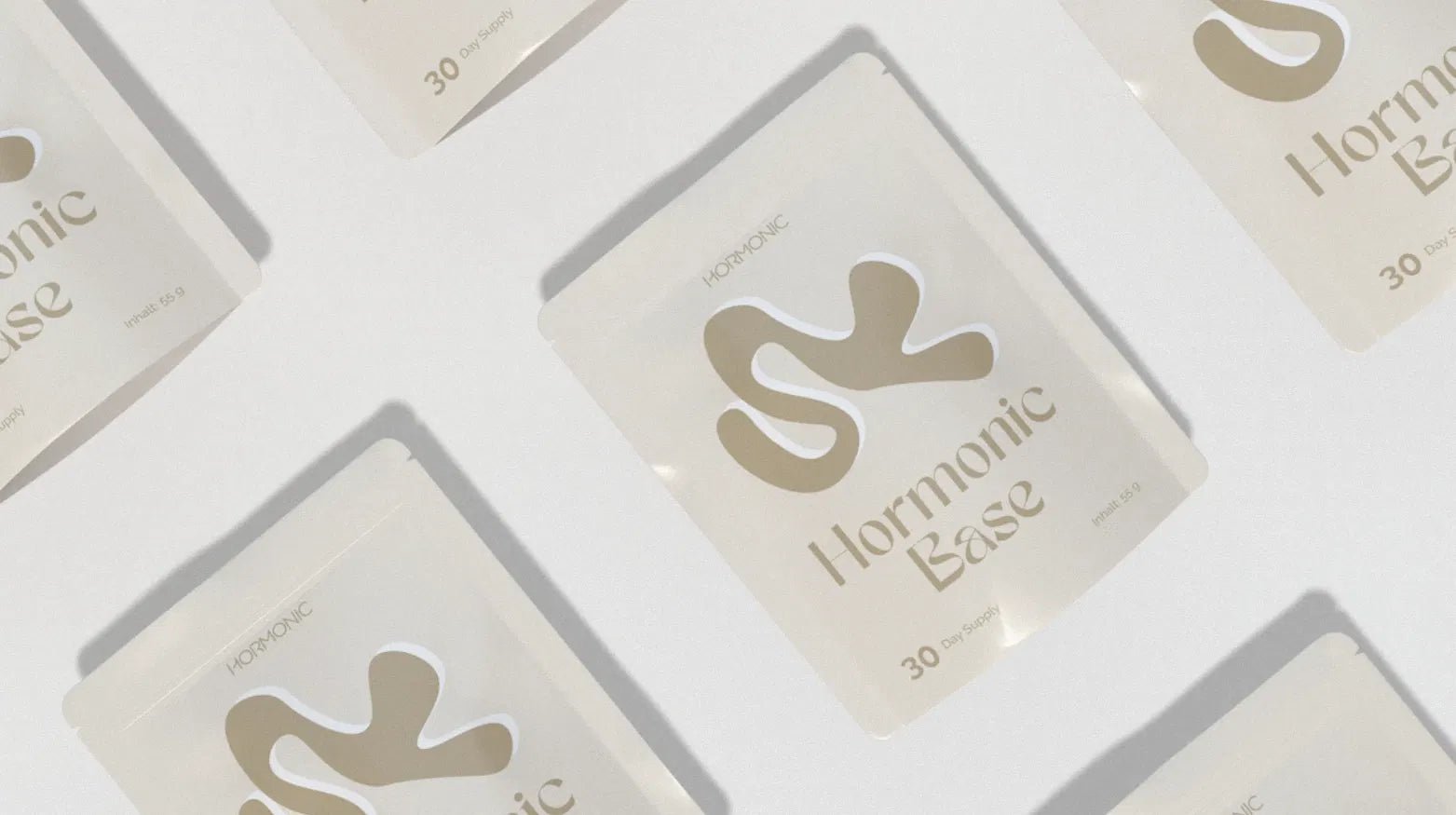
Die Wissenschaft hinter Hormonic Base
MikronährstoffeOct 8, 202523 min read
The science behind Hormonal Base

Discover how the carefully selected ingredients of Hormonic Base, such as vitamin B6, curcumin, and coenzyme Q10, support you. Scientifically sound, based on studies – for more balance in everyday ...