

When I first read the figure that women lose about one-third of their skin collagen in the first five years after menopause, I had to look twice. One-third. That explains why the skin suddenly feels different for many during this phase—drier, thinner, somehow less plump.
The good news: This is not merely a cosmetic fate. Those who understand what is behind the changes in skin during menopause can take targeted action from both external and internal approaches.
Why does skin change during menopause?
Skin changes during menopause primarily because estrogen levels decline. Estrogen promotes the formation of collagen and elastin, binds moisture via hyaluronic acid, and maintains sebum production. When it drops, the skin becomes thinner, drier, and loses elasticity. Studies show that this loss is more closely related to estrogen deficiency than to age alone (Brincat et al., 1987).
| Change | What's behind it |
|---|---|
| Dryness | Less sebum and hyaluronic acid, the skin barrier retains moisture less effectively. |
| Reduced elasticity | Collagen and elastin loss due to estrogen decline. |
| Thinner skin | The epidermis and dermis become measurably thinner. |
| Slower healing | Cell renewal and wound healing slow down. |
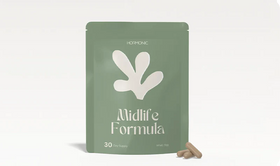
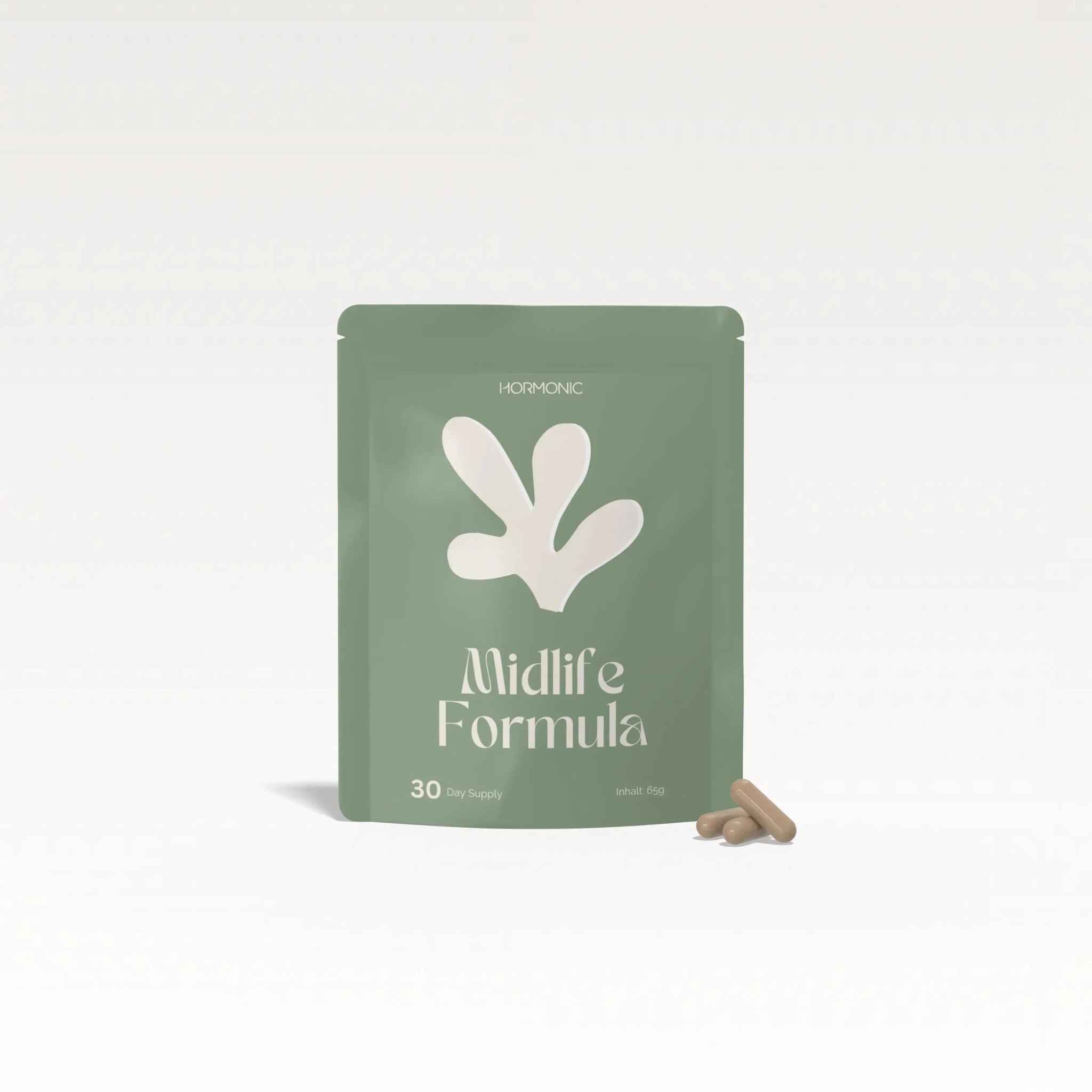
Midlife Formula for Your Skin during Menopause
The Midlife Formula combines a total of 9 active ingredients for typical menopausal issues, red clover isoflavones with the antioxidants astaxanthin and resveratrol, which plays a role in skin regeneration. Doctor-developed, 100% plant-based, loved by thousands.
Are you looking for medical support for menopause-related issues?
In a free, 15-minute introductory call, one of our doctors will discuss your questions about skin and menopause, completely without obligation. Conveniently from your home via video call, without any waiting times.
Common questions about skin during menopause
Why does skin become drier during menopause?
What helps with dry skin during menopause?
Welche Nährstoffe sind gut für die Haut in den Wechseljahren?
Hilft Kollagen bei Hautalterung in den Wechseljahren?
Scientific Sources
- Brincat, M. et al. (1987). Long-term effects of the menopause and sex hormones on skin thickness. British Journal of Obstetrics and Gynaecology, 94(2), 126-129. doi:10.1111/j.1471-0528.1987.tb02338.x
- Thornton, M. J. (2013). Estrogens and aging skin. Dermato-Endocrinology, 5(2), 264-270. doi:10.4161/derm.23872
- Rittié, L. & Fisher, G. J. (2015). Natural and sun-induced aging of human skin. Cold Spring Harbor Perspectives in Medicine, 5(1), a015370. doi:10.1101/cshperspect.a015370
- Proksch, E. et al. (2014). Oral intake of specific bioactive collagen peptides reduces skin wrinkles and increases dermal matrix synthesis. Skin Pharmacology and Physiology, 27(3), 113-119. doi:10.1159/000355523
- Tominaga, K. et al. (2012). Cosmetic benefits of astaxanthin on human subjects. Acta Biochimica Polonica, 59(1), 43-46. PMID: 22428137
- Managing menopausal skin changes: a narrative review of skin quality changes and the role of hormone replacement therapy (2025). PMC12374573.
About the Author

You might also be interested in this.

Hot flashes during and before menopause: What happens hormonally, which measures truly help, and when other causes should be investigated.
Night Sweats in Women: Why Menopause Is the Most Common Cause, Which Warning Signs Require a Doctor's Visit, and What Really Helps Against Night Sweating.
Why does hair thin during menopause? What you should get checked out, what really helps, and why biotin is overrated.