


If migraines almost always strike just before your period, it's not a coincidence, but a distinct medical condition: menstrual migraine. This article explains why the drop in estrogen triggers it, what studies show helps prevent it, and when you need to be particularly careful with an aura.
Key takeaways
- Menstrual migraine occurs within the window of two days before to three days after the start of bleeding, triggered by a drop in estrogen.
- These attacks are usually without aura, but are often longer, more severe, and harder to treat.
- For prevention, magnesium, coenzyme Q10, and riboflavin have been studied, and their effects build up over weeks.
- Important: For migraine with aura, estrogen-containing pills are generally not suitable due to the increased risk of stroke.
- For severe or new attacks, migraine should be treated medically; nutrients are only a supplement.
In my practice, women often tell me the same pattern: the worst headaches come like clockwork just before or with their period, are particularly severe, and are harder to relieve than usual. This is not imagination, but a well-described phenomenon, and it has a clear hormonal background. I want to calmly explain to you what's behind it, what really helps, and what you should definitely pay attention to.
Menstrual migraine is a type of migraine that is closely linked to the menstrual cycle. The trigger is not the bleeding itself, but the sharp drop in estrogen in the days preceding it. This hormonal drop lowers the brain's excitability threshold, making an attack more likely.
Did you know?
Studies show that attacks around the period last significantly longer and are more severe and persistent than attacks at other times. Therefore, it's not your imagination if this migraine feels particularly stubborn.
What exactly is menstrual migraine?
Professionally, menstrual migraine is defined by a fixed time window: attacks occur within the period of two days before to three days after the onset of bleeding, in at least two out of three cycles. It is also characteristic that this type of migraine almost always occurs without aura, meaning without the typical visual disturbances or sensory abnormalities beforehand. Two forms are distinguished:
| Form | When attacks occur |
|---|---|
| Pure menstrual migraine | exclusively within the window around the period, never otherwise |
| Menstrual-associated migraine | within the same window, but also at other times (more common) |
The menstrual-associated form is significantly more common. For treatment, the distinction is useful because it shows whether prevention should only be done around the period or also in between. It is also important to differentiate: these headaches are different from the cramp-like period pains in the lower abdomen, even if both can occur at the same time.
Why the drop in estrogen triggers migraine
At the end of the second half of the menstrual cycle, just before the period, estrogen levels drop sharply. This drop is considered the most important trigger of menstrual migraine. Estrogen influences neurotransmitters and pain systems in the brain, including the neurotransmitter CGRP, which plays a central role in migraine and is elevated in women with menstrual migraine around their period.
In addition, pro-inflammatory prostaglandins, the same signaling molecules that contract the uterus, also increase during this phase. However, it remains true that the exact mechanism is not yet fully understood; the estrogen drop is the best-supported explanation, not a definitively proven switch. For you, the main takeaway is: the pattern is hormonal and thus explainable, and that is precisely where intervention can be made.
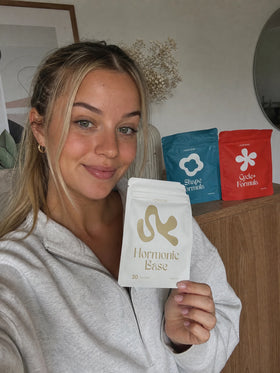
Hormonic Base: Magnesium and Q10 as the Foundation
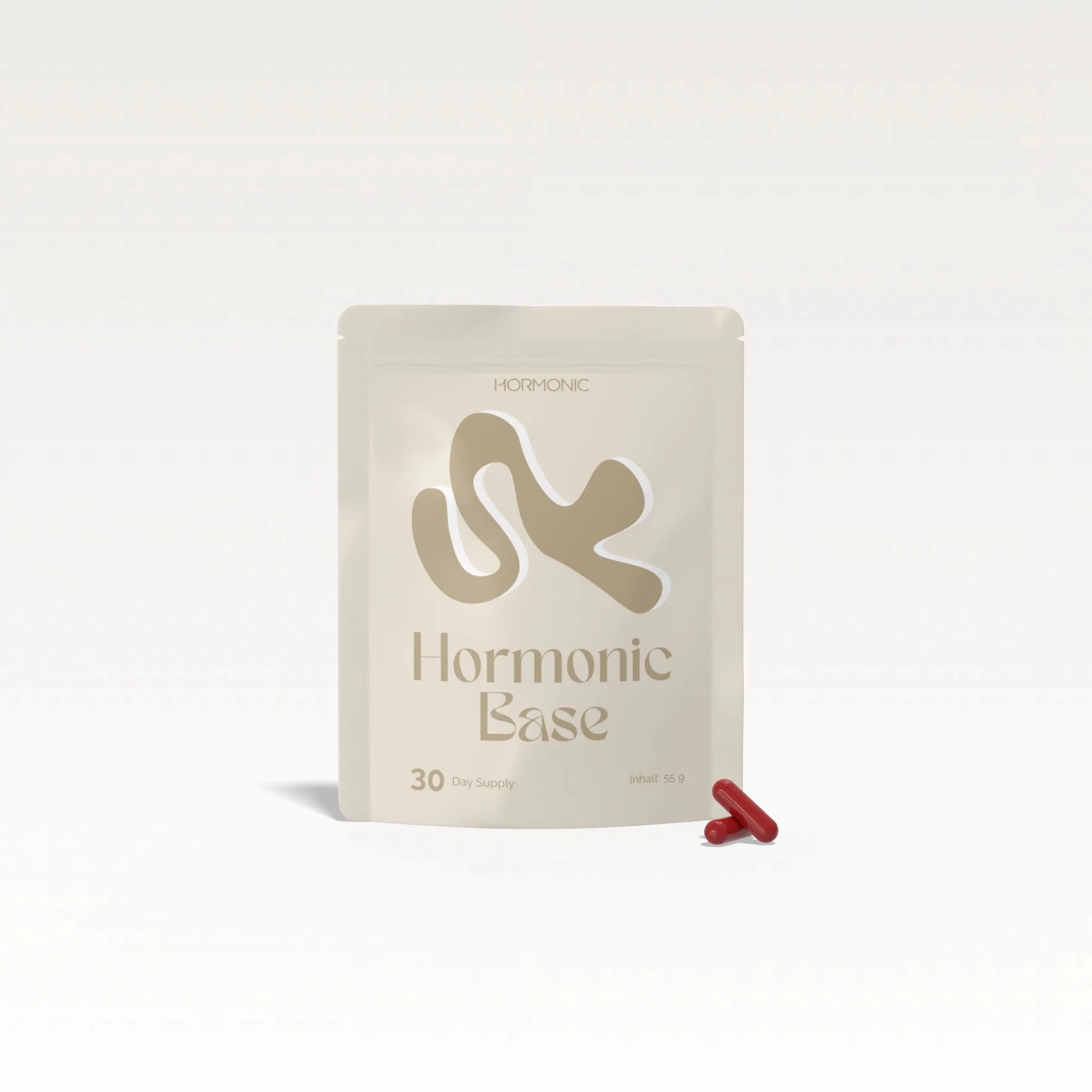
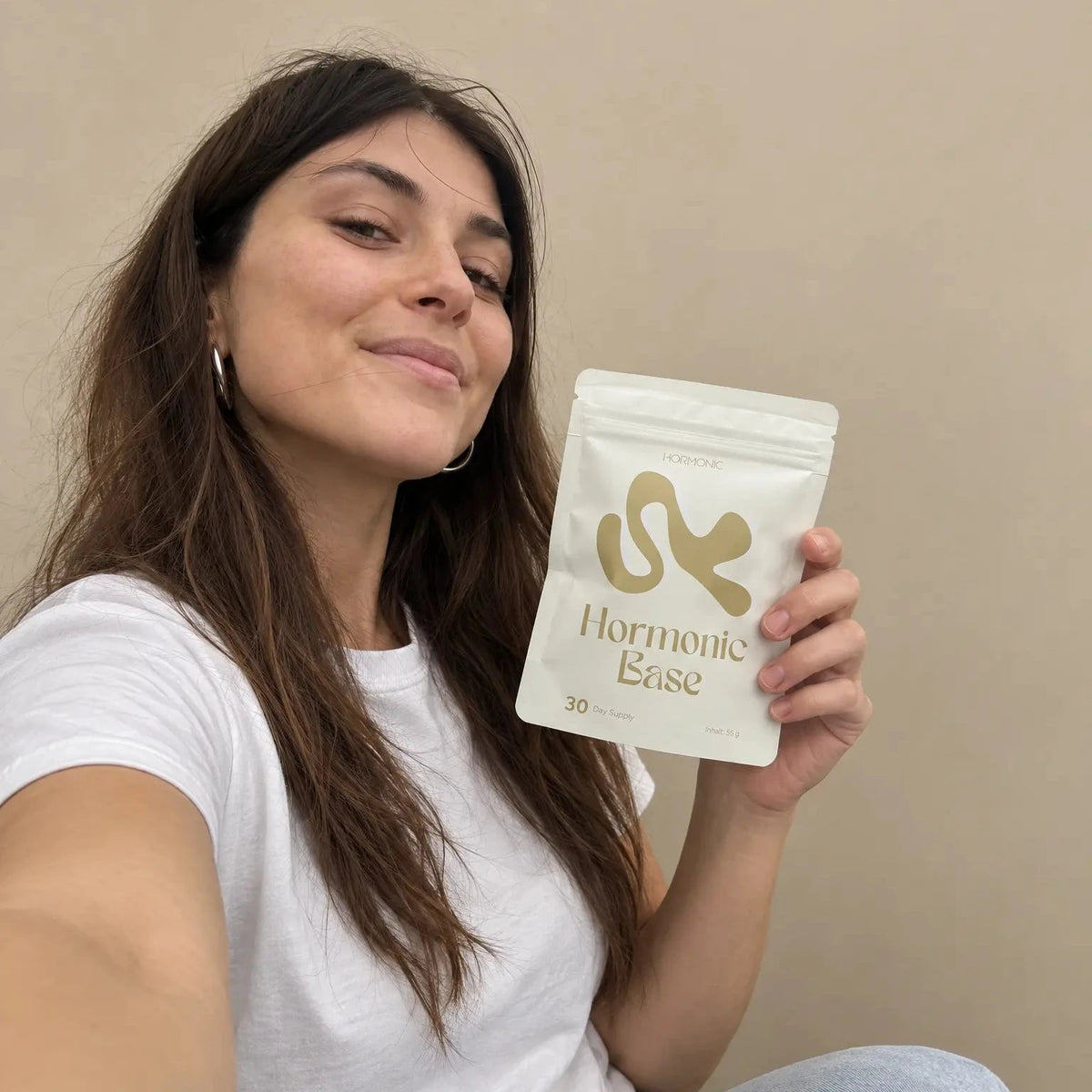
To prevent migraines, two nutrients are best studied that are also found in Hormonic Base: magnesium and coenzyme Q10. Magnesium contributes to the normal functioning of the nervous system, and Q10 is part of the cells' energy metabolism. Base provides both in a medically coordinated dose, along with 14 other micronutrients.
Cyclic migraines, what can be done?
Do your migraines occur like clockwork before your period, or are you unsure about aura and the pill? In a free 15-minute consultation, one of our doctors will assess your situation, with no obligation.
Frequent questions about migraine before your period
Why do I always get migraines before my period?
What helps with menstrual migraine?
Welche Nährstoffe helfen bei menstrueller Migräne?
Darf ich mit Migräne die Pille nehmen?
Scientific Sources
- International Headache Society. ICHD-3, Appendix A1.1.1 and A1.1.2: pure and menstrually associated migraine without aura (window Day minus 2 to plus 3).
- van Casteren, D. S. et al. (2021). Comparing Perimenstrual and Nonperimenstrual Migraine Attacks Using an e-Diary. Neurology, 97(17), e1661-e1671. doi:10.1212/WNL.0000000000012723
- MaassenVanDenBrink, A. et al. (2023). Menstrual migraine is caused by estrogen withdrawal: revisiting the evidence. J Headache Pain, 24, 131. doi:10.1186/s10194-023-01664-4
- Vetvik, K. G. et al. (2014). Prevalence of menstrual migraine: a population-based study. Cephalalgia, 34(4), 280-288. doi:10.1177/0333102413507637
- Facchinetti, F. et al. (1991). Magnesium prophylaxis of menstrual migraine. Headache, 31(5), 298-301. doi:10.1111/j.1526-4610.1991.hed3105298.x
- Sándor, P. S. et al. (2005). Efficacy of coenzyme Q10 in migraine prophylaxis: a randomized controlled trial. Neurology, 64(4), 713-715. doi:10.1212/01.WNL.0000151975.03598.ED
- Schoenen, J. et al. (1998). Effectiveness of high-dose riboflavin in migraine prophylaxis. Neurology, 50(2), 466-470. doi:10.1212/WNL.50.2.466
- Sacco, S. et al. (2017). Hormonal contraceptives and risk of ischemic stroke in women with migraine: EHF/ESCRH consensus statement. J Headache Pain, 18, 108. doi:10.1186/s10194-017-0815-1
- S1 Guideline Therapy of Migraine Attack and Migraine Prophylaxis, DGN/DMKG (AWMF 030-057, 2022).
About the Author

You might also be interested in this.
Fatigue, PMS, poor sleep: Magnesium deficiency in women is often overlooked. Symptoms, studies, and what really helps.

Severe period pain is mostly caused by elevated prostaglandins. What causes them and what natural approaches can help according to studies.

From symptoms to the real causes and treatment: the evidence-based overview of PMS, including the remedies with the best scientific evidence.