The Menstrual Cycle: The 4 Phases, Hormones, and What's Normal
In my consultation room, I hear one sentence particularly often: "Something is wrong with my cycle; it's never exactly 28 days." This almost always hides the same concern, and almost always I can alleviate it. Because the menstrual cycle is not a clockwork that falls on the same day every month, but a finely tuned hormonal process that fluctuates slightly and can still be completely healthy.
When you understand what happens in each phase, which hormones are in charge, and what really lies outside the norm, it changes your perception of your own body. This guide is your overview of the female cycle, from the first bleeding to the luteal phase, and the starting point for all in-depth topics related to your period.
What is the menstrual cycle? The HPO axis simply explained
The menstrual cycle is the hormonally controlled interplay between the brain and the ovaries that allows an egg to mature each month and prepares the uterus for a possible pregnancy. The control center for this is the HPO axis, short for Hypothalamus, Pituitary, and Ovary.
The hypothalamus in the brain releases the hormone GnRH in fine pulses. It instructs the pituitary gland to secrete two control hormones: FSH and LH. These two act on the ovaries, stimulating egg maturation and the production of estrogen and progesterone. The ovarian hormones, in turn, report back to the brain, sometimes inhibiting, sometimes stimulating. This regulatory loop with its feedback mechanisms ensures that the phases proceed in the correct order. If it gets out of sync, for example, due to chronic stress or insufficient energy, the entire cycle shifts. A detailed technical description can be found in the freely accessible overview by Reed and Carr (Endotext).
Overview of the four phases of the cycle
The cycle is divided into four phases: menstruation, follicular phase, ovulation, and luteal phase. Menstruation and the follicular phase overlap in time, as bleeding is also the beginning of the first half of the cycle. The following table shows the phases in an example 28-day cycle; your own numbers may vary.
Phase
Period (for ~28 days)
Key Hormone
What happens in the body
Menstruation
Day 1 to 5
Estrogen and Progesterone low
The uterine lining is shed, bleeding begins.
Follicular Phase
Day 1 to 13
FSH, then rising Estrogen
A follicle matures in the ovary, the lining rebuilds.
Ovulation
around Day 14
LH surge
The mature follicle ruptures, the egg is released.
Luteal Phase
Day 15 to 28
Progesterone
The corpus luteum produces progesterone, the lining becomes receptive.
In the next section, we will go through each phase individually: which hormone rises, which falls, and what you notice in your daily life.
Menstruation, follicular phase, ovulation, and luteal phase: what happens in each phase
Each phase has its own guiding hormone and its own function. Roughly, the cycle is divided into a first half, in which estrogen sets the tone and prepares the body for ovulation, and a second half, in which progesterone takes over and makes the uterus receptive.
Menstruation (Day 1 to approximately 5)
The first day of your bleeding is, by definition, Day 1 of the cycle. Estrogen and progesterone are now at their lowest, which is why the uterine lining sheds and is discharged as menstrual blood. Inflammatory messengers, prostaglandins, cause the uterus to contract, which you feel as cramps. Bleeding usually lasts three to seven days, averaging around five. Why some women suffer particularly severely here is explained in the article on severe period pain.
Follicular phase (Day 1 to approximately 13)
The follicular phase begins at the same time as menstruation. The follicle-stimulating hormone (FSH) from the pituitary gland stimulates several follicles in the ovary, small sacs in which an egg matures. Usually, one dominant follicle prevails. It increasingly produces estradiol, the most important form of estrogen, which rebuilds the uterine lining and makes cervical mucus clearer and more elastic. It is precisely this phase that makes your cycle sometimes shorter, sometimes longer, as it reacts sensitively to stress, lack of sleep, or illness.
Ovulation (around Day 14)
When estradiol exceeds a threshold, the signal to the brain switches from inhibitory to stimulatory and triggers a sharp rise in luteinizing hormone (LH). This LH surge is the trigger: about 24 to 36 hours later, the mature follicle bursts and releases the egg. The egg is then only fertile for about 12 to 24 hours. Because sperm can survive in the body for up to five days, the fertile window still encompasses about six days. How to recognize ovulation is explained in the article on ovulation and fertile days.
Luteal phase (Day 15 to approximately 28)
The remaining follicle becomes the corpus luteum. It secretes progesterone, the guiding hormone of the second half of the cycle. Progesterone slightly raises basal body temperature and transforms the uterine lining so that a fertilized egg could implant. If pregnancy does not occur, the corpus luteum regresses after about 12 to 14 days, progesterone and estrogen levels drop, and the next period begins. Unlike the follicular phase, the luteal phase is remarkably constant in length. If progesterone production is too weak, it can shorten the cycle; more on this can be found under luteal phase defect.
What is a normal cycle, and what is not?
A cycle between 21 and 35 days is considered normal, measured from the first day of bleeding to the day before the next. The average is about 28 to 29 days, but very few women have exactly the same length month after month, and that is healthy. The ACOG professional societyeven describes the cycle as a kind of vital sign: it reveals a lot about whether the hormonal interplay is running smoothly.
The bleeding itself may also vary. Three to seven days is common, with the amount decreasing over the days. Small fluctuations from cycle to cycle, a little more pulling one month, a slightly shorter interval another, are no cause for concern.
However, you should pay attention if your cycle is consistently shorter than 21 or longer than 35 days, if bleeding regularly lasts longer than seven days or is very heavy (you change protection hourly, lose large clots), if you bleed between periods or after sex, or if your period stops completely for more than three months without you being pregnant. If bleeding stops, you can find possible reasons under missed periodand hypothalamic amenorrhea. The international FIGO classification categorizes such patterns as requiring clarification; they are no cause for panic, but a reason to seek medical advice.
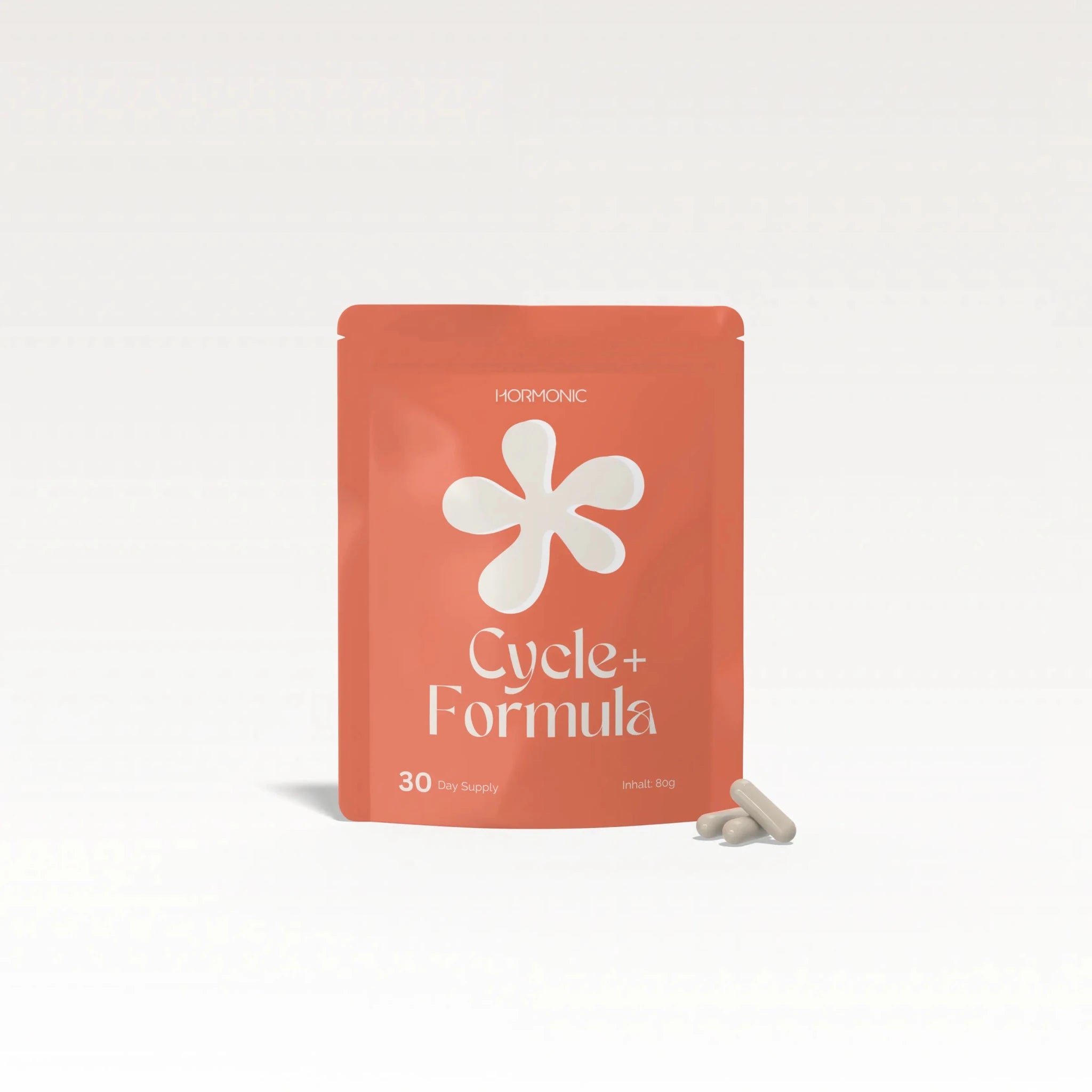
Cycle+ combines myo- and D-chiro-inositol in a natural ratio with zinc and five other active ingredients, such as apigenin, quercetin, and rhodiola. Randomized studies have shown that inositol can support ovulation and cycle regularity, and zinc contributes to normal fertility and reproduction.
Your cycle involves much more than just bleeding: mood, skin, digestion, sleep, and appetite all fluctuate with it. The following articles delve into the most common topics. Together with this overview, they form a common thread through all cycle phases.
Observing your cycle is the simplest way to better understand your body. For several months, note the start of bleeding, duration of bleeding, and how you feel, using an app, calendar, or cycle diary. If you want to pinpoint ovulation, you can also measure your morning basal body temperature (it rises slightly after ovulation) or use LH test strips. Over several cycles, you will recognize your personal normal, and deviations will be noticed sooner.
Lifestyle directly affects the HPO axis. Chronic stress, very little sleep, intense training with simultaneously insufficient energy intake: all of these can delay or stop ovulation. Eating enough, sleeping sufficiently, and taking stress seriously are therefore not just wellness extras, but essential for cycle health. The article on hypothalamic amenorrheashows how closely energy deficiency and the cycle are related.
Individual micronutrients have also been well-studied for their impact on the cycle, with inositol being the most thoroughly researched. A meta-analysis of randomized controlled trials observed that myo-inositol can support ovulation and cycle regularity, especially in women with irregular cycles (Greff et al., 2023). The mechanism is indirect and well understood: inositol improves insulin sensitivity, and more stable blood sugar metabolism eases the burden on the ovaries, which can promote ovulation and thus a more regular cycle. The combination of myo- and D-chiro-inositol in their natural ratio, as found in our Cycle+ Formula, is particularly beneficial. To be fair, a newer, careful review still classifies the data safety as limited and calls for larger studies (Fitz et al., 2024). So, inositol is promising and well-tolerated, even if research is still ongoing.
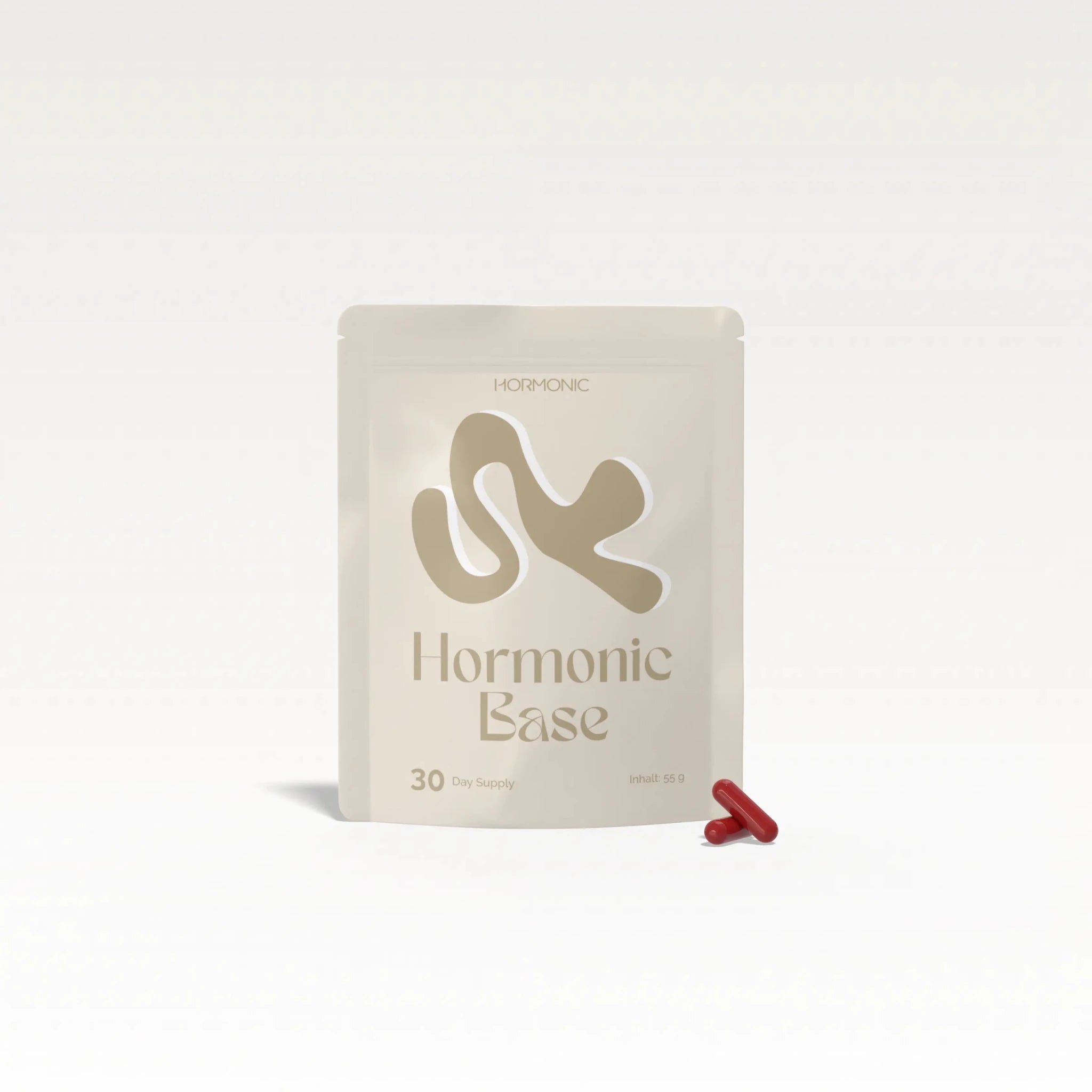
For the second half of the cycle, it's worth looking at three micronutrients, all contained in Hormonic Base. According to the EFSA, vitamin B6 contributes to the regulation of hormonal activity and normal psychological function, which is why it is frequently mentioned for premenstrual symptoms (for continuous dosage, it's best to stay below 12 mg per day). Magnesium contributes to the normal function of the nervous system and psyche, as well as to the reduction of fatigue – three things many women particularly appreciate during the luteal phase; in the Base, it is included as a highly absorbable complex of bisglycinate, malate, and citrate. And zinc contributes to normal fertility and reproduction. Together, these nutrients form a solid foundation that you can supplement with the cycle-targeted Cycle+ Formula. How vitamin D interacts with progesterone can be read in the article on vitamin D and progesterone.
When you should have your cycle medically checked
A single irregular cycle is usually harmless, often due to stress, travel, or an infection. You should have your cycle medically checked if it is consistently shorter than 21 or longer than 35 days, if your period is absent for more than three months (and pregnancy is ruled out), if you bleed very heavily or for longer than seven days, if you bleed between periods or after sex, or if menstrual pain regularly disrupts your daily life. A suddenly very different cycle than usual is also a good reason to take a closer look.
If you are unsure, you don't have to sort it out alone. In a free 15-minute introductory consultation, you can ask one of our doctors your questions about your cycle and get an initial assessment.
While Hormonic Base provides the 16 essential nutrients the body needs daily, including vitamins K2 and D3, magnesium, and selenium, Cycle+ adds 8 nutrients specifically relevant to cycle-related issues, such as myo-inositol and zinc. Developed by doctors, manufactured in Austria, and loved by thousands of women.
The menstrual cycle is not a rigid 28-day clockwork mechanism, but a finely tuned hormonal process in four phases, controlled by the interplay between the brain and the ovaries. Estrogen characterizes the first half and ovulation, progesterone the second. Anything between 21 and 35 days is normal, and minor fluctuations are a natural part of it.
When you know what happens in each phase and where the line lies between normal variation and warning signs, you can read your body with much greater ease. Use this overview as a starting point and dive deeper into the topics currently relevant to you via the linked articles.
All articles about the cycle and period
This guide is your starting point. We explore the individual topics in more detail here, sorted by category:
If you are particularly burdened by the second half of your cycle, you will find in the overview on Nutritional supplements for PMS and cycle complaintsthe nutrients that are best studied for this, above all vitamin B6 and magnesium.
Frequent Questions About the Menstrual Cycle
How long does a normal cycle last?
A normal cycle lasts between 21 and 35 days, with an average of about 28 to 29 days. Counting starts from the first day of bleeding until the day before the next period. It is completely normal for the length to fluctuate slightly from month to month; only very few women have an exact 28-day cycle.
What are the phases of the cycle?
The cycle has four phases: menstruation (bleeding), the follicular phase (when an egg matures), ovulation (the release of the egg), and the luteal phase (when the corpus luteum produces progesterone). The first half is dominated by estrogen, the second by progesterone.
Wann ist der Eisprung?
Der Eisprung findet ungefähr in der Zyklusmitte statt, ausgelöst durch einen Anstieg des luteinisierenden Hormons (LH). Zuverlässiger als das Kalenderdatum ist die Faustregel, dass der Eisprung etwa 12 bis 14 Tage vor der nächsten Periode liegt. Der genaue Zeitpunkt kann von Zyklus zu Zyklus schwanken.
Wann ist ein unregelmäßiger Zyklus ein Warnzeichen?
Einzelne Schwankungen sind harmlos. Ärztlich abklären lassen solltest Du Deinen Zyklus, wenn er dauerhaft kürzer als 21 oder länger als 35 Tage ist, wenn die Periode über drei Monate ausbleibt, wenn Du sehr stark oder länger als sieben Tage blutest oder wenn Du zwischen den Perioden blutest. Das sind Muster, die einen Blick von der Ärztin oder dem Arzt verdienen.
Scientific Sources
Reed BG, Carr BR (2018). The Normal Menstrual Cycle and the Control of Ovulation. Endotext, NCBI Bookshelf NBK279054.
Mihm M, Gangooly S, Muttukrishna S (2011). The normal menstrual cycle in women. Anim Reprod Sci 124(3-4):229-236. doi:10.1016/j.anireprosci.2010.08.030
Bull JR et al. (2019). Real-world menstrual cycle characteristics of more than 600,000 menstrual cycles. npj Digit Med 2:83. doi:10.1038/s41746-019-0152-7
American College of Obstetricians and Gynecologists (2015, reaffirmed). Committee Opinion No. 651: Menstruation in Girls and Adolescents: Using the Menstrual Cycle as a Vital Sign. Obstet Gynecol 126:e143-e146.
Wilcox AJ, Dunson D, Baird DD (2000). The timing of the fertile window in the menstrual cycle. BMJ 321:1259-1262. doi:10.1136/bmj.321.7271.1259
Munro MG et al., FIGO Menstrual Disorders Committee (2018). The FIGO classification of causes of abnormal uterine bleeding. Int J Gynaecol Obstet 143(3):393-408. doi:10.1002/ijgo.12666
Greff D et al. (2023). Inositol is an effective and safe treatment in polycystic ovary syndrome: a systematic review and meta-analysis of randomized controlled trials. Reprod Biol Endocrinol 21:10. doi:10.1186/s12958-023-01055-z
Fitz V et al. (2024). Inositol for Polycystic Ovary Syndrome: A Systematic Review and Meta-analysis to Inform the 2023 International Evidence-based Guideline. J Clin Endocrinol Metab 109(6):1630-1655. doi:10.1210/clinem/dgad762
Unfer V et al. (2017). Myo-inositol effects in women with PCOS: a meta-analysis of randomized controlled trials. Endocr Connect 6(8):647-658. doi:10.1530/EC-17-0243
About the Author
Lisa Maria Emmer
Founder · Physician · Hormonic
Lisa Maria Emmer is co-founder and medical director at Hormonic. She supports women with hormonal problems every day and specializes in cycle health, PCOS, and menopause.
Note: This article is based on current guidelines and scientific work (as of 2026). It is for informational purposes only and does not replace medical advice, diagnosis, or treatment.