




An absent period can have many causes – from temporary stress to hormonal disorders requiring treatment. This article explains the most common causes based on medical evidence, shows when a medical consultation is necessary, and what specifically helps to restore the cycle.
A missed period can be concerning, but in many cases, it is treatable. Medically, amenorrhea is defined as the absence of menstruation for three or more months. Causes range from chronic stress and weight changes to hormonal disorders like PCOS and anatomical changes. This article medically explains the most common causes, indicates when medical consultation is necessary, and what concrete steps can help.
What does it mean if your period is absent?
Medically, two forms of amenorrhea are distinguished:
Form 1
Primary Amenorrhea
The period does not occur by age 16 (with normal pubertal development) or by age 14 without signs of puberty. A rarer form, always requires medical evaluation.
Form 2
Secondary Amenorrhea
A previously regular period is absent for three or more months. The more common form, affecting many women in their lifetime. Causes are very diverse.
Important to know
Long-term estrogen deficiency due to amenorrhea can lead to bone loss (osteoporosis) and an increased cardiovascular risk. Therefore, persistent amenorrhea should always be medically investigated, even if no other symptoms are present.
Free self-test · approx. 2 minutes
Why is my period absent? Take the check.
Answer a few questions about your cycle, stress, weight, and symptoms, and get an initial assessment of potential causes and what the next sensible step is. Anonymous, no registration required to start. It is not a substitute for a medical diagnosis.
To the self-test →Common causes of a missed period: Overview
The causes of a missed period can be divided into four main categories. In the following sections, they will be explained in detail and concrete options for action will be described.
Category 1
Functional Causes
- Chronic stress
- Underweight or significant weight loss
- Overtraining
- Hypothalamic amenorrhea
Category 2
Hormonal Disorders
- PCOS
- Thyroid disorders
- Hyperprolactinemia
- Premature ovarian insufficiency (POI)
Category 3
Medications and Diseases
- Antipsychotics, antidepressants
- Chemotherapy
- Chronic illnesses
Category 4
Anatomical Causes
- Asherman's Syndrome
- Cervical stenosis
- Congenital malformations (rare)
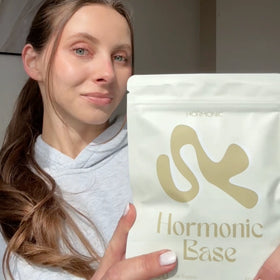
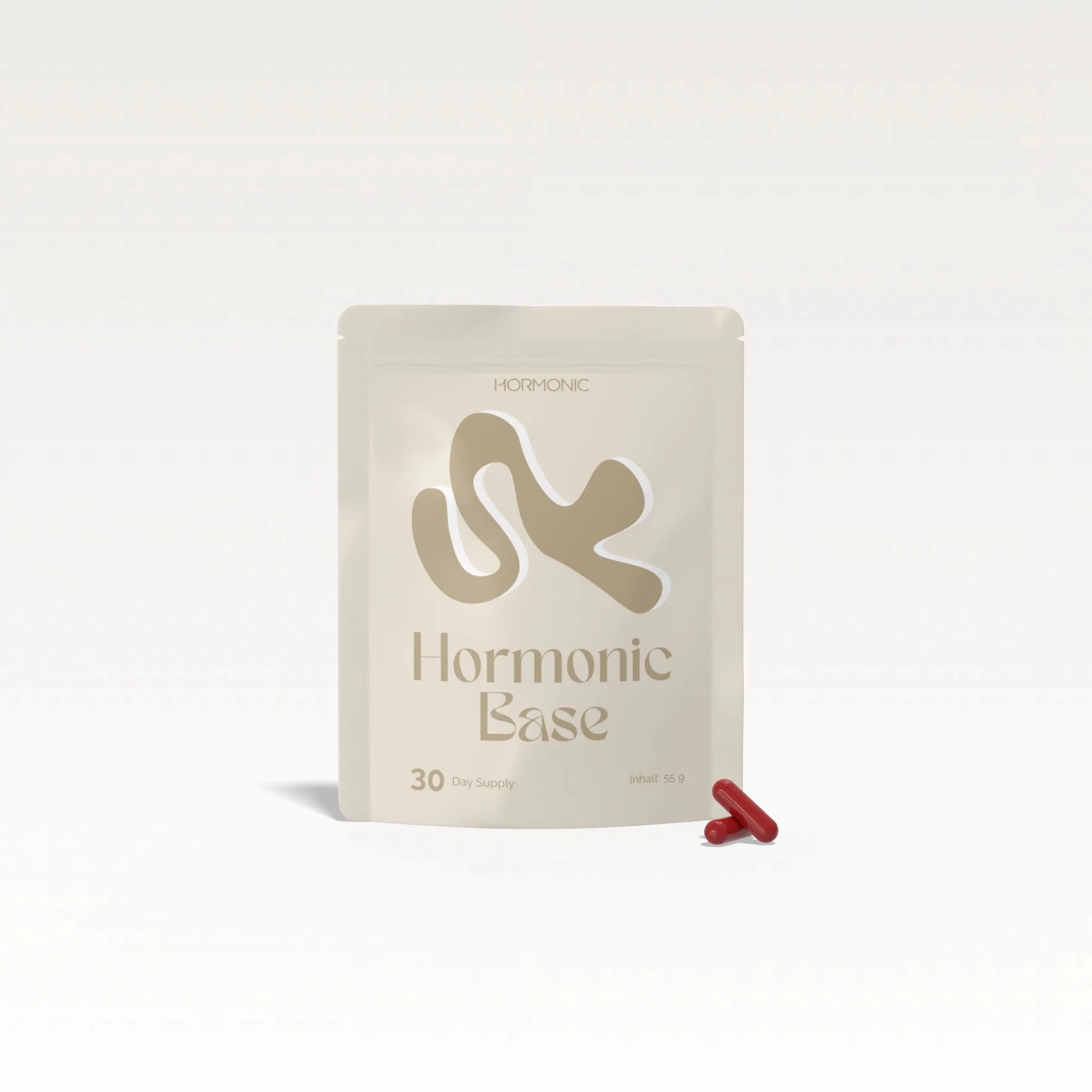
Hormonic Base for your hormonal foundation
16 active ingredients like zinc, magnesium, and B vitamins - clinically dosed and specially formulated for women who want to support their cycle & hormones daily. Developed and manufactured in Austria.
€65,00

If your period is late for a longer time, it should be checked out.
A missed period has many potential causes, ranging from stress and being underweight to PCOS and thyroid issues. Which of these applies to you is determined by your test results and medical history, not by a list on the internet. Our free initial consultation with our doctors will help determine the next appropriate steps.
Frequent Questions About Missed Periods
How long can your period be absent before you should see a doctor?
Can a missed period be normal even without pregnancy?
Kann Stress allein dafür sorgen, dass die Periode ausbleibt?
Was hilft, wenn die Periode nach dem Absetzen der Pille ausbleibt?
Welche Blutwerte sollte man bei ausbleibender Periode bestimmen lassen?
Scientific Sources
- Gordon CM et al. (2017). Functional Hypothalamic Amenorrhea: An Endocrine Society Clinical Practice Guideline. J Clin Endocrinol Metab. doi:10.1210/jc.2017-00131
- Teede HJ et al. (2023). Recommendations from the 2023 International Evidence-based Guideline for the Assessment and Management of PCOS. J Clin Endocrinol Metab. doi:10.1210/clinem/dgad090
- Practice Committee ASRM (2021). Current evaluation of amenorrhea. Fertil Steril. doi:10.1016/j.fertnstert.2021.08.048
- Unfer V et al. (2017). Effects of Myo-Inositol on Women with PCOS: A Systematic Review. Gynecol Endocrinol. doi:10.1080/09513590.2017.1290546
- Huhmann K. (2020). Menses Requires Energy: RED-S and Menstrual Function in Female Athletes. Sports (Basel). doi:10.3390/sports8060055
About the Author

You might also be interested in this.

Why does anorexia cause periods to stop? Learn about the hormonal causes of functional hypothalamic amenorrhea and what helps with underweight.

Did you know that a natural form of “Ozempic” already exists in your body? The hormone GLP-1 (Glucagon-Like Peptide-1) plays a key role in weight management, blood sugar regulation, and appetite co...

Severe period pain is mostly caused by elevated prostaglandins. What causes them and what natural approaches can help according to studies.