🖤 Black WeeksPick 3 · save 30 %Pick 6 · save 60 %Automatic, no codeFor a limited time only🖤 Black WeeksPick 3 · save 30 %Pick 6 · save 60 %Automatic, no codeFor a limited time only🖤 Black WeeksPick 3 · save 30 %Pick 6 · save 60 %Automatic, no codeFor a limited time only

Cart

Your cart is empty

Continue shopping

Trending searches

Featured products

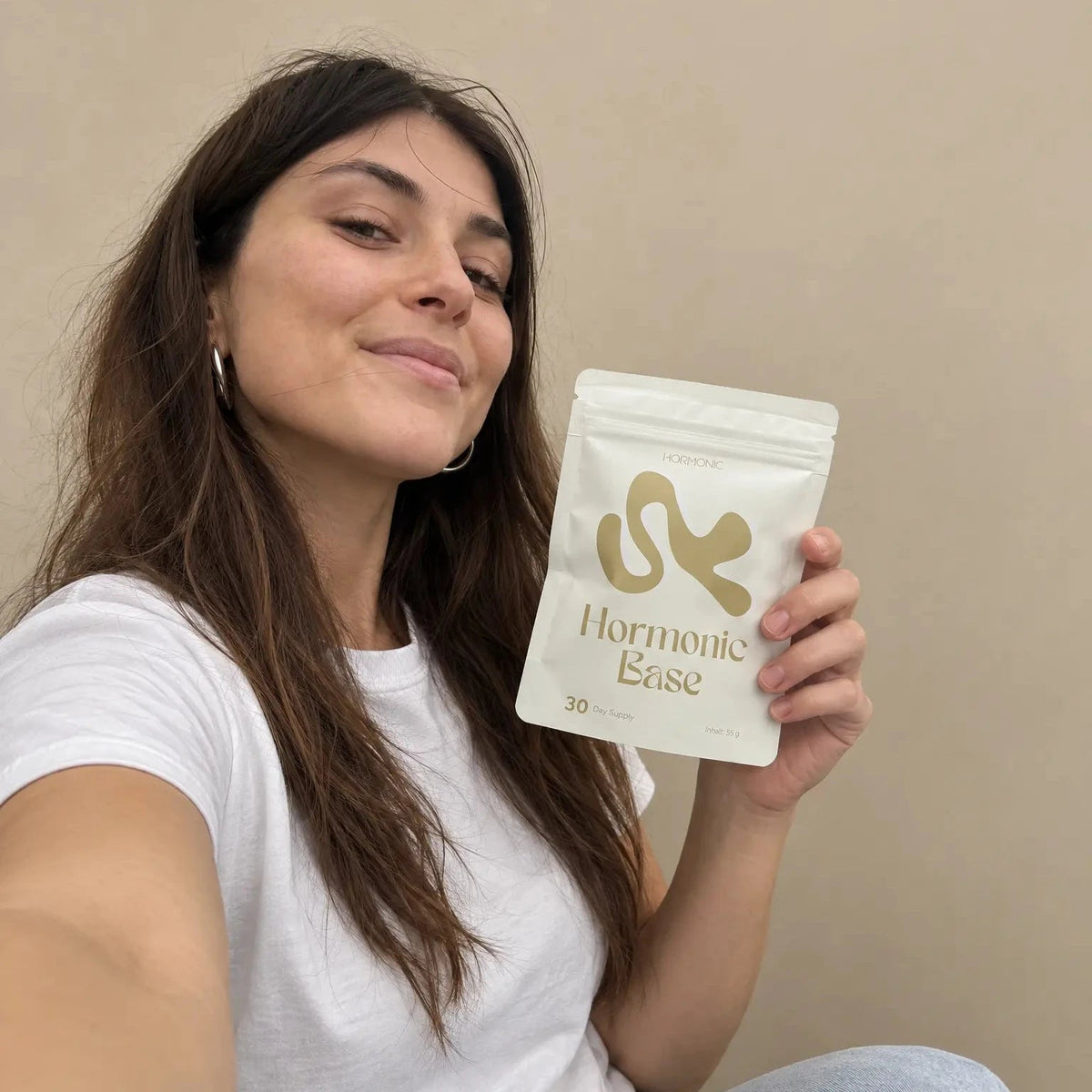
Hormonic Base - Hormonic - Nahrungsergänzungsmittel
Sale price€65,00
(5.0)
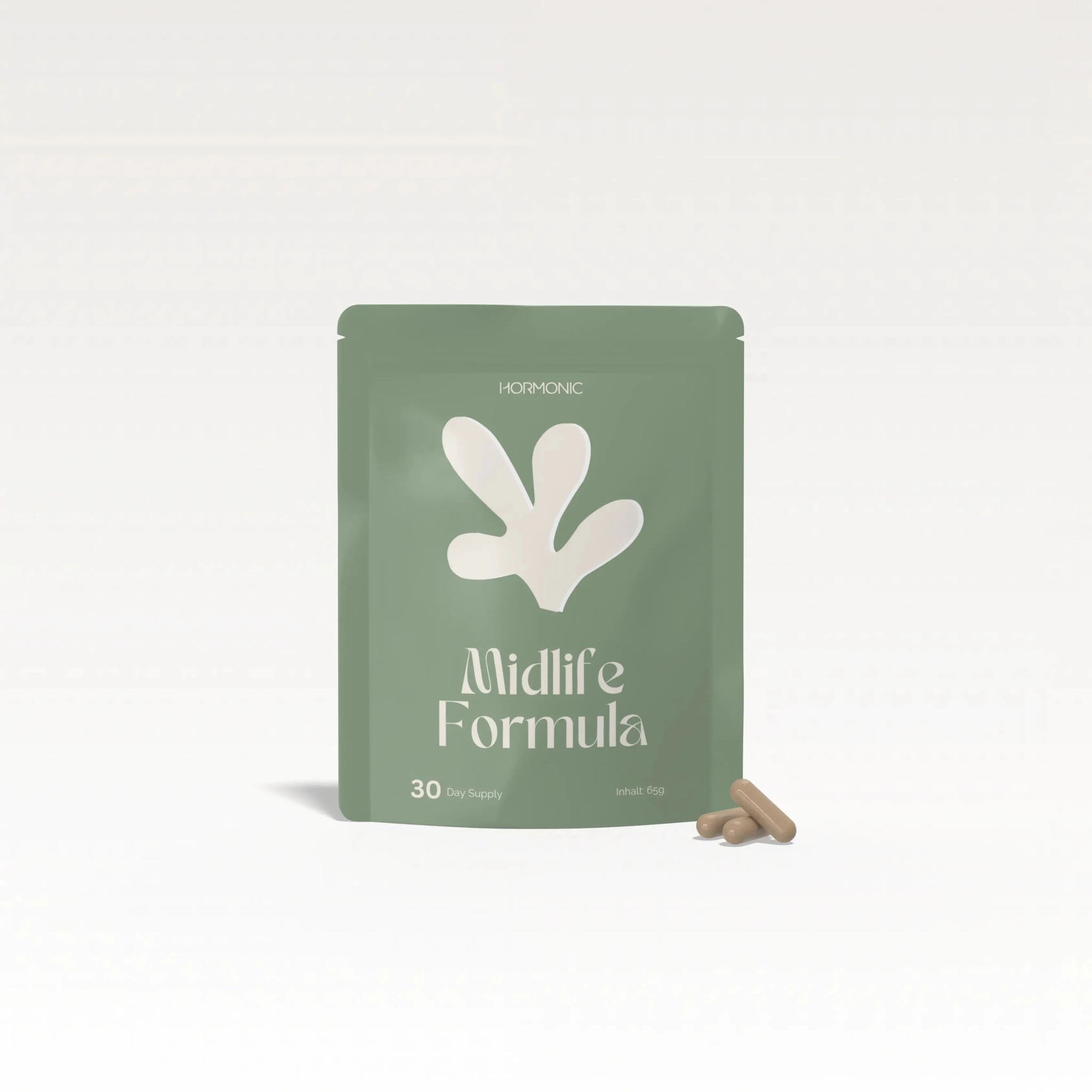
Midlife Formula - Hormonic - Nahrungsergänzungsmittel
Sale price€75,00
(5.0)
Pickel am Kinn: Warum sie hormonell sind und was hilft - Hormonic
Haut & HaareSep 19, 20266 min read

Chin acne: Why it’s hormonal and how to treat it

As I read through studies on adult acne, one figure stood out: in a frequently cited study, the number of inflammatory pimples increased by at least 25 percent in around 63 percent of women shortly before their period. Chin acne is therefore rarely a coincidence or a sign of poor skincare, but rather often follows the cycle.

In this article, I provide an honest assessment of why the skin reacts specifically on the chin, what research shows really helps, and when there might be more behind the acne that requires medical attention.

Why do pimples develop on the chin?

Pimples on the chin occur because the sebaceous glands in the lower third of the face are particularly sensitive to androgens—male hormones such as testosterone, which women also produce in small quantities. Androgens stimulate sebum production, the sebum clogs the pores, and inflammation occurs. This is precisely why hormonal acne in adult women typically sits on the chin and jawline, the so-called U-zone (Carmina et al., 2022).

Trigger The underlying cause Point of intervention
Second half of the cycle Relative androgen dominance before menstruation Observe cycle, have patience
PCOS / Androgen excess Increased male hormones Medical evaluation
Diet High glycemic load and dairy raise insulin and androgens Adjust diet
Squeezing Irritation, bacteria are pushed deeper Keep hands off, use gentle active ingredients

The cycle: why breakouts often happen before your period

Most women notice chin breakouts during the second half of their cycle, in the days leading up to their period. The reason is a relative androgen dominance: the ratio of estrogen to progesterone changes, and the androgen-sensitive sebaceous glands on the chin produce more sebum. In one study, around 63 percent of women showed a measurable increase in inflammatory breakouts shortly before their period (Lucky, 2004).

This also explains why the skin reacts during other hormonal transitional phases: after stopping the pill, during pregnancy, or during menopause. The trigger is the same mechanism, just in a different phase of life.

When is PCOS or an androgen excess behind it?

Chin breakouts alone are not proof of a hormonal imbalance. Depending on the study, however, 8 to 80 percent of adult women with acne have elevated androgens (Carmina et al., 2022). You should pay attention if other signs are present: an irregular or absent cycle, increased body or facial hair, or hair loss on the scalp.

In that case, a medical evaluation is worthwhile, as the cause could be, for example, PCOS. You can read more about how to naturally lower elevated testosteronein our dedicated article. And our diagnostic overview shows you which hormone levels are useful to test.

Zinc and inositol for skin and hormone balance: Cycle+

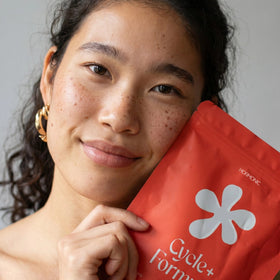
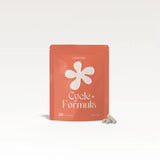
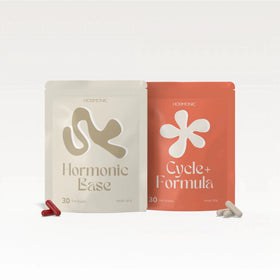
Cycle+ Formula delivers 8 active ingredients, including zinc together with myo- and D-chiro-inositol, which have been linked in studies to improved insulin sensitivity and lower androgen levels, the mechanism behind hormonal skin changes.
Discover now

What really helps against chin acne

There is no remedy that makes hormonal acne disappear overnight, but there are several approaches with real evidence. Regarding diet, a low-glycemic diet is best supported: in a controlled study, it significantly reduced the number of pimples while simultaneously improving insulin sensitivity (Smith et al., 2007). High milk consumption is also linked to more acne in a large meta-analysis, although these are observational data (Juhl et al., 2018).

Topically, active ingredients like retinoids, benzoyl peroxide, azelaic acid, and salicylic acid are the dermatological standard. Most importantly: do not squeeze them, as this irritates the skin and pushes bacteria deeper.

Micronutrients: what supports the skin from within

The best-evidenced nutrient for acne is zinc. A systematic review with meta-analysis found fewer inflammatory pimples with zinc, and people with acne frequently had lower blood zinc levels (Yee et al., 2020). Added to this is the regulatory anchor: according to the EFSA, zinc contributes to the maintenance of normal skin. This makes zinc the most obvious nutrient if you want to support your skin from the inside.

A second, indirect path involves insulin and androgen metabolism: Myo- and D-chiro-inositol are associated in studies with better insulin sensitivity and lower androgen levels in PCOS, which is exactly the chain of events behind chin acne. There is also evidence for omega-3 and vitamin D, especially in cases of deficiency, but the evidence here is more preliminary. It remains important to note: nutrients provide support, they do not replace skin treatment, and they only take effect over the course of weeks.

The power duo for hormones, skin & cycle

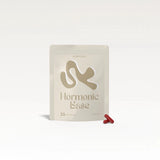
If the pimples on your chin just won't go away, a hormonal imbalance could be the cause. Hormonic Base provides the 16 essential micronutrients needed daily for key bodily processes and hormone regulation. Cycle+ supplements these with specific active ingredients for cycle health and skin.

Start with a price advantage

Conclusion

Pimples on the chin in women are usually a hormonal signal, not a skincare mistake: androgens stimulate the sebaceous glands in the U-zone, especially in the second half of the cycle. Most effective are a low-glycemic diet, less dairy, gentle skincare, and zinc, which helps maintain normal skin. If an irregular cycle, excess hair growth, or hair loss also occur, the cause should be clarified by a doctor. Then you will know where you stand, instead of continuing to guess.

Frequently asked questions about chin acne

Why do I always get pimples on my chin before my period?

In the second half of the cycle, the hormone ratio shifts, creating a relative androgen dominance that stimulates the sebaceous glands on the chin. In a frequently cited study, the number of inflammatory pimples increased by at least 25 percent in about 63 percent of women shortly before their period (Lucky, 2004). This flare-up is therefore cycle-related and normal.

What helps quickly against hormonal acne on the chin?

For spot treatment, topical agents like salicylic acid, benzoyl peroxide, or azelaic acid work fastest. You should not pop your pimples, as that pushes bacteria deeper. Nothing works overnight from the inside: a low-glycemic diet, fewer dairy products, and zinc take weeks. For deep, painful, or scarring pimples, your skin should be treated by a doctor.

Welche Nährstoffe helfen bei Pickeln am Kinn?
Am besten belegt ist Zink: Eine Meta-Analyse fand unter Zink weniger entzündliche Pickel, und Zink trägt laut EFSA zur Erhaltung normaler Haut bei (Yee, 2020). Für Omega-3 und Vitamin D (vor allem bei Mangel) gibt es Hinweise, die Datenlage ist aber dünner. Inositol kann bei PCOS die Androgen- und Insulinwerte günstig beeinflussen, was indirekt für die Haut relevant ist.
Sind Pickel am Kinn ein Zeichen für PCOS?
Pickel am Kinn allein bedeuten kein PCOS. Kommen aber ein unregelmäßiger Zyklus, verstärkte Körperbehaarung oder Haarausfall dazu, kann ein Androgenüberschuss dahinterstecken, der ärztlich abgeklärt werden sollte. Je nach Untersuchung haben 8 bis 80 Prozent der erwachsenen Frauen mit Akne erhöhte Androgene (Carmina, 2022).

Scientific Sources

  • Carmina E. et al. (2022). Female Adult Acne and Androgen Excess. J Endocr Soc. doi:10.1210/jendso/bvac003
  • Lucky AW. (2004). Quantitative Documentation of a Premenstrual Flare of Facial Acne in Adult Women. Arch Dermatol. doi:10.1001/archderm.140.4.423
  • Yee BE et al. (2020). Serum zinc levels and efficacy of zinc treatment in acne vulgaris. Dermatol Ther. doi:10.1111/dth.14252
  • Smith RN et al. (2007). A low-glycemic-load diet improves symptoms in acne vulgaris. Am J Clin Nutr. doi:10.1093/ajcn/86.1.107
  • Juhl CR et al. (2018). Dairy Intake and Acne Vulgaris: A Systematic Review and Meta-Analysis. Nutrients. doi:10.3390/nu10081049
  • EFSA Panel (2009). Scientific Opinion on zinc health claims (ID 293). EFSA Journal. doi:10.2903/j.efsa.2009.1229

About the Author

Amelie Weiss

Amelie Weiss

Research Fellow, PhD · Hormonic

Amelie Weiss is a Research Fellow at Hormonic and conducts scientific research on hormonal health, micronutrients, and evidence-based women's health.

Note: This article is based on current guidelines and scientific work (as of 2026). It is for informational purposes only and does not replace medical advice, diagnosis, or treatment.

Share

You might also be interested in this.
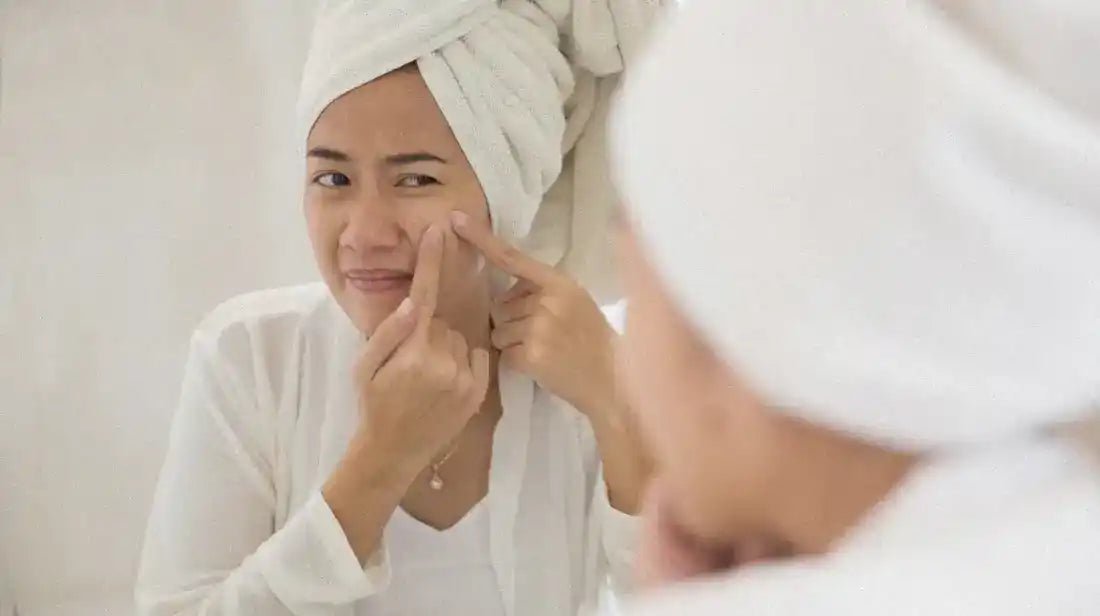
Hormonelle Akne bei Frauen: Ursachen und was wirklich hilft - Hormonic
Haut & HaareSep 1, 202412 min read
Hormonal Acne in Women: Causes and What Really Helps

Hormonal acne often appears on the chin and jawline, usually before one's period. We explain the role of androgens, the menstrual cycle, and nutrition, and clarify which active ingredients and appr...
Hormonelle Akne von innen bekämpfen: Wirkstoffe, Ernährung und was die Studien zeigen - Hormonic
ErnährungSep 20, 20269 min read
Nutrition for hormonal acne: What really works from within

What really helps with hormonal acne from the inside out? We have reviewed the studies on zinc, omega-3, spearmint tea, dairy, and glycemic load, including the data that is usually missing from mar...
Welche Supplements sollten Frauen täglich nehmen? Der evidenzbasierte Stack - Hormonic
MikronährstoffeDec 8, 20259 min read
Which supplements should women take daily? The evidence-based stack

These 4 supplements are recommended daily by science for women: Micronutrient basis, Omega-3, Creatine, and targeted gut-hormone add-ons. Without hype, with a study basis.