


Increasing progesterone almost never means directly raising the hormone. This is because progesterone is only produced after ovulation in the corpus luteum. Those who want to naturally support their progesterone levels are actually supporting a strong ovulation and a stable second half of the cycle.
Key takeaways
- Progesterone is only produced by the corpus luteum after ovulation; without ovulation, there is little progesterone.
- Therefore, “naturally increasing” means strengthening ovulation and the luteal phase, not directly raising the hormone.
- The most well-supported methods include sufficient energy, reduced chronic stress, and good sleep.
- Inositol, zinc, and vitamin D can support ovulation, especially in cases of deficiency.
- Pregnenolone steal, wild yam, and seed cycling are not proven methods; progesterone can only be directly raised with medical intervention.
When I first researched how to naturally increase progesterone, the most honest answer quite surprised me: not at all, at least not directly. No food, no capsule, and no cream simply floods your body with progesterone. The hormone is exclusively produced after ovulation, formed by the corpus luteum. And that changes the whole question.
Because if progesterone depends on ovulation, then "increasing progesterone" actually means: strengthening ovulation and keeping the second half of the cycle stable. This shift is key, and it also explains why so many popular tips are ineffective. Let's take an honest look at what really works and what you can safely omit.
Did you know?
In a cycle without ovulation, your progesterone remains consistently low, no matter how healthy you eat. The corpus luteum, which produces progesterone, only forms from the shell of the ruptured follicle. No ovulation, no corpus luteum, no progesterone.
Can progesterone be directly increased at all?
The short, honest answer: not with diet or supplements. Progesterone is not a nutrient you can ingest, but a hormone your body produces itself after ovulation. Everything sold as "natural progesterone increase" works at best indirectly, by supporting ovulation. The hormone can only be directly raised with medically prescribed, bioidentical progesterone.
To help you put the many promises into perspective, a sober look at what each measure actually does is helpful.
| Measure | Directly increases progesterone? | What it actually does |
|---|---|---|
| Energy & less stress | no, indirectly | supports reliable ovulation (most well-supported) |
| Inositol, zinc, vitamin D | no, indirectly | support ovulation, especially in cases of deficiency or PCOS |
| Wild yam, seed cycling | no, if indirectly | no proven direct effect on progesterone |
| Bioidentical progesterone | yes | medical option, only by doctor's prescription |
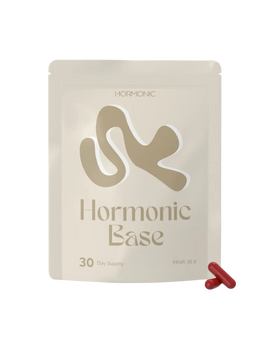
Physician-Formulated Nutrient Foundation for Hormone Balance
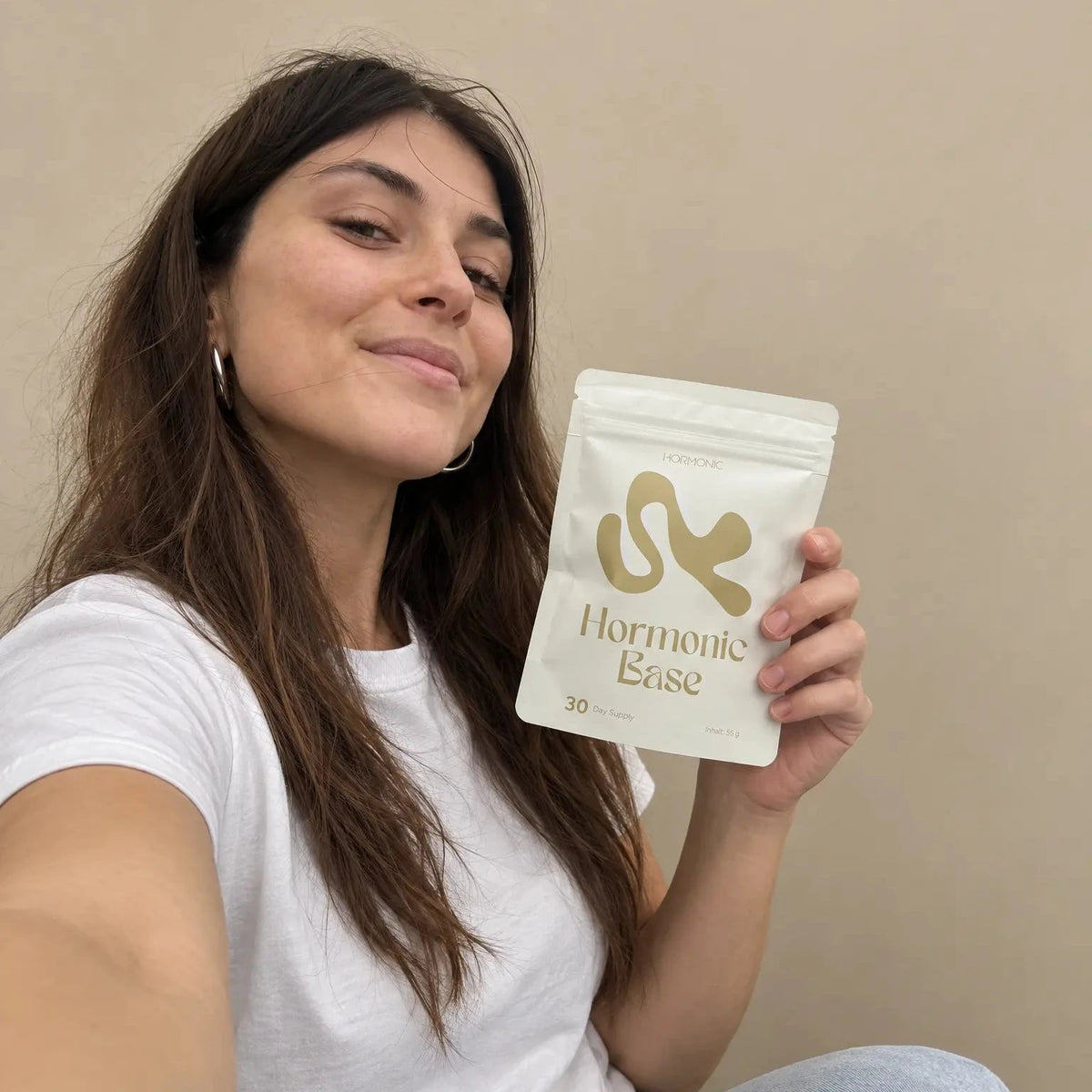
Your body's own progesterone needs the right building blocks. Hormonic Base provides 16 essential micronutrients daily, including zinc, which contributes to normal fertility and reproduction, as well as vitamin D and vitamin B6. A thoughtful daily foundation for the female body.

Are you unsure about your luteal phase?
In a free 15-minute consultation, one of our doctors will give you an initial assessment of your symptoms and you can ask all your questions, without any obligation.
Frequently Asked Questions about Progesterone
Can you increase progesterone naturally?
Which foods increase progesterone?
Hilft Yamswurzel oder Seed Cycling, um Progesteron zu erhöhen?
Wann sollte man den Progesteronwert messen?
Scientific Sources
- Practice Committee of the American Society for Reproductive Medicine (2021). Diagnosis and treatment of luteal phase deficiency: a committee opinion. Fertility and Sterility. doi:10.1016/j.fertnstert.2021.02.010
- Gordon, C. M. et al. (2017). Functional hypothalamic amenorrhea: an Endocrine Society clinical practice guideline. The Journal of Clinical Endocrinology & Metabolism. doi:10.1210/jc.2017-00131
- Fitz, V. et al. (2024). Inositol for polycystic ovary syndrome: a systematic review and meta-analysis to inform the 2023 update of the international evidence-based PCOS guidelines. The Journal of Clinical Endocrinology & Metabolism. doi:10.1210/clinem/dgad762
- Guo, S. et al. (2023). The effect of vitamin D supplementation on the reproductive outcomes of women with polycystic ovary syndrome: a meta-analysis. Frontiers in Endocrinology. doi:10.3389/fendo.2023.1148556
- Nasiadek, M. et al. (2020). The role of zinc in selected female reproductive system disorders. Nutrients. doi:10.3390/nu12082464
- Verkaik, S. et al. (2017). The treatment of premenstrual syndrome with preparations of Vitex agnus castus: a systematic review and meta-analysis. American Journal of Obstetrics and Gynecology. doi:10.1016/j.ajog.2017.02.028
- Mumford, S. L. et al. (2016). Association of preconception serum 25-hydroxyvitamin D and reproductive hormones. The Journal of Clinical Endocrinology & Metabolism. doi:10.1210/jc.2015-3986
About the Author

You might also be interested in this.

Recognizing progesterone deficiency symptoms: How luteal phase defect develops, how to identify it, what can be said about diagnosis according to ASRM (2021), and what magnesium, zinc, and vitamin ...

Luteal phase deficiency explained: how to recognise the symptoms, what causes it, and what truly helps with fertility issues and cycle irregularities.

Estrogen Dominance and Progesterone Deficiency Explained: how to recognize the symptoms, what causes them, and what studies show truly helps.