
🖤 Black WeeksPick 3 · save 30 %Pick 6 · save 60 %Automatic, no codeFor a limited time only🖤 Black WeeksPick 3 · save 30 %Pick 6 · save 60 %Automatic, no codeFor a limited time only🖤 Black WeeksPick 3 · save 30 %Pick 6 · save 60 %Automatic, no codeFor a limited time only

Cart

Your cart is empty

Continue shopping

Trending searches

Featured products

Hormonic Base - Hormonic - Nahrungsergänzungsmittel
Sale price€65,00
(5.0)
Midlife Formula - Hormonic - Nahrungsergänzungsmittel
Sale price€75,00
(5.0)
Skinny Fat loswerden: Ursachen und was wirklich hilft - Hormonic
StoffwechselSep 21, 20268 min read

Getting rid of skinny fat: Causes and what really works

This article is part of: Metabolism, Hormones, and Weight: The Complete Guide for Women

Skinny fat is currently one of the biggest topics on social media, and hardly a week goes by without a woman asking me about it: "I weigh a perfectly normal amount, so why do I still feel soft and out of shape?" That is exactly what skinny fat describes, and the term hits a nerve because it makes visible what the scale hides.

Slim on the outside, but too much fat and too little muscle on the inside. The technical term for this is normal weight obesity. What concerns me most about this is that many women start eating even less as a result, even though that often has the opposite effect. It is worth shifting your focus away from the scale and onto your body composition. And the good news is: you can take targeted action to change it.

What "skinny fat" really means

Skinny fat means your body fat percentage is too high in relation to your muscle mass, even though your weight and BMI are within the normal range. BMI only measures weight relative to height; it does not distinguish between fat and muscle. Two people with the same BMI can therefore have completely different body builds.

The crucial factor is primarily where the fat is located. Visceral fat, i.e., the fat surrounding the internal organs in the abdominal cavity, is metabolically active and influences blood sugar, blood lipids, and inflammatory markers more strongly than the fat directly under the skin. With "skinny fat," it is often precisely this visceral portion that is elevated, while the arms and legs appear slim. Muscle mass, in turn, is the primary place where your body absorbs glucose, and it does so even without insulin. Low muscle mass therefore means less of a buffer for blood sugar.

Characteristic Slim & fit Skinny Fat What matters
BMI normal normal doesn't say much on its own
Body fat % in healthy range elevated more telling than BMI
Muscle mass well-developed low the most important lever
Waist circumference unremarkable often slightly elevated indicator of visceral fat

Why women in particular become skinny fat

Skinny fat rarely happens overnight; it is the result of a combination of low muscle development, a sedentary lifestyle, and a diet that favors fullness over nutritional density. For women, a few additional factors make this pattern more likely.

Less muscle as a starting point. Women naturally have less muscle mass than men. If it is not actively trained, it continues to decline over the years, and with it, the basal metabolic rate. Those who lose weight through crash diets often lose muscle as well, which intensifies the skinny-fat composition after every diet.

A diet low in protein. Highly processed foods, white flour, and sugary drinks provide plenty of energy but little protein and fiber. This makes muscle maintenance difficult and promotes fat storage, especially in the abdominal area.

Hormonal transitions. When estrogen levels drop, such as during perimenopause, fat distribution shifts more toward the abdomen, and insulin sensitivity decreases. An irregular cycle or insulin resistance can also push the metabolism in the same direction. Read about how closely insulin and body fat are linked in our article on Insulin resistance in women.

Chronic stress and lack of sleep. Chronically elevated cortisol and insufficient sleep impair insulin action and promote belly fat. Both factors are unspectacular but effective and are often underestimated.

How to recognize if you are skinny fat

The simplest indicator is a look that goes beyond the scale: a slim silhouette but little definition, a soft belly, and little visible musculature. However, measurements are more reliable. Body fat percentage can be estimated using a bioimpedance scale or calipers, and waist circumference is a good marker for visceral fat: values over 80 centimeters are considered elevated for women.

Certain blood values can also be informative, revealing skinny fat long before weight changes: fasting insulin and the resulting HOMA-IR index, fasting blood glucose, triglycerides, and HDL cholesterol. If insulin and triglycerides are high while HDL is low, it is a typical pattern. These values are not included in a standard blood panel and must be specifically requested.

What really helps: muscles instead of eating even less

The most effective lever for addressing skinny fat is not eating less, but building more muscle. Strength training is the best-supported method here according to studies.

Strength training. Regular strength training, two to three times a week, builds muscle and improves insulin sensitivity. Muscles take up glucose even without insulin, so every increase has a direct effect on blood sugar. For women, it is the central building block, precisely because the starting muscle mass is lower.

Enough protein. Protein is the second lever. Meta-analyses show that a higher protein intake in combination with strength training consistently supports the building of muscle mass (Morton et al., 2018). As a guideline, about 1.6 to 2.2 grams of protein per kilogram of body weight per day is recommended, distributed over several meals.

Moderate instead of radical deficit. Those who want to lose fat and maintain muscle at the same time fare better with a small calorie deficit than with a crash diet. Controlled studies have observed that a moderate deficit of around 250 to 300 kilocalories, combined with high protein intake and strength training, enables body recomposition—meaning fat loss while simultaneously maintaining or building muscle. Radical diets, on the other hand, cost you exactly the muscles you need.

Sleep and stress. Seven to nine hours of sleep and a conscious approach to stress are not secondary; they measurably improve insulin action and facilitate fat loss.

Shape Formula: the active ingredient booster for your metabolism

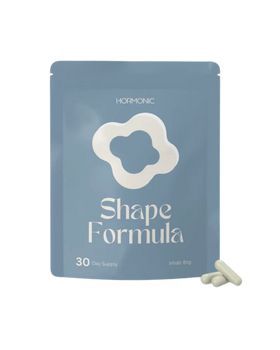
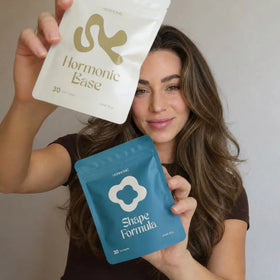
You can change "skinny fat" by altering your body composition, and that is exactly where Shape Formula gives you a tailwind. Chromium is scientifically proven to contribute to normal blood glucose levels and normal macronutrient metabolism, the foundation for your body to burn fat instead of storing it. Added to this are nine other specifically selected active ingredients such as L-carnitine, green coffee, and alpha-lipoic acid, which are being researched in relation to glucose and fat metabolism. Developed by doctors, manufactured in Austria, 10 specifically selected active ingredients in one capsule routine.
Start now

Micronutrients for skinny fat: what studies show

The core of being skinny fat is blood sugar that rides a rollercoaster too often, and not enough muscle to buffer it. This is precisely where certain micronutrients and plant compounds, which have been studied in relation to glucose and fat metabolism, come into play. A quick note upfront: they are no substitute for strength training or a healthy diet, but they can purposefully support a metabolism-conscious routine. You can also read about how closely blood sugar and body fat are linked in our article on Insulin resistance in women.

Chromium: the best-documented building block. According to the EFSA, chromium contributes to the maintenance of normal blood glucose levels and normal macronutrient metabolism. In a meta-analysis of women with PCOS, chromium supplementation was also associated with lower fasting insulin (Fazelian et al., 2017). The connection is crucial: calmer blood sugar means fewer insulin spikes, and fewer insulin spikes make it easier for the body to burn abdominal fat and maintain muscle. It is precisely this indirect path that counts when you are skinny fat.

L-carnitine: studies show an effect on fat mass. L-carnitine transports fatty acids into the mitochondria, the power plants of the cell, where they are burned to produce energy. A meta-analysis of randomized studies observed a moderate but measurable decrease in body weight and fat mass (Talenezhad et al., 2020). Not a replacement for training, but a sensible companion when you are working on your body composition.

Green coffee and green tea: focus on glucose metabolism. Chlorogenic acid from green coffee and catechins from green tea (EGCG) are linked in studies to slowed glucose absorption and a slightly increased energy expenditure. The evidence is promising but not yet conclusive, which is why they should be classified as a support measure rather than a primary solution.

Alpha-lipoic acid: in the focus of insulin research. Alpha-lipoic acid acts as an antioxidant and has been studied primarily in the context of insulin sensitivity. Since improved insulin action helps the body burn fat and maintain muscle, it fits well mechanically with the skinny-fat pattern, even if the data remains limited.

Cinnamon, fenugreek, fiber, and satiety. Cinnamon and fenugreek are studied in relation to blood sugar. Acacia fiber is a prebiotic that supports gut flora and can contribute to satiety, and tryptophan is a precursor to serotonin, which helps regulate appetite. Together, these building blocks facilitate one main thing: sticking to a high-protein, high-fiber diet with fewer cravings.

Our Shape Formulacombines exactly these active ingredients in a daily dose: chromium for blood sugar, plus L-carnitine, green coffee, alpha-lipoic acid, cinnamon, fenugreek, acacia fiber, and tryptophan—a total of ten carefully selected building blocks for glucose, fat, and satiety metabolism. It is intended as a daily supplement that supports, rather than replaces, a metabolism-conscious diet. You can find an overview of how this level interacts with your hormones in our article on Metabolism in women.

What you can do yourself

If you want to tackle being skinny fat, it is worth following a clear order of priorities instead of the next diet:

  • Strength training two to three times a week, with increasing resistance. This is the most important point.
  • Protein with every meal, about 1.6 to 2.2 grams per kilogram of body weight per day.
  • Plenty of fiber from vegetables, legumes, and whole grains for steadier blood sugar.
  • Reduce highly processed foods and sugary drinks instead of broadly cutting calories.
  • Increase everyday movement: more steps, taking the stairs instead of the elevator more often.
  • Seven to nine hours of sleep and conscious breaks for calmer cortisol levels.

When to seek medical advice

Being skinny fat alone is not an emergency, but it is a reason to take a closer look. Medical clarification is recommended if fasting insulin, HOMA-IR, or blood lipids are elevated, if your cycle is irregular, or if you see no change despite training and dietary adjustments. Insulin resistance, PCOS, or a thyroid disorder could be the cause.

If you are unsure where to start, you can have it assessed in a free initial consultationwith one of our doctors or discuss it with your GP.

Shape Bundle: Foundation and metabolism in one

You get the fastest leverage when your base and metabolism converge. Hormonic Base provides vitamin B6, which contributes to the regulation of hormonal activity, and a magnesium complex to reduce fatigue, while Shape supports glucose and fat metabolism. Base and Shape together, 26 active ingredients for foundation and metabolism, permanently 20 percent cheaper and free of shipping costs with a subscription.

View Shape Bundle

Conclusion

Being "skinny fat" is not a weight problem, but an issue of body composition: too much fat and too little muscle, despite a normal reading on the scale. This is important to understand because it changes the solution. Eating even less will not get you anywhere; instead, you need to build muscle, eat enough protein, and keep your blood sugar stable.

Strength training and protein are the most well-proven levers, supplemented by a moderate deficit and good sleep. Micronutrients like chromium can support a metabolism-conscious diet, but they do not replace training or a balanced diet. And if your blood work is abnormal, it should be clarified by a doctor.

Frequently Asked Questions about Skinny Fat

What does skinny fat mean?

"Skinny fat" means that you have a high body fat percentage and low muscle mass despite having a normal weight and a normal BMI. You appear slim on the outside, but the ratio of fat to muscle on the inside is unfavorable. The technical term is normal-weight obesity.

How do I get rid of being skinny fat?

The most effective approach is muscle building rather than dieting: regular strength training, sufficient protein (about 1.6 to 2.2 grams per kilogram of body weight), and at most a small calorie deficit. This allows you to build muscle and lose fat without slowing down your metabolism. Crash diets tend to make "skinny fat" worse because they cause muscle loss.

Ist skinny fat gefährlich?
Skinny fat ist kein akuter Notfall, sollte aber ernst genommen werden. Ein hoher Körperfettanteil bei normalem BMI, vor allem viszerales Bauchfett, ist in Studien mit Insulinresistenz und dem metabolischen Syndrom verknüpft. Deshalb lohnt es sich, die Körperzusammensetzung und bei Bedarf die Blutwerte im Blick zu behalten.
Hilft Krafttraining oder Ausdauer besser bei skinny fat?
Krafttraining hat bei skinny fat Priorität, weil der Kern des Problems zu wenig Muskelmasse ist. Ausdauertraining ist eine sinnvolle Ergänzung für Herz-Kreislauf-Gesundheit und Kalorienverbrauch, baut aber kaum Muskeln auf. Die beste Kombination ist Krafttraining plus etwas Bewegung im Alltag.

Scientific Sources

  • Madeira FB, et al. (2013). Normal Weight Obesity Is Associated with Metabolic Syndrome and Insulin Resistance in Young Adults from a Middle-Income Country. PLoS ONE, 8(3), e60673. doi:10.1371/journal.pone.0060673
  • Correa-Rodríguez M, et al. (2022). Cardiometabolic risk factors in adults with normal weight obesity: A systematic review and meta-analysis. Clinical Nutrition, 41(10), 2179-2188. doi:10.1016/j.clnu.2022.08.011
  • Morton RW, et al. (2018). A systematic review, meta-analysis and meta-regression of the effect of protein supplementation on resistance training-induced gains in muscle mass and strength in healthy adults. British Journal of Sports Medicine, 52(6), 376-384. doi:10.1136/bjsports-2017-097608
  • Talenezhad N, et al. (2020). Effects of L-carnitine supplementation on weight loss and body composition: A systematic review and meta-analysis of randomized controlled trials. Clinical Nutrition ESPEN, 37, 9-23. doi:10.1016/j.clnesp.2020.03.008
  • Fazelian S, et al. (2017). Chromium supplementation and polycystic ovary syndrome: A systematic review and meta-analysis. Journal of Trace Elements in Medicine and Biology, 42, 92-96. doi:10.1016/j.jtemb.2017.04.008
  • EFSA Panel on Dietetic Products, Nutrition and Allergies (2010). Scientific Opinion on the substantiation of health claims related to chromium. EFSA Journal, 8(10), 1732. doi:10.2903/j.efsa.2010.1732

About the Author

Lee Paulina Pape

Lee Paulina Pape

Founder · MSc Psychology · Hormonic

Lee is a psychologist (MSc) and co-founder of Hormonic. As CEO, she makes women's hormonal health understandable and accessible.

Note: This article is based on current guidelines and scientific work (as of 2026). It is for informational purposes only and does not replace medical advice, diagnosis, or treatment.

Share

You might also be interested in this.

Wie Du deinen Stoffwechsel ankurbelst - Hormonic
StoffwechselJun 4, 20267 min read
Boost metabolism: What really helps women

Boost metabolism: We separate myth from evidence and show which levers really count for women, from protein and muscles to thyroid, insulin, and the menstrual cycle.

L-Carnitin: Wirkung, Abnehmen und was Studien zeigen - Hormonic
MikronährstoffeJun 25, 20268 min read
L-Carnitine: Effects, Weight Loss, and What Studies Show

L-Carnitine transports fatty acids into the mitochondria for energy production. What studies on weight loss and fat metabolism show, how to dose it, and for whom it is useful.

Pille und Gewicht: Zunahme, Absetzen & was wirklich hilft - Hormonic
StoffwechselMay 30, 20258 min read
Weight gain from the pill: Do you really gain weight?

Does the pill really make you gain weight? Three mechanisms explain why it feels that way, which pill doesn't make you gain weight, and 6 tips that really help.