
Offer ends in10:00

Cart

Your cart is empty

Continue shopping

Trending searches

Featured products

Hormonic Base - Hormonic - Nahrungsergänzungsmittel
Sale price€65,00
(5.0)
Midlife Formula - Hormonic - Nahrungsergänzungsmittel
Sale price€75,00
(5.0)
Apigenin: Wirkung auf Schlaf, Hormone und PCOS - Hormonic
MikronährstoffeAug 19, 20248 min read

Apigenin: Effects on Sleep, Hormones, and PCOS

This article is part of: Micronutrients and Hormones: The Female Guide

Apigenin is one of the best-studied flavonoids with hormonal relevance. It is found in chamomile tea, parsley, and celery, and studies show it has effects on sleep, androgens, and inflammation.

Key takeaways
  • What it is: Apigenin is a plant flavonoid (4',5,7-trihydroxyflavone) found primarily in chamomile, parsley, celery, and sage.
  • Sleep & Calm: Apigenin binds to GABA receptors in the brain – the most likely reason why chamomile tea has a calming effect.
  • Hormones & PCOS: In preclinical studies, apigenin lowers elevated androgens, improves insulin sensitivity, and dampens inflammatory markers.
  • Inflammation & Cell Protection: Apigenin acts as an antioxidant and inhibits pro-inflammatory signaling pathways (including NF-κB).
  • Important to know: Most hormonal data comes from animal and laboratory studies. Apigenin is not a drug and does not replace PCOS therapy.

Apigenin is one of the most thoroughly researched flavonoids with hormonal relevance – found in chamomile tea, parsley, and celery. Research links it to more restful sleep, reduced inflammation, and a more balanced hormone metabolism. This article explores what is proven, for whom it may be beneficial, and its limitations.

What is Apigenin?

Apigenin belongs to the group of flavones, a subgroup of flavonoids. These secondary plant compounds give plants color and protect them from stress – and it is precisely these protective properties that make them interesting for the human body.

You consume apigenin daily through your diet, usually without knowing it. It is particularly abundant in chamomile flowers, parsley, celery, sage, oregano, thyme, and artichokes. A cup of chamomile tea is the best-known source – and the reason why chamomile has been considered a sleep aid for centuries.

Food Apigenin content (approximate)
Dried parsley very high
Chamomile flowers / Chamomile tea high
Fresh parsley medium to high
Celery medium
Sage, oregano, thyme medium
Artichoke low to medium

Values vary widely depending on drying, cultivation, and preparation – an exact dietary intake is difficult to calculate.

Apigenin and Sleep: the GABA effect

By far the best-known effect of apigenin concerns sleep. Apigenin can bind to GABA-A receptors in the brain – the same receptors that calming agents target. GABA is the most important "inhibitory" neurotransmitter in the nervous system: It reduces the excitability of nerve cells and helps the body to unwind.

This explains why chamomile has a calming effect. In clinical studies, chamomile extract was mostly used as a source of apigenin, and the effects on sleep quality and relaxation were consistently positive. Important to note: Because chamomile contains other ingredients, the effect cannot be 100% attributed solely to apigenin.

For many women, this is exactly the starting point: they don't know apigenin as an active ingredient, but they know the feeling after a cup of chamomile tea in the evening.

Apigenin, Hormones, and PCOS

This is where it gets particularly exciting for women's health – and also the reason why apigenin receives so much attention in PCOS research. PCOS is characterized by three interconnected problems: increased androgens (male hormones), insulin resistance, and chronic, low-grade inflammation. Apigenin addresses all three points in preclinical models.

1. Androgens and Hormone Balance

In animal models, apigenin lowered elevated testosterone and estradiol levels while increasing progesterone levels – a shift that is often the therapeutic goal in PCOS. In a widely cited study in rats, apigenin normalized the cycle, reduced ovarian diameter, and promoted the development of healthy follicles.

2. Insulin Sensitivity and Metabolism

A core problem in PCOS is insulin resistance. In preclinical studies, apigenin improved insulin sensitivity, lowered blood sugar, and positively influenced fat metabolism – relevant because many women with PCOS struggle with weight and metabolism.

3. Inflammation

PCOS is associated with elevated inflammatory markers such as TNF-α and IL-6. Apigenin inhibits the NF-κB signaling pathway, a central switch for inflammation, and lowered precisely these markers in studies.

In several comparisons, the effect of apigenin approached that of metformin – the standard medication for PCOS. This is a remarkable signal, but: These results are predominantly from animal and laboratory studies. They show biological plausibility but do not replace large human clinical trials. Apigenin should therefore be classified as a supplementary, nutrition-based building block – not as a substitute for medically supervised PCOS therapy.

Estrogen: lower or balance?

Apigenin has a dual, regulatory effect on estrogen. On the one hand, it can act as a mild aromatase inhibitor (and thus lower excessive estrogen levels); on the other hand, it can weakly bind to receptors as a phytoestrogen. Simply put: Apigenin tends to have a balancing effect – it dampens where there is too much. Precisely because of this hormonal activity, women with hormone-dependent diseases should clarify the use of higher-dose preparations with a doctor.

Inflammation, Cell Protection, and More

Beyond hormones, apigenin is a potent antioxidant. It neutralizes free radicals, increases the activity of the body's own protective enzymes (e.g., superoxide dismutase and glutathione reductase), and is being researched in connection with cardiovascular health, neuroprotection, and cell protection. Again, promising, predominantly preclinical evidence applies here.

Bioavailability: The Real Challenge

Apigenin has a weakness: It is poorly water-soluble, and the body absorbs it only to a limited extent. This is precisely why "eating a lot of parsley" alone is not enough to achieve therapeutic levels. Absorption can be improved by:

Strategy Why it helps
Combination with Vitamin C & Folate hydrophilic co-factors increase plasma levels
Intake with some fat fat-soluble flavones are better absorbed
Modern formulations e.g., micellar or nano-forms improve solubility


Did you know?

The mechanism by which apigenin calms – binding to GABA-A receptors – is similar to that of classic sedatives, albeit significantly milder and without their potential for addiction. This is why chamomile tea has been considered a gentle sleep aid for centuries.

Dosage and Safety

In studies, therapeutic dosages frequently range between 50 mg and 500 mg per day. Within this range, apigenin is considered well-tolerated, with no significant side effects. Nevertheless, caution is advised in cases of: pregnancy and breastfeeding, hormone-dependent conditions, allergies to composite flowers (chamomile), and with medications metabolized by the liver (CYP450 enzymes). When in doubt: consult a doctor.

This article is for informational purposes only and does not replace medical advice. The described hormonal effects are predominantly based on preclinical studies.

Apigenin in combination with other active ingredients

Apigenin is rarely used alone. In practice, it makes sense primarily in combination with other well-researched active ingredients. Here, we classify it in comparison to the classic PCOS support options.

Myo-inositol is considered the best-documented natural active ingredient for PCOS. It improves insulin sensitivity and can support ovulation. There is significantly more human clinical evidence for myo-inositol than for apigenin. Apigenin can meaningfully complement this effect by also acting on inflammation and androgens.

Berberine has a strong effect on blood sugar and fat metabolism, similar to metformin. It is more potent metabolically than apigenin but more frequently causes gastrointestinal side effects. Apigenin is gentler and also calming.

Zinc is an essential trace element that, according to approved EU health claims, contributes to normal fertility and reproduction, normal cognitive function, and the protection of cells from oxidative stress. Unlike apigenin, health claims for zinc are officially approved, which is an important distinction for dietary supplements.

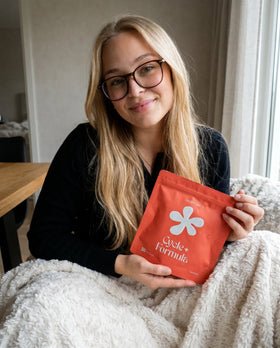
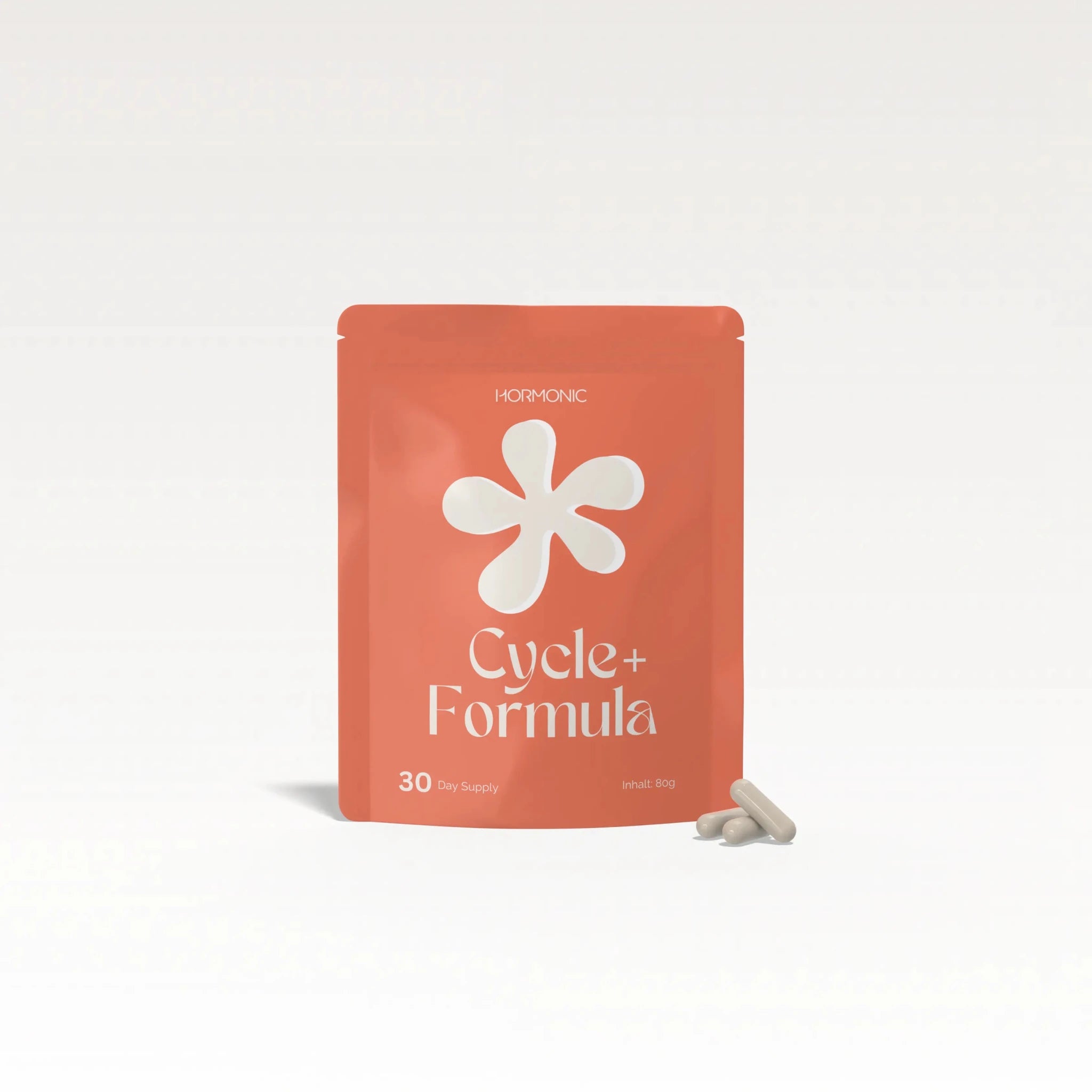
The classification: Apigenin is not a substitute for these active ingredients but unfolds its strength in combination. This is precisely why apigenin is not in a mono-preparation with us, but in the Cycle+ Formula. There, it is specifically combined with myo- and D-chiro-inositol, zinc, quercetin, trans-resveratrol, rhodiola, and L-theanine. This way, the mild hormone-regulating, anti-inflammatory, and calming effects of apigenin and the better-documented human effects of inositol and zinc interact rather than replace each other. This is the thoughtfully combined approach for which Cycle+ was developed.

Cycle+ Formula: Apigenin in a well-conceived complex

Apigenin unfolds its potential primarily in synergy, not as a standalone substance. That is precisely why we developed Cycle+: The formula combines apigenin with myo- and d-chiro-inositol, zinc, quercetin, trans-resveratrol, rhodiola, and l-theanine—active ingredients that work together to support the cycle, insulin sensitivity, and inner calm. Zinc contributes to normal fertility and the protection of cells from oxidative stress. Developed by doctors, produced in Austria. Save 20% permanently with a subscription with free shipping, cancellable at any time, and backed by a 30-day money-back guarantee.

€75,00

Start now

How do I integrate apigenin into my daily life?

You don't have to reach for a supplement right away. For many women, the easiest way to start is through diet – and that can be implemented immediately.

Through diet: A cup of chamomile tea in the evening is the simplest and most traditional source of apigenin – with the pleasant side effect of a calmer sleep. Fresh and dried parsley, celery, and Mediterranean herbs like oregano and thyme further increase intake. A squeeze of lemon (vitamin C) and a little olive oil in the same dish improve absorption.

The timing idea: Since apigenin has a calming effect, it fits well into an evening routine. Those who want to use it for sleep and relaxation should take it in the evening; those targeting metabolic and hormonal aspects should follow the recommendations of the respective product.

Realistic expectations: Hormonal changes take time. The cycle is a sluggish system – a observation period of at least two to three cycles is useful, ideally with cycle tracking, to even make effects visible.

When to consult a doctor: In cases of missed periods, severe cycle fluctuations, desire to conceive, or suspected PCOS, basic diagnostics belong in a doctor's hands. An active ingredient like apigenin is a supportive measure, not a replacement.

Unsure where and how to get started?

Book a free initial consultation with our medical team. Our doctors specialize in hormonal issues and will help you with your concerns. Completely non-binding, without waiting times, conveniently via video call.

Book appointment

Conclusion: For whom is apigenin useful?

Apigenin is one of the most versatile flavonoids we know – and at the same time, one where the evidence needs to be honestly evaluated.

It is particularly interesting for women who suffer from inner restlessness and difficulty falling asleep (here the data is most robust), who want to holistically and nutritionally support PCOS, or who generally focus on anti-inflammatory, antioxidant nutrition.

It is less suitable, or only after consulting a doctor, during pregnancy and breastfeeding, for hormone-dependent diseases, and when taking medications that are metabolized by the liver.

The honest take-home message: Apigenin is not a miracle cure and not a medication. The hormonal effects are biologically plausible and promising, but mainly come from preclinical studies. As part of a well-thought-out overall concept – nutrition, exercise, sleep, and potentially targeted supplementation – it can be a valuable building block. You achieve the greatest effect by addressing the root causes instead of chasing individual symptoms.

Frequent Questions About Apigenin

Does apigenin really work for PCOS?

In preclinical studies, apigenin shows promising effects in PCOS: It lowered elevated androgens, improved insulin sensitivity, and reduced inflammatory markers such as TNF-α and IL-6. In animal models, its effect sometimes approached that of metformin. Important: These results are predominantly from animal and laboratory studies. Apigenin is a complementary building block, not a substitute for medically supervised PCOS therapy.

Does apigenin help with sleep?

Yes, this is the most extensively studied effect. Apigenin binds to GABA-A receptors in the brain—the same receptors responsible for relaxation and calming. This explains why chamomile tea, one of the richest sources of apigenin, is traditionally considered a sleep aid. Clinical studies with chamomile extract consistently showed positive effects on sleep quality and relaxation.

Sources

  • Mahdavinia M et al. (2025). Apigenin and ellagic acid in PCOS – a comprehensive review. Front Endocrinol.
  • Samani SL et al. (2025). Beneficial effects of apigenin on ovarian histological changes in a PCOS rat model. Naunyn-Schmiedeberg's Arch Pharmacol.
  • Apigenin restores ovarian function in DHEA-induced PCOS rats (2022). Ann Med.
  • Salehi B et al. (2019). The therapeutic potential of apigenin. Int J Mol Sci.
  • Apigenin as a promising agent for female reproductive function (2024). Biomedicines.

About the Author

Lisa Maria Emmer

Lisa Maria Emmer

Founder · Physician · Hormonic

Lisa Maria Emmer is co-founder and medical director at Hormonic. She supports women with hormonal problems every day and specializes in cycle health, PCOS, and menopause.

This article is for informational purposes only and does not replace medical advice.

Share

You might also be interested in this.
Welche Supplements sollten Frauen täglich nehmen? Der evidenzbasierte Stack - Hormonic
MikronährstoffeDec 8, 20259 min read
Which supplements should women take daily? The evidence-based stack

These 4 supplements are recommended daily by science for women: Micronutrient basis, Omega-3, Creatine, and targeted gut-hormone add-ons. Without hype, with a study basis.

Myo-Inositol bei PCOS: Wirkung, Studien & Dosierung - Hormonic
MikronährstoffeMay 31, 202610 min read
Myo-inositol for PCOS: Effects, Studies & Dosage

How does inositol work for PCOS, what do studies show regarding ovulation, testosterone, and insulin resistance, and what is a sensible dosage? The evidence-based overview.
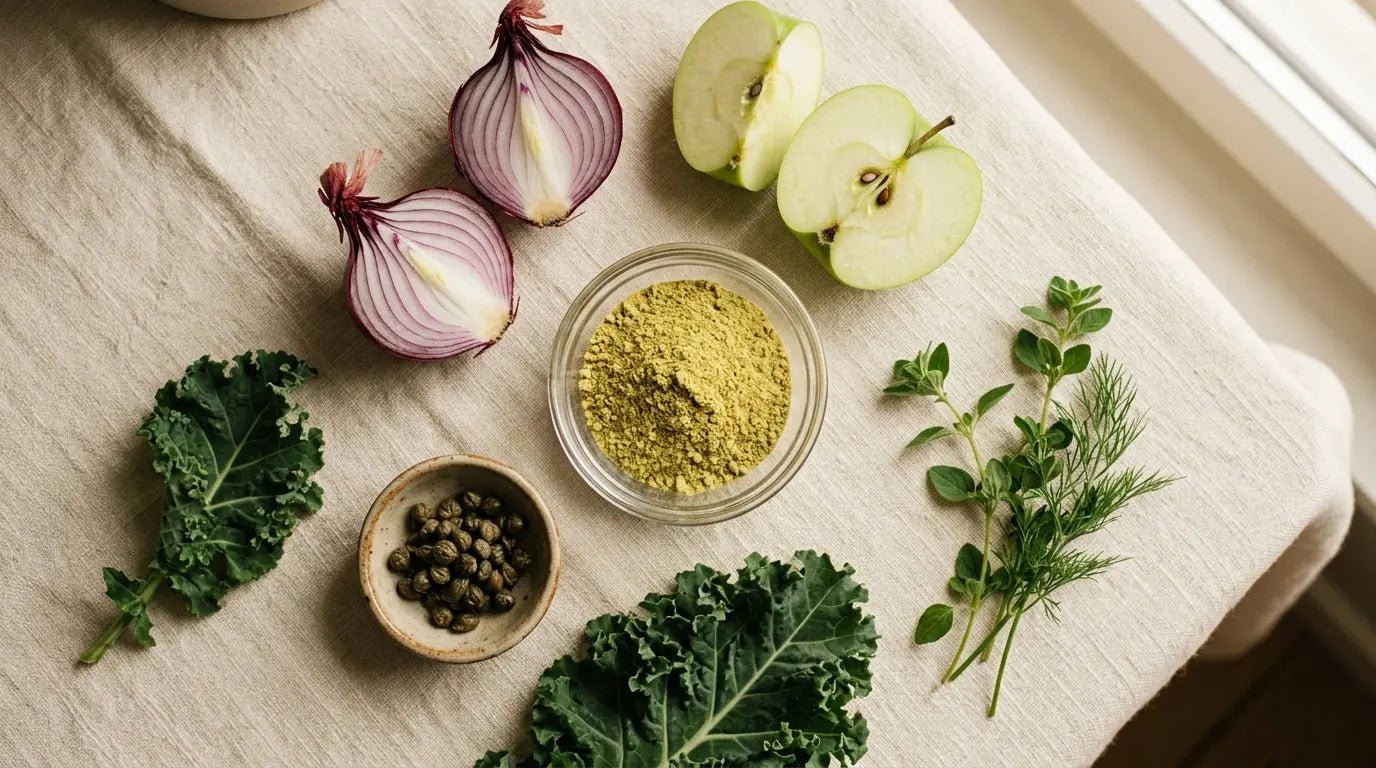
Quercetin bei PCOS: Wirkung auf Hormone, Insulin und Entzündung - Hormonic
MikronährstoffeAug 22, 20248 min read
Quercetin in PCOS: Effect on Hormones, Insulin, and Inflammation

If you suffer from hormonal disorders such as polycystic ovary syndrome (PCOS), quercetin could be just the right ingredient for you. Quercetin is a flavonoid found in many fruits and vegetables an...