
Offer ends in10:00

Cart

Your cart is empty

Continue shopping

Trending searches

Featured products

Hormonic Base - Hormonic - Nahrungsergänzungsmittel
Sale price€65,00
(5.0)
Midlife Formula - Hormonic - Nahrungsergänzungsmittel
Sale price€75,00
(5.0)
Frau mit Wärmflasche und Fencheltee auf dem Sofa, Symbolbild für Verdauungsbeschwerden im Zyklus
ZyklusSep 6, 20269 min read

Cycle and Digestion: Why You Have Diarrhea, Bloating, and Nausea Before and During Your Period

This article is part of: The Menstrual Cycle: The 4 Phases, Hormones, and What's Normal

In my office, a woman regularly sits, almost apologetically explaining that she can barely leave the bathroom on the first day of her period, while a week earlier she felt her stomach was bloated like a balloon. Many believe something is wrong with them, or that they've upset their stomach. Yet the truth is surprisingly simple: the gut reacts to the same hormones that control your cycle.

So, if you're struggling with diarrhea during your period, bloating, or nausea around ovulation, you're neither alone nor sick. Your digestive tract and your uterus are close together and share some of the hormonal signals. In this article, we'll go through what happens in your body phase by phase, and what you can do if the symptoms bother you.

What happens to your digestion during your cycle

Your digestion changes throughout your cycle because different hormones set the tone in each phase. Simply put, estrogen and progesterone influence how quickly your gut moves, and prostaglandins determine how strongly it contracts. These three messenger substances explain the majority of typical symptoms, from constipation in the second half of the cycle to diarrhea on the first day of bleeding.

Cycle Phase Key Hormones Typical Digestive Symptoms
Menstruation (approx. day 1 to 5) High prostaglandins, low progesterone and estrogen Diarrhea, abdominal cramps, more frequent bowel movements, sometimes nausea
Follicular Phase (after bleeding) Estrogen rises, low progesterone Usually calm and unremarkable, rarely mild bloating
Ovulation (mid-cycle) Estrogen peak, LH surge, local prostaglandins For some, slight nausea, softer stools, mid-cycle pain
Luteal Phase (before period) High progesterone Slower digestion, constipation, bloating

This table is a pattern, not a law. Not every woman experiences every phase in the same way, and many don't even notice a connection for years until they consciously pay attention. In the next sections, we'll take a closer look at the three most common complaints, starting with the symptom that is least talked about.
Why you get diarrhea during your period

Diarrhea during your period is primarily due to prostaglandins. These are hormone-like tissue hormones that your body produces in increased amounts shortly before and during menstruation to cause the uterus to contract and shed its lining. Because the uterus and intestines are in close proximity and the intestines react to the same messenger substances, these prostaglandins also stimulate the intestinal muscles.

The result: The intestines work faster, draw more fluid into them, and empty more frequently. Many women experience exactly this as loose stools or diarrhea during the first days of their period, often accompanied by cramps and sometimes nausea. A review on primary dysmenorrhea describes this prostaglandin mechanism as well-established and explains why severe menstrual pain and bowel problems often go hand in hand (Cochrane analysis, Marjoribanks et al., 2015).

It's interesting to look at women with irritable bowel syndrome: studies show that their symptoms, such as abdominal pain and diarrhea, often worsen around menstruation, which is also linked to higher prostaglandin levels (Bharadwaj et al., 2015). So, if you feel that your stomach is particularly sensitive during your period, there is a solid biological basis for it.

Bloating and constipation before your period: the role of progesterone

In the second half of the cycle, the so-called luteal phase after ovulation, progesterone levels rise significantly. Progesterone relaxes smooth muscles, and this includes the muscles of your intestines. A relaxed intestine moves slower, food remains in it longer, more water is extracted, and stool becomes harder. This leads to the typical constipation and feeling of fullness in the days before your period. This mechanism involving smooth muscles is well understood, although studies on actually measured intestinal transit time are inconsistent: not every woman reacts with the same intensity.

Because intestinal contents are transported more slowly, intestinal bacteria have more time to produce gases. This explains premenstrual bloating, which for many women feels as if they have gained a dress size overnight. This slowed digestion in the luteal phase is considered one of the classic accompanying symptoms of premenstrual syndrome (PMS).

General bloating can, of course, have many causes, from diet to intolerances. If you want to delve deeper into the topic regardless of your cycle, you will find a broader overview in our article on bloating in women and what helps. Here, we deliberately stick to the cyclical pattern: premenstrual bloating comes and goes with your progesterone.

Nausea and loose stools around ovulation

Ovulation itself can also make itself felt in the abdomen. Around mid-cycle, estrogen peaks, luteinizing hormone (LH) surges, and prostaglandins are locally released in the ovary to support follicular rupture. For some women, this hormonal change is enough to trigger mild nausea, slightly looser stools, or the well-known Mittelschmerz (mid-cycle pain).

The evidence for this is weaker than for period diarrhea, and not every woman even feels anything during ovulation. A cross-sectional study on digestion across cycle phases found gastrointestinal complaints more frequently around menstruation and ovulation (BMC Gastroenterology, 2023). So, if you regularly notice slight nausea around mid-cycle, it may well coincide with your ovulation. You can read more about how to recognize your ovulation in our article on fertile days around ovulation.

Important for context: This ovulation-related nausea is usually mild and brief. Persistent or severe nausea, especially in combination with pain, should be medically investigated and not simply attributed to the cycle.

Hormonic Base as a supportive nutrient foundation

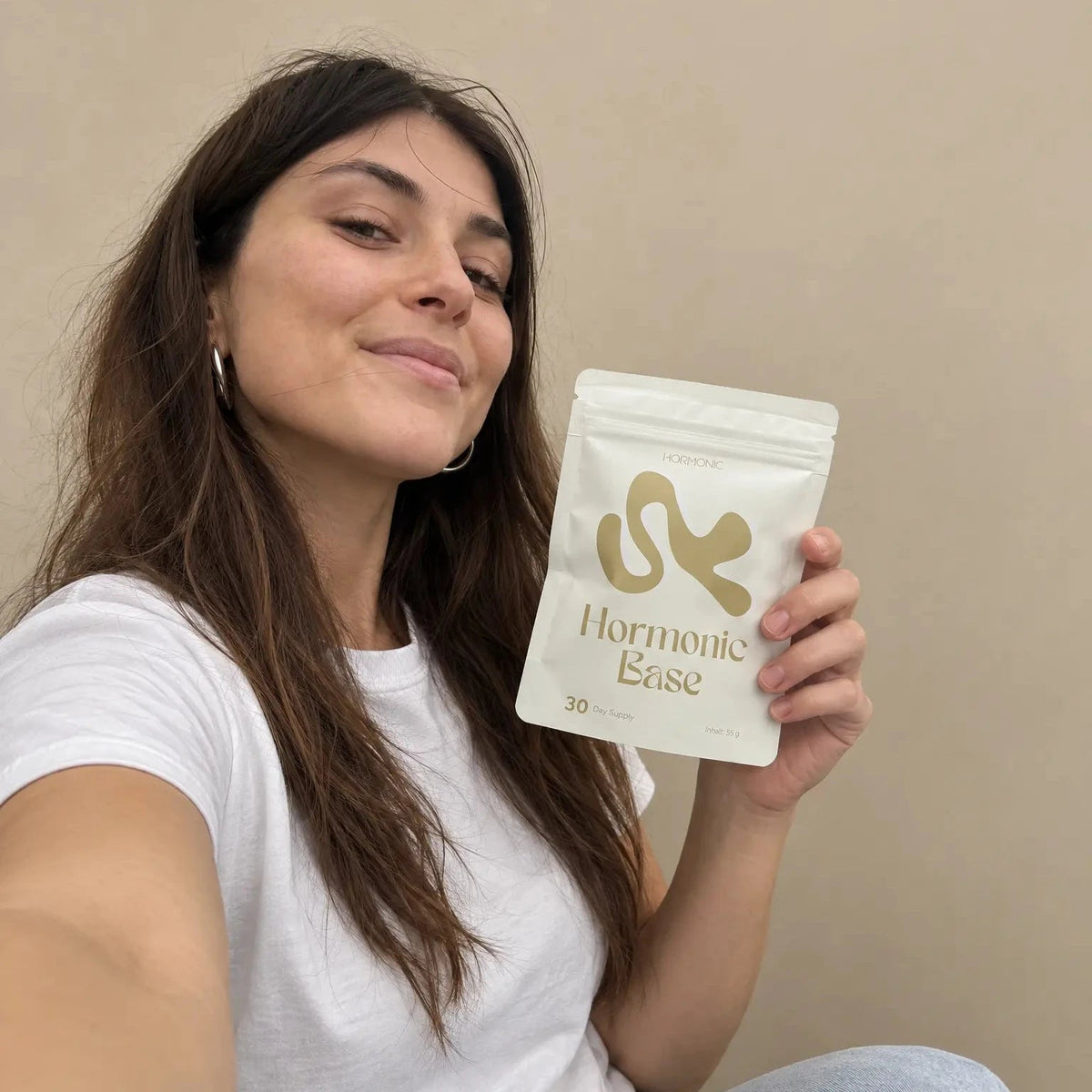
Intestinal cramps during menstruation are caused by tense muscles. The magnesium complex in Hormonic Base can provide support here, while vitamin B6 helps regulate hormonal activity. Together with 12 other active ingredients such as curcumin, NAC, and vitamin D, you give your body a solid foundation.

Discover now

What really helps against period diarrhea and bloating

The good news: Even if you can't switch off hormonal fluctuations, the symptoms can usually be alleviated well. It's best to combine several simple levers instead of hoping for a single miracle cure, which honestly doesn't exist here.

With diarrhea during your period, the main goal is to relieve your bowels and compensate for fluid loss. Easily digestible meals like rice, oatmeal, banana, or rusks soothe the gastrointestinal tract, while very fatty, spicy, or highly caffeinated food can further irritate the bowels. Drink enough water or unsweetened tea to replace lost fluids. Many women also find warmth on their abdomen comforting because it relaxes cramped muscles.

Before your period, when constipation and bloating are more prominent, the opposite often helps: exercise gets sluggish bowels moving again, even a walk or light yoga can be enough. Fiber from vegetables, fruits, and whole grains, as well as enough water, supports regular bowel movements. It's best to increase fiber slowly so your gut can get used to it.

For very severe, prostaglandin-related symptoms, anti-inflammatory pain relievers (NSAIDs like ibuprofen) can be useful because they inhibit prostaglandin production and thus can dampen cramps and diarrhea at the same time. You should discuss whether and how often this is an option for you with your doctor, especially if you regularly take such medications. You can find more about dealing with severe period pain in our article on severe period pain and what helps.

Diet and micronutrients for a calmer belly during your cycle

In addition to acute nutrition, it's worth taking a look at your basic nutrient supply, because some micronutrients play a role in muscle, nervous system, and hormone balance – precisely the systems involved in cyclic abdominal complaints.

Magnesium is the most exciting nutrient here. A literature review on the role of magnesium in gynecology concluded that magnesium supplementation can contribute to the prevention of period pain (dysmenorrhea), premenstrual syndrome, and menstrual migraines; about 200 to 360 mg per day are common (Parazzini et al., 2017). Because the same overactive, prostaglandin-driven muscles that cause diarrhea are also behind period cramps, magnesium works at a sensible point: according to EFSA-approved claims, it contributes to normal muscle function and a normal nervous system and helps to reduce tiredness and fatigue.

In a randomized study, magnesium, especially in combination with vitamin B6, relieved PMS symptoms more effectively than a placebo (Fathizadeh et al., 2010). Frankly, however, the study situation is limited: the studies are mostly small and some are older, and magnesium is not a remedy for diarrhea or bloating itself. However, as a reliable daily basis for the muscle and nervous system aspects of cramps, it is well-founded, and the magnesium complex in Hormonic Base combines three highly available forms of bisglycinate, malate, and citrate for this purpose.

Vitamin B6 also deserves attention: it contributes to the regulation of hormonal activity, normal psychological function, and the reduction of fatigue, all aspects that often suffer in the second half of the cycle. These effects are not a promise of a cure for diarrhea or bloating, but an honest support for the systems that are particularly challenged during this phase. Good basic care through a varied diet is important, supplemented only where it is difficult in everyday life.

When you should have your symptoms checked by a doctor

Cyclic digestive problems are usually harmless, but they are not always just hormonal. You should seek medical advice if the diarrhea is very severe or lasts a long time, if you notice blood or mucus in your stool, lose weight unintentionally, or have severe, new pain.

You should also become alert if your bowel problems follow a clear cyclical pattern and are accompanied by severe pain. Endometriosis can affect tissue in the bowel area and cause cyclic symptoms such as painful bowel movements, diarrhea, or constipation during your period (Ek et al., 2015). You can read more about signs and clarification in our article on endometriosis, causes, and symptoms.

Irritable bowel syndrome or an intolerance like celiac disease can also hide behind seemingly cyclic symptoms or worsen during your period. If you are unsure whether your symptoms are still normal, you don't have to find out alone. In a free introductory consultation, you can ask your questions and get an initial assessment of what steps make sense for you.

The power duo for hormones & gut

Hormonic Base provides the 16 essential micronutrients your body needs daily, including zinc, magnesium, NAC, and curcumin. Shape supplements these with 10 high-quality active ingredients that have been studied in clinical trials for their effects on the gut and metabolism.

For a free consultation

Conclusion

Your digestion is more closely linked to your cycle than most women realize. Prostaglandins explain diarrhea and cramps during your period, high progesterone in the luteal phase is behind constipation and bloating, and hormonal changes around ovulation can trigger mild nausea. Knowing which phase brings which symptoms removes a lot of uncertainty and makes symptoms more predictable.

With easily digestible food, sufficient fluids, exercise, warmth, and a solid nutritional foundation, everyday life can be made significantly more pleasant. And if symptoms are very severe, show a clear cyclical pattern, or if warning signs like blood in the stool appear, seeing a doctor is the right step, not enduring it.

Frequently Asked Questions about Cycle and Digestion

Why do I have diarrhea during my period?

During your period, your body produces more prostaglandins, which cause the uterus to contract. Because the intestine is located right next to it and reacts to the same messenger substances, the intestinal muscles are also stimulated. The intestine works faster and empties more frequently, which manifests as diarrhea or loose stools, often accompanied by cramps.

Can ovulation cause nausea?

Yes, in some women. Around ovulation, estrogen levels rise sharply, LH surges, and prostaglandins are locally released in the ovary. This hormonal change can trigger mild nausea, softer stools, or mid-cycle pain. The symptoms are usually mild and short-lived. You should have severe or persistent nausea checked by a doctor.

Was hilft gegen Periodendurchfall?
Leicht verdauliche Mahlzeiten wie Reis, Haferbrei oder Banane entlasten den Darm, und ausreichend Wasser gleicht den Flüssigkeitsverlust aus. Wärme auf dem Bauch entspannt die Muskulatur, und eine gute Magnesiumversorgung kann die Muskel- und Nervenseite der Krämpfe unterstützen. Bei sehr starken, prostaglandinbedingten Beschwerden können entzündungshemmende Schmerzmittel (NSAR) helfen, das besprichst Du am besten ärztlich. Verzichte an diesen Tagen eher auf sehr fettiges, scharfes oder stark koffeinhaltiges Essen.
Wann sollte ich zur Ärztin?
Lass Deine Beschwerden abklären, wenn der Durchfall sehr stark ist oder lange anhält, wenn Du Blut oder Schleim im Stuhl bemerkst, ungewollt Gewicht verlierst oder neue, starke Schmerzen hast. Auch ein klares zyklisches Muster mit starken Schmerzen kann auf eine Endometriose hindeuten, ein Reizdarm oder eine Zöliakie kommen ebenfalls infrage. Im Zweifel gilt: lieber einmal zu viel nachfragen als zu lange aushalten.

Scientific Sources

  • Bernstein MT, Graff LA, Avery L, et al. (2014). Gastrointestinal symptoms before and during menses in healthy women. BMC Women's Health, 14:14. doi:10.1186/1472-6874-14-14
  • Marjoribanks J, Ayeleke RO, Farquhar C, Proctor M (2015). Nonsteroidal anti-inflammatory drugs for dysmenorrhea. Cochrane Database of Systematic Reviews, (7):CD001751. doi:10.1002/14651858.CD001751.pub3
  • Mulak A, Taché Y, Larauche M (2014). Sex hormones in the modulation of irritable bowel syndrome. World Journal of Gastroenterology, 20(10):2433-2448. doi:10.3748/wjg.v20.i10.2433
  • Bharadwaj S, Barber MD, Graff LA, Shen B (2015). Symptomatology of irritable bowel syndrome and inflammatory bowel disease during the menstrual cycle. Gastroenterology Report, 3(3):185-193. doi:10.1093/gastro/gov010
  • Ek M, Roth B, Ekström P, et al. (2015). Gastrointestinal symptoms among endometriosis patients: A case-cohort study. BMC Women's Health, 15:59. doi:10.1186/s12905-015-0213-2
  • Zhou X, et al. (2023). Gastrointestinal functioning and menstrual cycle phase in emerging young adult women: a cross-sectional study. BMC Gastroenterology, 23:361. doi:10.1186/s12876-023-03036-3
  • Parazzini F, Di Martino M, Pellegrino P (2017). Magnesium in the gynecological practice: a literature review. Magnesium Research, 30(1):1-7. doi:10.1684/mrh.2017.0419
  • Fathizadeh N, Ebrahimi E, Valiani M, Tavakoli N, Yar MH (2010). Evaluating the effect of magnesium and magnesium plus vitamin B6 supplement on the severity of premenstrual syndrome. Iranian Journal of Nursing and Midwifery Research, 15(Suppl 1):401-405. PMCID:PMC3208934

About the Author

Lisa Maria Emmer

Lisa Maria Emmer

Founder · Physician · Hormonic

Lisa Maria Emmer is co-founder and medical director at Hormonic. She supports women with hormonal problems every day and specializes in cycle health, PCOS, and menopause.

Note: This article is based on current guidelines and scientific work (as of 2026). It is for informational purposes only and does not replace medical advice, diagnosis, or treatment.

Share

You might also be interested in this.

Menstruationszyklus: Die 4 Phasen, Hormone und was normal ist - Hormonic
ZyklusSep 6, 202611 min read
The Menstrual Cycle: The 4 Phases, Hormones, and What's Normal

The Female Cycle in Four Phases: Which Hormones Are in Charge When, What a Normal Cycle Is, and When You Should Have It Medically Examined.

Hormonelle Akne bei Frauen: Ursachen und was wirklich hilft - Hormonic
Haut & HaareSep 1, 202412 min read
Hormonal Acne in Women: Causes and What Really Helps

Hormonal acne often appears on the chin and jawline, usually before one's period. We explain the role of androgens, the menstrual cycle, and nutrition, and clarify which active ingredients and appr...

Wassereinlagerungen vor der Periode: warum Du Dich aufgedunsen fühlst - Hormonic
ZyklusAug 12, 20268 min read
Water retention before your period: why you feel bloated

Why do you feel bloated before your period? An honest explanation: salt and water balance during your cycle, how much is normal, and what helps against water retention.