Cart

Your cart is empty

Continue shopping

Trending searches

Featured products

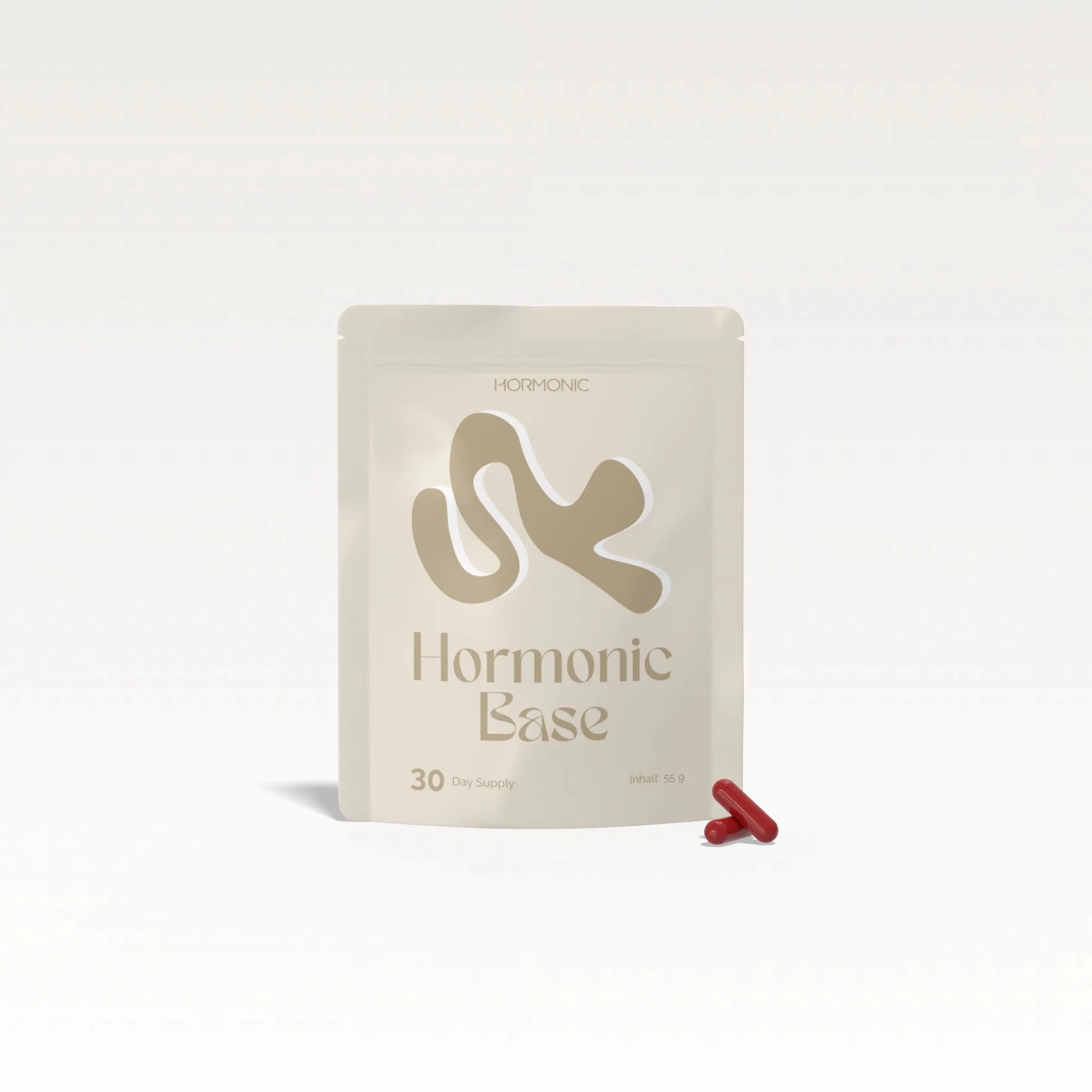
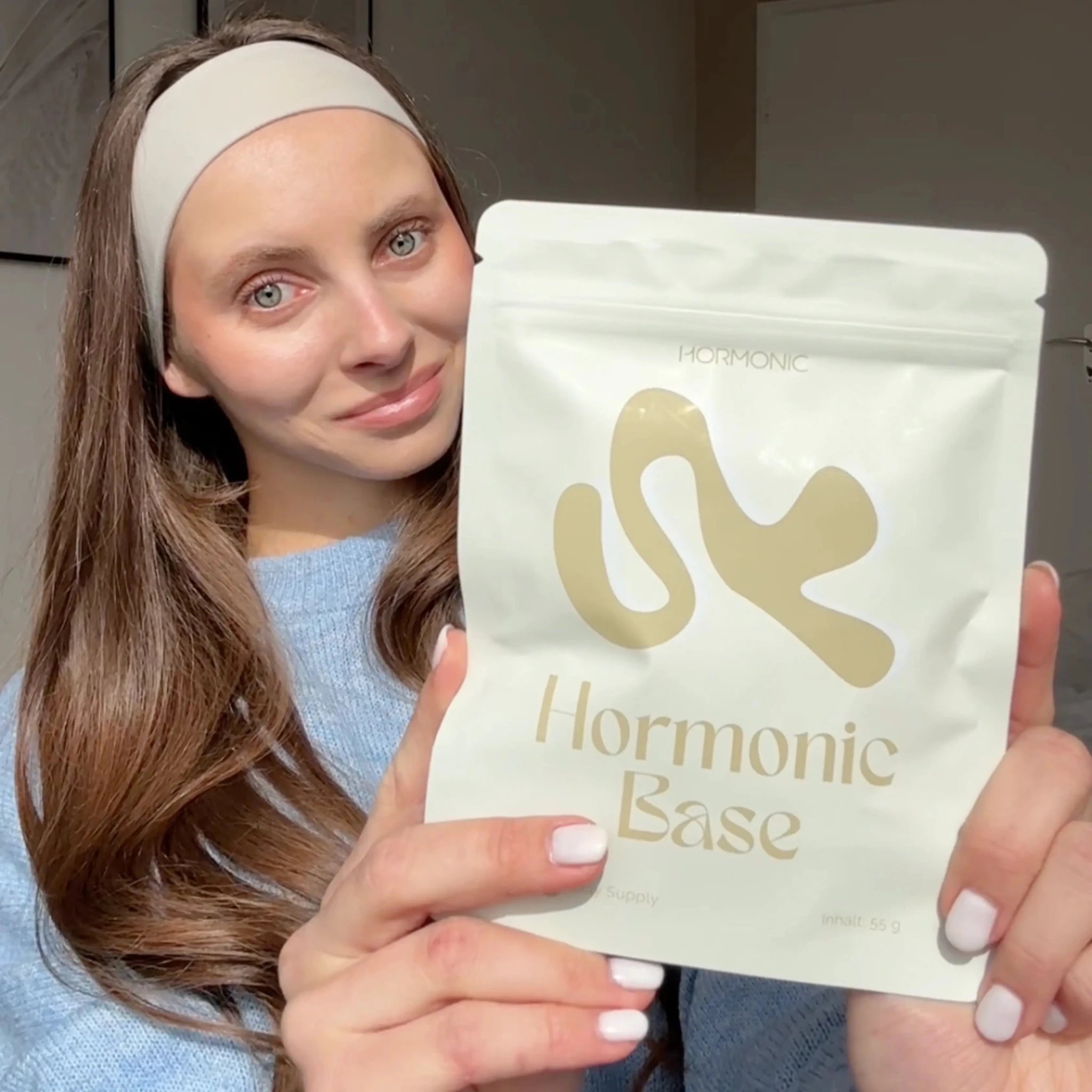
Hormonic Base - Hormonic - Nahrungsergänzungsmittel
Sale price€65,00
(5.0)
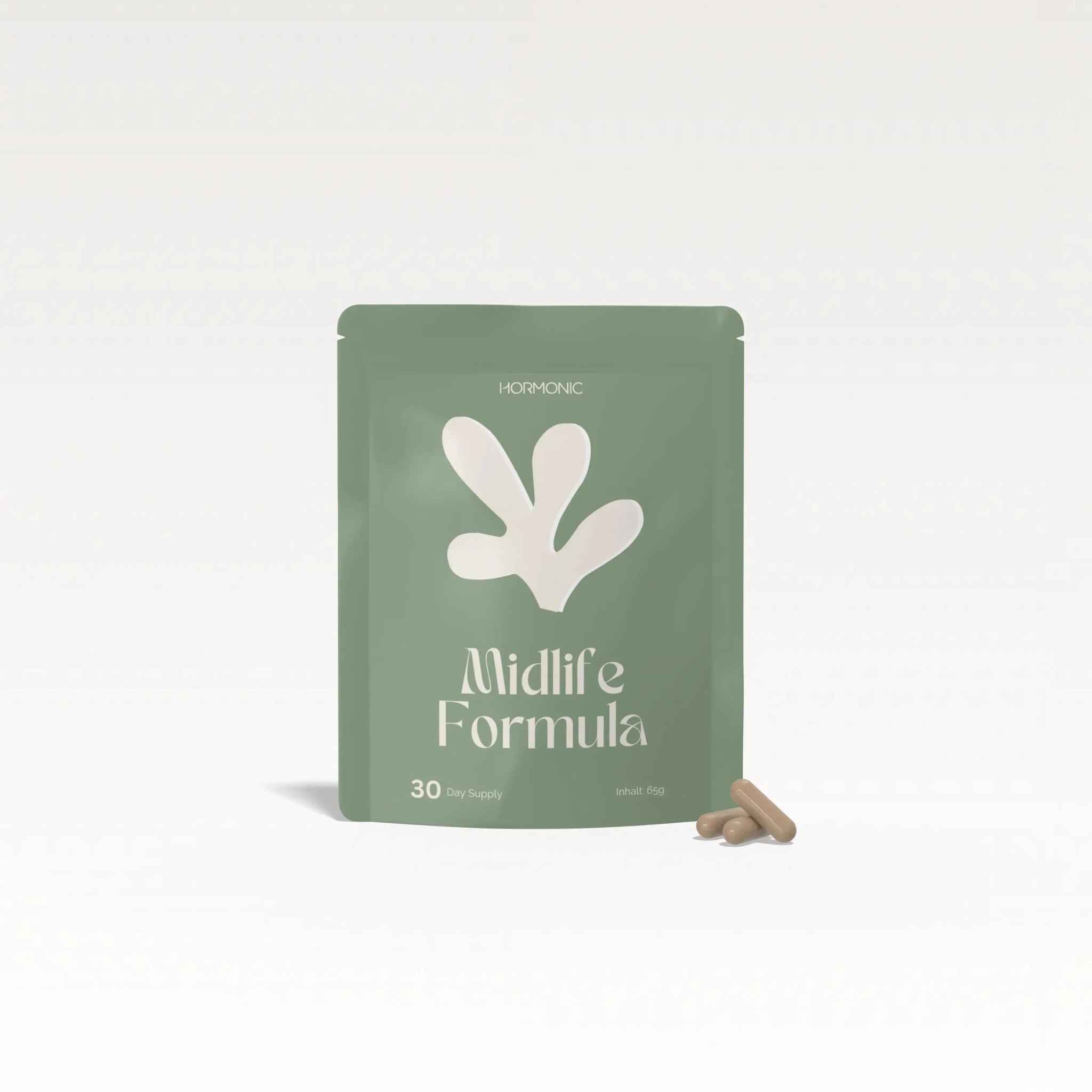
Midlife Formula - Hormonic - Nahrungsergänzungsmittel
Sale price€75,00
(5.0)
Eisenmangel bei Frauen: Symptome, Ferritin und was wirklich hilft - Hormonic
MikronährstoffeJul 25, 20267 min read

Iron Deficiency in Women: Symptoms, Ferritin, and What Really Helps

This article is part of: Micronutrients and Hormones: The Female Guide

As a doctor, I rarely see a nutrient deficiency as frequently as iron deficiency, and rarely one that is so often approached incorrectly. Many women take iron supplements based on a hunch, while others suffer from exhaustion for months without anyone checking their ferritin levels.

However, iron deficiency is easy to recognize and treat if you know the right values and avoid a few typical pitfalls. This is precisely what this is about: first understand and measure, then act specifically.

Do I have an iron deficiency?

Only a blood test can provide certainty, not symptoms alone. Typical symptoms include persistent fatigue, concentration problems, hair loss, pale skin, feeling cold, and restless legs. The most important lab value is ferritin, which reflects iron stores. It's important to distinguish: an iron deficiency can already exist when the hemoglobin (Hb) value is still normal. Only later does this develop into iron deficiency anemia, i.e., true anemia.

Ferritin (general guidance) What it means
below 15 µg/l WHO threshold: Iron deficiency in otherwise healthy individuals.
below 30 µg/l Often already considered deficient clinically, especially with symptoms.
in case of inflammation Ferritin increases; the WHO then uses a higher threshold and measures CRP.
Symptoms without testing Nonspecific, do not replace a blood test.

Why women are particularly affected

The main reason is menstruation. With each bleeding, the body loses iron, and in cases of heavy or prolonged periods (menorrhagia), this loss can exceed the intake from food. Globally, anemia is about three times more common in women of childbearing age than in men, with iron deficiency being the most common, but not the only cause (WHO).

Two other groups are at risk: pregnant women, whose iron requirements increase significantly, and women with a purely or predominantly plant-based diet. Plant-based iron is absorbed less effectively than that from meat and fish, which is why vegetarians and vegans more frequently show low ferritin levels (DGE). According to the DGE, the daily iron requirement for menstruating women is around 14 to 16 milligrams, significantly higher than that for men.

Symptoms: from fatigue to hair loss

The most well-established correlation is with fatigue. Two randomized studies showed that iron can reduce exhaustion even in women without anemia if ferritin levels are low, roughly below 50 µg/l (Verdon et al., BMJ 2003; Vaucher et al., CMAJ 2012). This is important because many women with normal Hb are told that everything is fine.

Further typical signs include restless legs (Restless Legs Syndrome), for which iron is used according to guidelines, as well as an intense craving for unusual things like ice (Pica). Regarding hair lossthe data is weaker: A low ferritin level is associated with diffuse hair loss, but a clear cause-and-effect proof is missing. Iron is a possible factor here, not a guaranteed lever.

Clarity on Your Hormones with the Diagnostics Kit

No more guesswork: With the Hormonic diagnostics kit, you can conveniently determine important hormone and metabolic values from home, evaluated by a leading medical laboratory.

View diagnostics kit

Understanding ferritin and the inflammation trap

The most common mistake is to consider ferritin in isolation. Since it increases with inflammation, a value during an infection, with obesity, or chronic inflammation can appear normal, even if the stores are empty. Therefore, a complete iron status requires not only ferritin but also transferrin saturation and the inflammatory marker CRP. This way, a true deficiency can be distinguished from a masked one.

You should see a doctor if you experience persistent fatigue, very heavy menstruation, suspected anemia, or before taking iron long-term. The latter, in particular, is more important than many think.

What helps: diet, iron supplements, when to see a doctor

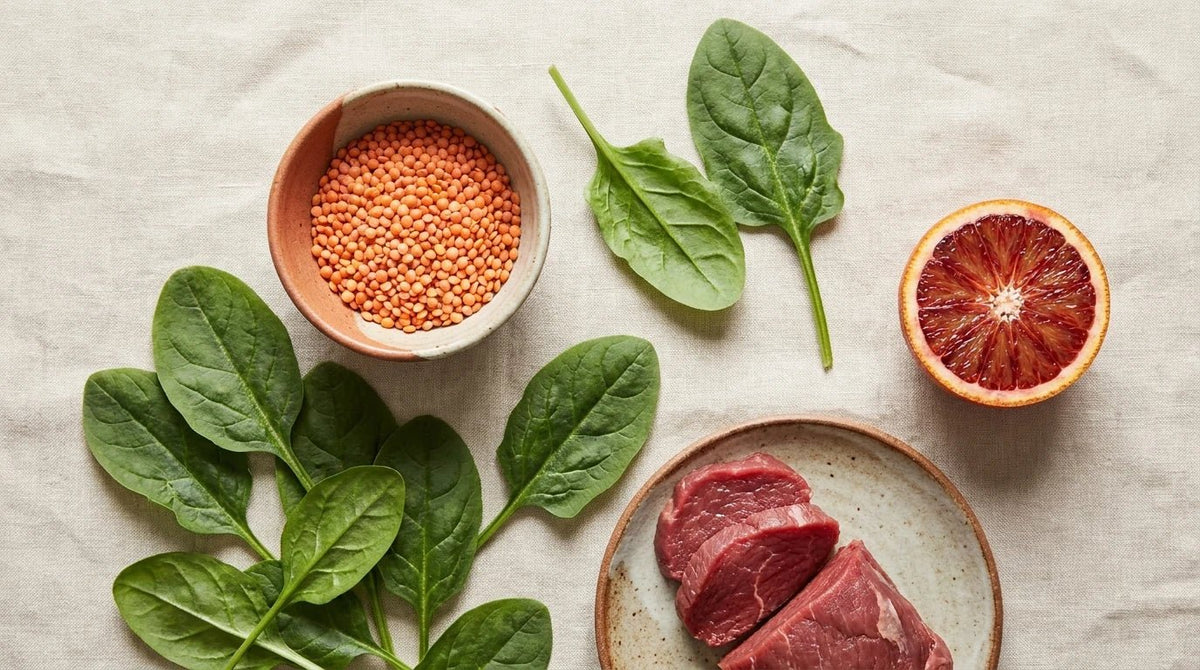
A lot can be achieved through diet. Iron from meat and fish (heme iron) is better absorbed than plant-based iron. Vitamin C significantly improves the absorption of plant-based iron, while coffee, black tea, and calcium inhibit it. A glass of orange juice with lentils is therefore more than just a cliché.

  • Targeted and correctly dosed supplements:Newer studies suggest that a single dose every other day is often better absorbed than multiple daily doses (Stoffel et al., 2017).
  • Plan for side effects:Oral iron supplements often cause gastrointestinal discomfort such as nausea and constipation, a major reason why many discontinue them (Tolkien et al., 2015).
  • Iron infusion if necessary:If tablets are not tolerated or if quick action is needed, intravenous administration is a medically supervised option.

Safety: why you shouldn't take iron blindly

Unlike water-soluble vitamins, the body has no active way to get rid of excess iron. Too much can accumulate. People with a hereditary iron storage disease (hemochromatosis) risk serious consequences for the liver, heart, and pancreas if they take iron unnecessarily. Therefore, iron should be tested, not guessed.

For this very reason, ourHormonic Basedeliberately contains no iron. A daily basic supply should be broad and safe, while iron should be dosed individually and only when a deficiency has been proven. If you want to understand your values, you can have important hormone and metabolic values determined from home with theHormonic Diagnostics Kitand analyzed by a medical laboratory.

And if you want to interpret your results, you can do so in afree initial consultationwith one of our doctors.

Unsure what your values mean?

In a free, 15-minute introductory call, one of our doctors will address your questions about iron, ferritin, and fatigue, without any obligation. Conveniently from home via video call, without waiting times.

For a free consultation

Conclusion

Iron deficiency is common in women, easily identifiable and treatable, if approached correctly. The key is the ferritin level, read in conjunction with CRP, and the knowledge that a deficiency causes symptoms even before anemia. Much can be controlled through diet; supplements work best when targeted and correctly dosed. The most important thing remains: first test, then act purposefully, instead of taking iron blindly.

Common Questions About Iron Deficiency in Women

At what ferritin level is iron deficiency indicated?

The WHO defines an iron deficiency as a ferritin level below 15 µg/l in otherwise healthy individuals. In practice, many doctors consider values below approximately 30 µg/l to be a deficiency, especially if there are corresponding symptoms. In cases of inflammation, higher thresholds apply because ferritin levels rise.

Can you have iron deficiency without anemia?

Yes. Iron deficiency can exist if the stores (ferritin) are empty, but the hemoglobin value is still normal. This is called latent iron deficiency. Studies show that iron can reduce fatigue even in women without anemia if ferritin levels are low.

Wie nimmt man Eisen am besten auf?
Über die Ernährung wird Häm-Eisen aus Fleisch und Fisch am besten aufgenommen, Vitamin C verbessert die Aufnahme von pflanzlichem Eisen, Kaffee, Tee und Kalzium hemmen sie. Bei Präparaten deuten Studien darauf hin, dass eine einzelne Dosis jeden zweiten Tag oft besser aufgenommen wird als mehrere kleine Dosen täglich.
Sollte man Eisen vorbeugend einnehmen?
Nein. Eisen sollte nicht blind vorbeugend eingenommen werden. Der Körper kann überschüssiges Eisen nicht aktiv ausscheiden, und bei einer unerkannten Eisenspeicherkrankheit drohen ernste Folgen. Sinnvoll ist, den Ferritinwert zusammen mit CRP zu bestimmen und Eisen nur bei nachgewiesenem Mangel einzunehmen.

Scientific Sources

  • World Health Organization (2020). WHO guideline on use of ferritin concentrations to assess iron status in individuals and populations. Geneva: WHO.
  • Camaschella, C. (2015). Iron-deficiency anemia. New England Journal of Medicine, 372(19), 1832-1843. doi:10.1056/NEJMra1401038
  • Verdon, F. et al. (2003). Iron supplementation for unexplained fatigue in non-anaemic women: double blind randomised placebo controlled trial. BMJ, 326(7399), 1124. doi:10.1136/bmj.326.7399.1124
  • Vaucher, P. et al. (2012). Effect of iron supplementation on fatigue in nonanemic menstruating women with low ferritin. CMAJ, 184(11), 1247-1254. doi:10.1503/cmaj.110950
  • Stoffel, N. U. et al. (2017). Iron absorption from oral iron supplements given on consecutive versus alternate days. The Lancet Haematology, 4(11), e524-e533. doi:10.1016/S2352-3026(17)30182-5
  • Tolkien, Z. et al. (2015). Ferrous sulfate supplementation causes significant gastrointestinal side-effects in adults: a systematic review and meta-analysis. PLoS ONE, 10(2), e0117383. doi:10.1371/journal.pone.0117383

About the Author

Lisa Maria Emmer

Lisa Maria Emmer

Founder · Doctor · Hormonic

Lisa Maria Emmer is a doctor and co-founder of Hormonic. She combines clinical experience with an evidence-based approach to women's health, micronutrients, and hormonal balance.

Note: This article is based on current guidelines and scientific works (as of 2026). It is for informational purposes only and does not replace professional medical advice, diagnosis, or treatment.

Share

You might also be interested in this.

Haarausfall in den Wechseljahren: Ursachen und was wirklich hilft - Hormonic
Haut & HaareJul 13, 20268 min read
Hair Loss During Menopause: Causes and What Really Helps

Why does hair thin during menopause? What you should get checked out, what really helps, and why biotin is overrated.
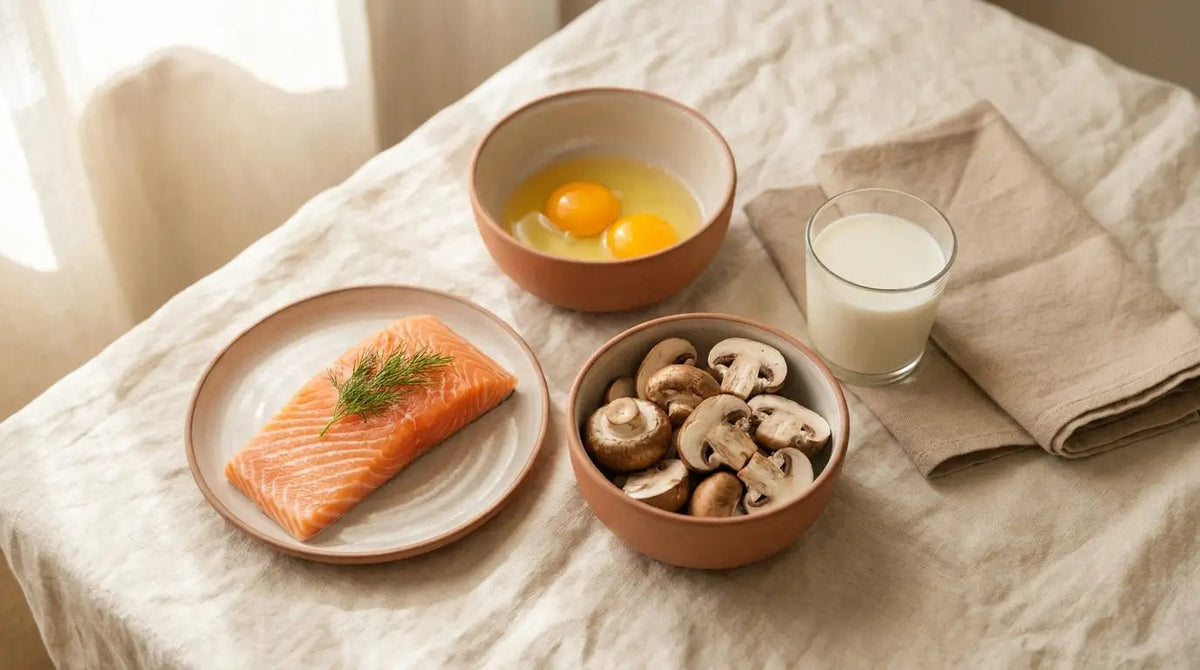
Vitamin D bei Frauen: Mangel, Symptome und Wirkung - Hormonic
MikronährstoffeJul 10, 20268 min read
Vitamin D in Women: Deficiency, Symptoms, and Effects

How do you recognize a vitamin D deficiency as a woman? Symptoms, risk groups, appropriate dosage, and when vitamin D truly helps.
Magnesiummangel bei Frauen: Symptome und was wirklich hilft - Hormonic
MikronährstoffeJun 27, 20268 min read
Magnesium Deficiency in Women: Symptoms and What Really Helps

Fatigue, PMS, poor sleep: Magnesium deficiency in women is often overlooked. Symptoms, studies, and what really helps.