Offer ends in10:00

Cart

Your cart is empty

Continue shopping

Trending searches

Featured products

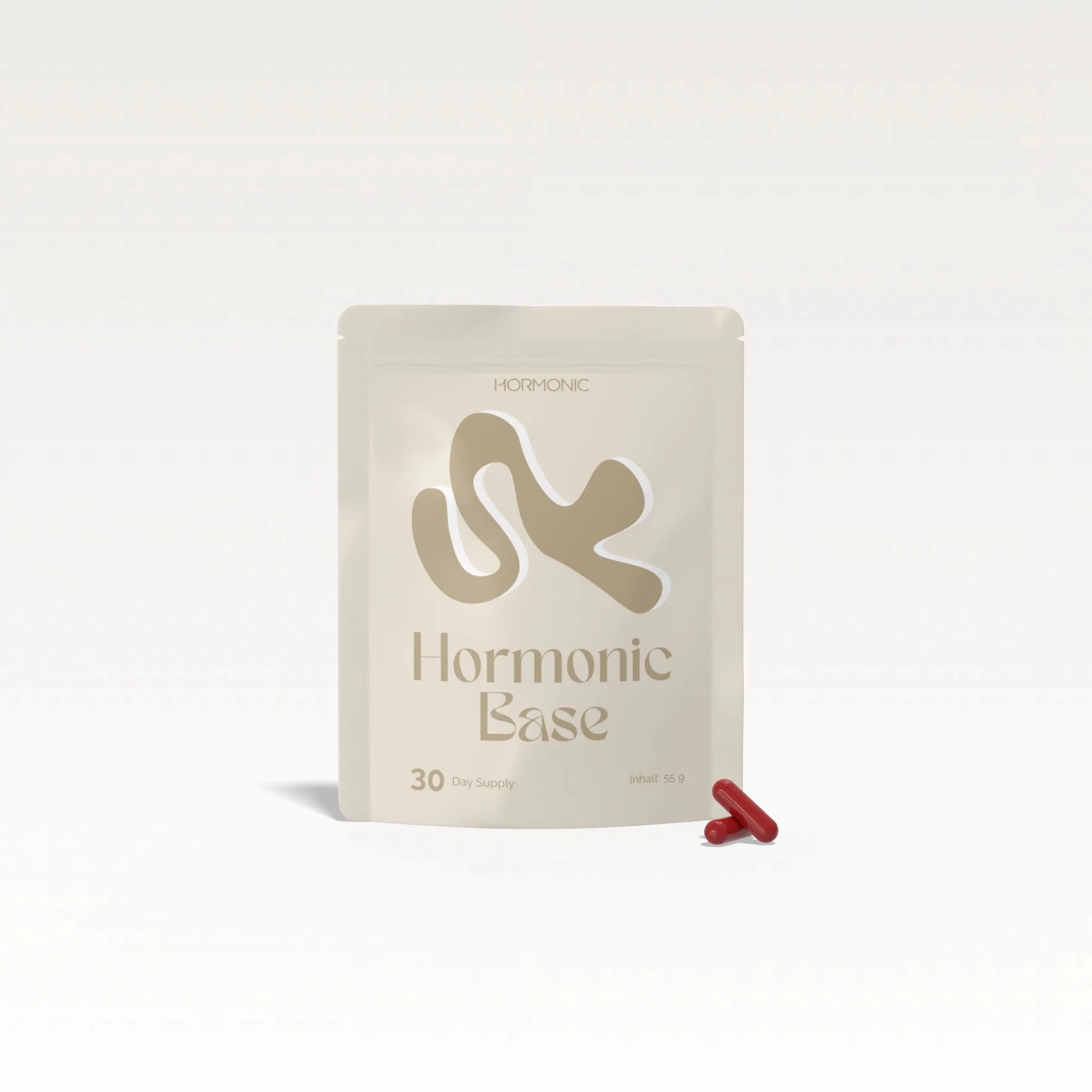
Hormonic Base - Hormonic - Nahrungsergänzungsmittel
Sale price€65,00
(5.0)
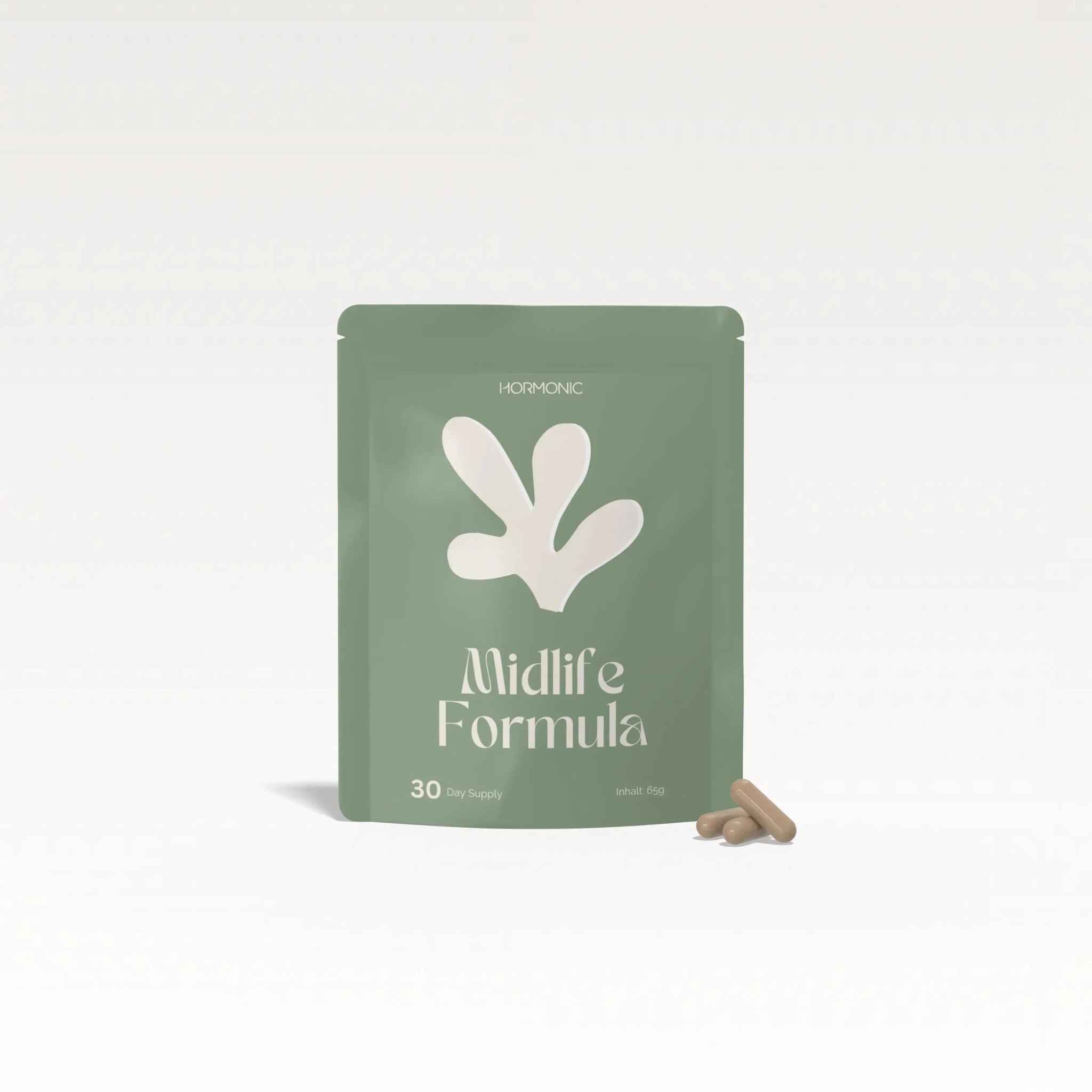
Midlife Formula - Hormonic - Nahrungsergänzungsmittel
Sale price€75,00
(5.0)
Eiweißbedarf Frau: Wie viel Protein Du am Tag brauchst
ErnährungOct 7, 20267 min read

Protein requirements for women: How much protein you need per day

When I first laid the numbers out side by side, I had to take a moment. The official recommendation for protein is 0.8 grams per kilogram of body weight, and yet research into muscles, satiety, and bone health shows that many women fare much better with a little more.

A woman's protein requirement is therefore not a rigid number; it depends on your weight, your age, and your goals. In this article, we will calculate it concretely, see how much protein you as a woman really need per day, and which sources provide the most benefit.

How much protein does a woman need per day?

The base value is 0.8 g of protein per kg of body weight; this is the guideline from the German Nutrition Society (DGE) for healthy adults. For 65 kg, that is around 52 g per day. However, for more muscle, when losing weight, and during menopause, the sensible range is higher, closer to 1.2 to 1.6 g per kg.

To get your rough guideline, simply multiply your weight in kilograms by the factor that matches your goal. The table below shows the most important scenarios and what they concretely mean for 65 kg.

Goal / Life Stage Per kg body weight Example at 65 kg Evidence
Basic requirement (DGE) 0.8 g ~52 g A (Guideline)
Active / Muscle building 1.4 to 2.0 g ~91 to 130 g A
Weight loss (maintaining muscle) 1.2 to 1.6 g ~78 to 104 g A/B
From approx. 50 / Menopause 1.0 to 1.2 g ~65 to 78 g B
Pregnancy 0.9 to 1.0 g ~59 to 65 g A (Guideline)
Breastfeeding ~1.2 g ~78 g A (Guideline)

Why many women eat too little protein

In practice, many women end up on the lower end, often without realizing it. Typical breakfasts consisting of bread, muesli, or fruit provide little protein, and those who are calorie-conscious often cut out exactly the satiating protein sources. Furthermore, the requirement tends to increase rather than decrease with every decade.

The good news: You don't have to finish a tub of protein powder to achieve this. It is enough to consciously plan a protein source with every meal and not rely solely on carbohydrates in the morning. Let's take a look at what that looks like in practice and which sources yield the most benefit.
The best protein sources for women

Whether or not your protein ends up on your plate depends on the sources. You can roughly divide them into animal and plant-based foods, and both have their place. The crucial thing is that you know how much protein is actually in them, because 100 grams of food does not equal 100 grams of protein.

Animal sources provide a lot of protein in a small portion and naturally contain all essential amino acids. 150 grams of low-fat quark provide around 18 grams of protein, two eggs about 13 grams, a 150-gram portion of chicken breast comes in at around 35 grams, and 150 grams of salmon at about 30 grams. Skyr and cottage cheese are also practical everyday staples.

Plant-based sources are just as suitable; you just need a bit more of them and need to combine them cleverly. 100 grams of cooked lentils provide around 9 grams of protein, chickpeas a similar amount, 100 grams of tofu about 12 grams, and a handful of almonds around 6 grams. In addition, there are oats, seeds, and whole-grain products, which contribute significantly throughout the day. As a bonus, plant-based sources provide fiber, which keeps you full and keeps your blood sugar more stable.

The only real difference lies in the amino acid profile. Individual plant sources often have a weaker amino acid; legumes lack some methionine, grains lack lysine. If you combine both, for example lentils with rice or beans with whole-grain bread, they complement each other to form a complete profile. A purely plant-based protein supply is therefore easily possible if you ensure variety.

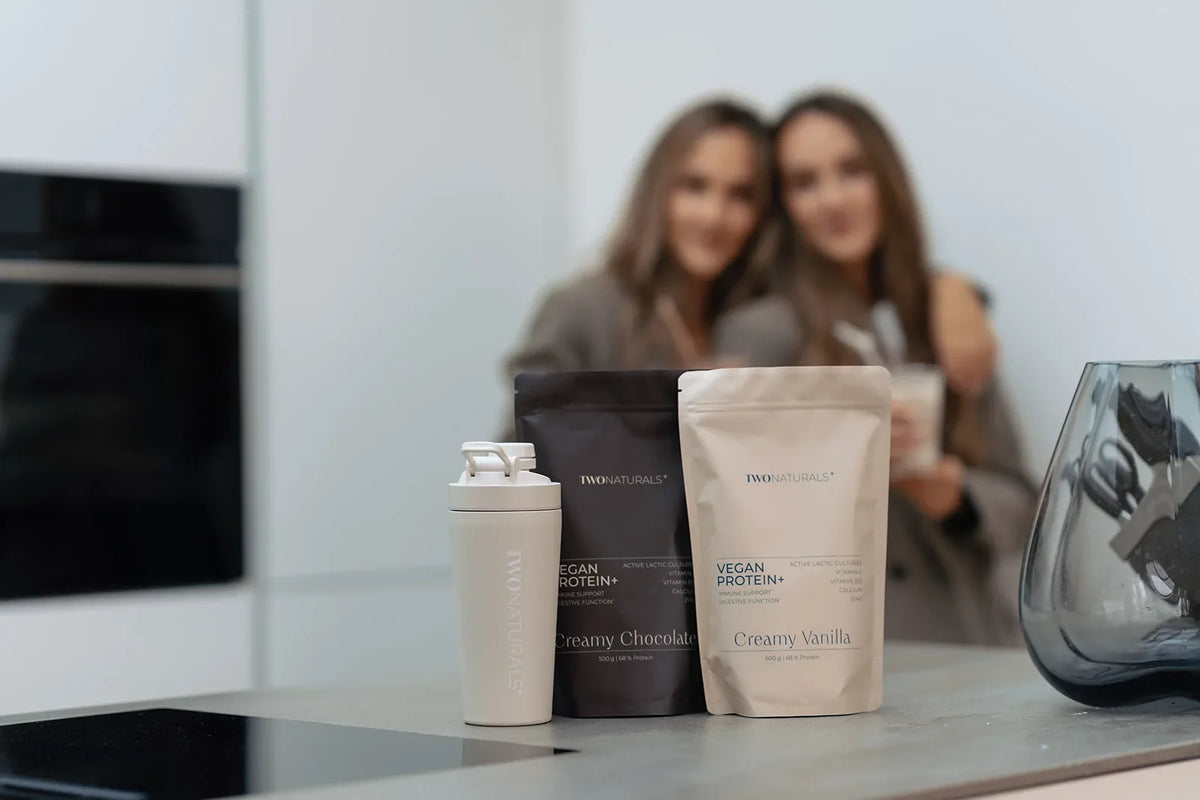
When you are in a rush, a high-quality plant-based protein powder can be a practical supplement. One example is the vegan pea-rice-almond protein from Two Naturals, which is soy-free and already combines these sources effectively. It is one option among several and does not replace a varied diet, but it can help you meet your requirements on stressful days. You can read more about how plant-based protein affects digestion and hormones in our article on plant-based protein and hormones.

Hormonic Base: the micronutrient foundation for your protein

Protein covers your protein requirements, while Hormonic Base covers the micronutrient foundation around it. The 16 ingredients provide, among other things, magnesium, vitamin B6, and folate, which contribute to the reduction of tiredness and fatigue, as well as vitamin D3 for the maintenance of normal bones. Base is not a protein powder, but the daily cornerstone to go with it. Get 20 percent off permanently with a subscription, plus free shipping; cancel anytime, with a 30-day money-back guarantee.
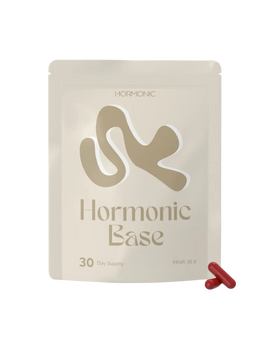
Discover Hormonic Base

Distributing protein correctly throughout the day

At least as important as the total amount is how you distribute your protein. Your body can only use a limited amount per meal specifically for the muscles; the rest is utilized, but not optimally converted into muscle mass. A good rule of thumb is about 25 to 30 grams of protein per meal, spread as evenly as possible throughout the day.

This is precisely where many women have room for improvement, especially in the morning. A typical breakfast of bread with jam or muesli with fruit provides hardly any protein, and the body starts the day with empty stores. Behind this is the so-called leucine threshold: the amino acid leucine triggers muscle protein synthesis, and it is only from a certain amount of protein per meal that this stimulus becomes strong enough. A low-protein breakfast wastes this moment.

In practice, this means: consciously bring your protein intake forward. Quark, eggs, a protein shake, or legumes in the morning often make the biggest difference because that is where the largest gap exists. Protein is also useful around training, but the exact timing is less critical than the total amount and an even distribution throughout the day.

More protein after 50 and during menopause

With age, protein requirements tend to increase rather than decrease. The reason is anabolic resistance: from about age 50, muscles become less sensitive to protein, so you need more of it to trigger the same stimulus for muscle maintenance. The international PROT-AGE group therefore recommends that older adults consume 1.0 to 1.2 grams per kilogram, which is more than younger adults (Bauer et al., 2013).

There is more to it than just aesthetics. From midlife onwards, the body loses muscle mass more quickly, and it is precisely these muscles that support metabolism, strength, and stability. Together with strength training, sufficient protein is the most effective lever to counteract this. Bones also benefit, as protein is part of the bone matrix and works there in conjunction with calcium and vitamin D. How to manage weight and muscle wisely during this phase can be read in our article on Weight loss during menopause.

Protein covers the protein requirement, but that is only one half. The other is the micronutrient foundation around it. This is exactly where Hormonic Base comes in: Vitamin D3 contributes to the maintenance of normal bones, and magnesium, vitamin B6, and folate contribute to the reduction of tiredness and fatigue. Base is not a protein powder or a weight loss supplement, but the daily foundation alongside a high-protein diet, especially when needs increase over the years.

Not sure what your body needs right now?

Your needs are different from your friend’s, depending on your cycle, life stage, and goals. In a free 15-minute initial consultation, one of our doctors will address your questions, with no obligation.

Free initial consultation

Conclusion

A woman's protein requirement is not a fixed number, but depends on weight, age, and goals. 0.8 grams per kilogram is the minimum; for building muscle, losing weight, and during menopause, 1.2 to 1.6 grams are more realistic. Calculate your specific value, distribute it into roughly 25 to 30 grams per meal, and consciously prioritize protein in the morning. Whether animal-based, plant-based, or a combination is up to you; what matters are quantity and quality. And while protein meets your protein requirements, a solid foundation of micronutrients ensures that everything else is in balance.

Frequently asked questions about women's protein requirements

How much protein does a woman need per day?

The guideline is 0.8 g of protein per kg of body weight, which for 65 kg is around 52 g per day (DGE). For building muscle, weight loss, and during menopause, the recommended range is higher, at approximately 1.2 to 1.6 g per kg. Distribute this amount over several meals.

How much protein for weight loss as a woman?

When losing weight, about 1.2 to 1.6 g of protein per kg of body weight is advisable because this amount protects muscle mass and increases satiety during a calorie deficit (Leidy et al., 2015). For 70 kg, this corresponds to approximately 84 to 112 g of protein per day.

Ist zu viel Eiweiß schädlich für Frauen?
Für gesunde Nieren gilt eine erhöhte Eiweißzufuhr im Bereich von 1,2 bis 2,0 g pro kg nach aktueller Studienlage als unbedenklich. Bei bekannter Nierenerkrankung solltest Du die Menge aber ärztlich abklären. Trinke ausreichend und setze auf Vielfalt statt extrem einseitiger Eiweißmengen.
Reicht pflanzliches Eiweiß für Frauen aus?
Ja. Pflanzliche Quellen wie Linsen, Kichererbsen, Tofu, Haferflocken und Nüsse decken den Eiweißbedarf problemlos, wenn Du sie clever kombinierst. Einzelne Quellen haben ein schwächeres Aminosäureprofil, zusammen ergänzen sie sich aber zu einem vollständigen Profil, zum Beispiel Linsen mit Reis oder Bohnen mit Vollkornbrot. Du brauchst pflanzlich nur etwas größere Portionen als bei Fleisch oder Quark.

Scientific Sources

  • German Nutrition Society (DGE). Reference values for nutrient intake: Protein. https://www.dge.de/wissenschaft/referenzwerte/protein/
  • Bauer J, Biolo G, Cederholm T, et al. (2013). Evidence-based recommendations for optimal dietary protein intake in older people: a position paper from the PROT-AGE Study Group. J Am Med Dir Assoc 14(8):542-559. doi:10.1016/j.jamda.2013.05.021
  • Leidy HJ, Clifton PM, Astrup A, et al. (2015). The role of protein in weight loss and maintenance. Am J Clin Nutr 101(6):1320S-1329S. doi:10.3945/ajcn.114.084038
  • Morton RW, Murphy KT, McKellar SR, et al. (2018). A systematic review, meta-analysis and meta-regression of the effect of protein supplementation on resistance training-induced gains in muscle mass and strength in healthy adults. Br J Sports Med 52(6):376-384. doi:10.1136/bjsports-2017-097608
  • Phillips SM, Chevalier S, Leidy HJ (2016). Protein requirements beyond the RDA: implications for optimizing health. Appl Physiol Nutr Metab 41(5):565-572. doi:10.1139/apnm-2015-0550

About the Author

Amelie Weiss

Amelie Weiss

Research Fellow, PhD · Hormonic

Amelie Weiss is a Research Fellow at Hormonic and conducts scientific research on hormonal health, micronutrients, and evidence-based women's health.

Note: This article is based on current guidelines and scientific work (as of 2026). It is for informational purposes only and does not replace medical advice, diagnosis, or treatment.

Share

You might also be interested in this.
Pflanzliches Protein und Hormone: Was die Forschung sagt - Hormonic
ErnährungMay 30, 20259 min read
Plant Protein and Hormones: What the Research Says

Plant Protein vs. Whey for PCOS & Co.: What Research Says About Muscle Building, Digestibility, and Hormones, and How Micronutrients Support Their Effects.

Künstliche Süßstoffe - So ungesund sind sie wirklich - Hormonic
ErnährungJul 21, 20248 min read
Artificial sweeteners - How unhealthy they really are

How do artificial sweeteners affect blood sugar, gut, and hormones? An honest, evidence-based overview of benefits, open questions, and alternatives.
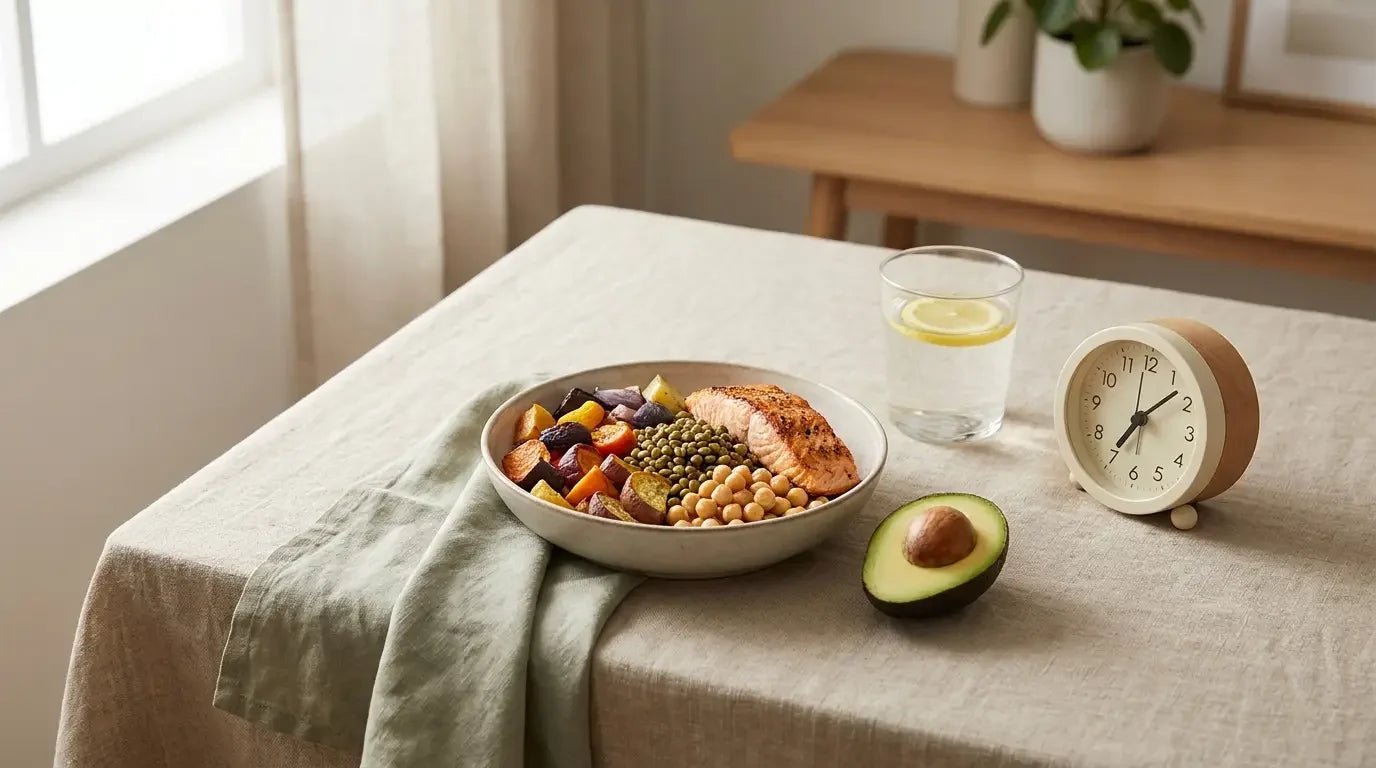
Leptin und Leptinresistenz: das Sättigungshormon verstehen - Hormonic
HormoneAug 6, 20268 min read
Leptin and Leptin Resistance: Understanding the Satiety Hormone

Leptin meldet Deinem Gehirn, dass Du satt bist. Bei Leptinresistenz kommt das Signal nicht mehr an. Wie das Sättigungshormon funktioniert und was die Sensitivität wieder verbessert.