

Offer ends in10:00

Cart

Your cart is empty

Continue shopping

Trending searches

Featured products

Hormonic Base - Hormonic - Nahrungsergänzungsmittel
Sale price€65,00
(5.0)
Midlife Formula - Hormonic - Nahrungsergänzungsmittel
Sale price€75,00
(5.0)
Endometriose-Test vorbereiten: Frau notiert ihre Beschwerden in einem Notizbuch, daneben Tee und Wärmflasche
EndometrioseOct 14, 20269 min read

Endometriosis test: What a self-test can and cannot do

This article is part of: Endometriosis: Symptoms, Causes, and What Really Helps

This is how many of our first consultations begin, or something close to it: a woman in her early thirties is holding a printed online test. “It says likely endometriosis. Now what?” Since she was a teenager, she had two days every month when she could barely get out of bed. Until then, everyone had told her the same thing: that’s just how it is.

This scene shows exactly what an endometriosis test is really about. The result on the paper was not the valuable part. What mattered was that, for the first time, she had her symptoms sorted out in front of her. That is exactly what this article is for: an honest look at what a self-test can do, what it cannot do, and how you can turn it into a good doctor’s appointment.

What can an endometriosis test do?

An endometriosis test in the form of a questionnaire can strengthen or weaken a suspicion, but it cannot make a diagnosis. It translates your experiences into the language doctors work with, and that is exactly where its value lies.

The data shows why. In a large British analysis of GP records (5,540 women with endometriosis, around 22,000 without), women with endometriosis had experienced severe period pain (odds ratio 8.1), pain or bleeding during or after sex (6.8) or unsuccessful attempts to conceive (8.2) much more often before their diagnosis than women without endometriosis (Ballard et al., 2008). The odds ratio roughly describes how much more often a feature occurs in one group than in another.

It gets interesting when you compare only women who already have pelvic pain. Then the difference shrinks: in a meta-analysis of 250,574 participants, individual symptoms reached a diagnostic odds ratio of only about 2 to 2.6 (Bainton et al., 2023). In plain terms: your symptoms are a signal to take seriously, but they do not cleanly separate endometriosis from other causes. Only an examination can do that.

Even well-designed questionnaires reach their limits here. The best-tested score so far, developed in Paris, reached a C-index of 0.81 in 2,527 women who had surgery, which means good but not definitive accuracy (Chapron et al., 2022). The European guideline states that there is no evidence that questionnaires or apps shorten the time to diagnosis. They can, however, help make pain visible (ESHRE, 2022).

Endometriosis self-test: 12 questions for your appointment

These 12 questions cover the key symptoms that, according to the German S2k guideline, should be asked about when endometriosis is suspected, plus points that often appeared in studies before diagnosis. Answer each one with yes or no and bring your answers to your appointment. There is deliberately no score and no result.

No. Your question Why it matters
1 Is your period pain so severe that you have to lie down or cancel plans? Severe period pain is a key symptom (S2k 2025)
2 Do you miss school, university or work because of your period? Missed days are considered a risk factor for chronic pain
3 Are regular painkillers not enough, or do you need them every cycle? At one German center, 66 to 79% took painkillers regularly
4 Do you have deep pain during or after sex? Pain during sex (dyspareunia) is a key symptom
5 Do bowel movements hurt, especially during your period? Painful bowel movements (dyschezia) are relatively specific
6 Does it burn or hurt to urinate during your period? Painful urination (dysuria) is a key symptom
7 Do you get diarrhea, constipation or bloating that follows your cycle? Cycle-related bowel symptoms are common
8 Have you had lower abdominal pain for more than 6 months, including outside your period? Chronic pelvic pain is typical
9 Have you been trying to conceive for more than 12 months without success? Difficulty conceiving is a key symptom
10 Does your mother or sister have endometriosis? The most specific single clue
11 Is your bleeding very heavy or long? Heavy bleeding was more common before diagnosis
12 Have you had these symptoms since your teens? Early onset is linked to a long diagnostic delay

How to read your answers: the more questions you answer with yes, the more important an appointment is. But even a single yes for severe pain is reason enough. And the other way around: answering no to every question does not mean endometriosis is ruled out. By the way, how severe your symptoms are says little about the extent of the disease. In an analysis from Jena, symptoms were not linked to the stage (Nicolaus et al., 2020).

A self-test does not give you a diagnosis. It gives you something better for right now: the right words for your appointment.
Is there a blood test for endometriosis?

No, there is currently no blood test that can reliably detect endometriosis. The 2025 German S2k guideline explicitly states that biomarkers are not suitable for diagnosis (Burghaus et al., 2026), and the European guideline strongly advises against using them for this purpose.

The best-known marker is CA-125, a protein that can rise when the peritoneum is inflamed. A Cochrane review examined 122 biomarkers from 141 studies involving 15,141 women. At the standard cut-off of 35 U/ml, CA-125 detected only about 40% of endometriosis cases (Nisenblat et al., 2016). The level also rises during your period, with fibroids and with other types of inflammation. So a normal result rules nothing out, and an elevated one proves nothing.

According to the guideline, other blood markers are not suitable for diagnosis either. How the diagnostic workup works instead, and what role blood tests play in the overall picture, is explained in our article on endometriosis diagnosis.

How useful is the saliva test for endometriosis?

The saliva test is the most interesting new approach, but it is not yet standard and does not replace a medical evaluation. It measures a pattern of small RNA molecules in saliva, known as microRNAs, which regulate gene activity.

The figures from France are impressive: in a validation study of 971 women with symptoms at 17 centers, the test identified 97.3% of endometriosis cases and was correct for 94.1% of women without endometriosis (Bendifallah et al., 2025). But context matters: the research team is closely linked to the manufacturer, and 77% of the women studied actually had endometriosis. In a group where the condition is less common, more of the positive results would be false, and whether the test performs as well in women with milder symptoms has not been studied. Whether the test leads to better decisions in everyday practice has not yet been shown.

In Germany, the test is a self-pay service costing around 800 euros. The Endometriosis Association Germany (Endometriose-Vereinigung Deutschland) points out that the German Endometriosis Working Group (Arbeitsgemeinschaft Endometriose) does not currently recommend it for routine use. There is no home test you can order that detects endometriosis. What is offered online as a test are questionnaires like the one above.

Why does diagnosis take so long?

Because period pain has long been considered normal, and the symptoms resemble many other conditions. In a study from Germany and Austria, it took an average of 10.4 years from the first symptoms to diagnosis, and 74% of the women had received at least one misdiagnosis along the way (Hudelist et al., 2012).

More recent German data is somewhat better, but still not good: in the EndoCost project, the delay averaged 7 years (median 5 years), and women whose symptoms had started in their teens waited the longest (Brandes et al., 2022). Whether a self-test shortens the time to diagnosis has not been proven. The more specifically you describe your pain, with numbers, days and the impact on your daily life, the better it can be assessed at your appointment.

Hormonic Base: Your foundation while you seek answers

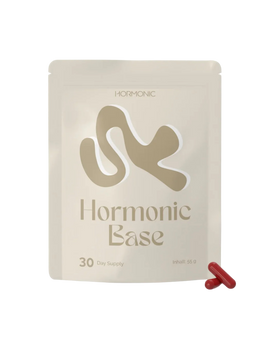
It often takes a while before you get answers. Hormonic Base combines 16 micronutrients, including zinc and selenium, which contribute to the protection of cells from oxidative stress, and a magnesium complex of bisglycinate, malate and citrate, which contributes to normal muscle function. A daily foundation alongside your medical evaluation, not a replacement for it.
Discover Hormonic Base

How do you prepare for your appointment?

The best preparation is a symptom diary kept over two to three cycles, plus your answers from the self-test. This supports the structured pain history that the guideline calls for.

Each day, note your pain on a scale from 0 to 10, when it occurs and what triggers it: your period, sex, bowel movements, urination. Write down which painkillers you take, at what dose and how well they work. Note how many days you had to cancel plans. Numbers like these turn “I have bad period pain” into a picture your doctor can work with.

Also think ahead about whether you are trying to conceive or hoping to, because this affects which tests and treatments are an option. And bring two or three specific questions with you, for example:

  • What could be causing my symptoms?
  • Would an ultrasound by an examiner experienced in endometriosis make sense?
  • At what point would a referral to a specialized facility make sense?

When does an endometriosis center make sense?

A specialized center makes sense above all if your symptoms continue despite treatment. The S2k guideline recommends that women be reassessed at a facility specializing in endometriosis after two unsuccessful hormone therapies (Burghaus et al., 2026).

In Germany, the Endometriosis Research Foundation (Stiftung Endometriose-Forschung), together with the European Endometriosis League, certifies practices, clinics and centers at several levels. You can find the list on the website of the Endometriosis Research Foundation. You are allowed to actively ask your gynecologist for a referral. That is not a sign of mistrust, it is part of good care.

What you can do yourself until your appointment

Until you are seen, exercise and nutrition are the main things you can work on. Neither replaces a diagnosis, but both are recommended in the guideline.

The S2k guideline recommends regular physical activity at any intensity, such as endurance training, yoga or stretching, to ease period pain (Burghaus et al., 2026). For nutrition, it advises a healthy diet rich in vitamins and fiber and advises against special diets without a medical reason. What this means in practice is summarized in our article on nutrition for endometriosis.

Many women also look at micronutrients during this time. Honesty helps here: micronutrients can complement a balanced diet, and independently of endometriosis, the following applies: zinc and selenium contribute to the protection of cells from oxidative stress, and magnesium contributes to normal muscle function. A meta-analysis of 13 small studies found less pelvic pain in endometriosis with antioxidant vitamins, but the quality of the data is limited, and vitamin D alone showed no significant effect (Zheng et al., 2023). NAC was studied in an Italian observational study of 120 women who reported less period pain after three months, although there was no control group (Anastasi et al., 2023). For curcumin, there are so far only very small studies with conflicting results. Which nutrients have been studied best is covered in our overview of the best supplements for endometriosis. Supplements are a foundation, not a treatment.

Sleep, stress and warmth: the underestimated part

Pain disrupts sleep, and poor sleep makes you more sensitive to pain. According to a meta-analysis, around 70% of women with endometriosis sleep poorly (Zhang et al., 2024), and in experimental studies, sleep deprivation lowered the pain threshold (Chang et al., 2022). So track your sleep in your symptom diary too. Psychological and mindfulness-based programs reduced pain during sex and pelvic pain in randomized studies, but the evidence is still weak (del Pino-Sedeño et al., 2024). And one simple tool for bad days: in a large survey of women with endometriosis, heat was the most commonly used strategy (Armour et al., 2019).

When you should not wait for your appointment

Sudden, very severe pelvic pain, fever together with abdominal pain, circulation problems such as feeling faint, unusually heavy bleeding or severe pelvic pain when you might be pregnant need to be checked by a doctor right away, at a practice or in the emergency room.

If you would like to organize your questions for your next doctor’s appointment, you can do that in a free initial consultation. Medical questions about your symptoms are for your gynecologist to answer.

If you would like to talk in more depth, you can go through your symptom diary with our medical team in our doctor-led video hormone consultation and look at sleep, stress, nutrition and micronutrients together. We do not make a diagnosis there; ultrasound and examination stay with your gynecologist.

At a glance

  • Fill out the self-test and keep a symptom diary for two to three cycles.
  • Do not expect a diagnosis from blood, saliva or online tests.
  • Ask about a specialized facility if your symptoms continue despite treatment.

Want to sort out your symptoms before your appointment?

In the free 15-minute initial consultation, we look at your answers and notes together, put your cycle and micronutrients into context, and work out which questions to take to your gynecologist. We do not make a diagnosis in this call; that belongs in an in-person examination.

Book your free initial consultation

Conclusion

There is no endometriosis test that can tell you at home whether you have endometriosis, and blood and saliva tests are not yet part of standard diagnostics in Germany either. What does exist is something less spectacular yet very effective: your symptoms, clearly categorized and supported by data.

Use the 12 questions and your symptom diary as a basis for discussion, not as a verdict. Take severe pain seriously, even if you have been told for years that it is normal, and ask for a referral to a specialized facility if you are not getting anywhere. You can find an overview of causes and treatment options in our Endometriosis Guide.

Frequently Asked Questions about the Endometriosis Test

How do I test if I have endometriosis?

You cannot test yourself for endometriosis. A questionnaire like the self-test in this article will help you organize your symptoms and prepare for your appointment. The diagnostic process begins at the gynecologist's office with a detailed consultation, a physical examination, and a transvaginal ultrasound.

Can a gynecologist see if you have endometriosis?

Partially. Ovarian cysts, so-called chocolate cysts, and deeper lesions can often be clearly identified via ultrasound, especially with an experienced examiner. However, small lesions on the peritoneum are frequently invisible on ultrasound, which is why a normal finding does not definitively rule out endometriosis.

How much does an endometriosis test at the gynecologist cost?
A medical evaluation of your symptoms, meaning a consultation, examination and ultrasound, is usually covered by statutory health insurance in Germany; if in doubt, ask your practice. The saliva test, on the other hand, is a self-pay service costing around 800 euros and is not currently recommended for routine use. Online self-tests are usually free but do not provide a diagnosis.
What are the first signs of endometriosis?
Typical signs include severe period pain that limits your daily life; pain during sex, or pain with bowel movements or urination during your period; pelvic pain outside your period; and difficulty conceiving. Many women have had these symptoms since their teens. If you recognize them in yourself, have them checked by a doctor.

Scientific Sources

  • Burghaus S, Schäfer SD, Ulrich UA, et al. (2026). Diagnosis and Therapy of Endometriosis. Guideline of the DGGG, OEGGG and SGGG (S2k-Level, AWMF Registry No. 015/045, April 2025). Geburtshilfe und Frauenheilkunde 86(2):133-188. doi:10.1055/a-2760-4867
  • DGGG, OEGGG, SGGG (2025). S2k Guideline: Diagnosis and Therapy of Endometriosis. AWMF Registry No. 015/045, Version 5.1. register.awmf.org/de/leitlinien/detail/015-045
  • Becker CM, Bokor A, Heikinheimo O, et al. (2022). ESHRE guideline: endometriosis. Human Reproduction Open 2022(2):hoac009. doi:10.1093/hropen/hoac009
  • Bainton T, Jeyapala S, Zamora J, Khan KS, Raza A (2023). Diagnosis of pelvic endometriosis: a systematic review and accuracy meta-analysis of non-invasive tests available in primary care. F1000Research 12:453. doi:10.12688/f1000research.131729.1
  • Chapron C, Lafay-Pillet MC, Santulli P, et al. (2022). A new validated screening method for endometriosis diagnosis based on patient questionnaires. eClinicalMedicine 44:101263. doi:10.1016/j.eclinm.2021.101263
  • Nisenblat V, Bossuyt PMM, Shaikh R, et al. (2016). Blood biomarkers for the non-invasive diagnosis of endometriosis. Cochrane Database of Systematic Reviews (5):CD012179. doi:10.1002/14651858.CD012179
  • Bendifallah S, Roman H, Suisse S, et al. (2025). Validation of a saliva micro-RNA signature for endometriosis. NEJM Evidence 4(11). doi:10.1056/EVIDoa2400195
  • Nicolaus K, Reckenbeil L, Bräuer D, et al. (2020). Cycle-related diarrhea and dysmenorrhea are independent predictors of peritoneal endometriosis. Geburtshilfe und Frauenheilkunde 80(3):307-315. doi:10.1055/a-1033-9588
  • Brandes I, Kleine-Budde K, Heinze N, et al. (2022). Cross-sectional study for derivation of a cut-off value for identification of an early versus delayed diagnosis of endometriosis. BMC Women's Health 22:521. doi:10.1186/s12905-022-02044-x
  • Zheng SH, Chen XX, Chen Y, et al. (2023). Antioxidant vitamins supplementation reduce endometriosis related pelvic pain in humans: a systematic review and meta-analysis. Reproductive Biology and Endocrinology 21:79. doi:10.1186/s12958-023-01126-1
  • Hudelist G, Fritzer N, Thomas A, et al. (2012). Diagnostic delay for endometriosis in Austria and Germany: causes and possible consequences. Human Reproduction 27(12):3412-3416. doi:10.1093/humrep/des316
  • Ballard KD, Seaman HE, de Vries CS, Wright JT (2008). Can symptomatology help in the diagnosis of endometriosis? Findings from a national case-control study, Part 1. BJOG 115(11):1382-1391. doi:10.1111/j.1471-0528.2008.01878.x
  • Endometriosis Association Germany (2025). Detecting endometriosis via blood or saliva test: How reliable are new diagnostic methods? endometriose-vereinigung.de
  • Foundation for Endometriosis Research. Certification of endometriosis centers. endometriose-sef.de/zertifizierung
  • World Health Organization (2025). Endometriosis. Fact sheet. who.int/news-room/fact-sheets/detail/endometriosis
  • Zhang Y, Liu H, Feng C, et al. (2024). Prevalence of sleep disturbances in endometriosis patients: a systematic review and meta-analysis. Frontiers in Psychiatry 15:1405320. doi:10.3389/fpsyt.2024.1405320
  • Chang JR, Fu SN, Li X, et al. (2022). The differential effects of sleep deprivation on pain perception in individuals with or without chronic pain: a systematic review and meta-analysis. Sleep Medicine Reviews 66:101695. doi:10.1016/j.smrv.2022.101695
  • del Pino-Sedeño T, Cabrera-Maroto M, Abrante-Luis A, et al. (2024). Effectiveness of psychological interventions in endometriosis: a systematic review with meta-analysis. Frontiers in Psychology 15:1457842. doi:10.3389/fpsyg.2024.1457842
  • Armour M, Sinclair J, Chalmers KJ, et al. (2019). Self-management strategies amongst Australian women with endometriosis: a national online survey. BMC Complementary and Alternative Medicine 19:17. doi:10.1186/s12906-019-2431-x
  • Anastasi E, Scaramuzzino S, Viscardi MF, et al. (2023). Efficacy of N-Acetylcysteine on Endometriosis-Related Pain, Size Reduction of Ovarian Endometriomas, and Fertility Outcomes. International Journal of Environmental Research and Public Health 20(6):4686. doi:10.3390/ijerph20064686

About the Author
Lisa Maria Emmer

Lisa Maria Emmer

Founder · Physician · Hormonic

Lisa Maria Emmer is co-founder and medical director at Hormonic. She supports women with hormonal problems every day and specializes in cycle health, PCOS, and menopause.

Note: This article is based on current guidelines and scientific work (as of 2026). It is for informational purposes only and does not replace medical advice, diagnosis, or treatment.

Share

You might also be interested in this.

Endometriose-Diagnose: Symptome, Ablauf und Blutwerte - Hormonic
DiagnostikJun 4, 20268 min read
Endometriosis Diagnosis: Symptoms, Process, and Blood Values

How endometriosis is diagnosed: typical warning signs, the process according to the new 2025 guideline, and what blood and hormone values really say.

Ernährung bei Endometriose: Was wirklich hilft - Hormonic
EndometrioseJun 3, 20268 min read
Nutrition for Endometriosis: What Really Helps

Anti-inflammatory diet for endometriosis: What omega-3, Mediterranean diet, and co. can achieve according to research, and where the evidence reaches its limits.

Erholung nach der Bauchspiegelung bei Endometriose: Frau ruht mit Decke auf dem Sofa, Hand auf dem Bauch
EndometrioseOct 14, 202613 min read
Laparoscopy for endometriosis: procedure, recovery, and risks

Have a laparoscopy for endometriosis coming up? Here you will learn step by step what happens before, during, and after the procedure, how long recovery takes, and what happens with the findings.