


Lowering estrogen is the wrong question for most women. It is rare for a single value to be too high. Usually, it is a matter of the ratio of estrogen to progesterone and ensuring excess estrogen is properly excreted. During menopause, actively lowering it would actually be harmful.
In a nutshell
- For most women, it is not about having too much estrogen, but about the balance with progesterone and proper excretion.
- The best-proven methods are consuming less alcohol, getting enough fiber, and, in cases of being overweight, weight loss and physical activity.
- Cruciferous vegetables, flaxseeds, and zinc are overestimated: they provide support, but do not lower estrogen like a medication.
- In perimenopause, estrogen falls anyway; active lowering would be harmful here.
- Heavy or unusual bleeding and any bleeding after menopause should always be medically investigated.
Recently, I came across a video on social media that promised to "detox" estrogen with three foods. It had millions of views, sounded convincing, and was largely simply wrong. As someone who talks to many women about their hormones, I see almost daily how much uncertainty such clips cause. So, I took a look at what can actually be proven.
The result is more honest than it is click-worthy, but significantly more helpful: a few key levers truly work, most of the hype around it is overestimated, and sometimes lowering estrogen is even the wrong approach. Let's take a look at what research actually says.
Did you know?
During perimenopause, your estrogen fluctuates enormously and is often too low rather than too high. Anyone trying to actively lower estrogen during this phase risks more menopausal symptoms and poorer bone health. In the case of estrogen, "less" is therefore not automatically better.
Should you even be lowering your estrogen?
This question comes before any advice. A high estrogen level is not a diagnosis you can determine based on how you feel, and a single blood test says little because estrogen fluctuates significantly during the cycle. Thinking about lowering it is only useful if a doctor has diagnosed a genuine excess of estrogen compared to progesterone. In most other cases, it is more about balance and excretion than about a hard reduction.
If you want to make changes to your diet, this simple overview will help you understand what really matters.
| More of this | Less of this |
|---|---|
| Fiber: vegetables, whole grains, legumes, flaxseeds | Alcohol, which measurably raises estrogen |
| Plant variety for a healthy gut | High amounts of sugar and highly processed foods |
| Physical activity, especially if overweight | Highly heated plastic for food |
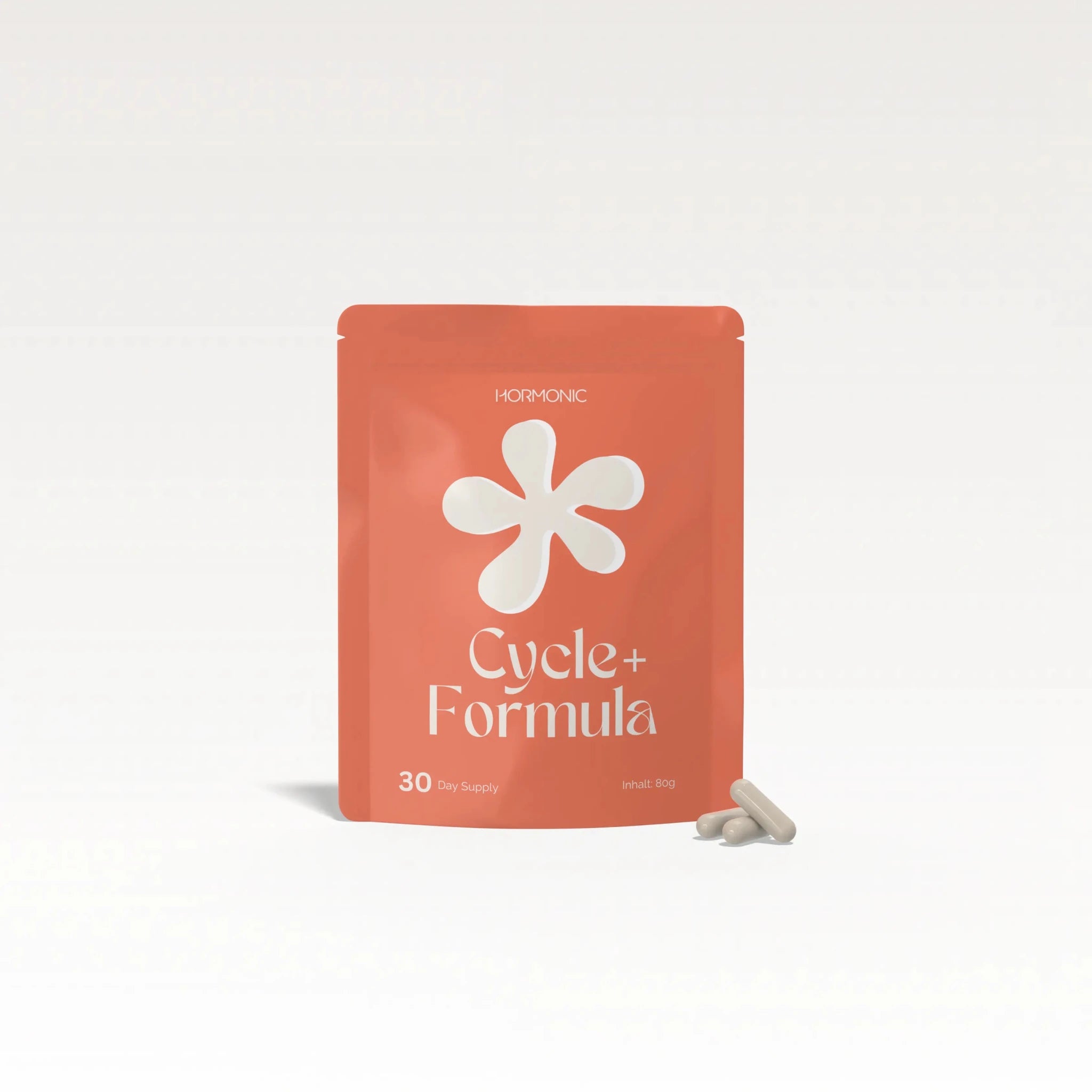
Cycle+ Formula for your Hormone Balance
This medically developed supplement combines 8 clinically backed active ingredients for your cycle, including zinc, which contributes to hormonal balance and the protection of cells from oxidative stress, as well as myo- and D-chiro-inositol and polyphenols such as quercetin and resveratrol.
Are you unsure if it's your estrogen?
Then it's time to test your hormones. With the Hormonic diagnostic kit, you can do this conveniently from home, without any waiting times. Medically supervised for women who want to know what's going on.
Frequently asked questions about lowering estrogen
Can estrogen be lowered naturally?
Which foods lower estrogen?
Sollte man in den Wechseljahren Östrogen senken?
Wann sollte ich mit erhöhtem Östrogen zur Ärztin?
Scientific Sources
- Baker, J. M. et al. (2023). Estrogen-gut microbiome axis: physiological and clinical implications. Gut Microbes. doi:10.1080/19490976.2023.2236749
- Rose, D. P. et al. (1991). High-fiber diet reduces serum estrogen concentrations in premenopausal women. The American Journal of Clinical Nutrition. PMID:1652197
- Tin Tin, S. et al. (2024). Alcohol intake and endogenous sex hormones in women: a meta-analysis of cohort studies and Mendelian randomization. Cancer. doi:10.1002/cncr.35391
- McTiernan, A. et al. (2004). Effect of exercise on serum estrogens in postmenopausal women: a 12-month randomized clinical trial. Cancer Research. PMID:15087413
- Thomson, C. A. et al. (2017). Chemopreventive properties of 3,3'-diindolylmethane in breast cancer: evidence from experimental and human studies. Nutrition Reviews. doi:10.1093/nutrit/nux012
- Nasiadek, M. et al. (2020). The role of zinc in selected female reproductive system disorders. Nutrients. doi:10.3390/nu12082464
- Darbre, P. D. (2020). Chemical components of plastics as endocrine disruptors: overview and commentary. Birth Defects Research. doi:10.1002/bdr2.1778
About the Author

You might also be interested in this.

Estrogen Dominance and Progesterone Deficiency Explained: how to recognize the symptoms, what causes them, and what studies show truly helps.

You can't directly increase progesterone because it only forms after ovulation. What truly supports your ovulation and luteal phase, honestly explained.

Luteal phase deficiency explained: how to recognise the symptoms, what causes it, and what truly helps with fertility issues and cycle irregularities.