



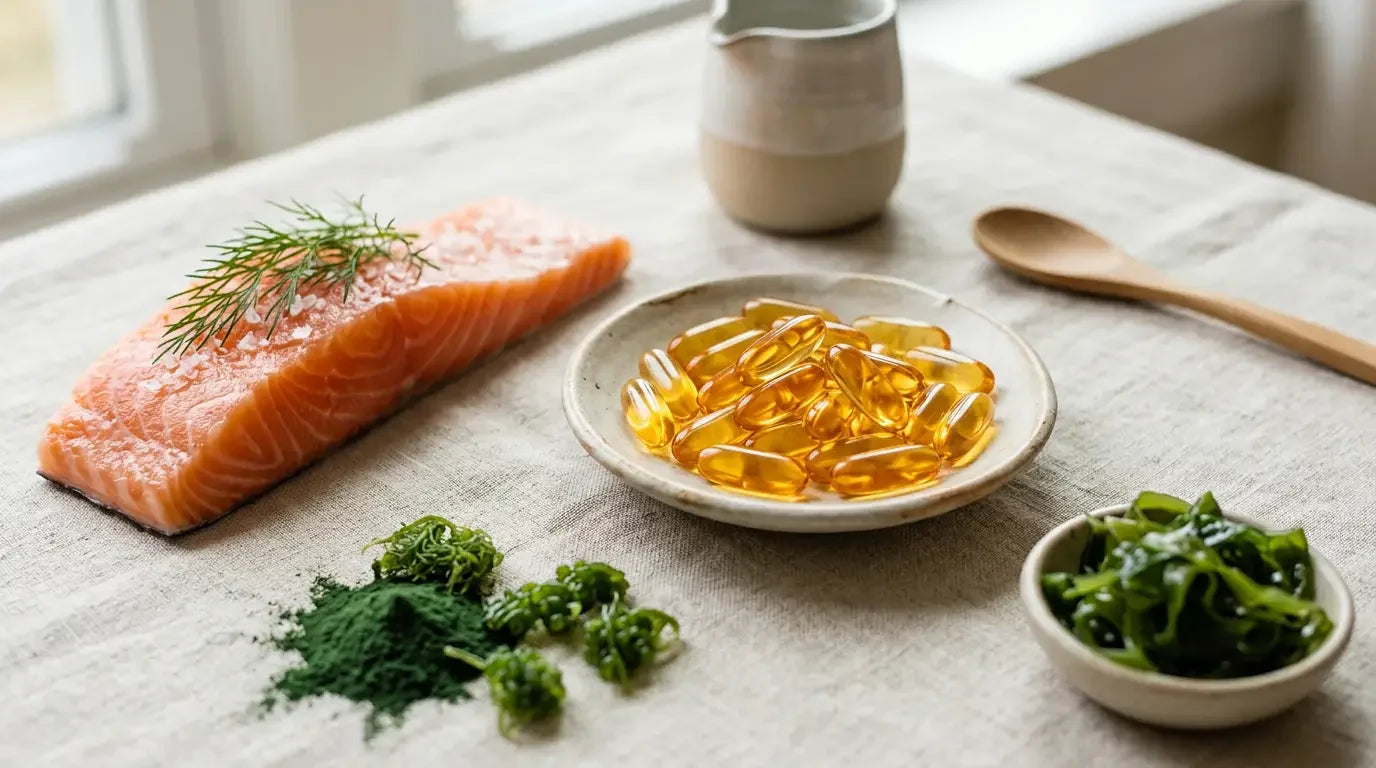
As a doctor, I am often asked about omega-3 when it comes to fertility, and for good reason: hardly any other nutrient has been so well researched when it comes to cycle, fertility, and pregnancy. The important thing is to separate proven facts from hopes.
That's why I honestly classify here what omega-3 can really do for fertility, what is recognized for pregnancy and the baby, and how best to get it and how much.
Does omega-3 help with fertility?
The role of DHA in pregnancy is recognized and most strongly supported: the mother's intake contributes to the normal development of the child's brain and eyes. The situation regarding becoming pregnant is promising but should be interpreted with caution: In observational studies, women with a good omega-3 supply had a higher chance of becoming pregnant per cycle. These are correlations, not proofs. Overall, omega-3 is a useful building block, but not a guarantee.
| Area | What studies show |
|---|---|
| Baby (DHA) | Recognized: Mother's DHA supports the child's brain and eyes. |
| Becoming pregnant | Observational studies: higher chance per cycle, no proof. |
| Pregnancy | Lower risk of premature birth in a large evaluation. |
| Quantity | 250 to 500 mg EPA/DHA, plus around 200 mg DHA in pregnancy. |

Hormonic Base: Folate and Zinc for Your Foundation
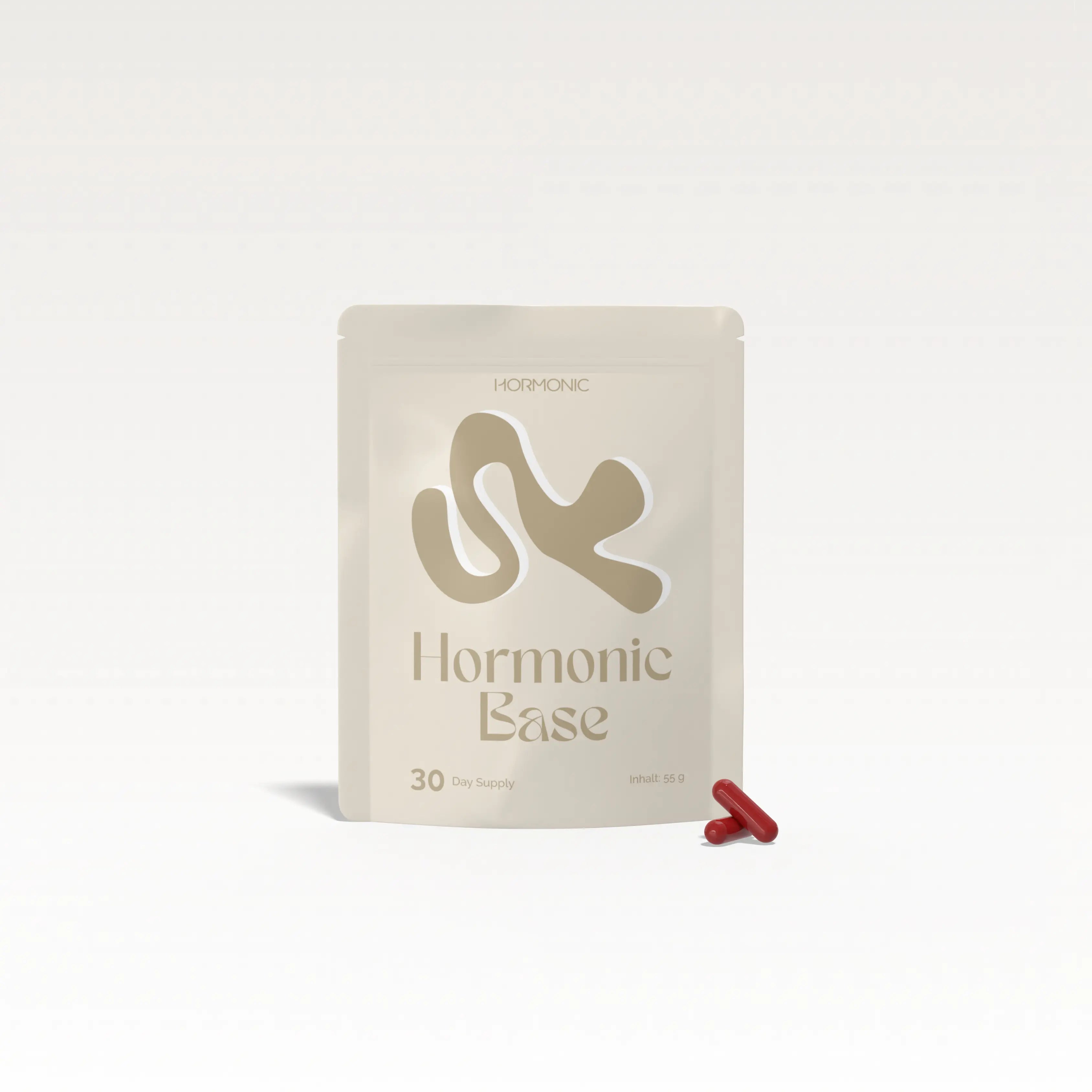
You get omega-3 from fish or algae oil. For the rest of your basic needs, Hormonic Base provides, among other things, folate and zinc, which according to the EFSA contributes to normal fertility, as well as vitamin D.

Unsure what makes sense for your family planning?
In a free 15-minute introductory call, one of our doctors will address your questions about fertility, cycles, and nutrients, with no obligation.
Frequently Asked Questions about Omega-3 for Fertility
Does omega-3 help with getting pregnant?
How much omega-3 for fertility?
Fischöl oder Algenöl bei Kinderwunsch?
Ist Omega-3 in der Schwangerschaft wichtig?
Scientific Sources
- Stanhiser, J. et al. (2022). Omega-3 fatty acid supplementation and fecundability. Human Reproduction, 37(5), 1037-1046. doi:10.1093/humrep/deac027
- Chiu, Y.-H. et al. (2018). Serum omega-3 fatty acids and treatment outcomes among women undergoing assisted reproduction. Human Reproduction, 33(1), 156-165. doi:10.1093/humrep/dex335
- Middleton, P. et al. (2018). Omega-3 fatty acid addition during pregnancy. Cochrane Database of Systematic Reviews, 11, CD003402. doi:10.1002/14651858.CD003402.pub3
- European Food Safety Authority (EFSA) (2011). Scientific Opinion on the substantiation of health claims related to DHA and contribution to normal brain and eye development. EFSA Journal, 9(4), 2078.
- Yang, K. et al. (2018). Effectiveness of Omega-3 fatty acid for polycystic ovary syndrome: a systematic review and meta-analysis. Reproductive Biology and Endocrinology, 16, 27. doi:10.1186/s12958-018-0346-x
About the Author

You might also be interested in this.

Folic acid, iodine, DHA, and iron: Which nutrients really matter during pregnancy, what you should supplement, and what you should avoid, medically explained.

The quality of your eggs is one of the most important factors for fertility and directly impacts the chances of a successful pregnancy. Women are born with a limited egg reserve – around 1 to 2 mil...

Which micronutrients are most commonly deficient in women with infertility? The NHANES 2026 analysis provides clear data – we explain what it really means.